
Few security experiences are more unsettling than watching your automatic gate open by itself with no one around. This phenomenon, commonly called a "ghost gate opener" event, affects thousands of property owners across the United States each year. While the term sounds supernatural, the causes are firmly rooted in electrical engineering, radio frequency interference, and mechanical failures. Understanding why gates activate without command is essential for maintaining both security and peace of mind at residential and commercial properties.
Understanding the Ghost Gate Opener Phenomenon
A ghost gate opener refers to any instance when an automatic gate activates without intentional human input. The gate swings or slides open as if commanded by an invisible operator, creating security vulnerabilities and raising serious safety concerns.
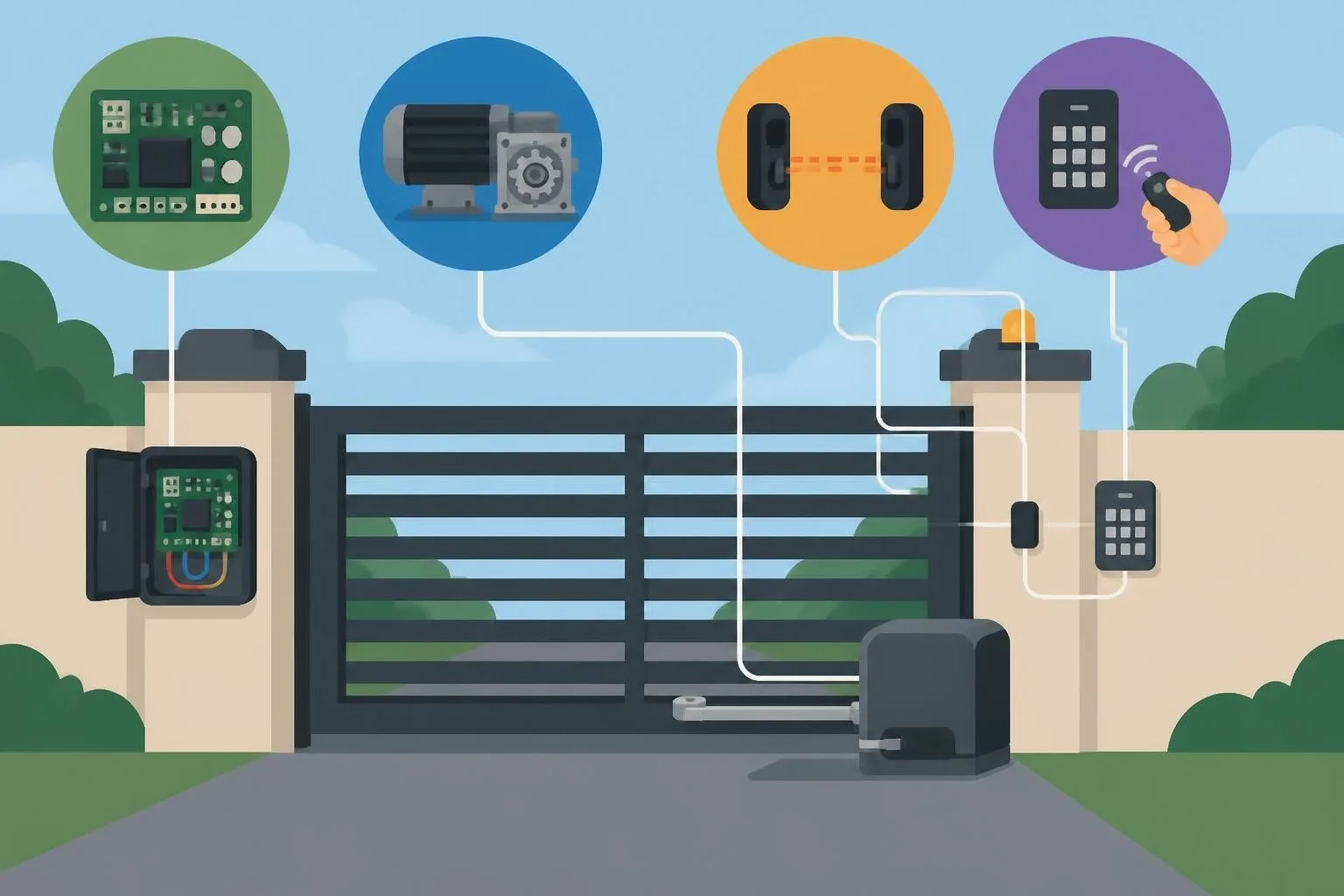
These unauthorized activations stem from legitimate technical failures rather than paranormal activity. Modern automatic gate systems rely on complex interactions between radio receivers, control boards, sensors, and mechanical components. When any element in this chain malfunctions or receives unintended signals, the gate may respond as if a valid opening command was issued.
Primary Categories of Ghost Activations
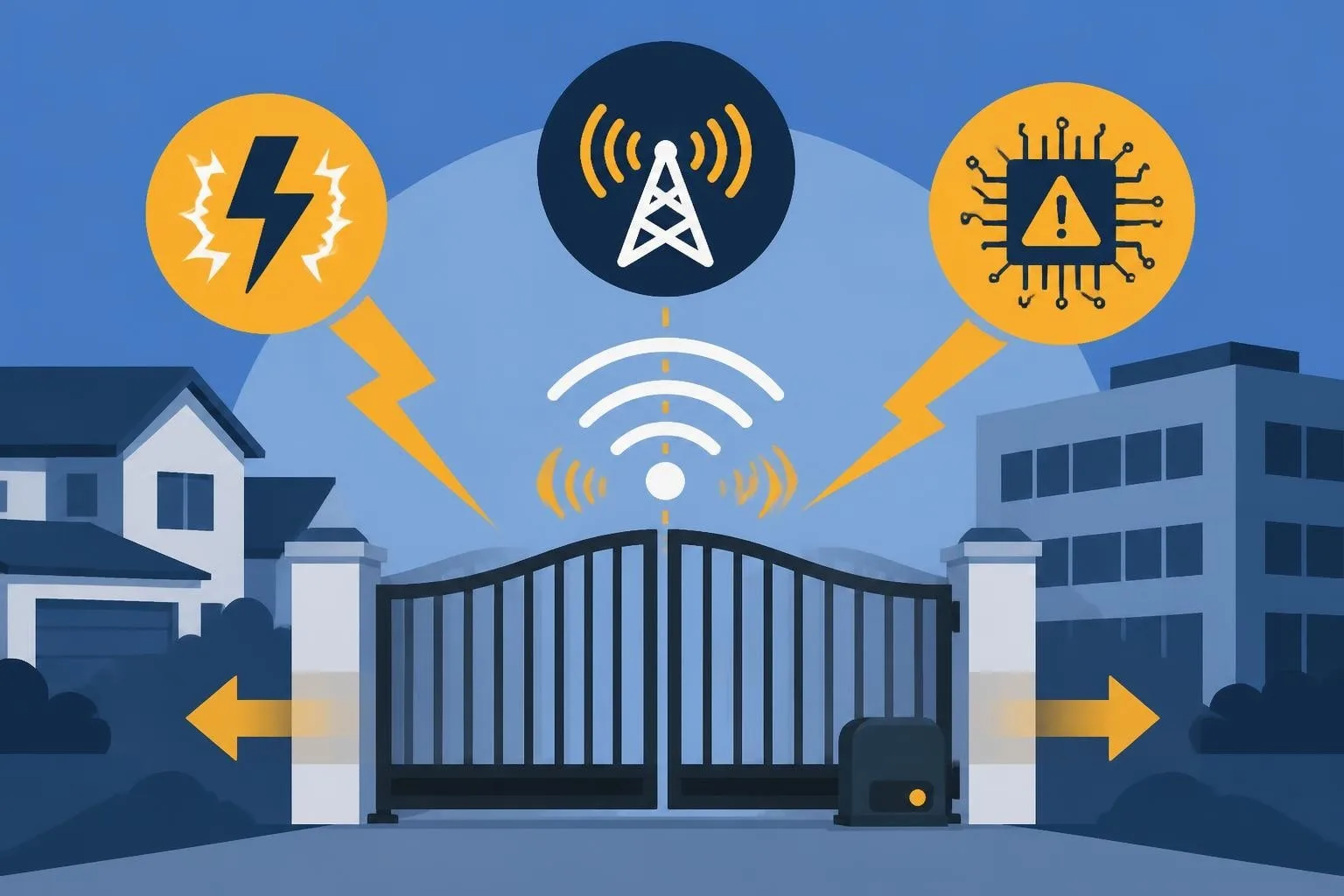
Ghost gate opener incidents typically fall into three main categories:
- Radio frequency interference causing the receiver to interpret noise as a valid signal
- Electrical system faults including power surges, ground loops, and circuit degradation
- Mechanical and sensor failures triggering false detection events
Each category requires different diagnostic approaches and solutions. Property owners who experience recurring ghost activations should systematically evaluate all three potential causes rather than assuming a single point of failure.
Radio Frequency Interference as the Leading Cause
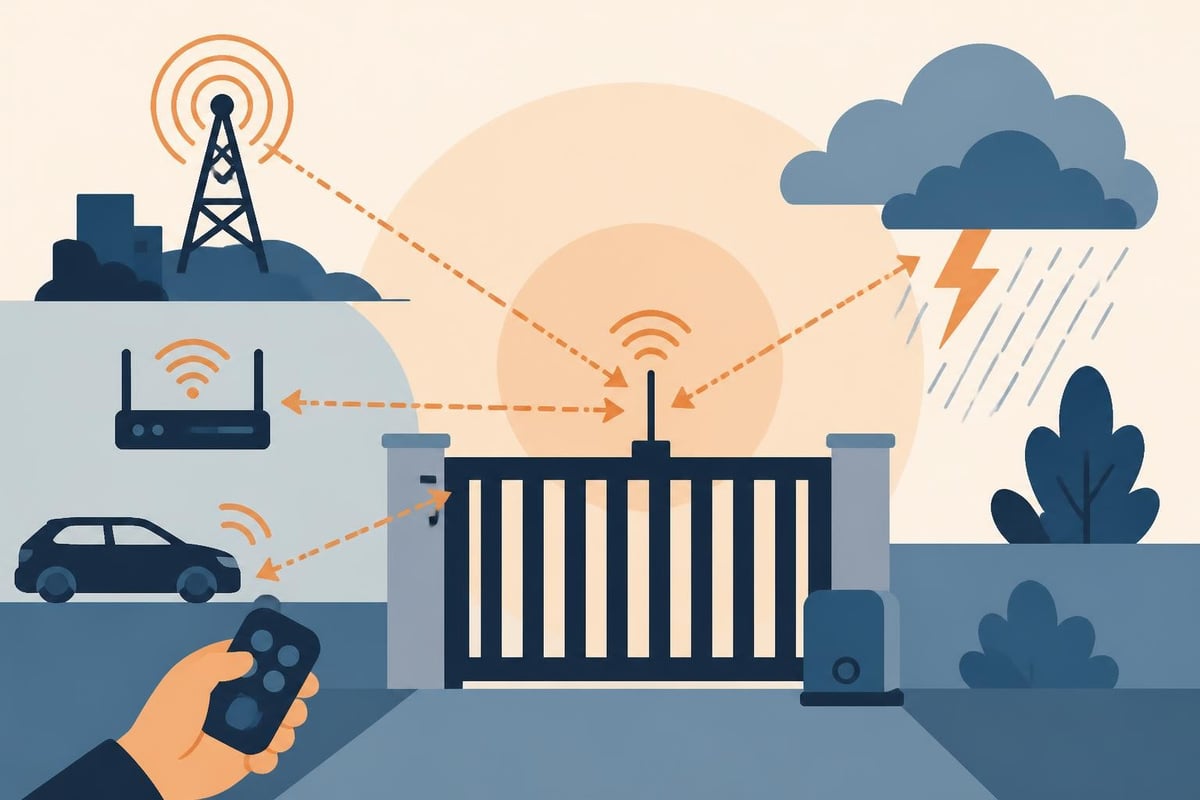
The most common source of ghost gate opener behavior involves radio frequency (RF) interference affecting the gate's receiver circuit. Automatic gates typically operate on frequencies between 300 MHz and 400 MHz, sharing spectrum space with numerous other devices and services.
According to federal regulations governing unlicensed RF devices, gate operators must accept interference from other lawful transmitters. This regulatory framework means your gate system cannot claim exclusive use of its operating frequency, making it vulnerable to signals from various sources.
Common RF Interference Sources
| Interference Source | Frequency Range | Likelihood of Impact |
|---|---|---|
| Nearby two-way radios | 150-174 MHz, 450-470 MHz | High |
| Wireless security cameras | 2.4 GHz, 5.8 GHz | Moderate |
| Cell tower equipment | 700-2500 MHz | Low to Moderate |
| Amateur radio operators | Multiple bands | Moderate |
| Industrial RF equipment | Varies widely | High (proximity-dependent) |
The NTIA guidance on non-licensed devices explains how receiver immunity varies significantly across gate operator models. Older systems with less sophisticated filtering are particularly susceptible to out-of-band interference that newer designs reject.
Rolling Code Vulnerabilities
Modern gate remotes use rolling code technology to prevent simple replay attacks. However, recent research on remote keyless entry systems demonstrates that even advanced encryption schemes remain vulnerable to sophisticated attacks. While true hacking attempts are rare in residential settings, understanding these vulnerabilities helps explain some ghost activation patterns.
The University of Victoria’s security analysis of rolling-code systems reveals that certain implementation flaws can allow unintended code acceptance. Manufacturing variations mean some gate operators exhibit higher false-acceptance rates than others, even within the same product line.
Electrical System Faults and Power Anomalies
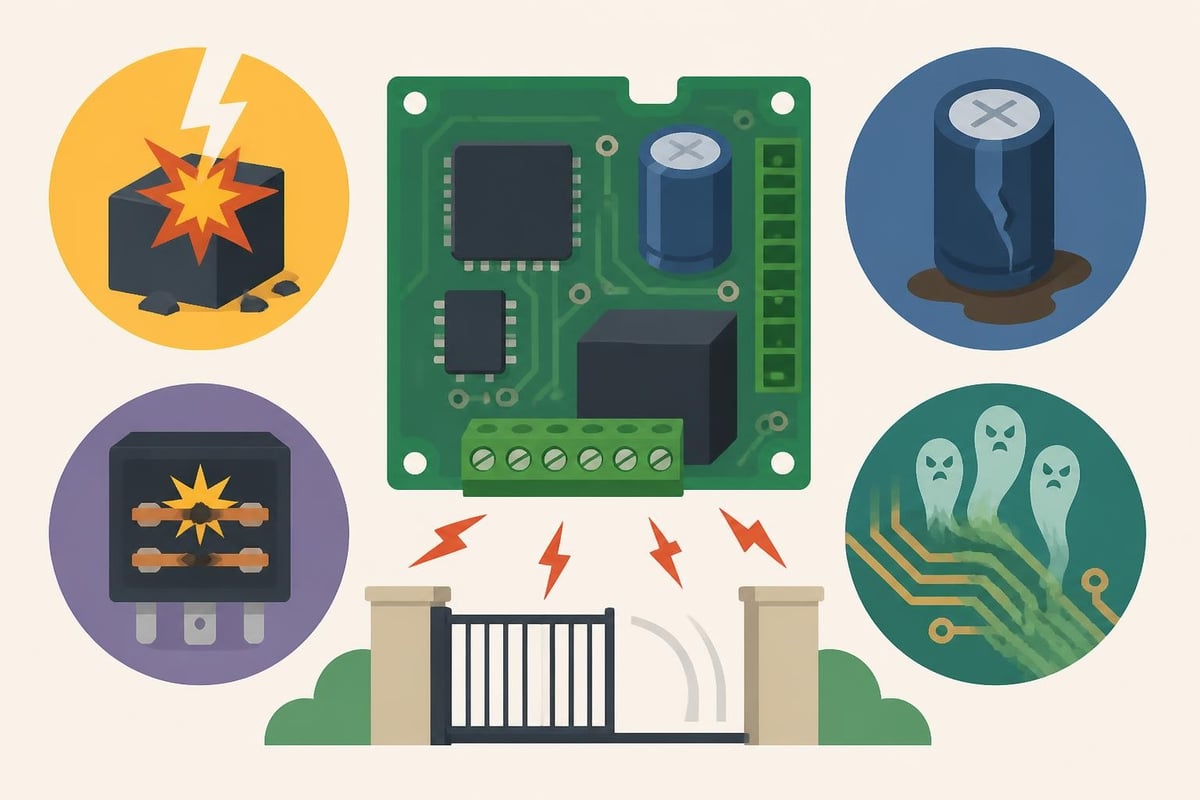
Electrical disturbances represent the second major category of ghost gate opener causes. The control boards in automatic gate operators contain sensitive semiconductor components that react to voltage irregularities in unexpected ways.
Power surges from lightning strikes pose particular risks. The NFPA lightning protection guidance outlines how nearby lightning can induce currents in gate wiring sufficient to trigger activation circuits or permanently damage control electronics. Even strikes several miles away can create transient overvoltages through utility lines.
Ground Loop Interference
Ground loops occur when multiple ground paths exist in an electrical system, creating circulating currents that introduce noise into control circuits. In gate installations, this commonly happens when:
- The gate operator grounds to one location while sensors ground elsewhere
- Multiple metal fence sections create unintended ground paths
- Utility ground and earth ground differ in potential
These conditions create voltage differences that the control board may interpret as sensor inputs or command signals. Professional electricians can identify ground loops using specialized test equipment and resolve them through proper bonding techniques.
Control Board Component Degradation
Electronic components age and fail in predictable patterns. Electrolytic capacitors in gate control boards typically have service lives of seven to twelve years, depending on operating temperature and duty cycle. As capacitors degrade, they lose their ability to filter noise from power supplies and signal lines.
This degradation gradually increases the system's susceptibility to false triggering. A gate that operated reliably for years may suddenly develop ghost activation tendencies as critical filtering components approach end-of-life. Replacing the entire control board often provides the most cost-effective long-term solution in these cases.
Sensor Malfunctions and Mechanical Triggers
The third category of ghost gate opener causes involves the gate's safety sensors and detection systems. Modern automatic gates incorporate multiple sensor types to prevent injury and property damage, and failures in these systems can produce activation behavior that appears random.
Photoelectric Sensor Issues
Photoelectric sensors use infrared beams to detect obstructions in the gate's path. Environmental factors frequently cause false detections:
- Spider webs and debris accumulating on sensor lenses
- Water condensation creating refraction patterns that interrupt the beam
- Direct sunlight overwhelming the receiver at specific times of day
- Lens degradation from UV exposure reducing signal clarity
When a photoelectric sensor reports an obstruction while the gate is closed, some control systems interpret this as a command to open and clear the obstacle. This safety feature becomes a liability when sensors generate false readings.
Loop Detector Sensitivity
In-ground inductive loop detectors sense metal vehicles passing over buried wire loops. These systems can trigger ghost openings when sensitivity settings drift too high. A loop that's too sensitive may detect:
- Large trucks passing on nearby streets
- Metal objects blown across the loop by wind
- Underground utility work creating temporary magnetic anomalies
- Soil settling that changes the loop's electrical characteristics
Professional calibration of loop detectors requires specialized equipment and expertise. The process involves adjusting sensitivity to reliably detect vehicles while rejecting environmental noise, a balance that changes with seasons and site conditions.
Security Implications and Known Vulnerabilities
Beyond accidental causes, property owners should understand intentional attack vectors that could produce ghost gate opener behavior. The NIST Vulnerability Database documents several CVEs affecting IoT-connected gate systems, revealing how network vulnerabilities can enable remote unauthorized access.
Smart gate operators with internet connectivity expand the attack surface significantly. Compromised credentials, unpatched firmware, or weak encryption can allow remote actors to issue opening commands. While less common than accidental triggers, these security issues deserve attention, especially for commercial and high-value residential properties.
The USENIX Security research on remote keyless entry details practical attack methodologies including signal amplification and code-grabbing techniques. Though focused on automotive systems, many findings apply directly to gate operators using similar RF protocols.
Mitigation Through Modern Standards
The UL 325 standard for gate operators establishes comprehensive safety requirements that indirectly improve security. Systems designed to meet current UL 325 requirements typically incorporate better receiver filtering, more robust control logic, and enhanced sensor verification, all of which reduce ghost activation susceptibility.
Upgrading to UL 325-compliant equipment represents a significant investment, but one that addresses multiple vulnerabilities simultaneously. Newer systems also provide diagnostic capabilities that help identify the root cause when ghost activations do occur.
Diagnostic Procedures for Identifying Root Causes
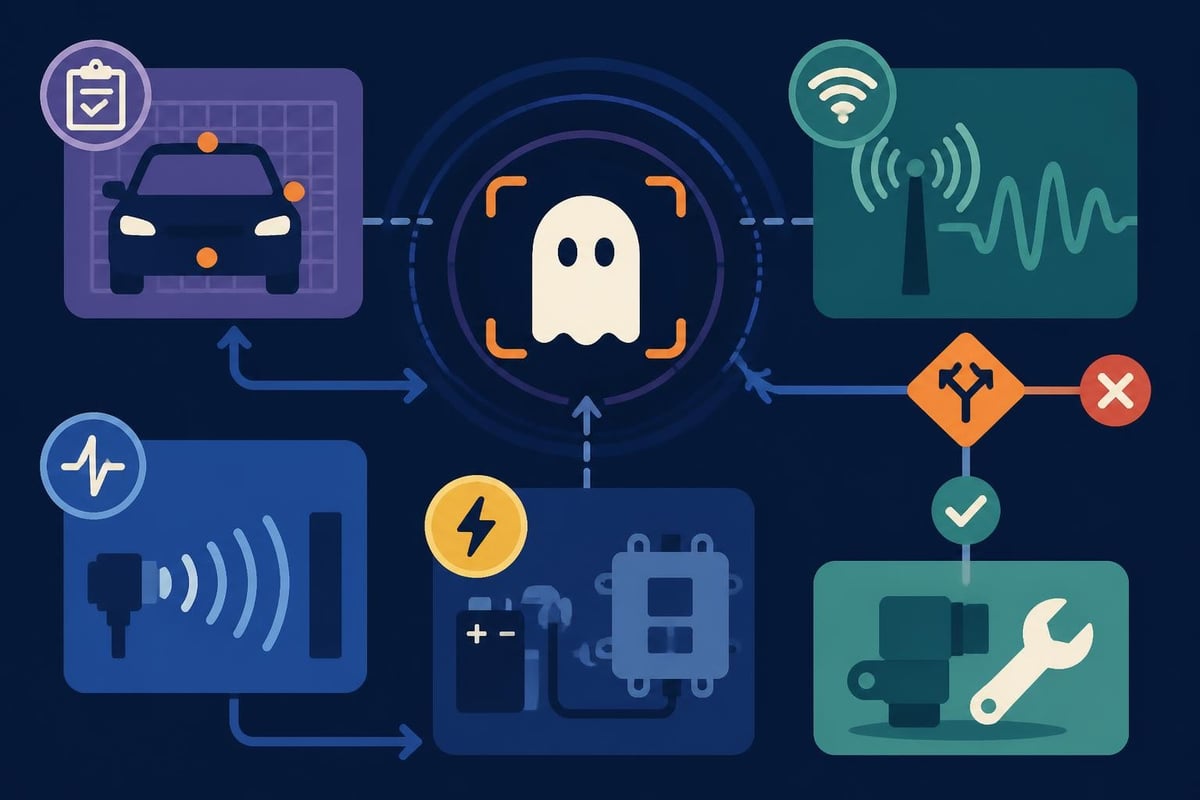
Systematically diagnosing ghost gate opener problems requires methodical testing and observation. Professional gate technicians follow structured protocols to isolate the cause among numerous possibilities.
Initial Assessment Steps
- Document activation patterns including time of day, weather conditions, and frequency
- Test all remote transmitters to verify they're not stuck or malfunctioning
- Inspect sensor alignment and cleanliness across all safety devices
- Review recent environmental changes such as new construction or equipment installations nearby
Pattern recognition often provides crucial clues. Ghost activations that occur exclusively during afternoon hours may indicate sun interference with photoelectric sensors, while activations during storms point to electrical issues.
Advanced Diagnostic Techniques
When basic inspection doesn't reveal the cause, specialized equipment enables deeper investigation:
| Test Equipment | Purpose | What It Reveals |
|---|---|---|
| RF spectrum analyzer | Identify interference sources | Specific frequencies and timing of RF signals |
| Digital oscilloscope | Examine control board signals | Voltage spikes, noise, and signal integrity |
| Ground resistance tester | Measure grounding effectiveness | Proper ground installation and bonding |
| Thermal imaging camera | Detect component overheating | Failing components before complete failure |
Many gate repair professionals, including those specializing in electric gate repair in metropolitan areas, maintain these diagnostic tools to efficiently resolve complex problems.
Solutions and Preventive Measures
Resolving ghost gate opener problems requires matching the solution to the diagnosed cause. No single fix addresses all scenarios, making accurate diagnosis essential before implementing repairs.
Addressing RF Interference
For interference-related ghost activations, several mitigation strategies prove effective:
- Install RF filters on the receiver input to reject out-of-band signals
- Relocate the receiver antenna away from interference sources
- Switch to a different operating frequency if the system supports multiple channels
- Upgrade to a receiver with better selectivity and adjacent-channel rejection
- Add shielded cable between the antenna and receiver module
Some property owners find success simply by repositioning the external antenna. Moving it even a few feet can dramatically change the RF environment it experiences, potentially eliminating interference from directional sources.
Electrical System Improvements
When power quality issues cause ghost activations, these interventions provide relief:
- Install transient voltage surge suppressors (TVSS) on gate operator power feeds
- Implement proper grounding and bonding following the National Electrical Code
- Add isolation transformers to break ground loops
- Replace degraded control boards before complete failure occurs
- Upgrade to dedicated circuit if sharing with high-interference loads
Surge protection deserves special attention in areas with frequent lightning activity. Proper TVSS installation on both power and control lines creates multiple barriers against transient overvoltages.
Sensor Optimization and Maintenance
Maintaining sensor reliability prevents false activations from detection system malfunctions:
- Clean photoelectric sensor lenses quarterly using appropriate solvents
- Verify sensor alignment using manufacturer specifications and tools
- Adjust loop detector sensitivity seasonally to account for environmental changes
- Replace aging sensors proactively based on manufacturer service life recommendations
- Install sun shields on photoelectric sensors facing east or west
Regular preventive maintenance catches degrading components before they cause operational problems. Professional gate technicians can establish maintenance schedules based on site-specific factors and equipment age.
Long-Term Prevention Strategies
Beyond addressing immediate ghost gate opener issues, forward-thinking property owners implement strategies that reduce future vulnerability.
Equipment Selection Considerations
When replacement becomes necessary, choosing equipment with these characteristics minimizes ghost activation risk:
- FCC Part 15 Class B certification indicating superior interference immunity
- Microprocessor-based control with programmable logic and self-diagnostics
- Multiple frequency operation allowing channel changes if interference develops
- Hardened receiver designs with enhanced filtering and selectivity
- Network security features for internet-connected systems
The initial cost premium for higher-quality equipment typically proves economical over the system's lifetime through reduced service calls and improved reliability.
Environmental Management
Controlling the RF and electrical environment around gate installations helps prevent interference:
- Survey the site for potential interference sources before installation
- Coordinate with neighbors about high-power RF equipment installations
- Maintain vegetation clearance from sensors and control equipment
- Route gate wiring away from high-voltage power lines and transformers
- Document any environmental changes when ghost activations begin
Property managers at commercial sites should establish protocols for notifying gate service providers when site modifications might affect gate operation, such as installing new wireless networks or electrical equipment.
Professional Service Relationships
Establishing relationships with qualified gate service providers ensures rapid response when problems develop. Companies with comprehensive service capabilities can address the full spectrum of ghost activation causes rather than focusing narrowly on mechanical adjustments.
Exploring the various service areas covered by professional gate companies helps property owners identify local resources for both emergency repairs and preventive maintenance programs.
Documentation and Warranty Considerations
Maintaining detailed records of ghost gate opener incidents and repairs serves multiple purposes. Documentation helps technicians identify patterns, supports warranty claims, and provides liability protection if unauthorized access incidents occur.
Essential Records to Maintain
- Activation logs with timestamps and circumstances
- Service history including all repairs and component replacements
- Environmental incident reports noting weather events or nearby construction
- Warranty documentation for all system components
- Professional inspection reports from qualified technicians
Modern gate operators with built-in logging capabilities simplify this documentation process. Systems that record all activation events create electronic audit trails useful for both troubleshooting and security purposes.
Warranty Implications
Ghost activations sometimes indicate latent defects in control electronics or receiver modules. Manufacturers typically warrant these components for one to three years, but warranty coverage requires proper installation and maintenance documentation.
Before assuming warranty has expired, verify the installation date and review coverage terms. Some manufacturers extend warranties when documented defects affect multiple units, particularly for systemic issues like RF receiver vulnerability or control board design flaws.
Understanding and resolving ghost gate opener problems requires systematic investigation of RF interference, electrical faults, and sensor malfunctions. By methodically diagnosing the root cause and implementing targeted solutions, property owners can restore reliable gate operation and maintain security. When ghost activations persist despite troubleshooting efforts, professional expertise becomes invaluable. Gates & Garage Door Express Inc. specializes in diagnosing and repairing complex automatic gate issues throughout Los Angeles, offering same-day emergency service to quickly resolve security concerns and restore normal operation.