
Installing a remote control gate for driveway applications transforms how property owners manage security, convenience, and curb appeal. Modern automated gate systems offer sophisticated wireless technology, enhanced safety features, and seamless integration with home automation platforms. As property security demands evolve in 2026, understanding the technology, safety standards, and maintenance requirements of remote-controlled driveway gates helps homeowners and businesses make informed decisions about protecting their properties.
Understanding Remote Control Gate Technology
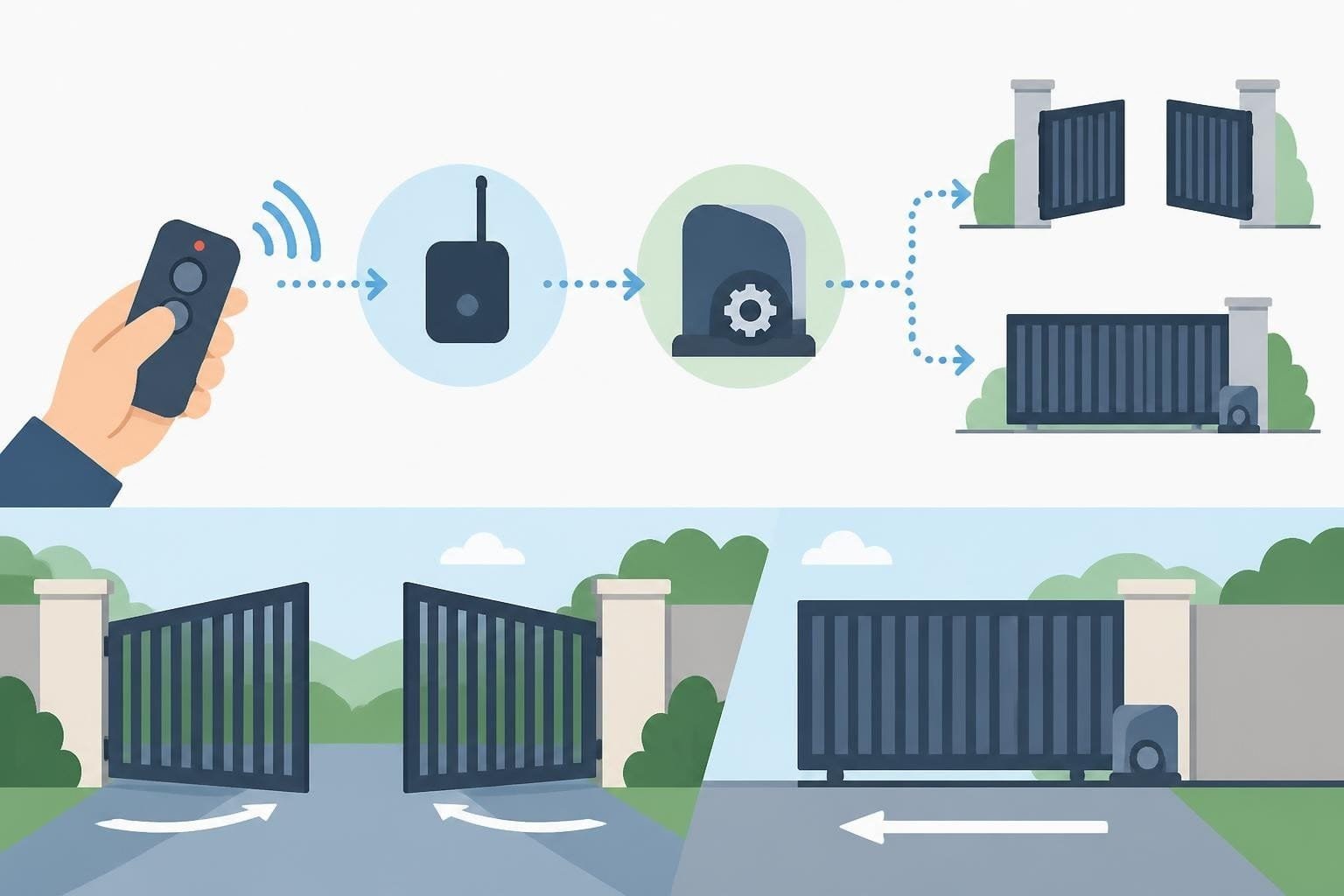
A remote control gate for driveway installation operates through radio frequency (RF) communication between a handheld transmitter and a receiver connected to the gate operator. When you press the remote button, it sends an encrypted signal to the receiver, which then activates the motor to open or close the gate. Modern systems typically operate on frequencies between 300 MHz and 433 MHz, with rolling code technology that changes the access code after each use to prevent unauthorized duplication.
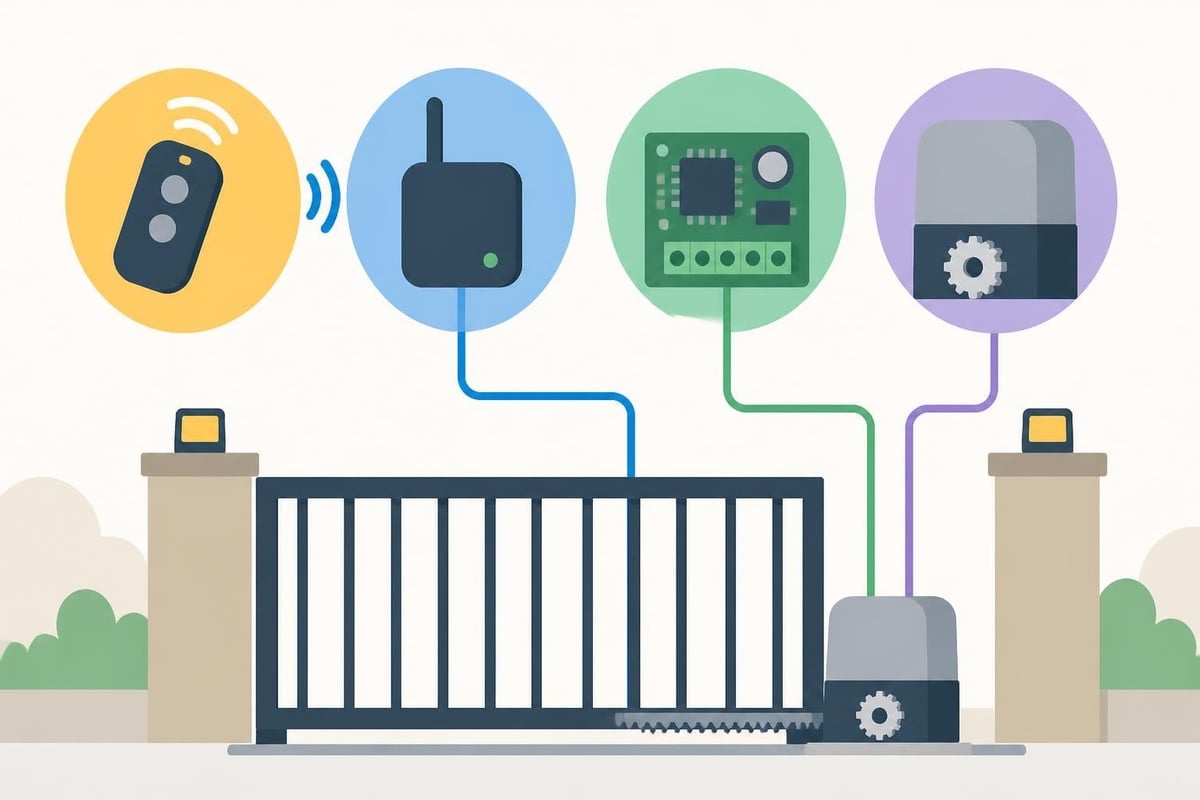
The wireless control system consists of several critical components working together. The transmitter contains a battery-powered circuit board that generates the unique RF signal. The receiver module, mounted near the gate operator, decodes this signal and sends a command to the control board. The operator itself contains the motor, gearbox, and electronic controls that physically move the gate.
Key technology features in 2026 include:
- Multi-button remotes controlling multiple gates or secondary functions
- Smartphone app integration through Wi-Fi or Bluetooth connectivity
- Battery backup systems ensuring operation during power outages
- Solar panel options for off-grid installations
- Integration with voice assistants and smart home platforms
Security researchers have identified potential vulnerabilities in older wireless gate systems, as detailed in academic studies on remote entry vulnerabilities. Modern rolling code technology addresses many of these concerns by generating a new encrypted code with each transmission, making it virtually impossible for unauthorized parties to capture and replay the signal.
Types of Driveway Gates and Operating Mechanisms
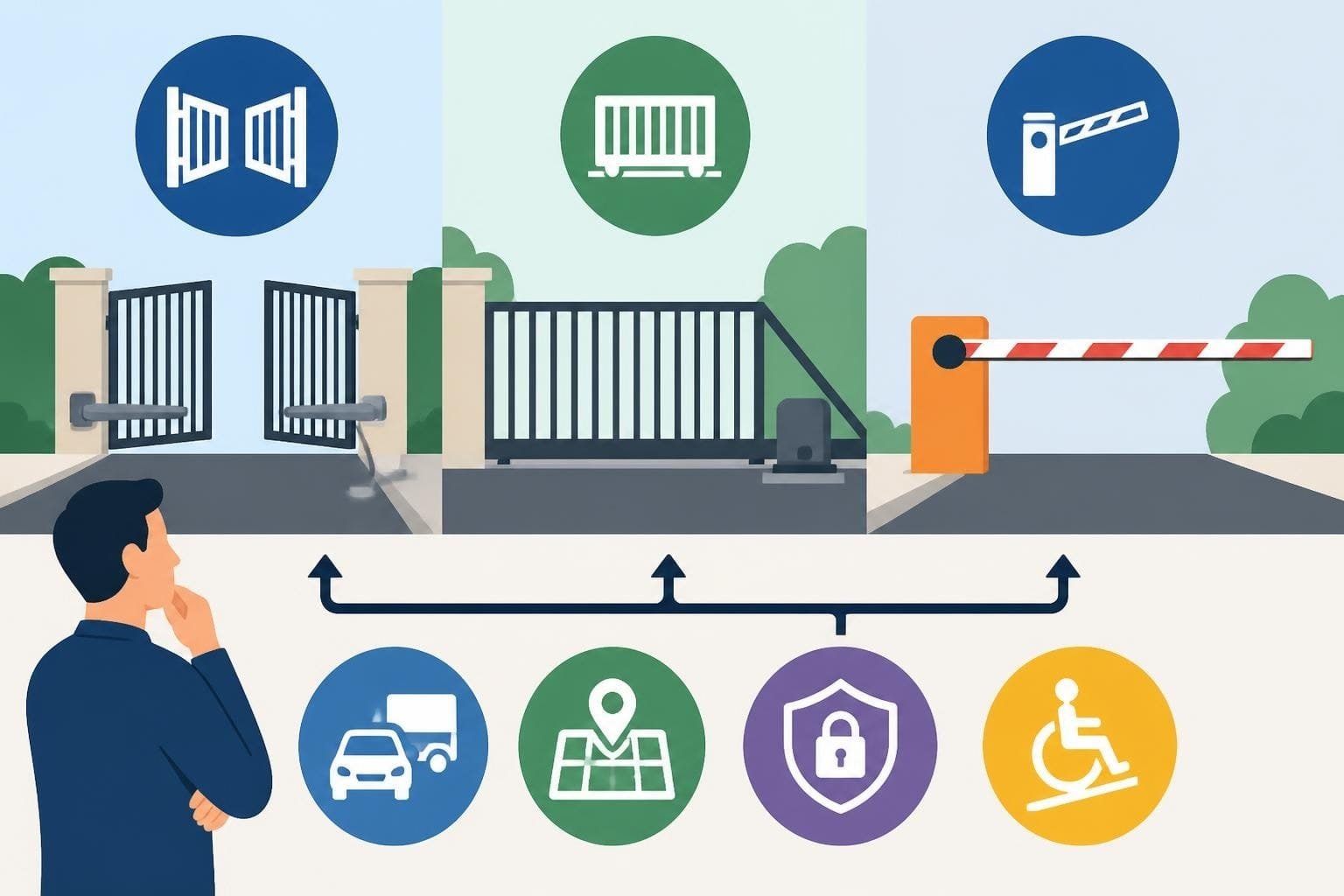
Selecting the right gate type depends on property layout, available space, and aesthetic preferences. The two primary categories for residential and commercial properties are swing gates and sliding gates, each with distinct operational characteristics and space requirements.
Swing Gates
Swing gates operate similarly to traditional doors, pivoting on hinges attached to posts. They can swing inward toward the property or outward toward the street. Single swing gates work well for narrower driveways, while double swing gates suit wider entrances and create a more dramatic visual impact.
Swing gate considerations:
- Require clearance space equal to the gate width
- Work well on sloped driveways
- Easier to automate on properties with adequate space
- Create classic, traditional appearance
- Typically more affordable than sliding systems
Sliding Gates
Sliding gates move horizontally along a track, parallel to the fence line. These systems excel in properties with limited driveway depth or where swing clearance isn't available. Cantilever sliding gates suspend above the ground using rollers on an overhead or ground-level track, while track-mounted gates roll on wheels within a ground channel.
| Feature | Swing Gates | Sliding Gates |
|---|---|---|
| Space Required | Clearance arc | Parallel fence run |
| Slope Tolerance | Excellent | Limited |
| Installation Cost | Lower | Higher |
| Maintenance | Moderate | Higher (track cleaning) |
| Wind Resistance | Moderate | Better |
The LiftMaster residential gate operator guidelines provide detailed specifications for matching operator models to different gate types and weights. Professional installation ensures the operator has sufficient power to handle the gate's weight and that all safety devices function correctly.
Safety Standards and Requirements
Safety represents the paramount concern when installing any remote control gate for driveway use. Multiple regulatory standards govern gate operator design, installation, and safety features to prevent injuries and property damage. Understanding these requirements protects both property owners and visitors.
The UL 325 standard establishes safety requirements for automatic gate operators in the United States. This standard classifies operators into different categories based on application and required safety features. Residential driveway gates typically fall under Class I (residential) or Class II (commercial) depending on traffic volume and access control needs.
Essential Safety Features
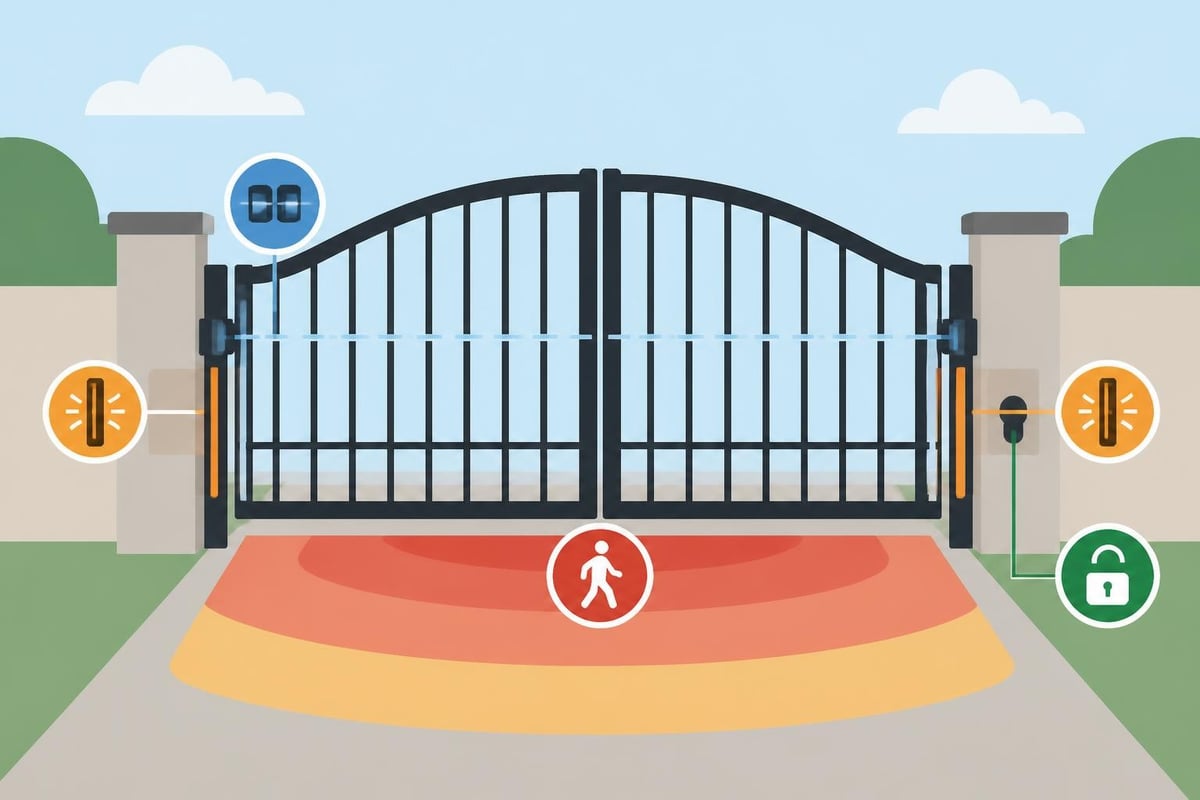
Modern gate operators must include multiple layers of protection to prevent entrapment and collision injuries. These systems work together to create a safe operating environment for vehicles, pedestrians, and pets.
Required safety devices include:
- Obstruction detection sensors that reverse gate movement when obstacles are detected
- Photo-eye beams creating an invisible curtain across the gate path
- Edge sensors mounted on the gate's leading edge to detect physical contact
- Emergency release mechanisms allowing manual operation during power failures
- Warning signs and lights alerting pedestrians to automatic gate operation
The 50-year evolution of UL 325 highlights how safety requirements have advanced to address real-world incidents and emerging technologies. Modern installations must comply with current standards, and older systems may require upgrades to meet contemporary safety expectations.
European installations follow BS EN 12453 safety standards, which establish force limits, presence detection requirements, and testing methods. While U.S. installations primarily follow UL standards, understanding international requirements provides valuable context for comprehensive safety planning.
Installation Considerations and Planning
Proper planning before installing a remote control gate for driveway applications prevents costly mistakes and ensures long-term satisfaction. Professional installers evaluate multiple factors that affect system performance, reliability, and compliance with local regulations.
Site Assessment Requirements
A thorough site evaluation examines the driveway slope, soil conditions, available power sources, and clearance requirements. Gates installed on slopes require special consideration for operator sizing and safety sensor placement. The ASTM F2200 standard provides detailed specifications for automated vehicular gate construction, including structural requirements and installation parameters.
Soil conditions affect foundation stability for gate posts and operator mounting. Clay soils may require deeper footings, while sandy conditions might need wider concrete bases. Professional installers typically specify post foundations extending at least 36 inches deep for residential gates, with larger dimensions for heavier commercial installations.
Pre-installation checklist:
- Verify property line locations and setback requirements
- Check local building codes and permit requirements
- Assess electrical service capacity and routing
- Measure gate opening width and height clearances
- Evaluate drainage patterns around gate location
- Plan conduit runs for power and safety sensors
Power supply options range from standard 120V AC service to low-voltage DC systems powered by solar panels and batteries. Solar installations work well for remote locations without convenient electrical access, though they require adequate sun exposure and larger battery banks in regions with limited winter daylight.
Professional vs. DIY Installation
While some homeowners consider DIY gate installation, the complexity of modern automated systems typically justifies professional installation. Licensed installers understand local codes, safety requirements, and proper techniques for mounting operators and configuring controls.
| Aspect | DIY Installation | Professional Installation |
|---|---|---|
| Cost | Lower materials only | Higher total investment |
| Expertise | Limited | Certified technicians |
| Warranty | Components only | System warranty |
| Code Compliance | Owner responsibility | Guaranteed compliance |
| Safety Integration | Variable | Standards-compliant |
| Time Investment | 20-40 hours | 1-2 days |
Professional installation provides peace of mind through proper safety device integration, code compliance, and factory-authorized warranty coverage. When gates experience operational issues, having professional installation documentation simplifies electric gate repair by establishing a baseline configuration and identifying any modifications made since original installation.
Remote Control Options and Features
The remote transmitters that control driveway gates have evolved significantly beyond simple single-button devices. Modern remotes offer multiple channels, programmable functions, and integration with broader property access control systems.
Transmitter Technologies
Traditional keyfob remotes remain popular for their simplicity and reliability. These compact devices clip to vehicle sun visors or keychains, providing instant gate control without smartphone dependence. Multi-button remotes can control multiple gates, activate exterior lighting, or trigger additional automation functions.
Contemporary remote control options:
- Standard RF keyfob transmitters (1-4 buttons)
- Wireless keypads for PIN code entry
- Smartphone apps with virtual keys and visitor management
- Vehicle-mounted dashboard remotes
- Homeowner portals for managing access credentials
- Biometric readers (fingerprint or facial recognition)
Smartphone integration represents the fastest-growing control method. Apps connect to gate operators through Wi-Fi bridges or cellular modules, enabling control from anywhere with internet connectivity. These platforms allow temporary access codes for visitors, delivery drivers, or service providers, with detailed logs tracking who accessed the property and when.
Programming and User Management
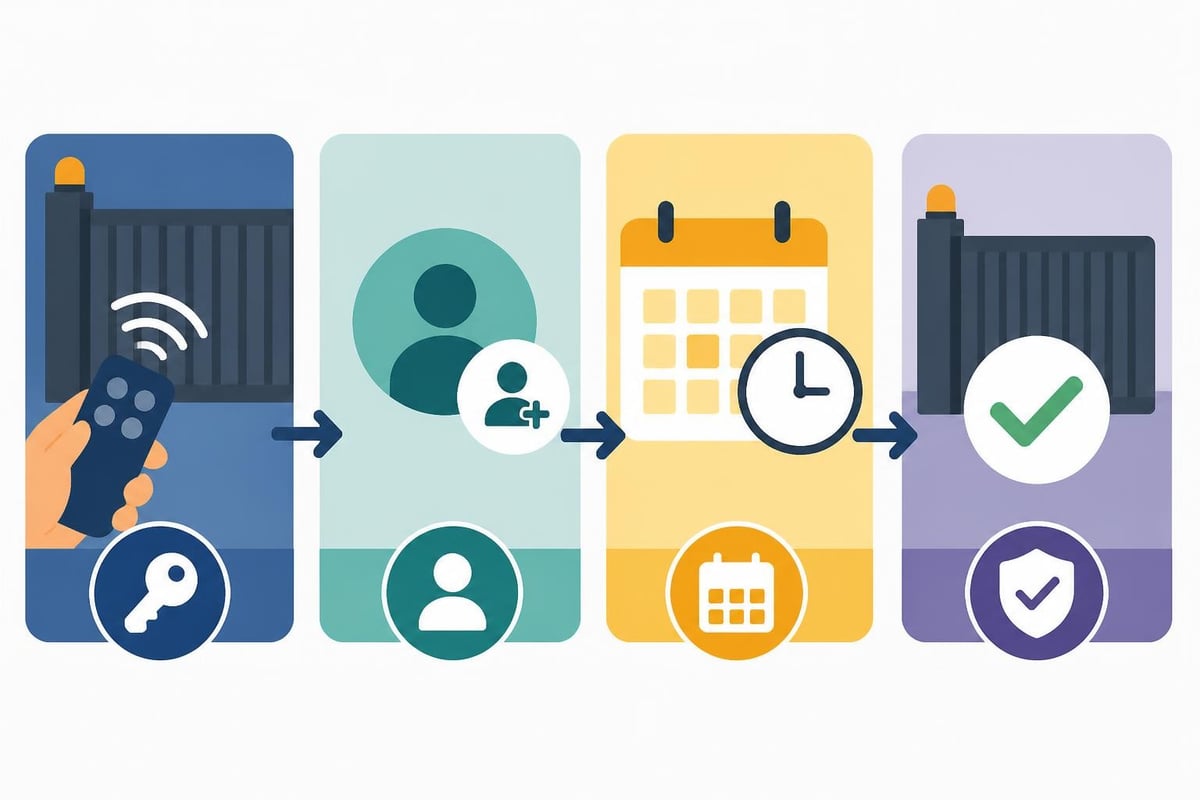
Modern gate systems support multiple users with individual access credentials. Property owners can assign permanent codes to family members, temporary codes to guests with automatic expiration, and scheduled access for regular service providers like landscapers or housekeepers.
The programming process varies by manufacturer but generally involves entering a master code, selecting the user type, and assigning the specific remote or PIN. Advanced systems integrate with property management software for rental properties or small business campuses requiring centralized access control.
Maintenance and Troubleshooting
Regular maintenance keeps remote control gate for driveway systems operating reliably and safely. Preventive care catches minor issues before they escalate into expensive repairs or safety hazards. The practical guidance on electric driveway gates emphasizes routine inspection schedules and common maintenance tasks homeowners can perform.
Routine Maintenance Schedule
Monthly inspections should verify that all safety devices function correctly. Test photo-eye beams by breaking the beam while the gate closes – it should immediately reverse direction. Check edge sensors by placing a cardboard tube against the gate's leading edge during operation to confirm contact triggers reversal.
Monthly maintenance tasks:
- Clean photo-eye lenses with soft cloth
- Verify remote battery strength (replace annually)
- Inspect gate track for debris accumulation
- Check hinge lubrication on swing gates
- Test emergency release mechanism
- Verify warning signs remain visible
Quarterly maintenance includes more thorough inspections of mechanical components. Examine gate wheels or rollers for wear, tighten loose mounting bolts, and inspect electrical connections for corrosion. Sliding gate tracks require regular cleaning to remove dirt, leaves, and ice that impede smooth operation.
Annual professional servicing provides comprehensive system evaluation. Technicians measure operating forces to ensure compliance with safety standards, test control board functions, verify proper sensor alignment, and adjust operator settings for seasonal temperature variations. Understanding why regular automatic gate maintenance matters helps property owners appreciate the value of preventive service contracts.
Common Problems and Solutions
Remote control failures represent the most frequent user complaint. When remotes stop working, the issue typically involves dead batteries, signal interference, or deprogrammed memory. Replace batteries first, then verify the remote remains programmed by checking the control board's learned transmitter list.
Environmental factors affect gate performance throughout the year. Winter freezing can prevent gates from closing completely, while summer heat causes metal expansion that may bind sliding gates in their tracks. Seasonal adjustments to limit switches and force settings accommodate these variations.
| Symptom | Likely Cause | Solution |
|---|---|---|
| Remote doesn't work | Dead battery / desynced | Replace battery / reprogram |
| Gate reverses immediately | Safety sensor blocked | Clean sensors / check alignment |
| Slow operation | Low battery / weak motor | Charge backup / inspect operator |
| Partial opening only | Limit switch misaligned | Adjust travel limits |
| Intermittent operation | Loose wiring / corroded connections | Inspect and repair connections |
| Excessive noise | Dry hinges / worn rollers | Lubricate / replace worn parts |
When troubleshooting proves unsuccessful, knowing when your electric gate stops working requires professional diagnosis prevents further damage from amateur repair attempts. Complex electrical issues, damaged control boards, or motor failures need certified technician expertise to resolve safely and permanently.
Cost Factors and Investment Planning
Installing a remote control gate for driveway applications represents a significant investment with costs varying based on gate type, operator selection, safety features, and installation complexity. Understanding these factors helps property owners budget appropriately and make value-driven decisions.
Initial Installation Costs
Basic swing gate systems with standard remote control start around $2,500 to $4,000 for professional installation including a simple gate, operator, remote transmitters, and required safety devices. Sliding gates typically cost $4,000 to $8,000 due to track requirements and more complex mechanical systems. Custom ornamental gates with advanced operators and premium control systems can exceed $15,000 for high-end installations.
Cost variables include:
- Gate material (chain-link vs. wrought iron vs. wood)
- Gate weight and size (affects operator selection)
- Terrain challenges (slopes, soil conditions)
- Distance from electrical service
- Number of safety devices required
- Control system sophistication
- Permitting and inspection fees
Solar-powered systems add $1,500 to $3,000 to installation costs but eliminate ongoing electrical consumption and enable installations where AC power isn't readily available. The investment pays dividends in remote locations where trenching electrical service would cost more than solar components.
Long-term Ownership Costs
Beyond initial installation, gate ownership involves ongoing expenses for electricity, periodic maintenance, and eventual component replacement. Electric gates typically consume $3 to $8 monthly in electricity, with solar systems eliminating this cost after the initial investment.
Annual professional maintenance averages $150 to $300 depending on system complexity and regional service rates. This preventive care significantly extends component life and reduces the likelihood of emergency repairs. Remote batteries require annual replacement at nominal cost, while operator motors typically last 10 to 15 years with proper maintenance.
Property value enhancement often justifies gate investment. Automated driveway gates improve security, privacy, and curb appeal, with real estate professionals citing 3% to 5% property value increases for homes with professional gate installations in appropriate markets.
Integration With Smart Home Systems
Modern remote control gate for driveway installations increasingly integrate with comprehensive smart home platforms, creating unified property management ecosystems. These integrations enable advanced automation scenarios, voice control, and consolidated security monitoring.
Platform Compatibility
Leading smart home platforms support gate control through Wi-Fi-enabled operators or third-party integration modules. Systems can connect with Amazon Alexa, Google Home, Apple HomeKit, and professional automation systems like Control4 or Savant. Voice commands allow hands-free operation, particularly convenient when returning home with arms full of groceries or during inclement weather.
Integration enables sophisticated automation rules. Gates can automatically open when family members' smartphones approach via geofencing, close automatically at sunset, or coordinate with security cameras to record all entry and exit events. Some property owners link gate operation to garage doors, ensuring the driveway gate opens before the garage door to prevent vehicles from queuing in the street.
Smart integration benefits:
- Voice control through virtual assistants
- Automated opening/closing schedules
- Geofencing for automatic family member access
- Security camera recording triggers
- Visitor notification and remote access granting
- Integration with complete property security systems
Third-party access management platforms designed for rental properties or small businesses provide comprehensive visitor tracking, scheduled access periods, and detailed audit logs. These commercial-grade systems typically operate through cloud platforms with monthly subscription fees ranging from $20 to $100 depending on features and user count.
Future Technology Trends
The gate automation industry continues evolving with emerging technologies promising enhanced functionality and user experience. Artificial intelligence integration enables learning patterns to predict when residents typically arrive and proactively open gates. Advanced computer vision systems can identify specific vehicles and automatically grant access without remote activation.
Cybersecurity remains a growing focus as gates become increasingly connected to internet platforms. Manufacturers implement encrypted communications, regular firmware updates, and multi-factor authentication to protect against unauthorized access attempts. Property owners should prioritize systems with robust security features and commitment to ongoing security updates.
A remote control gate for driveway applications delivers security, convenience, and property value enhancement when properly selected, installed, and maintained. Modern systems offer sophisticated features that integrate seamlessly with smart home platforms while meeting rigorous safety standards. If you're considering an automated gate installation or need expert service for your existing system, Gates & Garage Door Express Inc. provides professional installation, maintenance, and repair throughout Los Angeles with same-day emergency service and a commitment to quality that reflects our family-owned values. Contact our certified technicians today to discuss your driveway gate needs and discover how automated access control can transform your property security.