
Homeowners across California face unique challenges when it comes to garage door selection, installation, and maintenance. The California garage door market operates under strict building codes, seismic requirements, and energy efficiency standards that differ significantly from other states. Understanding these requirements helps property owners make informed decisions about their garage door systems while ensuring compliance with state regulations and maximizing safety for their families.
Understanding California's Garage Door Regulations
California maintains some of the nation's most comprehensive building standards for residential and commercial garage doors. The Contractors State License Board requires D-28 classification for professionals installing and repairing doors, gates, and activating devices throughout the state. This licensing ensures that contractors possess the necessary knowledge to handle the complex requirements governing garage door work.
State regulations cover multiple aspects of garage door systems, from structural integrity to energy performance. The California Energy Commission’s Building Energy Efficiency Standards establish minimum thermal performance requirements for garage doors, particularly when they separate conditioned living spaces from unconditioned garage areas.
Key Regulatory Requirements
California garage door installations must meet several critical standards:
- Seismic safety provisions designed to withstand earthquake forces
- Wind resistance ratings appropriate for coastal and inland zones
- Fire separation requirements between attached garages and living spaces
- Energy efficiency thresholds under Title 24 building standards
- Automatic reverse safety mechanisms on all motorized operators
The 2025 Title 24 California Code Changes introduced updated provisions affecting garage door thermal performance and installation practices. These changes reflect California's ongoing commitment to energy conservation and building safety.
Seismic Considerations for California Garage Doors
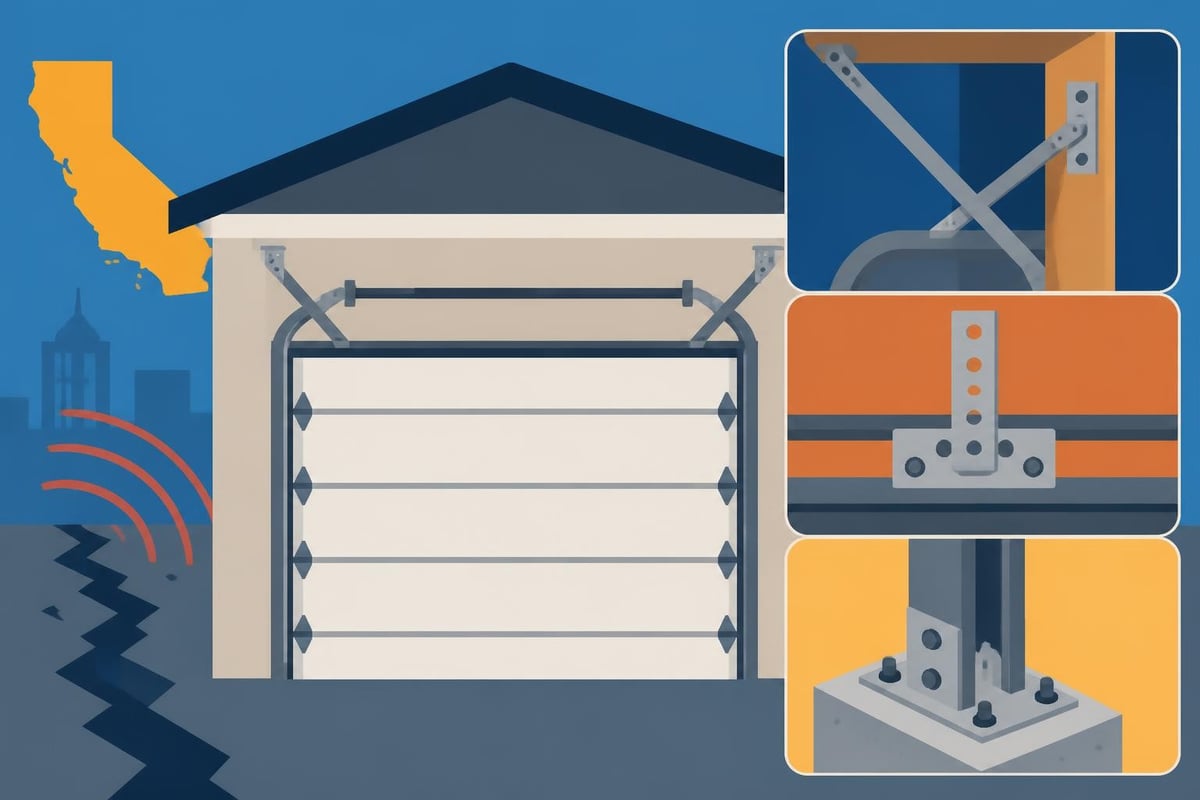
California's location along major fault lines creates unique structural demands for garage door systems. A California garage door must withstand lateral forces during seismic events while maintaining operational integrity and preventing injury to occupants.
Engineers and contractors design garage door installations with reinforced tracks, upgraded springs, and enhanced anchoring systems. The door's weight distribution becomes critical during earthquakes, as heavier materials can create dangerous momentum if improperly secured.
Material Selection and Earthquake Performance
Different garage door materials respond variably to seismic activity:
| Material | Seismic Performance | Weight Considerations | Typical Applications |
|---|---|---|---|
| Steel | Excellent durability, flexible mounting | Medium to heavy | Commercial, residential |
| Aluminum | Good resilience, lighter weight | Light to medium | Coastal areas, modern homes |
| Wood | Requires reinforcement, traditional appeal | Heavy | Historic properties, custom builds |
| Composite | Enhanced flexibility, weather resistant | Medium | All-climate installations |
Professional installation becomes essential when addressing seismic concerns. Contractors familiar with California garage door requirements understand proper anchoring depths, reinforcement schedules, and inspection protocols that protect against earthquake damage.
Energy Efficiency Standards and Title 24 Compliance
California leads the nation in energy conservation requirements, and garage doors play a significant role in meeting these standards. When a garage shares walls with conditioned living spaces, the California garage door becomes part of the building envelope subject to thermal performance mandates.
Title 24 standards specify minimum R-values for garage doors based on climate zones throughout the state. Coastal regions face different requirements than inland desert areas, reflecting varied heating and cooling demands.
Insulation Requirements by Climate Zone
The state divides into sixteen climate zones, each with specific energy requirements:
- Zone 6 (Los Angeles/Coastal): R-4.0 minimum for attached garage doors
- Zone 10 (Riverside/Inland): R-6.0 minimum with additional weatherstripping
- Zone 14 (Fresno/Central Valley): R-8.0 minimum with thermal breaks
- Zone 16 (Mountain regions): R-10.0 or higher with complete sealing
Homeowners seeking to insulate and weatherstrip their garage doors can find detailed guidance from national energy research programs. Proper insulation reduces energy costs while maintaining comfortable temperatures in adjacent living spaces.
Professional installers calculate thermal bridging, air infiltration rates, and overall U-factors to demonstrate code compliance. These calculations become part of the building permit documentation required for new installations and major renovations.
Safety Standards for California Garage Door Operators
Automatic garage door operators must meet rigorous safety standards to prevent injuries and fatalities. The federal safety standard for automatic residential garage door operators incorporates UL 325 requirements that California enforces through building codes and contractor licensing.
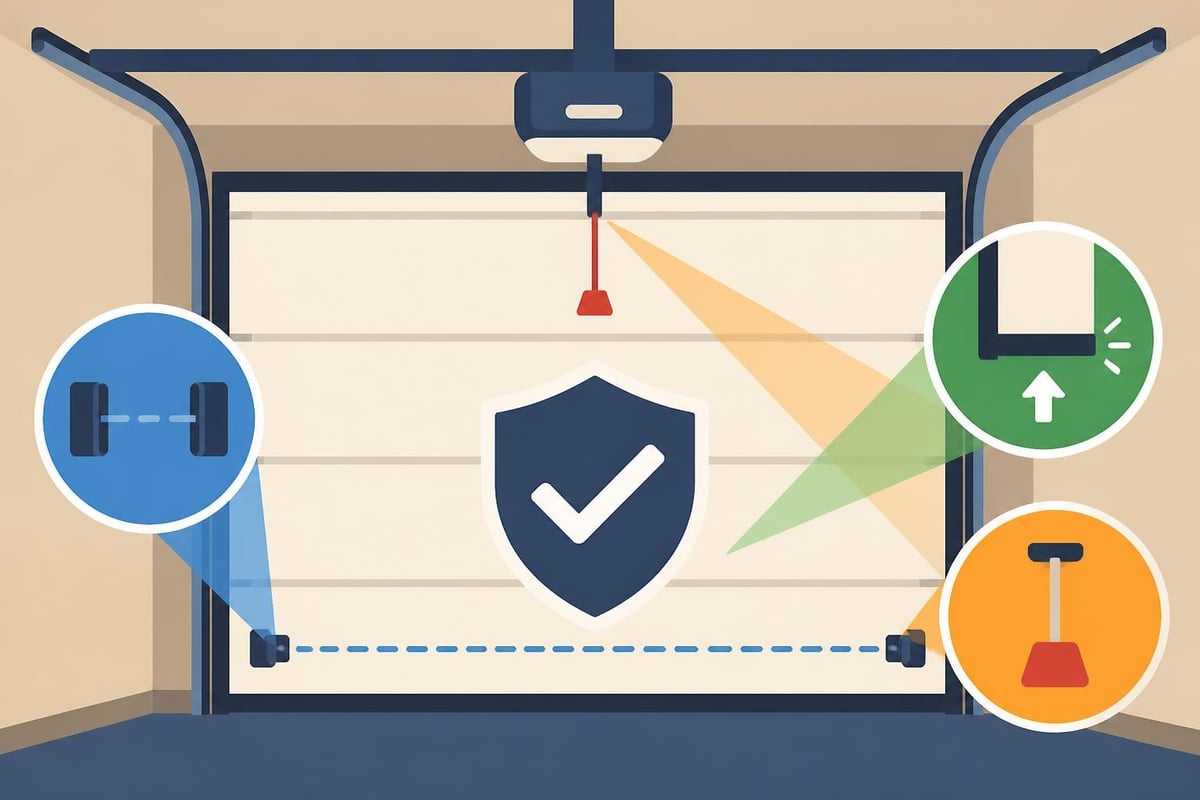
Every California garage door operator installed after 1993 must include automatic reversal mechanisms that detect obstructions and reverse door movement. Modern systems employ photoelectric sensors, pressure sensors, or both to ensure immediate response to people, pets, or objects in the door's path.
UL 325 Compliance Requirements
UL 325 standards have evolved over fifty years to address emerging safety concerns. Current California garage door installations must incorporate:
- Primary entrapment protection through monitored photoelectric sensors
- Secondary entrapment protection via inherent force sensing or edge sensors
- Emergency manual release accessible from inside the garage
- Battery backup systems for life-safety applications
- Visible warning indicators during door operation
Homeowners should test safety features monthly by placing a solid object in the door's path during closing. The door should reverse immediately upon contact or sensor detection. Failure to reverse indicates a need for professional adjustment or repair.
Choosing the Right California Garage Door Style
California's diverse architectural landscape supports numerous garage door styles, from traditional carriage house designs to sleek contemporary panels. The right California garage door complements your home's aesthetic while meeting functional requirements for climate, security, and daily use.
Regional preferences vary across the state. Mediterranean and Spanish Colonial homes in Southern California often feature wood or wood-composite doors with decorative hardware. Mid-century modern properties favor clean-lined aluminum and glass designs. Victorian and Craftsman residences in Northern California typically showcase carriage-style doors with window inserts.
Popular Styles and Applications
- Raised panel doors: Versatile design suitable for traditional and transitional homes
- Flush panel doors: Contemporary appearance ideal for modern architecture
- Carriage house doors: Classic styling with swing-out appearance and overhead function
- Full-view glass doors: Maximum natural light for modern homes and showrooms
- Custom wood doors: Unique designs for high-end properties and historic homes
Climate considerations influence material selection beyond aesthetic preferences. Coastal properties face salt air corrosion requiring aluminum or treated steel. Desert locations need materials that withstand extreme temperature variations without warping or degrading.
Maintenance Requirements for California Garage Doors
Regular maintenance extends the lifespan of your California garage door while ensuring safe operation and energy efficiency. California's varied climate zones create different maintenance schedules depending on location, usage patterns, and environmental exposure.
Coastal installations require more frequent lubrication and corrosion inspection than inland properties. Desert regions demand regular seal replacement due to UV exposure and thermal expansion cycles. Professional garage door repair services provide comprehensive maintenance programs tailored to specific climate challenges and operational demands.
Essential Maintenance Tasks
| Task | Frequency | Purpose | Climate Considerations |
|---|---|---|---|
| Visual inspection | Monthly | Identify wear, damage | All zones |
| Lubricate moving parts | Quarterly | Reduce friction, noise | More often in coastal areas |
| Test safety reversal | Monthly | Ensure operator safety | Required all zones |
| Weatherstripping check | Semi-annually | Maintain energy efficiency | Critical in extreme climates |
| Spring tension adjustment | Annually | Balance door weight | Professional service recommended |
| Track alignment | Annually | Smooth operation | Essential after seismic events |
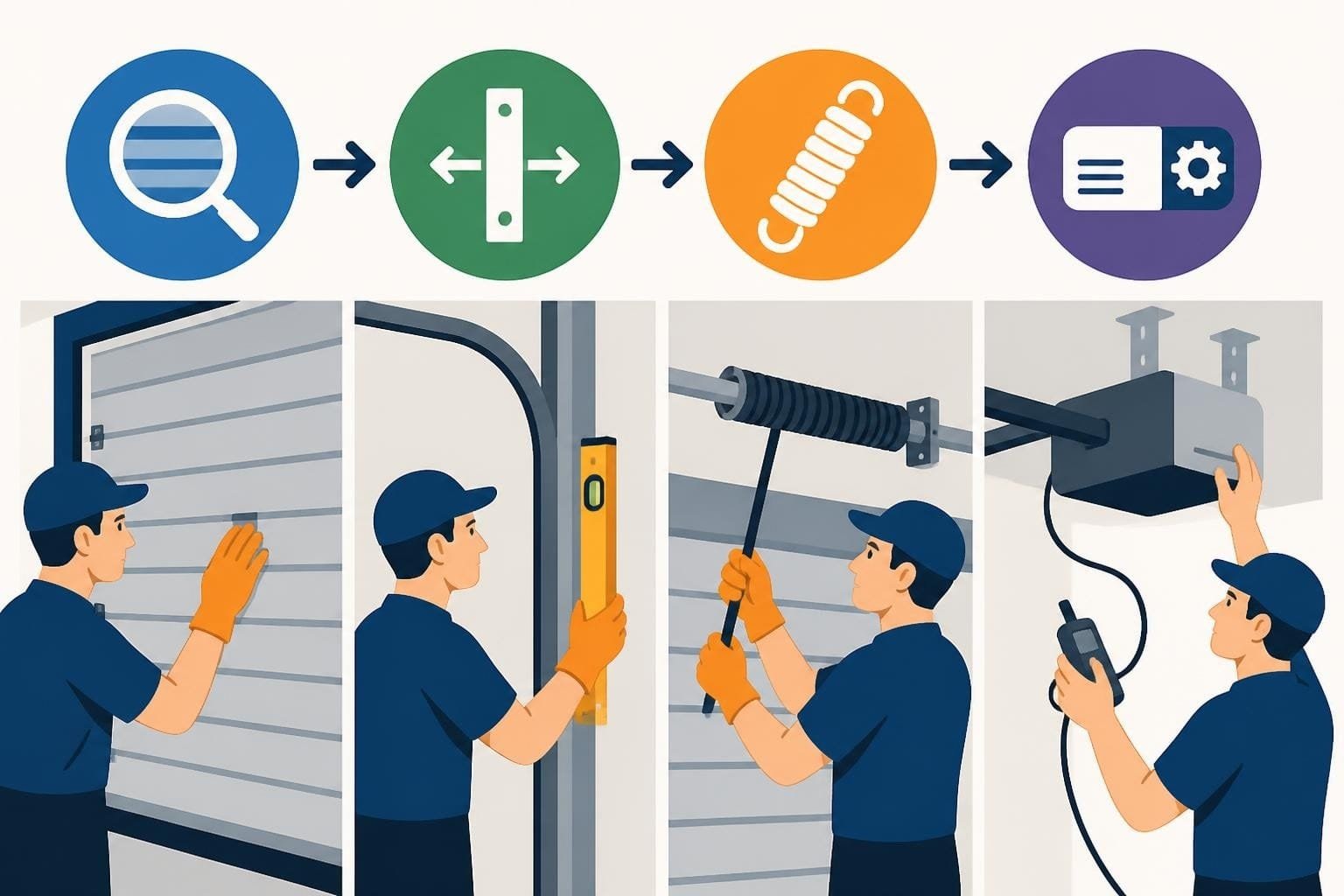
Professional technicians identify issues before they escalate into costly repairs or safety hazards. They measure spring tension, track alignment, and operator force settings against manufacturer specifications and safety standards.
Permit Requirements and Installation Process
Installing or replacing a California garage door typically requires building permits, especially when electrical work or structural modifications are involved. Local building departments verify compliance with state codes, energy standards, and safety requirements through the permitting process.
The Contractors State License Board licensing classifications system ensures that only qualified professionals perform permitted work. Homeowners should verify their contractor holds the appropriate D-28 license before beginning any garage door project.
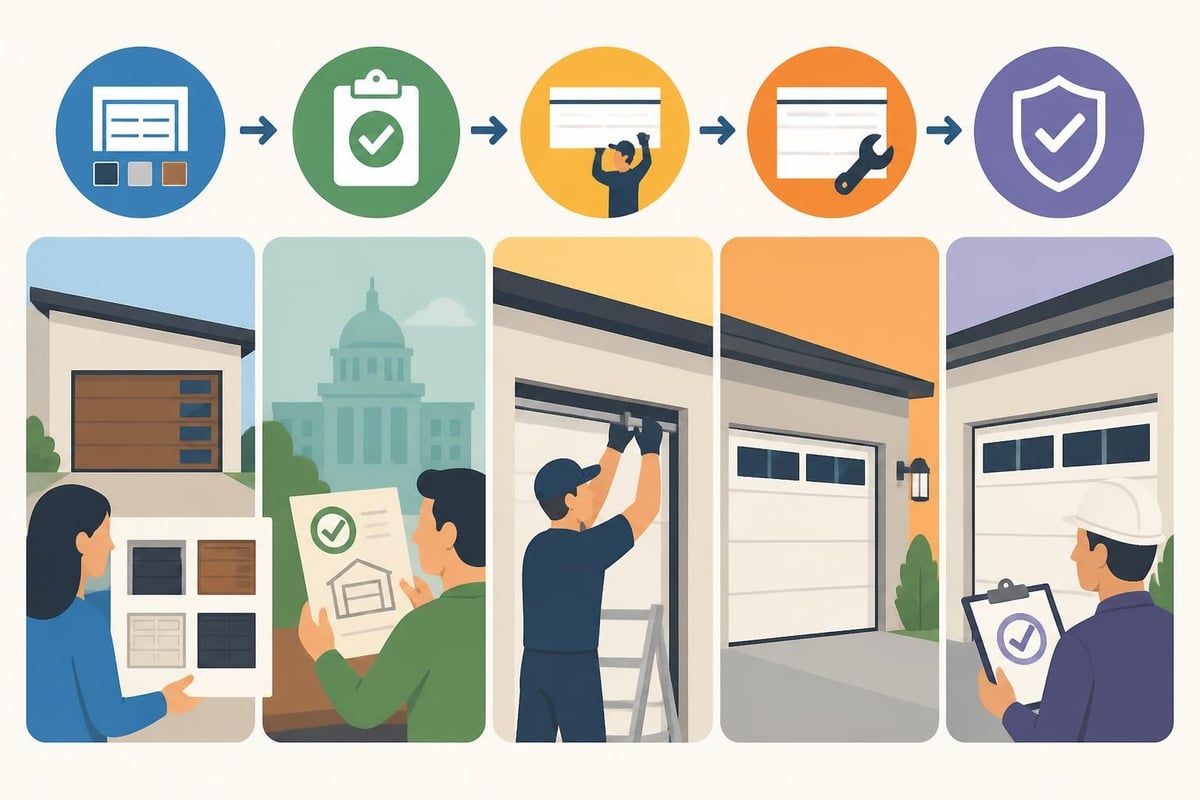
Installation Timeline and Steps
- Design selection and measurements: 1-2 weeks for custom orders
- Permit application and approval: 1-3 weeks depending on jurisdiction
- Site preparation and old door removal: 1 day
- New door installation and operator setup: 1-2 days
- Inspection and final approval: 1 week after installation
- Warranty registration and documentation: Completed at installation
Professional installers coordinate permit applications, schedule inspections, and ensure compliance with local amendments to state codes. They understand regional variations in wind load requirements, fire separation standards, and energy performance thresholds.
Environmental Considerations and Recycling
California's commitment to environmental stewardship extends to garage door disposal and recycling. CalRecycle regulations classify garage doors as construction and demolition waste subject to specific handling and diversion requirements.
Steel garage doors contain recyclable materials including the door panels, tracks, springs, and hardware. Aluminum doors offer even higher recycling value due to material composition. Wood doors can be salvaged for reuse or processed into biomass fuel when beyond repair.
Sustainable Disposal Practices
Responsible contractors separate California garage door components for maximum material recovery:
- Metal components sorted by type (steel, aluminum, zinc-coated) for scrap recycling
- Glass panels removed intact for reuse or glass recycling programs
- Insulation materials evaluated for proper disposal based on composition
- Electronic operators processed through e-waste recycling channels
- Wood elements directed to salvage operations or biomass facilities
Some manufacturers offer take-back programs for old doors when installing new systems. These programs ensure proper recycling while potentially offsetting installation costs through material credits.
Common California Garage Door Problems and Solutions
Climate variations, frequent use, and age contribute to common California garage door issues. Understanding typical problems helps homeowners identify when professional service becomes necessary versus simple DIY solutions.
Springs represent the most common failure point, typically lasting 7-10 years with normal use. Broken springs render doors inoperable and create safety hazards requiring immediate professional attention. Coastal salt air accelerates spring corrosion, reducing lifespan in beach communities.
Track misalignment occurs frequently after minor earthquakes or vehicle impacts. Doors that bind, make scraping noises, or hang unevenly indicate track problems requiring adjustment. Severe misalignment can damage door sections and operator mechanisms if not corrected promptly.
Troubleshooting Guide
Problem: Door won't open or close completely
Possible Causes: Limit switch adjustment needed, track obstruction, broken spring
Solution: Check for visible obstructions, test manual operation, call professional for mechanical issues
Problem: Excessive noise during operation
Possible Causes: Dry rollers, loose hardware, worn hinges
Solution: Lubricate moving parts, tighten bolts and screws, replace worn components
Problem: Door reverses before closing
Possible Causes: Sensor misalignment, debris in track, incorrect force settings
Solution: Clean sensors, remove obstructions, adjust operator force settings
Problem: Remote control not working
Possible Causes: Dead batteries, signal interference, operator malfunction
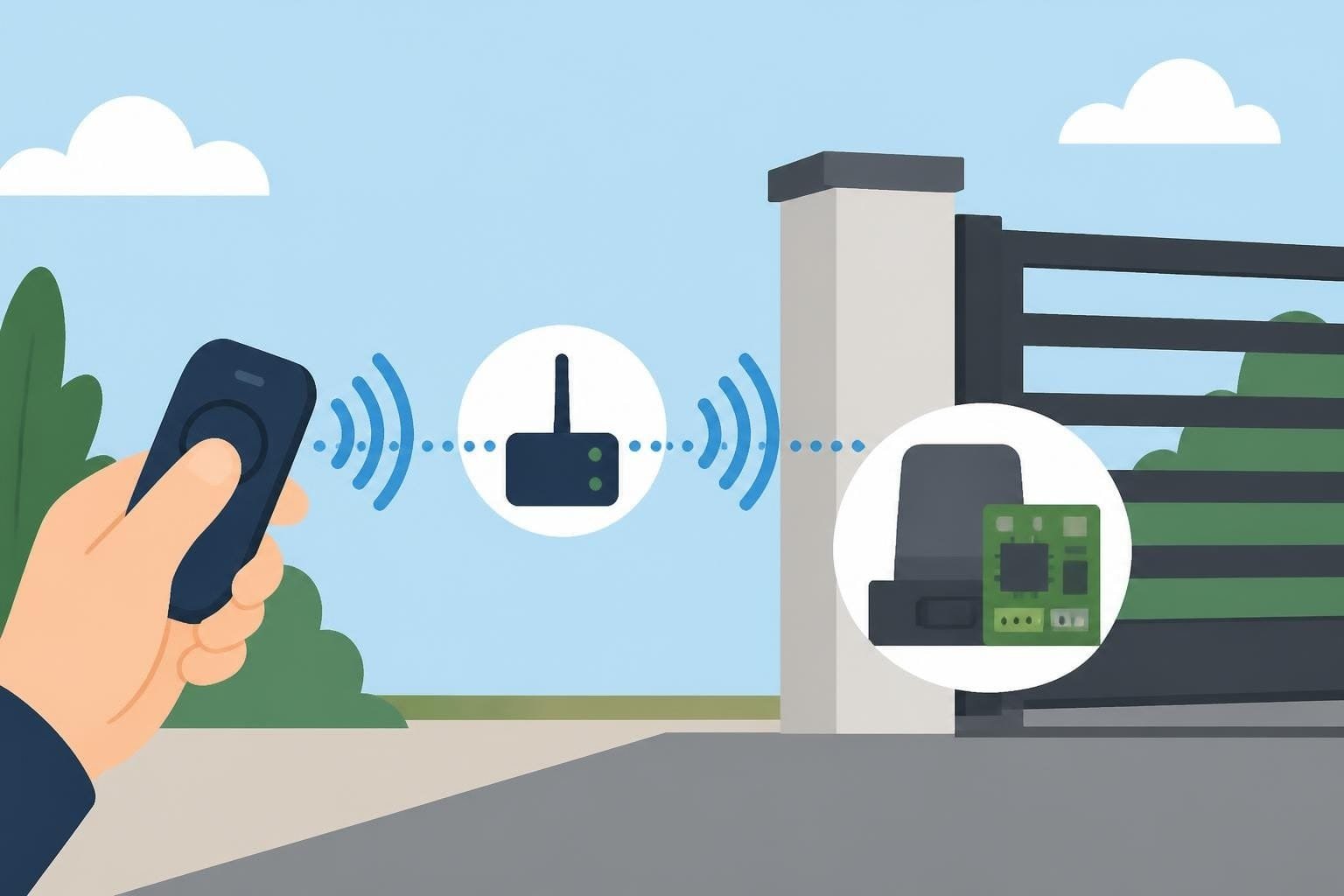
Solution: Replace batteries, reprogram remote, check operator antenna position
When dealing with emergency situations like broken springs or door off-track conditions, professional repair services ensure safe resolution. Attempting DIY repairs on tensioned spring systems creates serious injury risks.
Upgrading Your California Garage Door System
Technology advances offer California garage door owners opportunities to enhance convenience, security, and energy efficiency through system upgrades. Smart home integration, improved insulation, and battery backup systems represent popular enhancement options.
Wi-Fi connected operators allow remote monitoring and control through smartphone apps. Homeowners can verify door status, receive alerts about unusual activity, and grant temporary access to delivery personnel or service providers. Integration with home automation platforms enables scheduling and scene-based operation.
Battery backup systems maintain functionality during power outages, essential for regions experiencing wildfire-related utility shutdowns or earthquake disruptions. Modern systems provide enough power for multiple operation cycles, ensuring access during emergencies.
Cost-Effective Upgrade Options
- Insulation retrofit kits: Improve R-value by 4-8 points for $200-$400
- Smart operator conversion: Add Wi-Fi connectivity to existing systems for $100-$300
- LED lighting upgrades: Reduce energy use and improve visibility for $50-$150
- Decorative hardware: Transform appearance without full replacement for $100-$500
- Window additions: Increase natural light and curb appeal for $300-$800
Professional installation ensures upgrades integrate properly with existing systems while maintaining safety compliance and warranty coverage. Experienced technicians identify compatibility issues before investing in new components.
Understanding the unique requirements and opportunities surrounding California garage door ownership empowers homeowners to make informed decisions about installation, maintenance, and upgrades. From seismic safety to energy efficiency, state-specific regulations protect property owners while establishing industry-leading standards. When you need expert guidance or professional service for your garage door system, Gates & Garage Door Express Inc. brings family-owned dedication and technical expertise to every project throughout Los Angeles, offering same-day emergency response and comprehensive solutions tailored to California's demanding requirements.