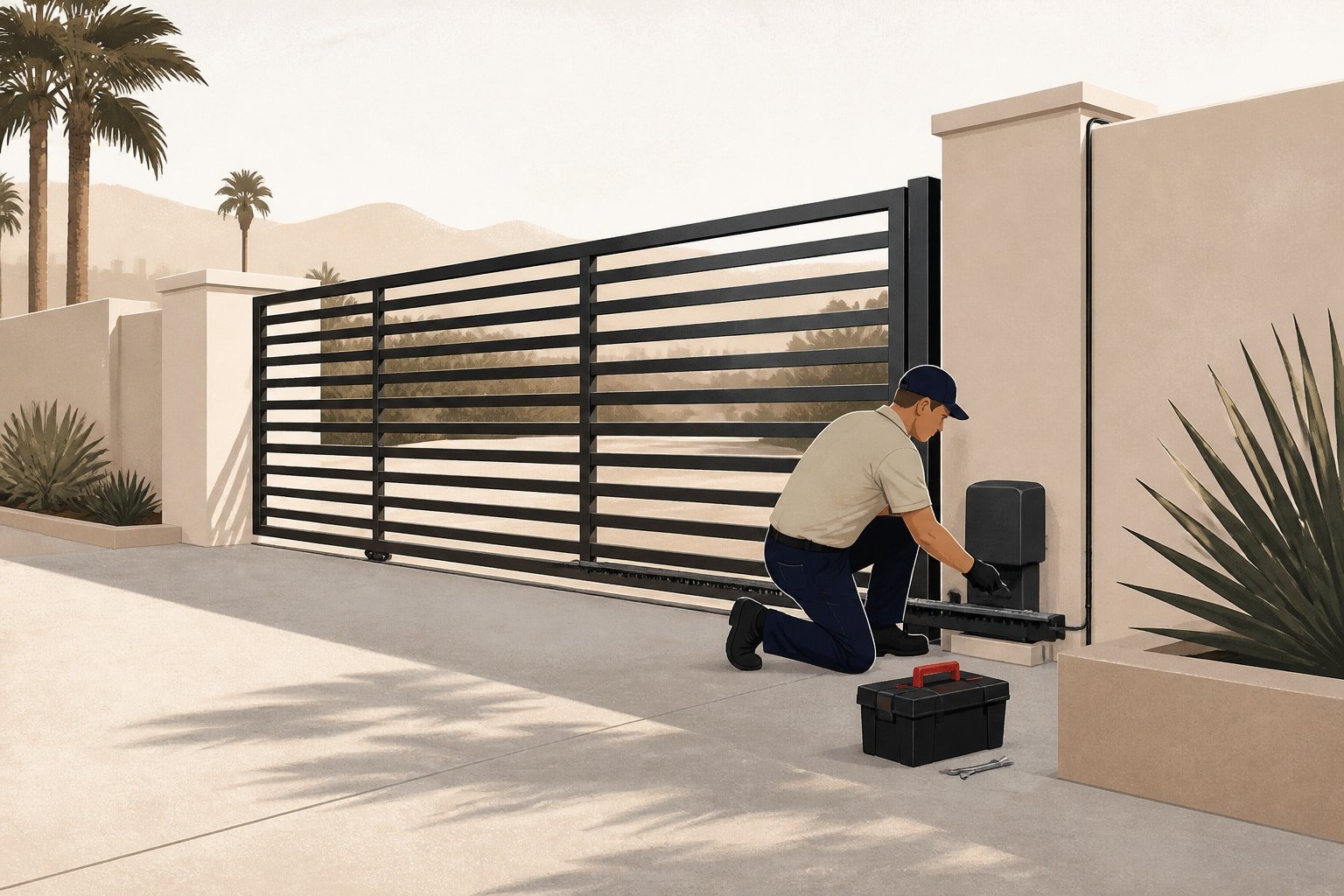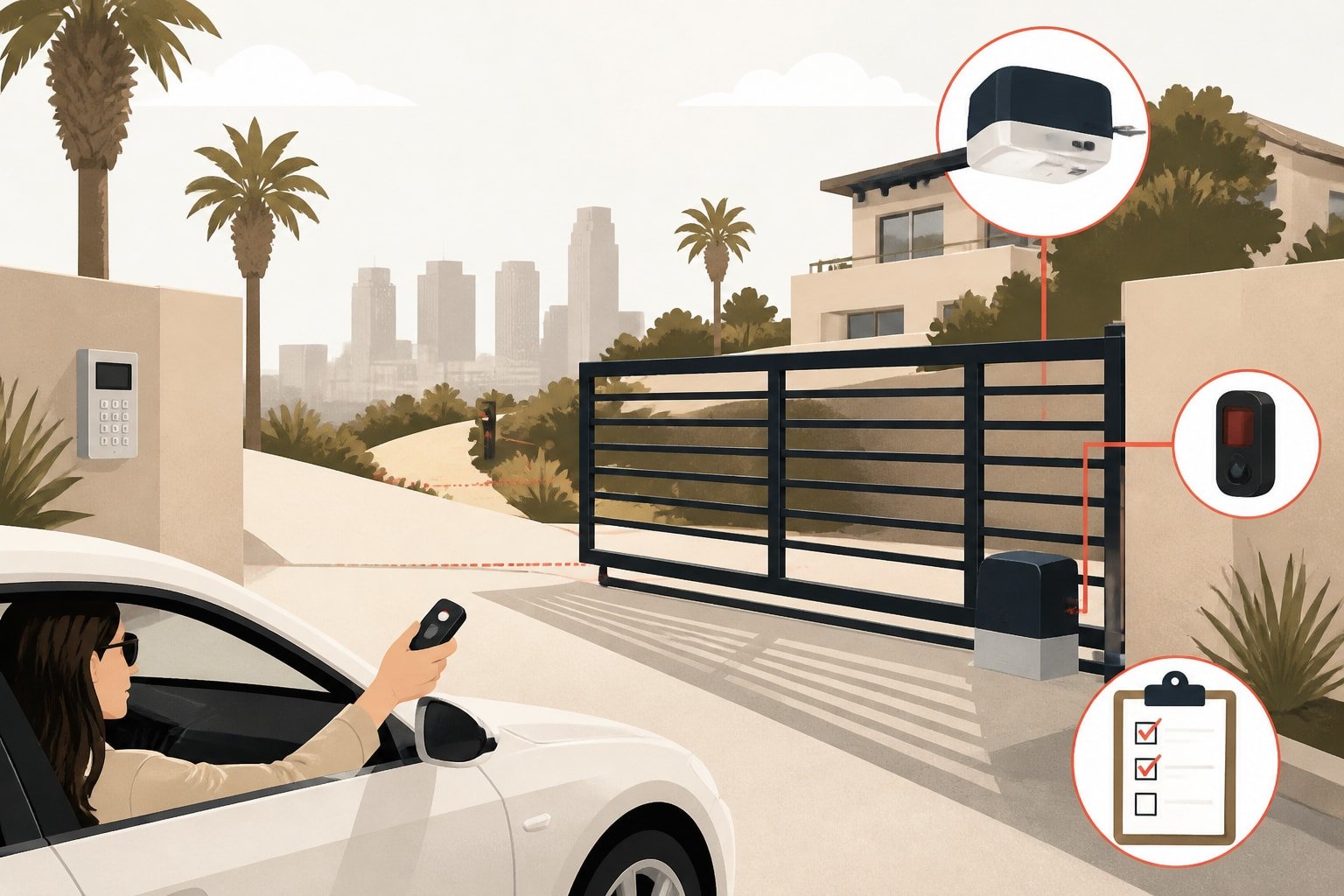
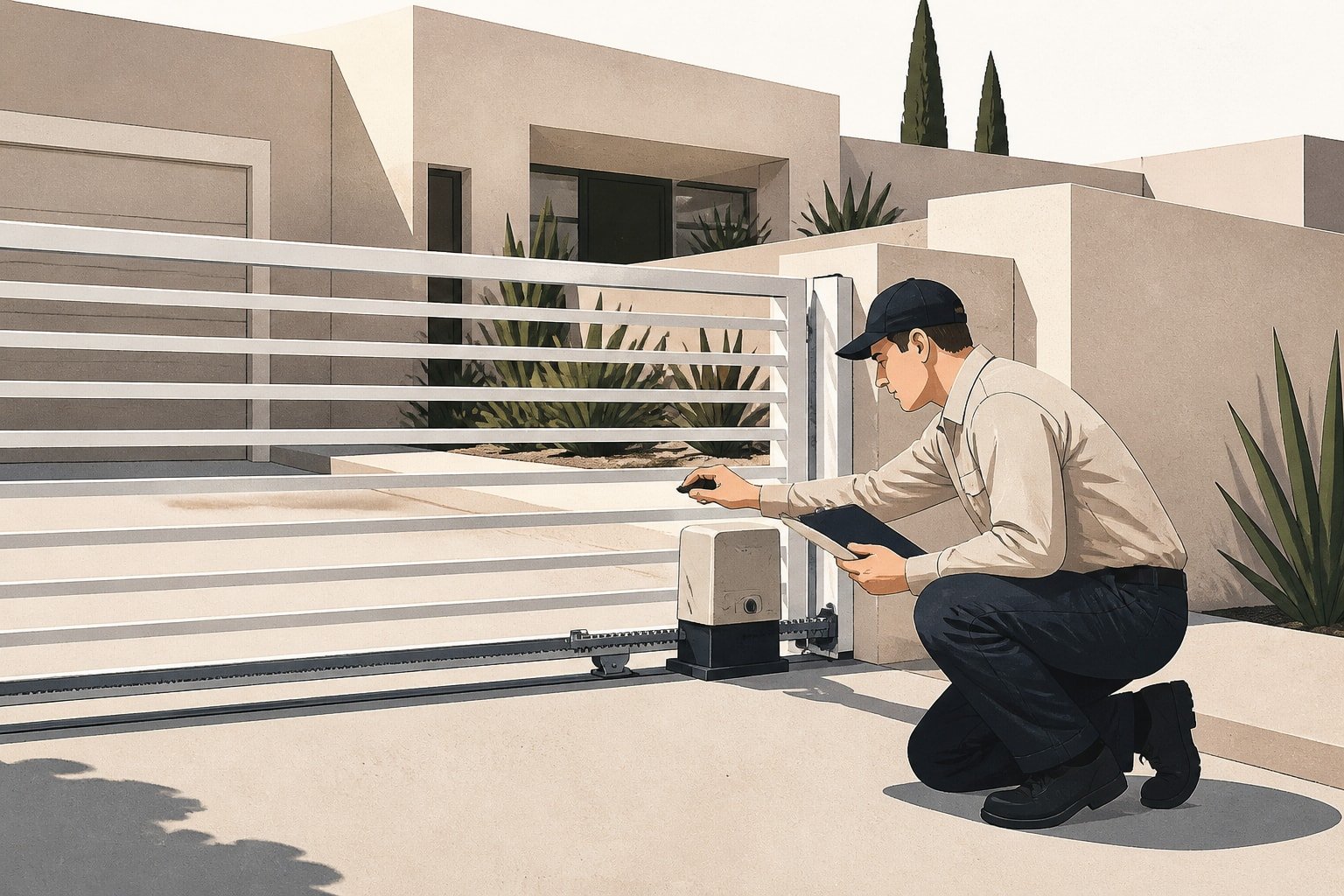

The best automatic gate installer near me is a licensed, insured California contractor with the right gate classification, a track record on your gate type, and the ability to return for service after the job is done. In Los Angeles County, that means verifying a CSLB license, confirming safety compliance, and getting a written scope before any work begins.
This guide explains how to vet an installer, what installation costs, which problems to anticipate, and how to compare operator options so your decision rests on facts rather than a quick quote.
What Should I Look for in an Automatic Gate Installer in Los Angeles?
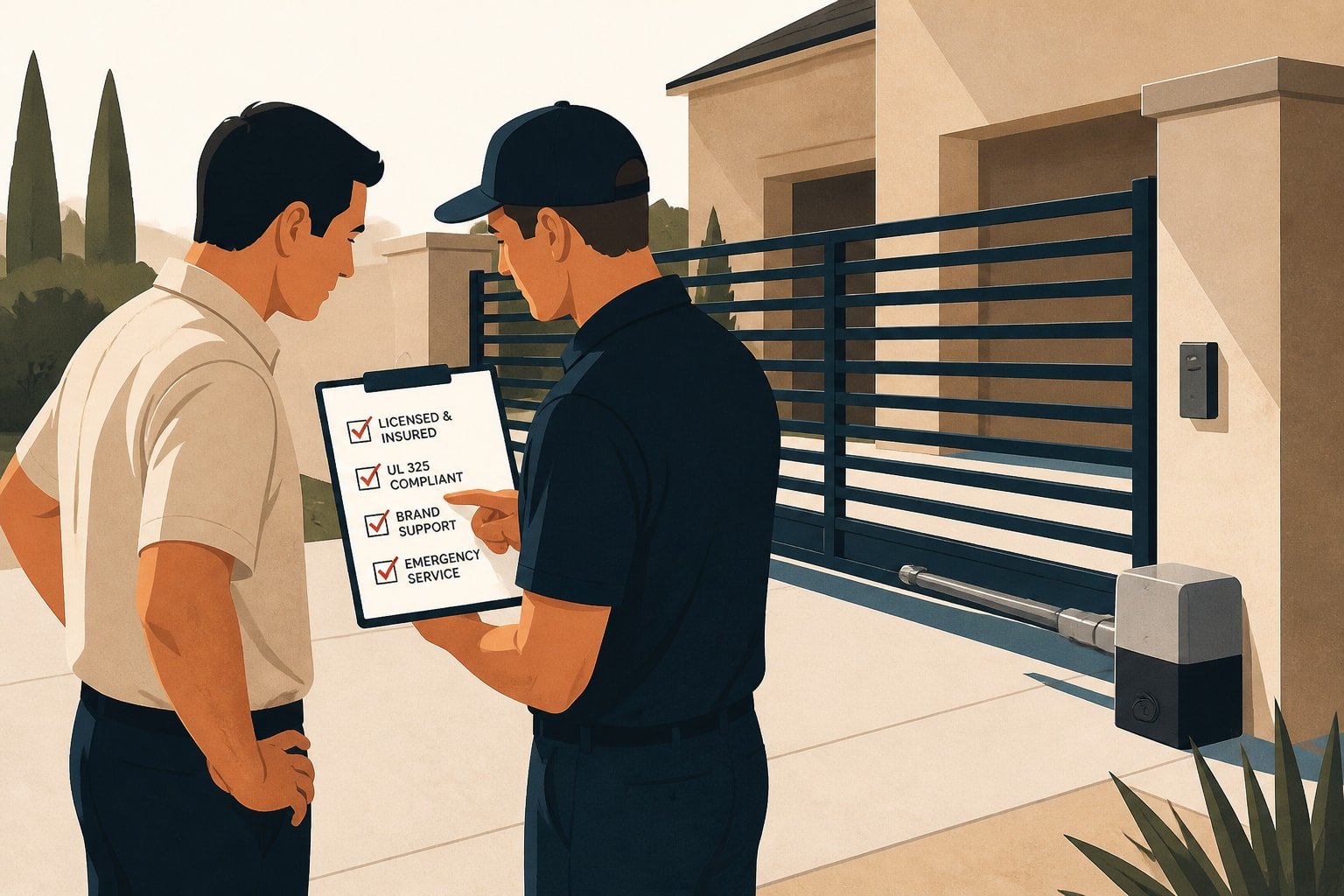
Look for four things first: a valid state license in the correct classification, proof of liability insurance, documented experience with your gate type, and a clear service plan after installation. Everything else is secondary to these.
The California Contractors State License Board lists a D-28 classification covering contractors who install, modify, or repair residential, commercial, or industrial gates and activating devices. A general handyman or a fence builder without that scope is not the same as a gate specialist. Ask for the license number and check it on the CSLB website before signing anything.
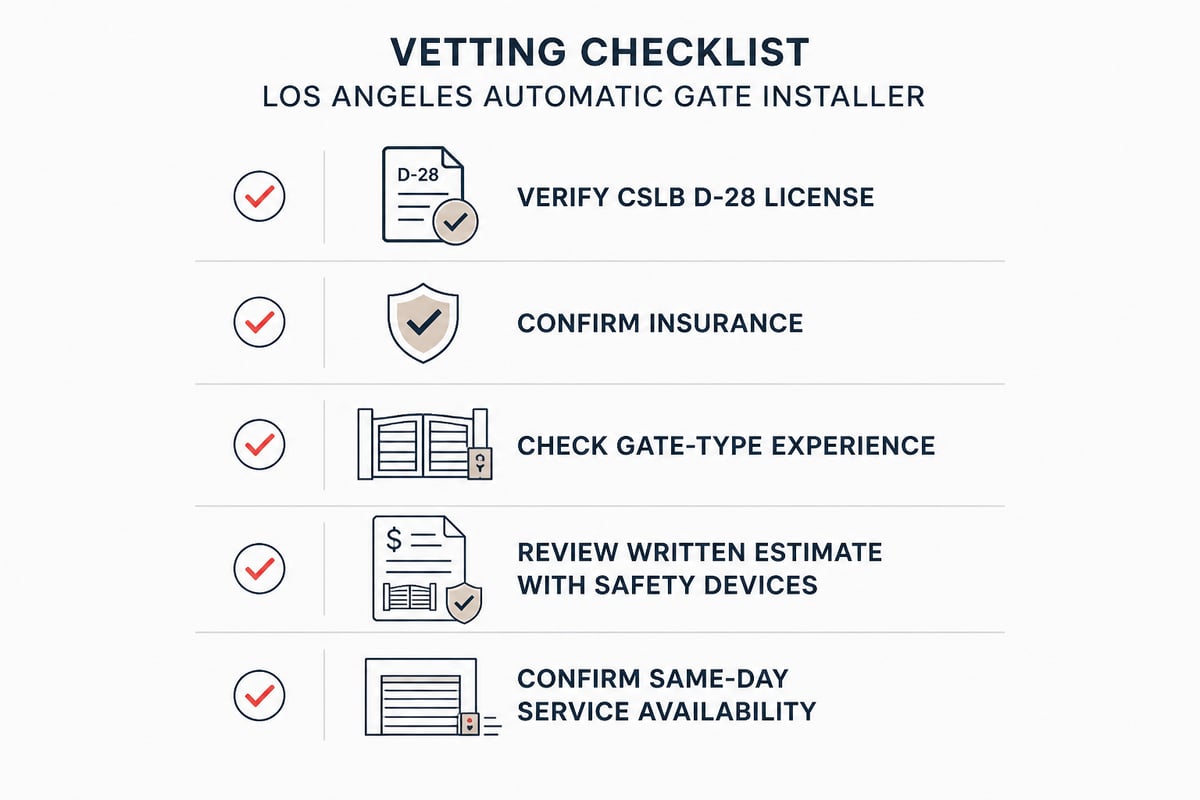
A short vetting checklist keeps the process objective:
- License number that matches the work being proposed
- Active insurance covering property damage and worker injury
- Gate-type experience: swing, slide, cantilever, or vertical lift each behave differently
- Written estimate that lists equipment models, safety devices, and labor
- Local presence, so a technician can return the same day if something fails
Longevity matters because gates are mechanical systems that need adjustment over time. A company that has operated in the same market for decades has a reputation it cannot afford to damage. Gates & Garage Door Express Inc. has served Los Angeles for 21 years as a family-owned business, and it carries CSLB license 1081161.
Why Local Matters More Than a Low Quote
A local installer can reach your property quickly, knows Los Angeles County permit and HOA expectations, and can answer a service call within hours instead of days. That responsiveness often matters more than a small difference in the upfront price.
Automatic gates fail at inconvenient moments. A gate stuck closed blocks a driveway on a workday morning, and a gate stuck open leaves a property exposed overnight. Distance from the installer directly affects how long that situation lasts.
Local knowledge also shapes the build. Coastal neighborhoods expose hardware to salt air and corrosion. Hillside driveways in areas such as the Hollywood Hills or Silver Lake often have steep grades that change which operator and gate style will work. Valley properties see extreme summer heat that stresses motors and batteries. An installer who works in these conditions every week designs for them.
If you are searching for an automatic gate installer near me because a current gate has stopped working, confirm that the company handles both new installations and repairs. Many gate problems trace back to the original installation, and a company that does both can diagnose the root cause instead of treating symptoms.
How Much Does It Cost to Have Electric Gates Installed?
Electric gate installation cost depends on gate type, width, materials, operator size, access controls, and site conditions such as grade, trenching, and electrical distance. Because those variables differ for every property, a firm price requires an on-site visit and a written estimate.
The cost breaks into several parts:
- The gate itself, which varies widely by material (steel, wrought iron, aluminum, wood) and design
- The operator, sized to the weight and width of the gate and rated for the expected number of daily cycles
- Power and wiring, including trenching, conduit, and a dedicated circuit or solar option
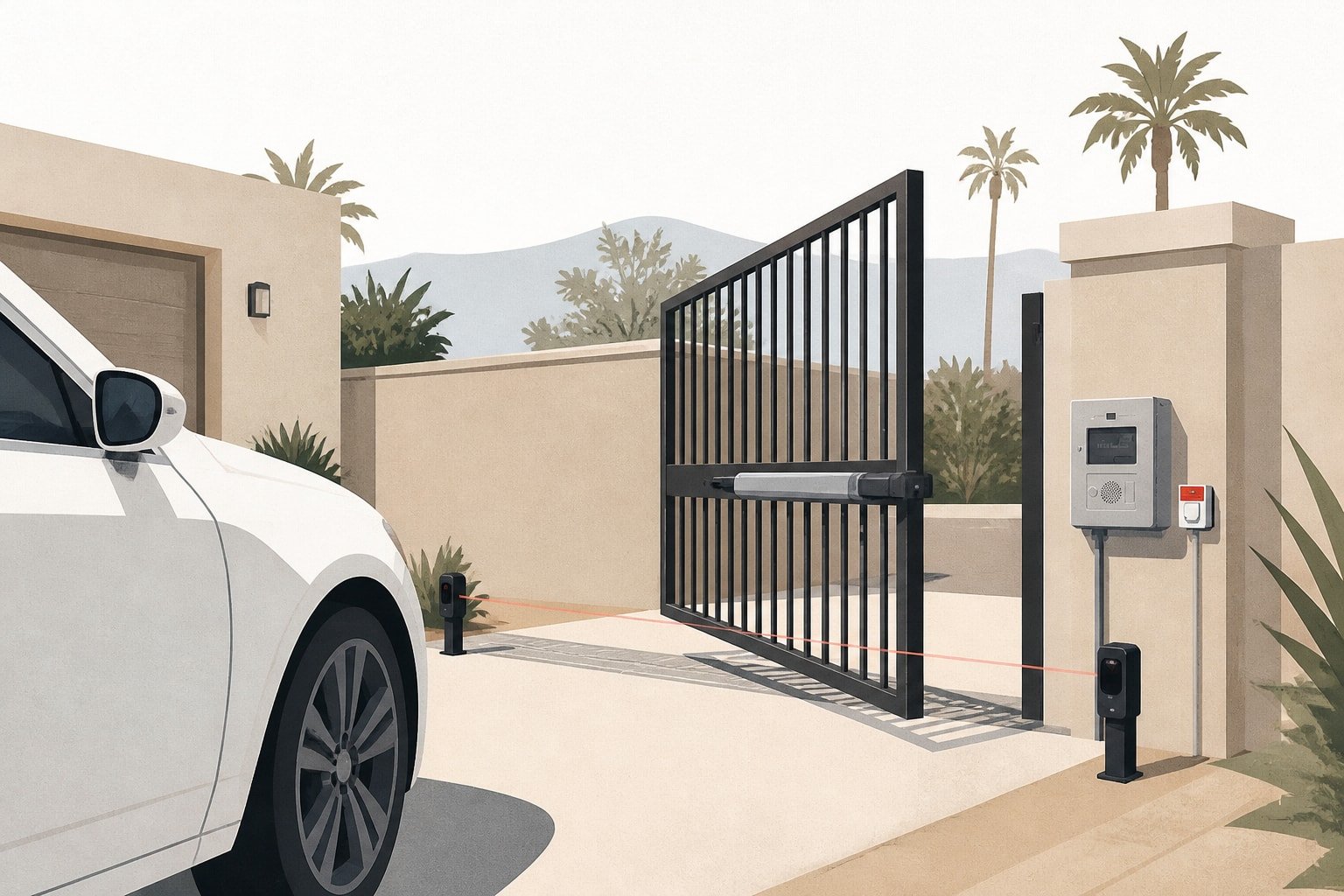
- Safety devices, such as photo eyes, edge sensors, and loop detectors
- Access controls, from remotes and keypads to intercoms and smartphone control
- Permits and inspection, depending on the city or county
Operator cost alone changes with duty rating. A residential gate used a few times a day needs a different motor than a commercial entrance cycling hundreds of times. Underbuying the operator is a common reason gates wear out early. Gates & Garage Door Express Inc. publishes background on automatic gate price factors, which is useful reading before you request estimates.
When you compare bids, make sure each one lists the same scope. A lower quote that omits safety sensors or uses a lighter operator is not actually lower.
What Does It Cost to Automate a Gate You Already Own?
Automating an existing gate usually costs less than building a new one, because you only pay for the operator, wiring, safety devices, and controls. The catch is that the gate must be structurally sound, properly hung, and able to move freely by hand.
Before any operator goes on, a technician should check:
- Whether hinges, posts, and rollers are straight and in good condition
- Whether the gate swings or slides without binding
- Whether the post footings can handle the added stress of a motor
- Whether the gate's weight and size fit the operator's rating
If the gate is heavy, warped, or poorly balanced, the operator will strain and fail early. In that case, repairing or rebuilding the gate first is the better investment. A gate contractor who inspects the existing structure honestly will tell you when automation is a good fit and when it is not.
Which Gate Operator Is Better, Mighty Mule or LiftMaster?
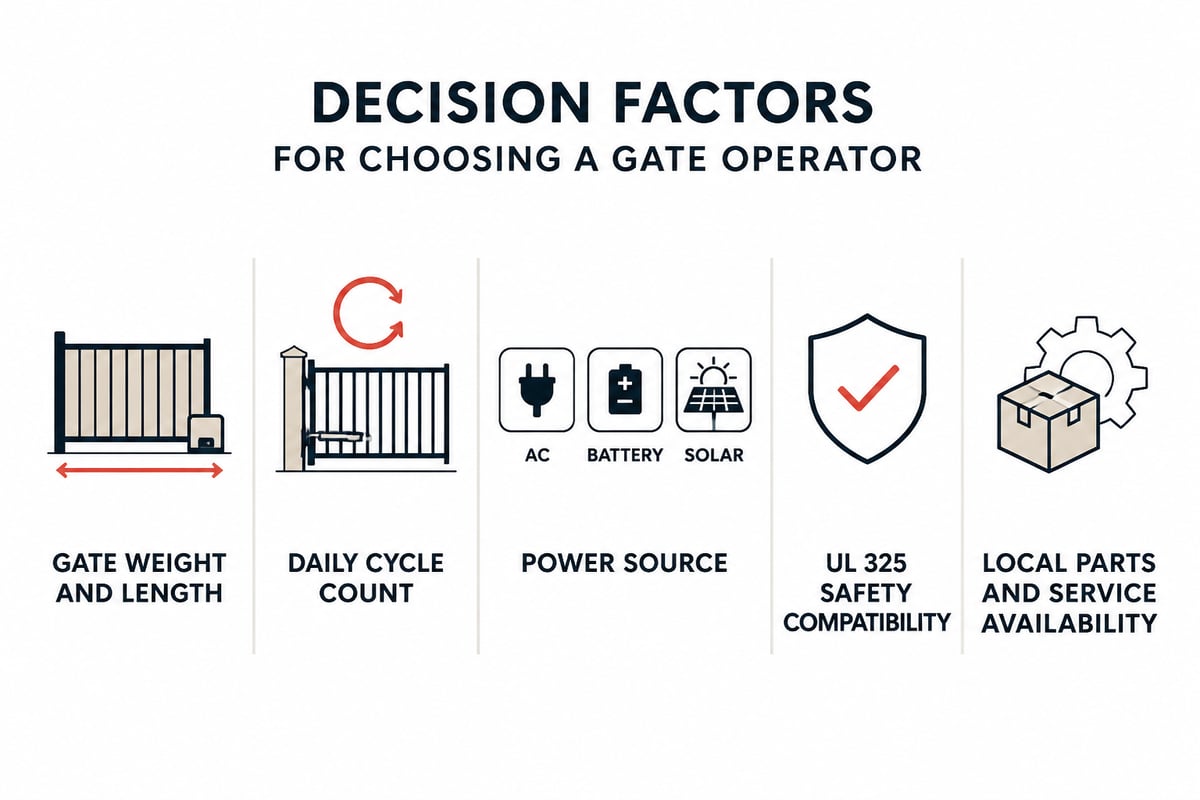
Neither is better in every case. Both brands make operators for different gate weights and usage levels, so the right choice depends on gate weight, length, and daily cycle count.
Use these criteria rather than brand loyalty:
| Factor | What to check |
|---|---|
| Gate weight and length | Match the operator's rated capacity with a safety margin |
| Daily usage | Higher traffic needs a higher duty cycle rating |
| Power source | Standard AC, battery backup, or solar for remote driveways |
| Safety compliance | Support for UL 325 entrapment protection devices |
| Serviceability | Local availability of parts and trained technicians |
Serviceability deserves more weight than most buyers give it. An operator is only as reliable as the technician who maintains it. If your installer cannot support a brand locally, repairs become slow and expensive. For a closer look at one common option, see this overview of the LiftMaster automatic gate opener.
What Safety and Code Standards Should an Installer Follow?
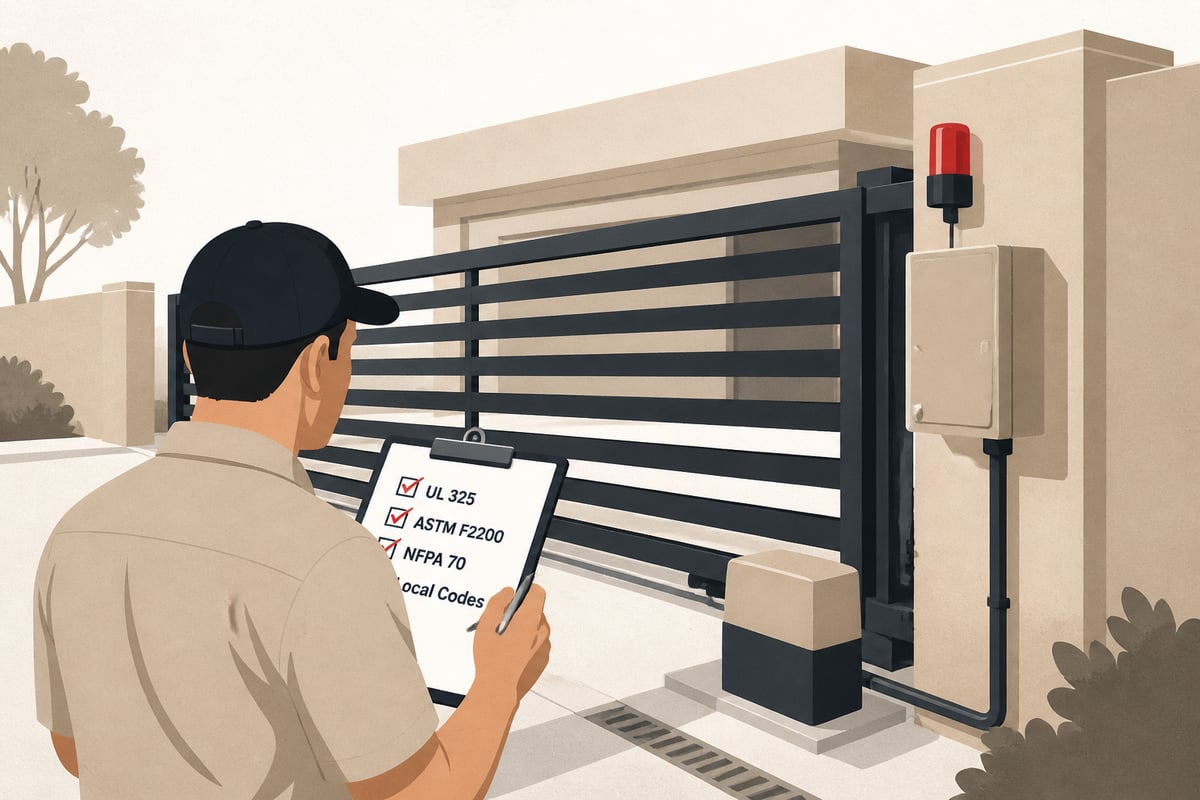
A competent installer builds to recognized safety standards, chiefly ASTM F2200 for gate construction and UL 325 for operator safety. These standards exist because automated gates can injure people and damage vehicles when built or protected poorly.
ASTM F2200 covers automated vehicular horizontal slide, horizontal swing, vertical lift, vertical pivot, and overhead pivot gates. The same standard states that automated vehicular gates that do not comply with it are subject to independent evaluation for compliance with UL 325. In practical terms, UL 325 requires entrapment protection, such as photo eyes and edge sensors, so a gate reverses when it meets an obstruction.
Gate safety standards also address construction details, such as fall-over protection and positive stops, which are easy to miss when a gate looks fine on the surface.
Ask any installer to confirm in writing which safety devices come with the job. For commercial properties and multi-unit buildings, this is especially important, since public access and liability exposure are higher. Property managers weighing commercial automatic gates should also confirm the installer can document compliance for insurers.
What Are the Common Problems With Outdoor Gates?
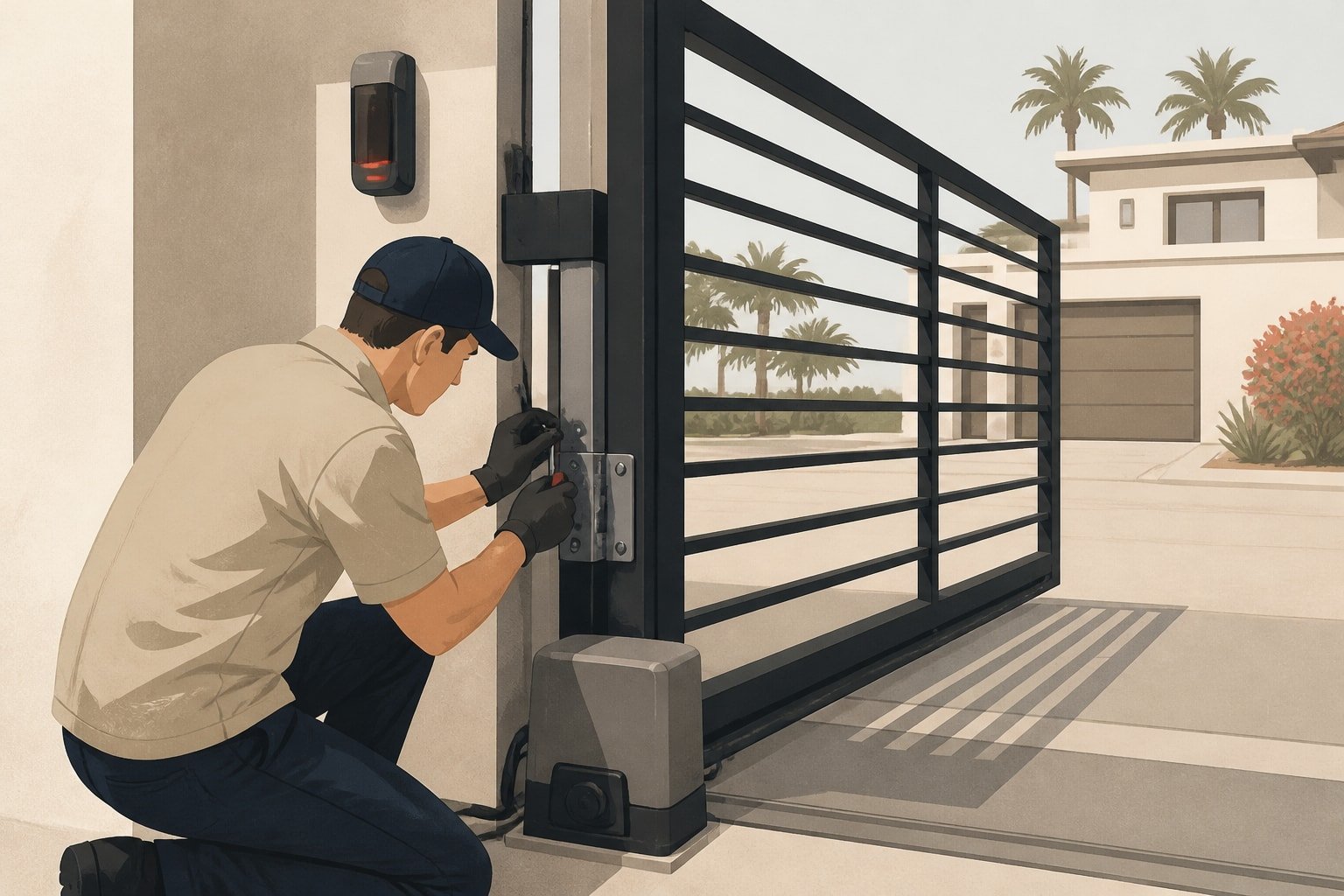
The most common outdoor gate problems are worn or dead batteries, misaligned sensors, damaged remotes, failing motors, sagging hinges, and track obstructions. Most trace back to wear, weather, or skipped maintenance rather than sudden defects.
Typical symptoms and likely causes:
- Gate will not open or close: power loss, tripped breaker, failed control board, or blocked safety sensor
- Gate stops partway or reverses: misaligned photo eyes, debris in the track, or incorrect force settings
- Grinding or loud noise: dry rollers, worn gears, or a damaged chain or arm
- Remote works intermittently: weak battery, interference, or a failing receiver
- Gate sags or drags: loosened hinges, shifted posts, or excess weight on a swing arm
Los Angeles conditions add their own wear. Heat degrades batteries and plastics, coastal air corrodes fasteners, and dust clogs tracks. Routine service catches most of these early, which is why regular automatic gate maintenance is cheaper than emergency repair. If your system keeps failing despite repairs, signs your automatic gate system may need replacement can help you judge when replacement makes more sense.
Questions to Ask Before You Hire an Installer
Ask questions that reveal how the installer works, not just what they charge. The answers show whether you are dealing with a specialist or a salesperson.
- What is your CSLB license number and classification?
- Can you provide proof of liability and workers' compensation insurance?
- Which operator will you recommend for my gate, and why?
- What safety devices are included, and do they meet UL 325?
- Who performs the installation: your employees or subcontractors?
- What warranty covers parts and labor, and what does it exclude?
- How quickly can you respond if the gate fails after installation?
- Do you offer maintenance plans?
Pay attention to specifics. A strong installer names equipment models, explains tradeoffs, and puts the scope in writing. Vague answers or pressure to sign the same day are reasons to keep looking.
Also ask about post-installation support. Gate technology, from smart controls to remote access, keeps advancing, and an installer who services what they sell can update your system over time. Properties interested in app control can review how smart automatic gates improve property security.
Why Repair Capability Should Influence Your Installer Choice
Choose an installer who also repairs, because the same technician who understands how your gate was built can fix it fastest when something goes wrong. Installation and service are two parts of one relationship.
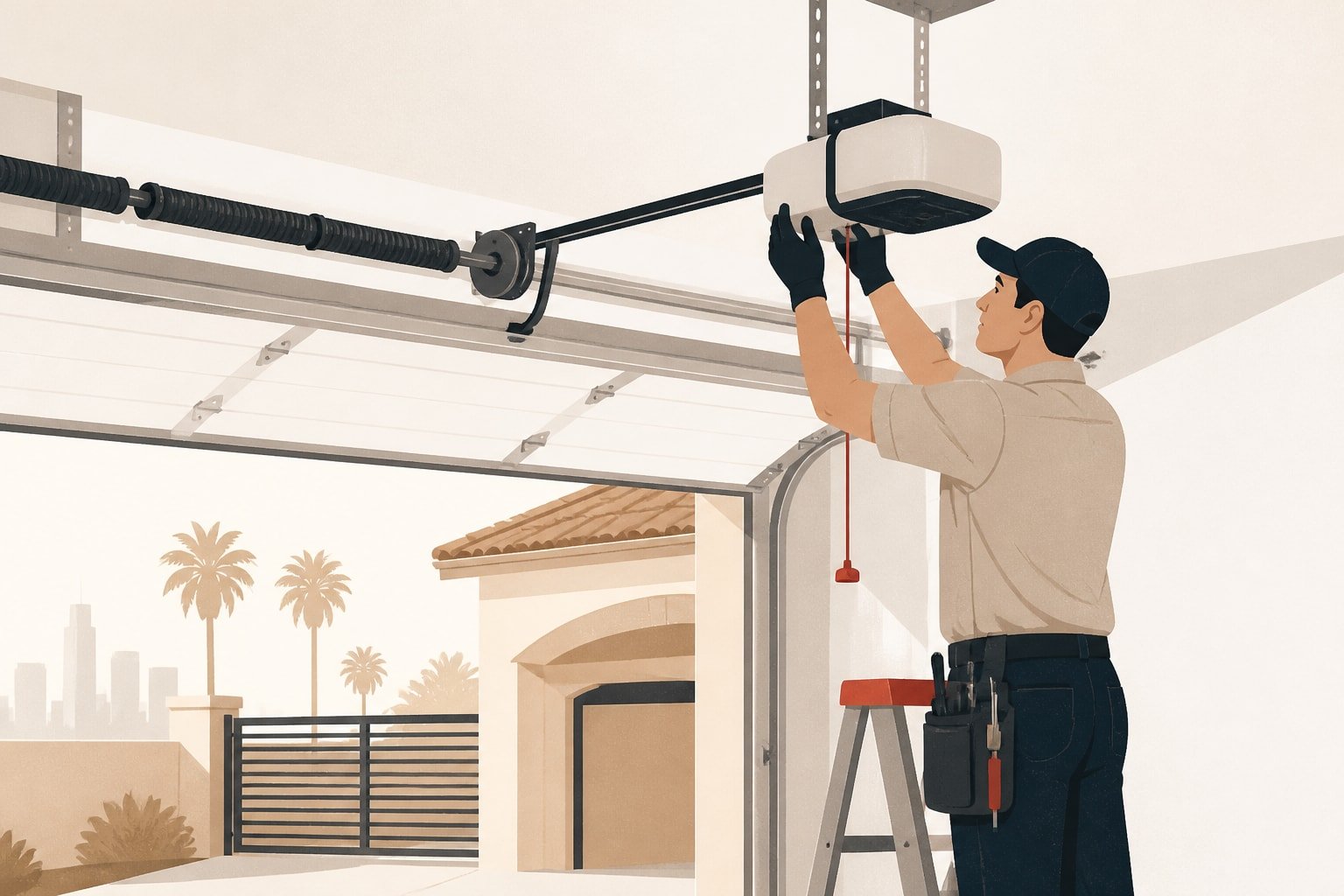
Gates & Garage Door Express Inc. offers electric gate repair alongside installation, with same-day service. Ask the company directly about its emergency response, brand coverage, and any discounts or satisfaction guarantees before you commit.
For homeowners, that continuity means one call covers a stuck gate, a failed remote, or a garage door that stopped responding. For property managers, it means a single vendor accountable across several entrances. When comparing providers, weigh how each handles the problem you will have in year five, not only the day of installation.
FAQ
How long does automatic gate installation take?
A straightforward residential operator install on an existing gate can often be completed in a day, while a new gate with trenching, wiring, and concrete work takes longer. Your installer should give a timeline in the written estimate after inspecting the site.
Do I need a permit for an automatic gate in Los Angeles County?
Requirements vary by city, gate height, and location, so confirm with your installer and local building department before work starts. A licensed contractor familiar with the area can usually tell you what applies to your property.
Can an automatic gate work during a power outage?
Yes, if the system includes battery backup or a solar option, and most operators also allow manual release. Ask your installer which backup method fits your driveway and how long it will run.
Start by writing down your gate's type, approximate width, and any current symptoms, then check any installer's CSLB license before requesting a quote. If you want a licensed local team to inspect your gate and give you a clear written scope, Gates & Garage Door Express Inc. can schedule a visit when you call (818) 873-7687.