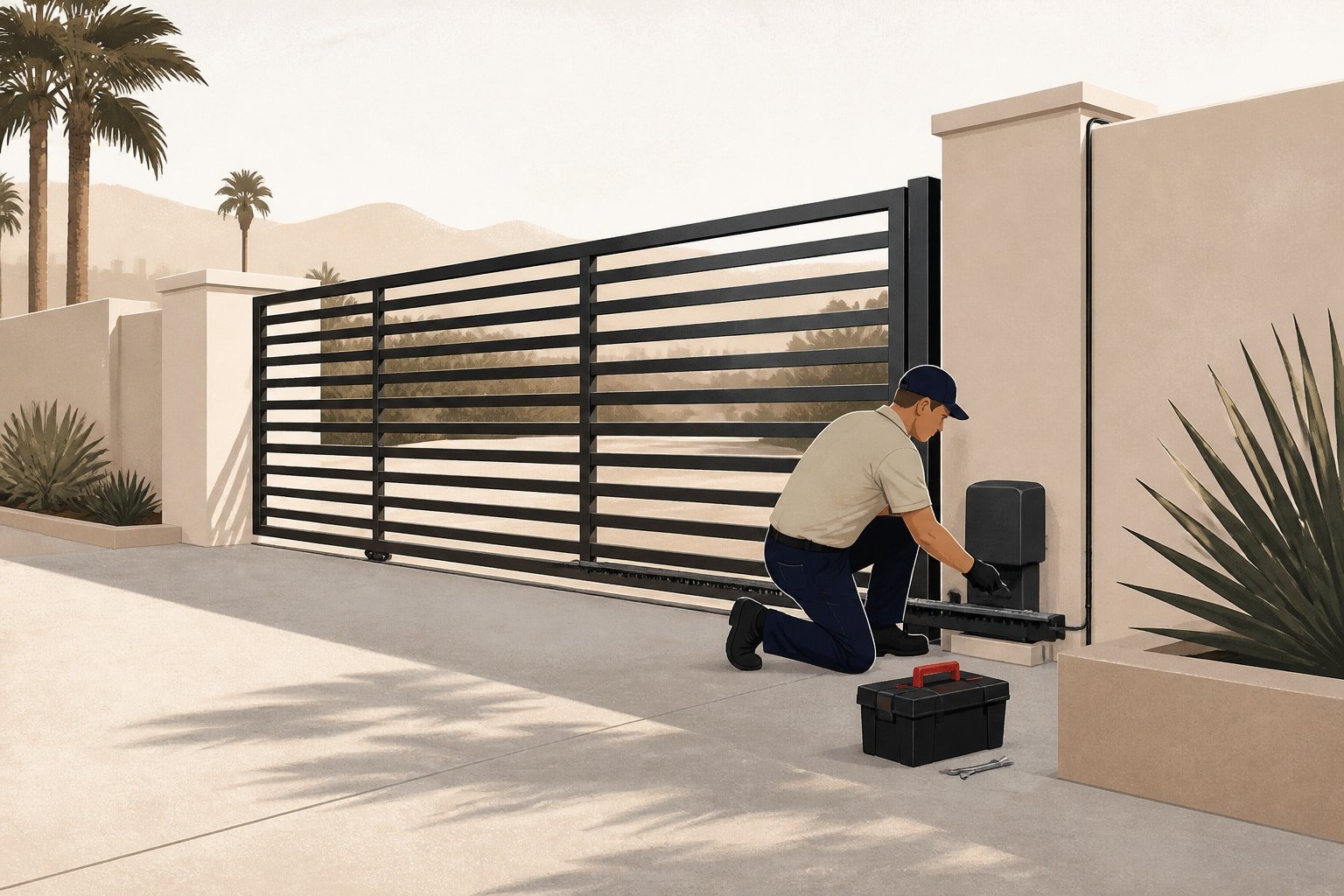

An automatic gate is a gate that opens and closes by motorized operator, triggered by a remote, keypad, intercom, sensor or smartphone, and in Los Angeles County most installations cost from a few thousand dollars for a basic swing opener on an existing gate to well above that for custom sliding or commercial systems. The right choice depends on your gate type, property layout, traffic volume and local permit rules. This guide covers how these systems work, what drives cost, which code and safety requirements apply, and when a failing system calls for repair or replacement.
How an Automatic Gate System Works
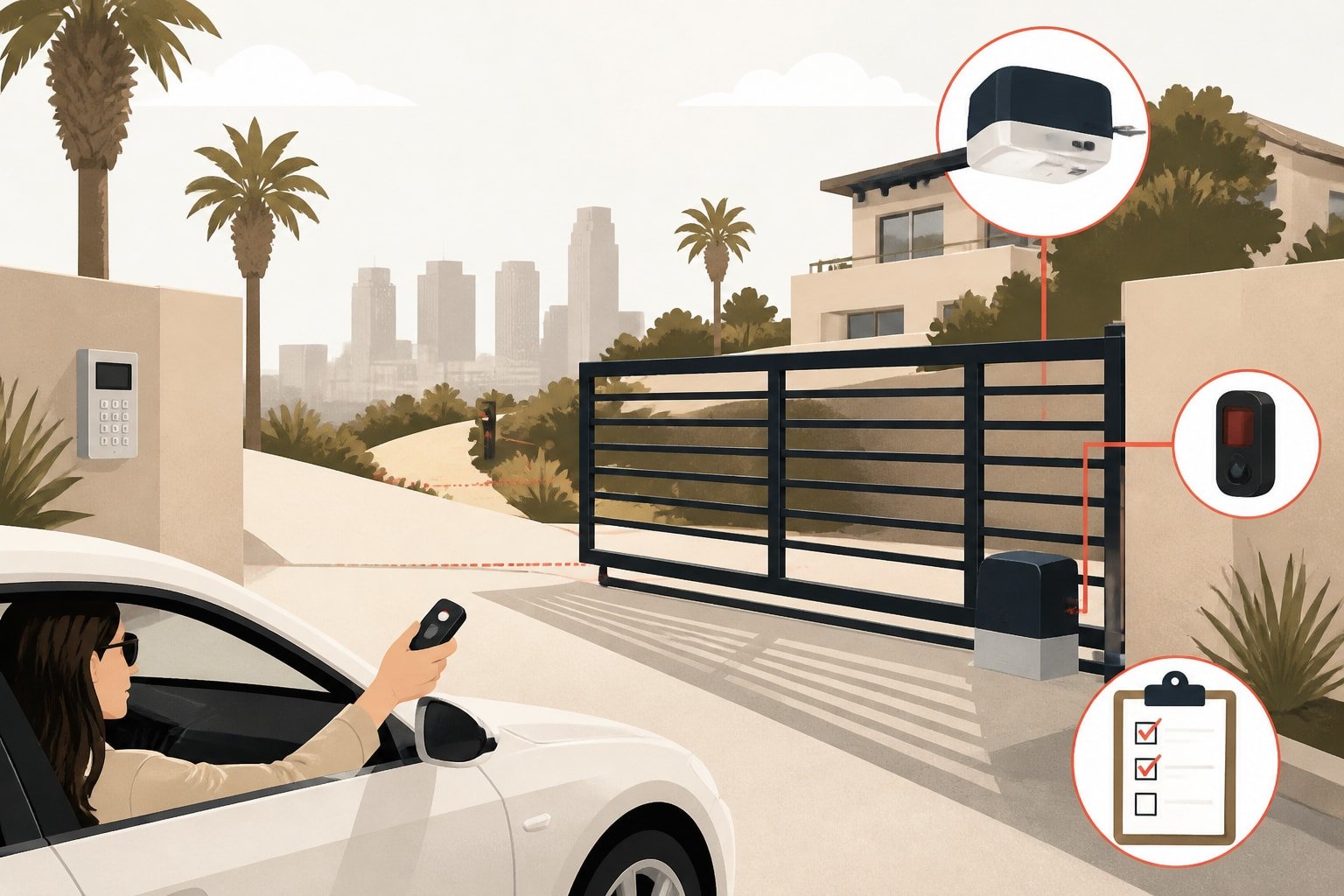
An automatic gate system combines a motorized operator, a control board, access devices and safety sensors that together move the gate on command.
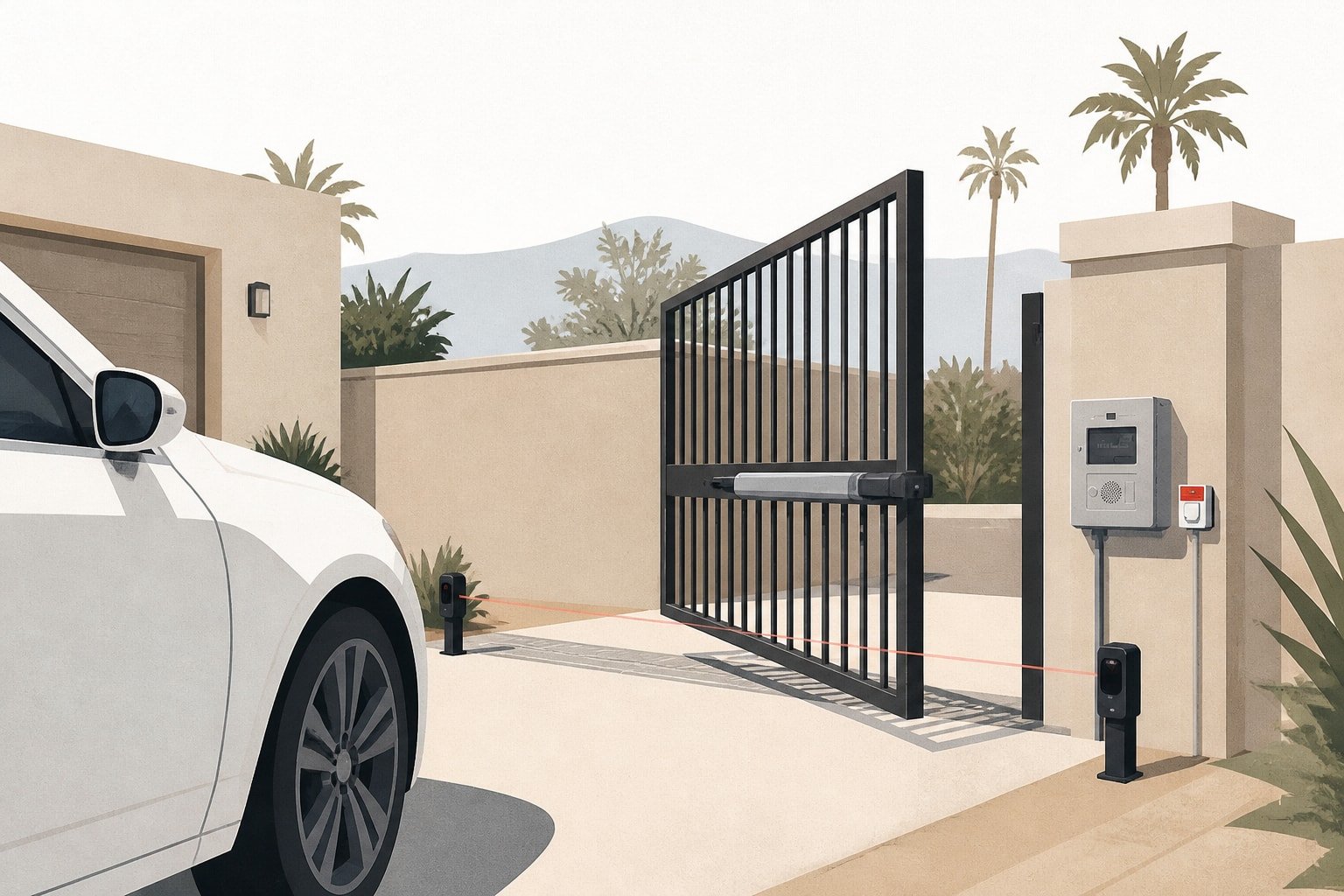
The operator is the motor and drive mechanism attached to the gate. The control board receives signals from a remote, keypad, intercom, loop detector or app, then tells the operator to open, pause and close. Safety devices such as photoelectric sensors and sensing edges stop or reverse the gate when something is in its path. A battery backup or solar panel keeps the gate usable during power interruptions, which matter in a region that experiences planned outages and wildfire-related shutoffs.
Most properties use one of two access patterns:
- Proximity or remote access: Transmitters, key fobs or vehicle-mounted openers trigger the gate as you approach. Reviewing options for an automatic gate opener remote helps you match the transmitter to your control board.
- Credentialed access: Keypads, intercoms, card readers or smart-home integration let you admit guests, deliveries and staff without handing out hardware.
Types of Automatic Gate Openers
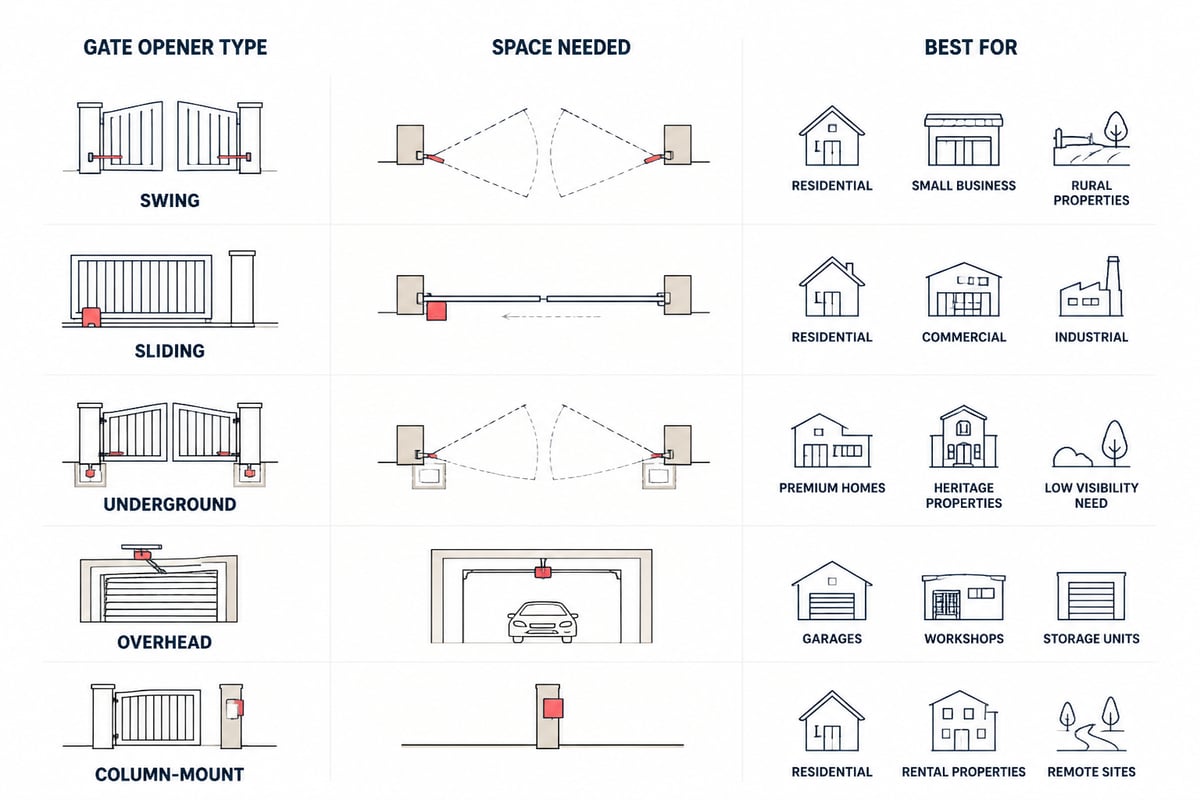
The main opener types are swing, sliding, overhead, underground and chain or column-mount designs, and your gate's movement and available space decide which one fits.
| Opener type | Typical use | Key consideration |
|---|---|---|
| Swing (articulating or linear arm) | Residential driveways with space inside or outside the gate arc | Needs clear swing room and sturdy posts |
| Sliding (roller or chain drive) | Tight frontages, wide openings, commercial lots | Needs a straight run of fence alongside the opening |
| Underground swing | Decorative gates where visible hardware is unwanted | More excavation and drainage planning |
| Overhead or vertical lift | Industrial or secured lots | Requires structural support above the opening |
| Column-mount | Gates hung between masonry columns | Column strength and hinge alignment matter |
A swing gate suits many hillside and suburban Los Angeles homes with a level apron. A sliding gate often works better where the driveway is steep, short or close to the sidewalk. For details on sliding designs, see these residential sliding gates. If you are weighing terminology, the difference between electric and automatic gates is explained in a separate article, and a quick look at automatic gate opening systems shows how the components pair up.
What Does an Automatic Gate Cost?
The average cost of an automatic gate depends on whether you are buying a full new gate or adding an opener to an existing one, and totals vary widely by gate size, material, opener type and access features.
Rather than a single number, think in three layers:
- The gate itself. A new custom steel, wrought iron or wood gate is often the largest line item, and materials, width and decorative detail drive it.
- The operator and controls. Opener type, motor strength, number of leaves, keypads, intercoms, loop detectors and battery backup each add cost.
- Installation and site work. Electrical trenching, concrete footings, post reinforcement, permit fees and inspections vary with your lot.
Hypothetical example: a homeowner with a sturdy existing single swing gate adds only an operator, a keypad and safety sensors, which keeps the project in the lower range. A neighbor installing a new double-leaf wrought iron gate with an intercom, new posts and trenched power will land well above that. Pricing depends on your specific site, so this overview of automatic gate price factors is a better starting point than a generic average, and a site visit gives a firm quote.
How Much Does It Cost to Automate an Existing Gate?
Automating an existing gate is usually the most economical route, because you pay for the operator, controls and installation but not for a new gate.
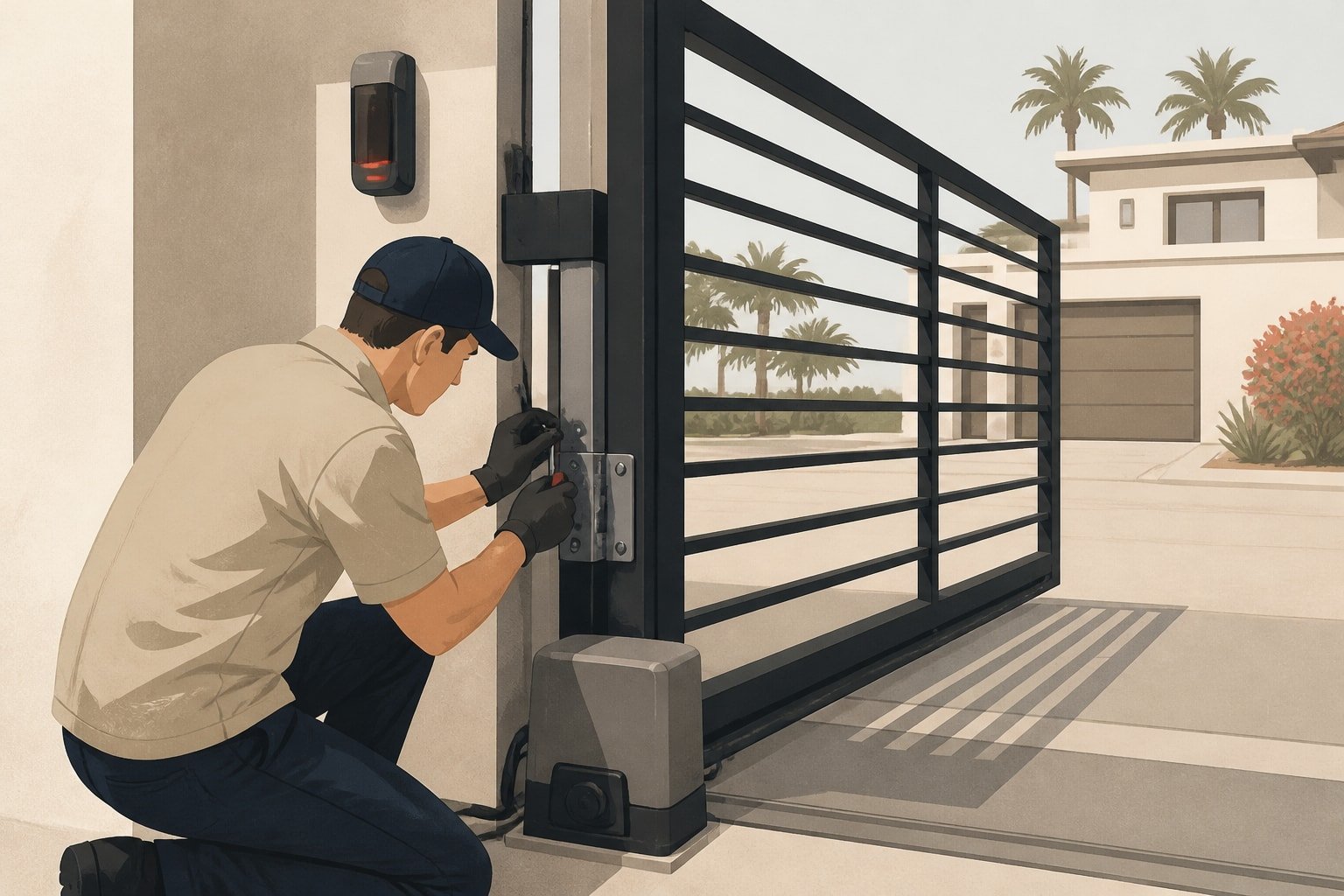
The key question is whether your current gate can handle motorized operation. A gate that sags, drags, binds on its hinges or has rusted posts will strain any operator and wear it out early. Before buying hardware, a technician should check:
- Hinge condition and post stability
- Gate weight and balance against operator ratings
- Whether the gate swings or slides freely by hand
- Available power or the feasibility of solar
- Clearance for safety sensors and wiring
If the gate needs straightening, welding or new hinges, add that to your budget. Bringing in a pro for automatic gate opener installation rather than a kit-only approach protects you from mismatched hardware, which is a frequent cause of early failure.
Permits and Local Rules in Los Angeles County
In unincorporated Los Angeles County, a building permit is required for a fence or similar structure over 6 feet high, measured from the lowest adjacent grade, and an electrical permit is also required to power the gate motor, according to Los Angeles County Building and Safety.
The same guidance notes that the Department of Regional Planning must review a driveway gate for front-yard setback and height compliance, even when a building permit is not otherwise required. That means a gate under 6 feet can still trigger a review.
Incorporated cities within the county, including Los Angeles, Pasadena and others, run their own permitting departments with their own rules. Before you sign a contract, confirm which jurisdiction governs your address and ask your installer how permits will be handled. Homeowners associations may add architectural review on top of city or county requirements.
Safety Standards That Apply to Every Installation
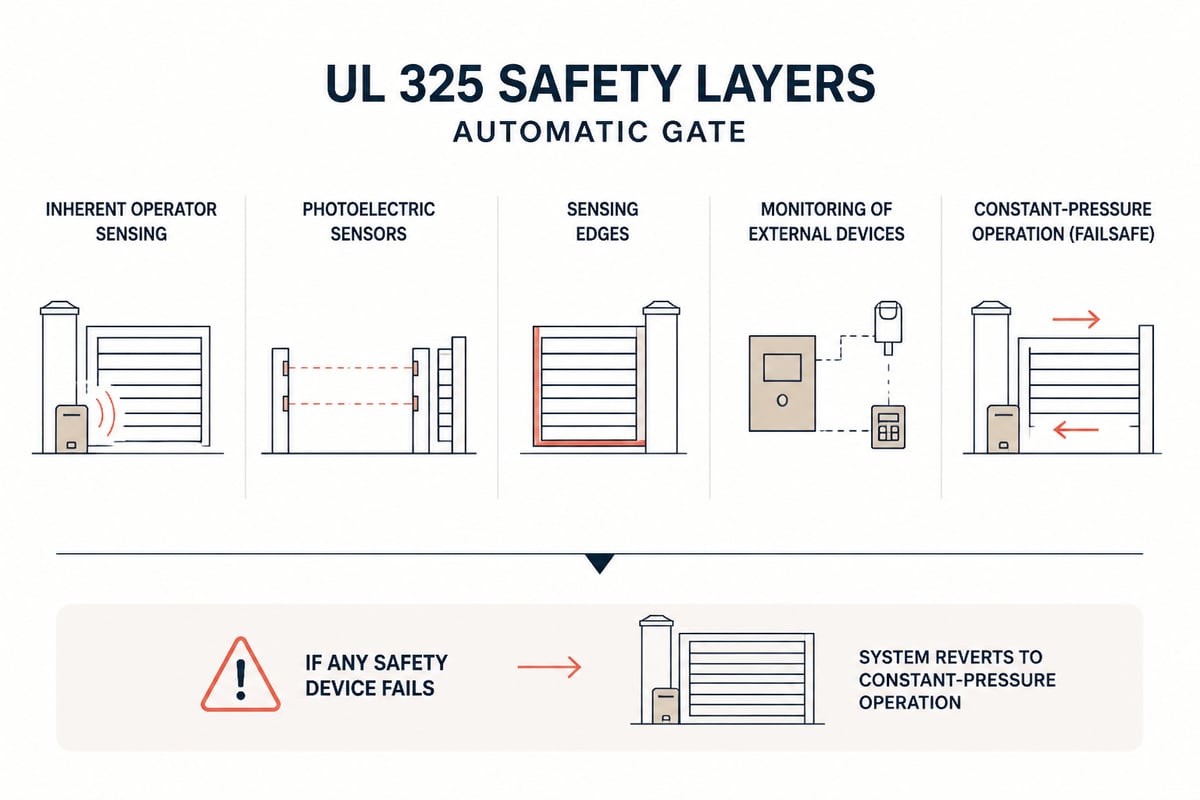
UL 325 is the safety standard for gate operators, and it calls for at least two independent entrapment-protection means for each entrapment zone, with the required number depending on gate type and direction of travel, according to UL.
Two further points matter for homeowners and property managers:
- External entrapment-protection devices must be monitored. If a device is not operating properly, the operator must restrict operation to constant-pressure control.
- The 2024 International Building Code, International Residential Code, International Fire Code, NFPA 1 and NFPA 101 require gate operators to be listed to UL 325 when installed, as outlined by UL’s Code Authority.
In practice, this means photoelectric sensors, sensing edges and correctly positioned devices are not optional extras. UL's page on external entrapment-protection devices explains how these sensors fit into gate and door systems. If a quote leaves out safety devices to hit a lower price, treat that as a red flag.
What Are the Downsides of Automatic Gates?
The main downsides of automatic gates are ongoing maintenance needs, vulnerability to power loss, safety risks when sensors are poorly set up, and repair costs when parts wear or components are mismatched.
- Maintenance: Hinges, rollers, chains, limit switches and batteries wear with use. Skipping service shortens the life of the operator. A look at why regular automatic gate maintenance matters in Los Angeles shows what a routine visit covers.
- Power dependence: Without a battery backup or manual release, a power outage can leave a vehicle stuck inside or outside.
- Safety exposure: Misaligned or disconnected sensors create entrapment hazards, particularly for children and pets.
- Access hardware issues: Lost remotes, dead keypad batteries and outdated transmitters cause daily frustration.
- Weather and wear: Heat, dust and coastal moisture affect electronics and metal parts depending on your location in the county.
These drawbacks are manageable. A properly sized operator, working safety devices, a backup power plan and scheduled service address most of them.
Choosing the Right System for Your Property
Choose a system by matching gate type, traffic volume and access needs to an operator rated for your gate's weight and daily cycle count.
For a single-family home, consider these steps:
- Measure the opening and note whether the driveway slopes.
- Decide between swing and slide based on available space.
- Identify how you want to admit visitors: remote, keypad, intercom or smart app.
- Plan for backup power and a manual release.
- Confirm permits with your city or the county.
Commercial and multi-unit properties have a different profile. Higher daily cycles, delivery traffic, tenant credentials and fire-department access requirements call for heavier-duty operators and more robust controls. Reviewing commercial automatic gates and why high-traffic properties need stronger systems clarifies where residential-grade equipment falls short. If remote monitoring and app control appeal to you, smart automatic gates and property security covers what those features add.
Signs Your Automatic Gate Needs Repair or Replacement
An automatic gate needs professional attention when it moves slowly, stops partway, reverses unexpectedly, makes grinding noises, ignores remotes or fails to close fully.
Common symptoms and likely causes:
- Gate stops or reverses mid-travel: Misaligned sensors, obstructions or a failing limit switch.
- Grinding or squealing: Dry rollers, worn gears or a bent track.
- No response to remote: Dead transmitter battery, antenna issue or control board fault.
- Gate drifts or won't latch: Worn hinges, loose arm connections or limit settings that have shifted.
- Clicking with no movement: Power supply or motor failure.
Repairs make sense when the operator is otherwise sound and the fault is a specific part. Replacement becomes the better call when the operator is outdated, parts are unavailable, repairs are recurring or the system no longer meets current safety standards. The signals are detailed in signs your automatic gate system may need replacement.
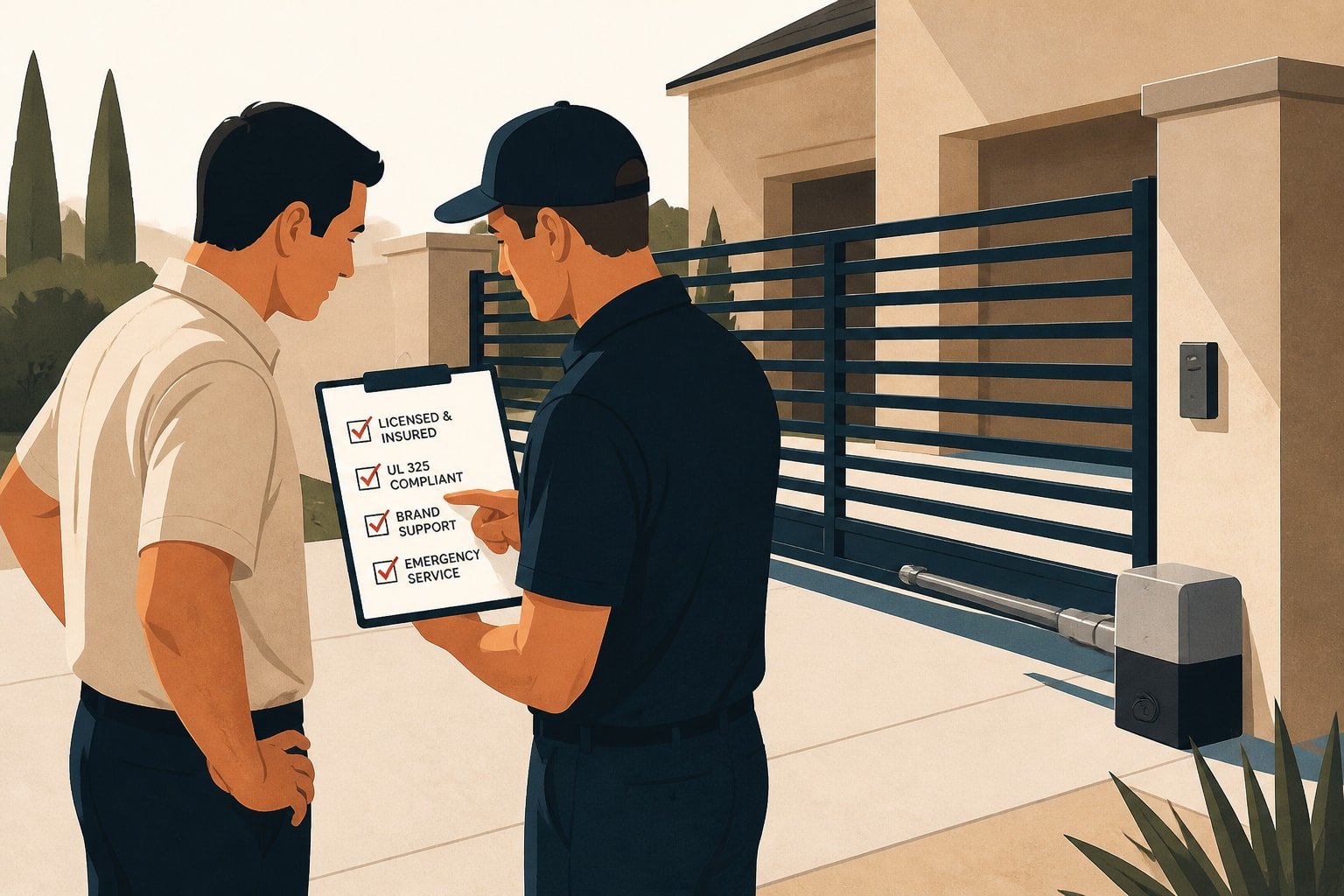
A stuck gate is both an inconvenience and a security gap. Gates & Garage Door Express Inc. offers same-day, on-site service for gate and garage door repairs, with emergency service available at no extra charge, including after hours. For motor, control board, sensor and hinge faults, its electric gate repair service covers the full diagnostic and repair process. The company is family owned and operated, licensed and insured under CSLB 1081161, and has been in business for 21 years. It works on all major gate and garage door brands, so you do not need to know your opener's make before calling.
FAQ
Can I automate any gate I already have?
Not every gate qualifies. The gate must be structurally sound, balanced and free-moving by hand before an operator is added. Sagging or rusted gates usually need repair first.
Do I need a backup for power outages?
A battery backup or solar option is strongly advised, along with a manual release. Without them, a power loss can trap vehicles inside or outside your property.
How often should an automatic gate be serviced?
Routine service at least once a year suits most residential systems, and high-traffic commercial gates benefit from more frequent checks. A technician inspects sensors, hardware, limit settings and batteries during each visit.
If your gate has stopped working, start by noting the symptom, such as no response, grinding or stopping midway, so the technician can come prepared. Gates & Garage Door Express Inc. is a family-owned Los Angeles company with 21 years in business, senior and veteran discounts, and free rework if you are not satisfied with the outcome. For a faster diagnosis, see its electric gate repair service, and when you are ready to book a visit, Call (818) 873-7687 to reach the team for same-day service.