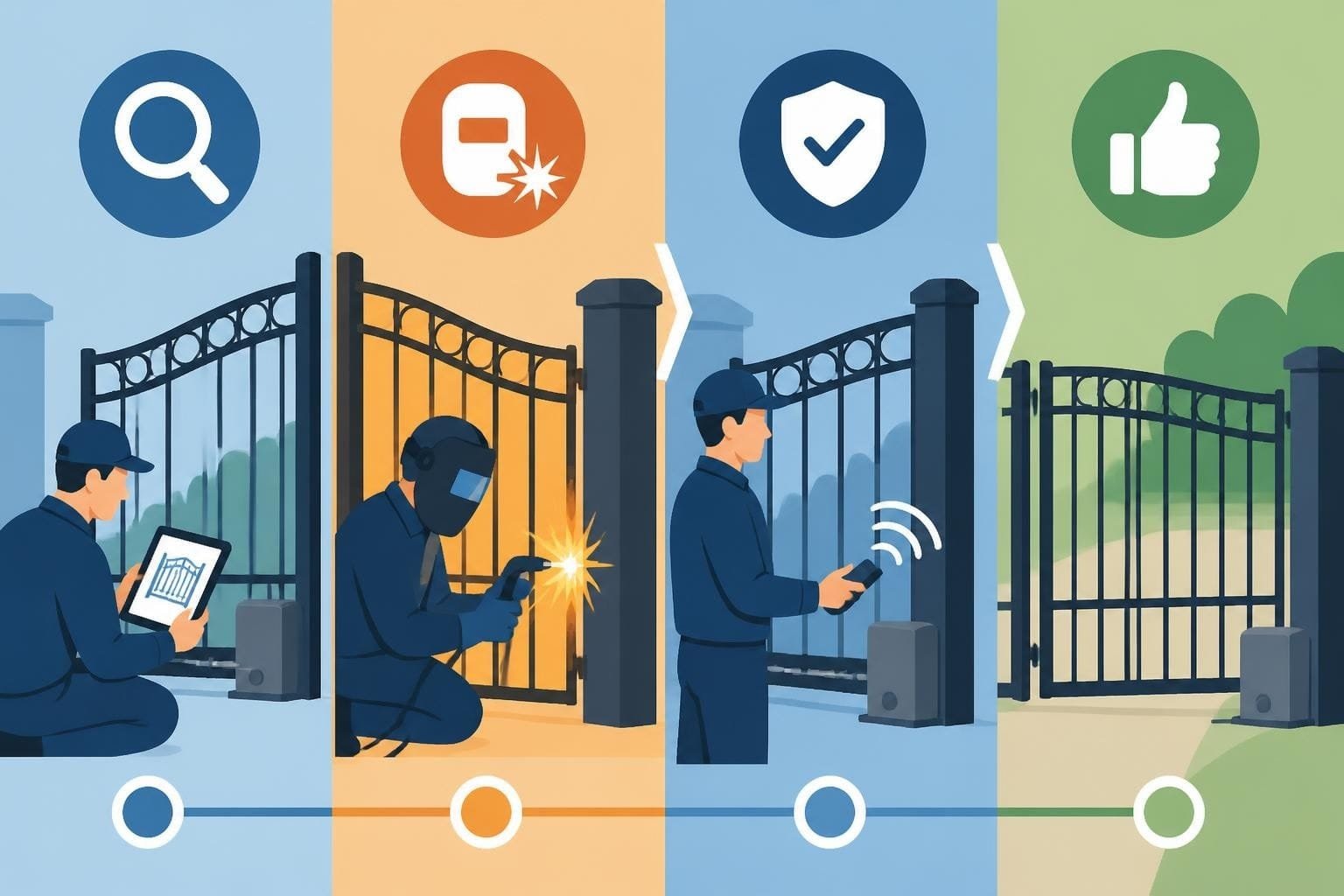
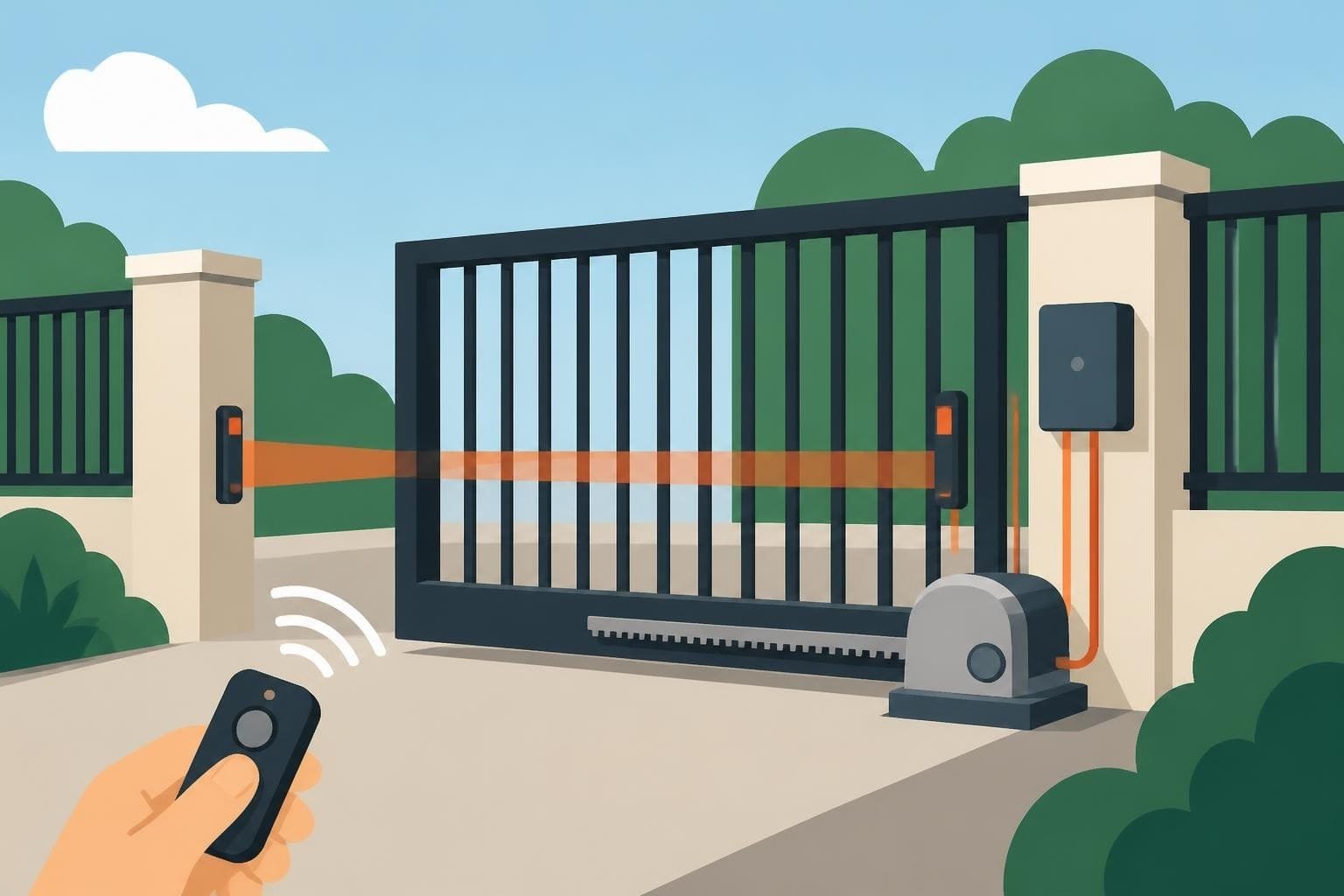

Property owners increasingly recognize that an auto fence gate opener delivers far more than simple convenience. These automated systems transform perimeter security while streamlining daily access for residential estates, commercial facilities, and gated communities throughout Los Angeles and beyond. Whether you're upgrading an existing fence line or planning a new installation, understanding the technology, safety requirements, and operational considerations will help you make informed decisions that balance security, convenience, and compliance.
Understanding Auto Fence Gate Opener Technology
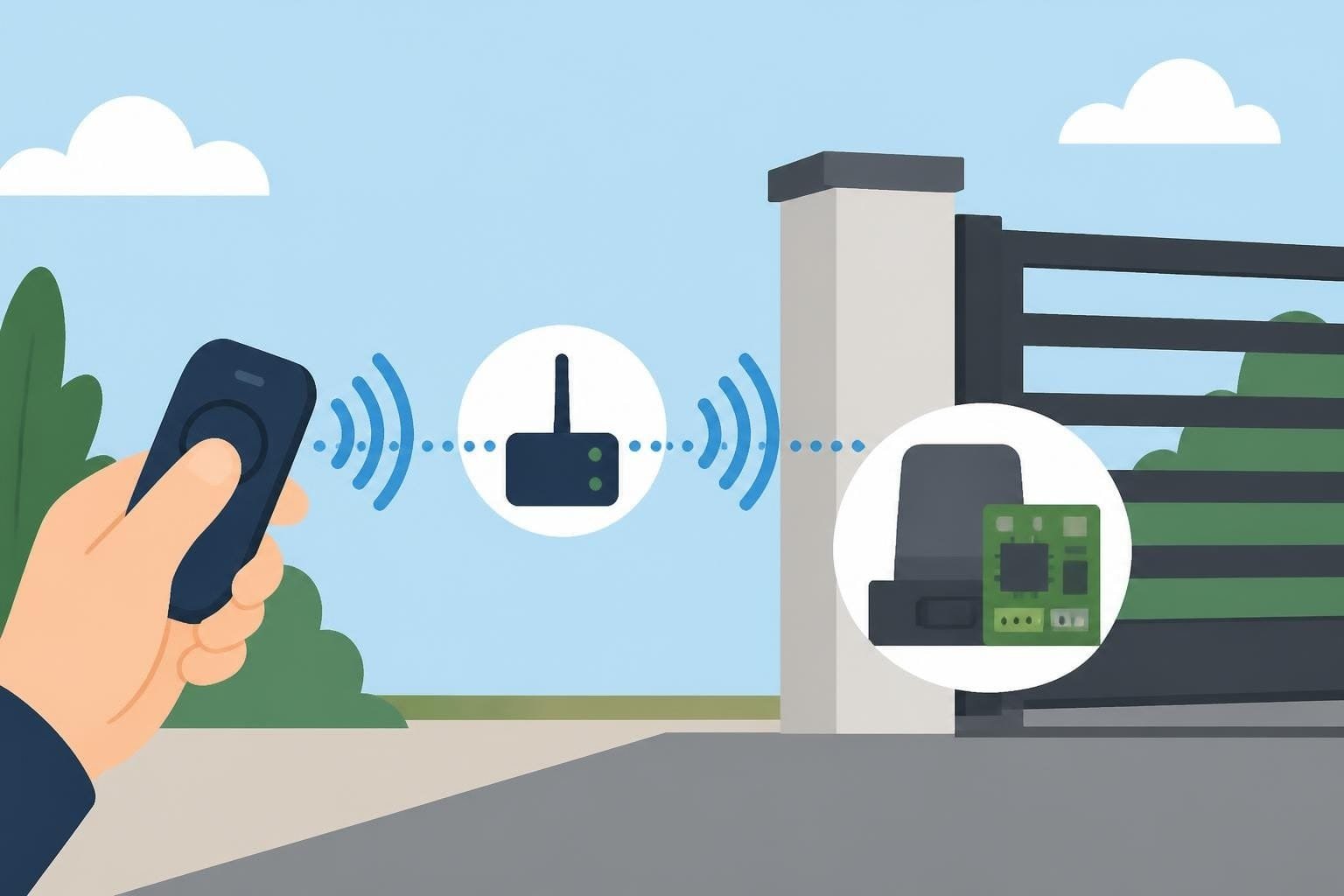
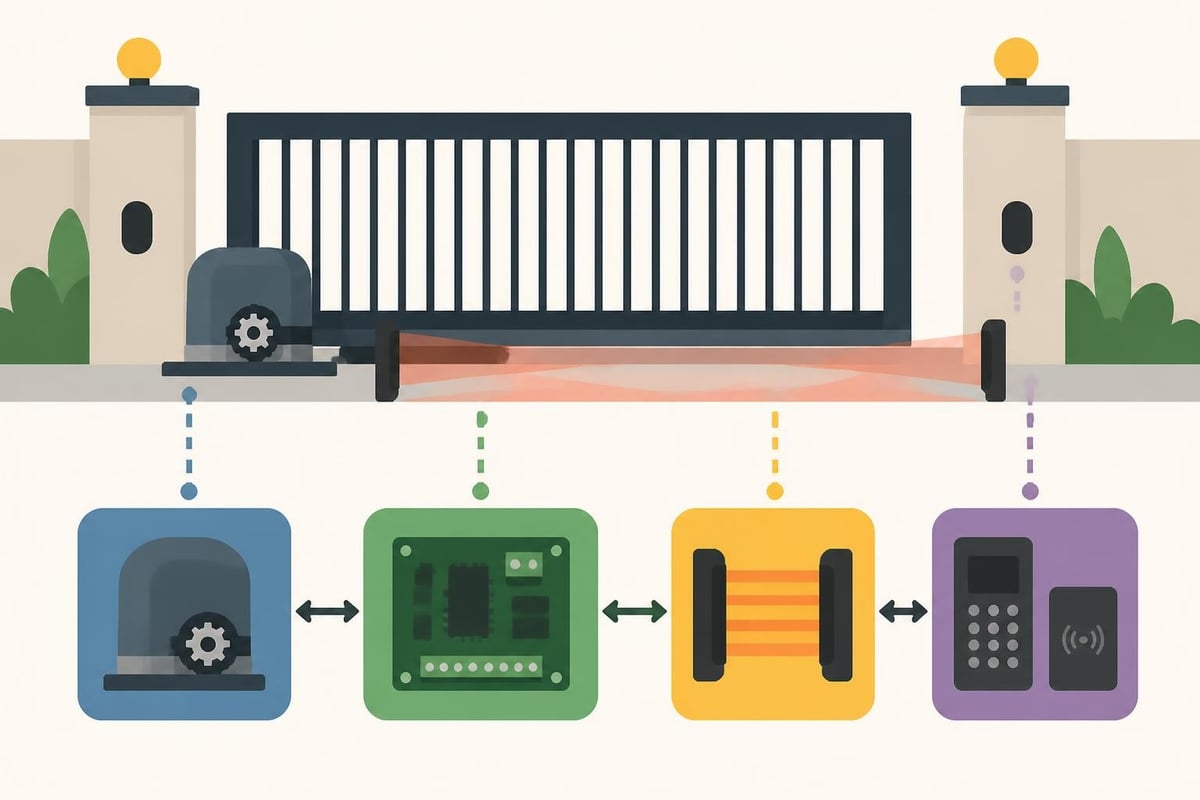
An auto fence gate opener consists of several integrated components working together to provide reliable automated access control. At the core sits the operator or motor unit, which generates the mechanical force needed to swing, slide, or roll your gate. This motor connects to a control board that interprets signals from access devices such as keypads, remote transmitters, or smartphone apps.
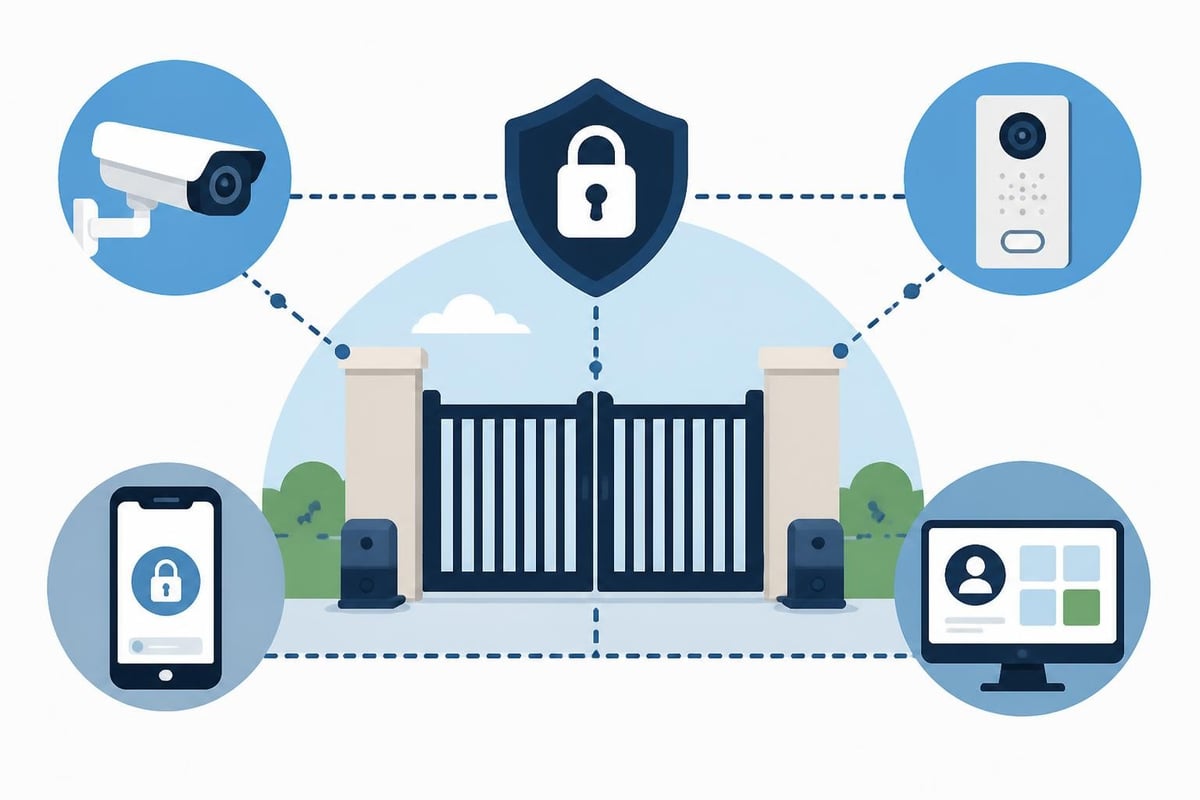
Modern systems extend beyond simple open-and-close functionality. Advanced control boards now incorporate programmable logic that manages access schedules, user permissions, and integration with broader security ecosystems. Many 2026 models support multiple communication protocols, allowing seamless coordination with video intercoms, surveillance cameras, and property management platforms.
Core Components and Their Functions
The mechanical operator represents the muscle of your system, but proper operation depends on numerous supporting elements:
- Motor unit: Provides the driving force, available in AC or DC configurations depending on power availability and backup requirements
- Control board: Processes input signals, manages safety features, and coordinates system functions
- Access control devices: Keypads, card readers, biometric scanners, or remote transmitters that authenticate users
- Safety sensors: Photo-eyes, edge sensors, and loop detectors that prevent entrapment and collision
- Power supply: Continuous AC power or battery-backed systems for uninterrupted operation
Each component must meet specific safety and certification standards to ensure reliable, code-compliant operation.
Types of Auto Fence Gate Openers
Selecting the appropriate operator style depends on your gate configuration, available space, and usage patterns. The three primary categories each offer distinct advantages for different applications.
Swing Gate Operators
Swing gate operators mount to the gate post or directly to the gate itself, pushing or pulling gates that move on hinges. These systems work exceptionally well for residential driveways and smaller commercial entrances where space permits the gate's arc of travel.
Articulated arm operators attach to both the post and gate with hinged arms that accommodate gates positioned at various distances from the hinge point. They tolerate minor installation variations and work well with decorative gates where aesthetic considerations matter.
Ram-style operators mount in-line with the gate swing, delivering powerful linear force through a piston-like mechanism. These compact units excel in tight spaces but require precise alignment for optimal performance.
| Swing Operator Type | Best Application | Space Requirement | Typical Duty Cycle |
|---|---|---|---|
| Articulated Arm | Residential, decorative gates | Moderate | Light to medium |
| Ram/Piston | Tight spaces, heavy gates | Minimal | Medium to heavy |
| Underground | High-end residential, invisible install | Gate arc only | Light to medium |
Slide Gate Operators
Slide gate operators move gates horizontally along a track, making them ideal when the property lacks space for the swing arc required by hinged gates. These systems shine in commercial and industrial settings where frequent, heavy-duty operation occurs.
Chain-driven and rack-driven configurations offer different power transmission methods. Chain systems cost less initially but require more maintenance over time. Rack-and-pinion designs deliver superior durability and operate more quietly, justifying their higher upfront investment for high-cycle applications.
Barrier and Vertical Lift Operators
Traffic control applications benefit from barrier arm operators that raise and lower a pivoting arm. These systems process high volumes of vehicles efficiently while occupying minimal ground space. Parking facilities, toll plazas, and controlled access zones rely heavily on this configuration.
Vertical pivot and vertical lift gates work where horizontal travel isn't feasible. These specialized operators suit applications with severe space constraints or where security requirements demand gates that lift straight up rather than swing or slide.
Safety Standards and Regulatory Compliance
Operating an auto fence gate opener involves significant safety obligations. The industry operates under strict regulatory frameworks designed to prevent entrapment, crushing, and other hazards associated with automated heavy machinery.
UL 325 establishes comprehensive safety requirements for vehicular gate operators, categorizing systems into distinct classes based on their use and access control methods. Class I applies to residential applications with inherent or monitored access control, while Classes II through IV address various commercial and industrial scenarios with escalating safety requirements.
Entrapment Protection Requirements
Every compliant system must incorporate primary and secondary entrapment protection devices. Primary protection typically consists of photo-eye sensors that detect obstructions in the gate's path before contact occurs. Secondary protection employs contact-sensing edges or monitored force adjustment that stops and reverses the gate upon encountering unexpected resistance.
The specific requirements vary by gate class and configuration:
- Inherent entrapment protection: System design and placement that physically prevents entrapment scenarios
- Contact sensors: Edge switches or pressure-sensitive edges that detect physical contact
- Non-contact sensors: Photo-eyes, area scanners, or motion detection that prevents contact
- Monitored force adjustment: Smart operators that continuously monitor force and stop when encountering obstacles
For properties requiring ADA-compliant pedestrian access, additional considerations apply. Automated gates serving as accessible entrances must meet specific timing, force, and clearance requirements to accommodate users with disabilities.
Access Control Integration Options
An auto fence gate opener becomes far more valuable when integrated with comprehensive access control systems. The options available in 2026 span from simple remote transmitters to sophisticated biometric authentication platforms.
Traditional Access Methods
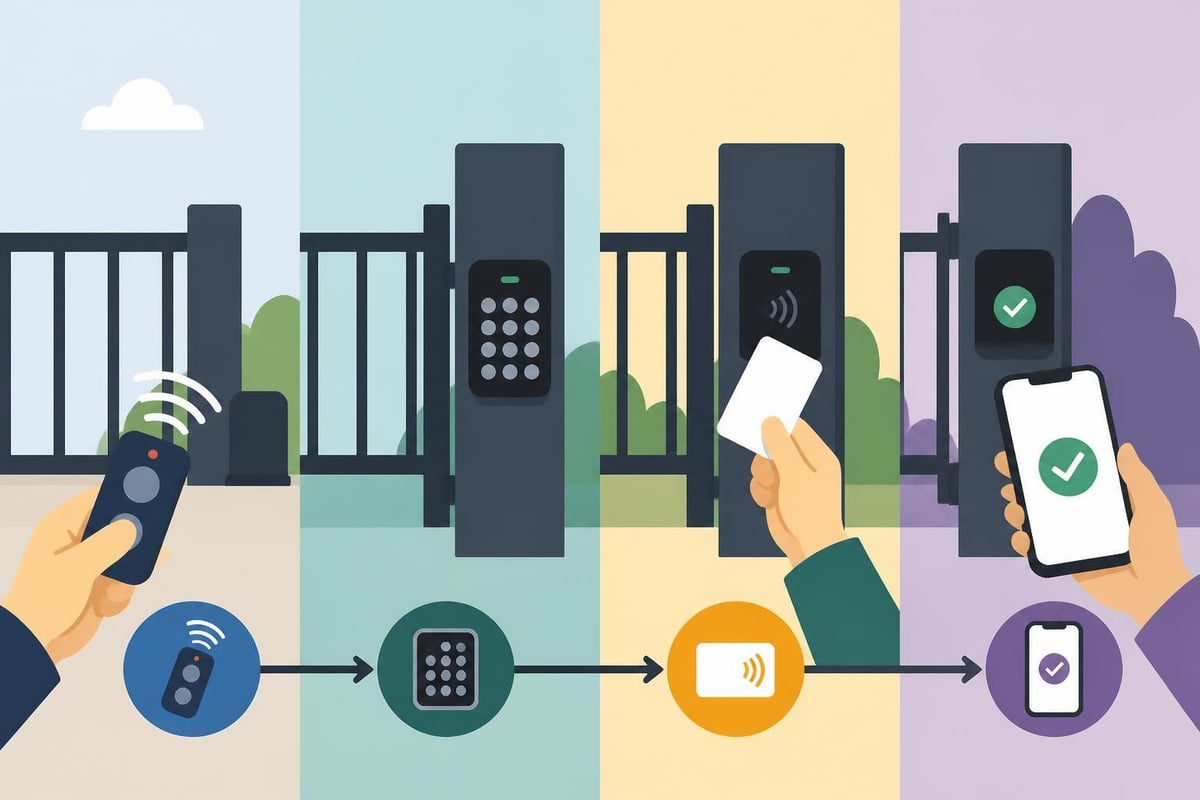
Radio frequency remote controls remain the most common access method for residential applications. Modern rolling-code technology prevents signal interception and replay attacks that compromised earlier fixed-code systems. Users simply press a button within range, and the encrypted signal authenticates and triggers gate operation.
Keypad entry systems offer convenient access without requiring physical tokens. PIN codes can be programmed with time restrictions, expiration dates, and usage tracking. Property managers appreciate the ability to issue temporary codes to service providers and revoke them remotely without changing physical keys.
Smart and Connected Systems
Internet-connected gate operators represent the fastest-growing segment of the market. These systems communicate via Wi-Fi, cellular modems, or dedicated protocols like Z-Wave to provide remote monitoring and control through smartphone apps or web interfaces.
Smartphone control offers unmatched flexibility. Property owners can grant access to visitors remotely, receive notifications when the gate operates, and review access logs from anywhere with internet connectivity. Delivery drivers can request temporary access through integrated intercom systems, and residents can admit them with a simple app tap.
Security considerations for connected systems:
When deploying internet-connected gate controls, cybersecurity becomes paramount. Following CISA’s Secure-by-Design principles helps ensure your system doesn't become a vulnerability in your property's security perimeter. Strong unique passwords, regular firmware updates, and network segmentation protect against unauthorized access.
Installation Planning and Site Requirements
Proper installation begins long before the operator arrives on site. Successful deployments require careful assessment of power availability, gate specifications, and usage patterns.
Power and Infrastructure Needs
Most residential operators run on standard 120VAC power, while commercial systems may require 240VAC or three-phase connections depending on gate size and cycle requirements. The circuit must be dedicated and properly protected with appropriate overcurrent devices.
Battery backup capability determines whether your gate can operate during power outages. Solar-charged battery systems suit remote locations without electrical service, though they require adequate sunlight exposure and properly sized panels to maintain charge through prolonged cloudy periods.
| Power Configuration | Advantages | Limitations | Best Use Case |
|---|---|---|---|
| AC-only | Lower cost, simpler installation | No outage operation | Grid-reliable areas |
| AC with battery backup | Outage operation, surge protection | Higher cost, battery maintenance | Critical access points |
| Solar with battery | No utility connection needed | Weather-dependent, higher upfront cost | Remote locations |
Gate Condition and Preparation
The existing gate must meet certain criteria before automation makes sense. Hinges and rollers should operate smoothly with minimal binding or resistance. A gate that's difficult to operate manually will place excessive strain on the operator, leading to premature failure and safety concerns.
Weight and wind loading calculations determine appropriate operator sizing. Manufacturers provide selection guides, but professional assessment accounts for site-specific factors like slope, prevailing winds, and gate construction. Undersized operators cycle excessively and fail prematurely, while oversized units waste energy and complicate entrapment protection calibration.
Maintenance Requirements and Service Intervals
An auto fence gate opener demands regular attention to maintain reliable, safe operation. Neglected systems develop problems that compromise security and create liability exposures.
Routine Inspection Schedule
Monthly visual inspections should verify proper safety sensor alignment, check for visible damage or wear, and test the basic open-close cycle. The gate should move smoothly without jerking, grinding, or unusual noises that indicate developing problems.
Quarterly servicing includes:
- Lubrication: Apply appropriate lubricants to hinges, rollers, tracks, and mechanical linkages
- Hardware tightening: Verify all mounting bolts, brackets, and connections remain secure
- Safety testing: Confirm photo-eyes and contact sensors properly stop and reverse gate travel
- Battery inspection: Check backup battery condition and voltage for systems with emergency power
Annual professional service goes deeper, examining wear components like drive gears, chains, and belts. Technicians verify proper force adjustment, test all safety features under load, and update controller firmware when manufacturers release improvements. When issues arise beyond routine maintenance, seeking professional electric gate repair in Los Angeles ensures proper diagnosis and code-compliant repairs.
Common Issues and Troubleshooting
Gate fails to respond to commands:
Check the most obvious culprits first. Verify power to the operator, confirm remote batteries haven't died, and ensure nothing obstructs photo-eyes. Many service calls result from simple issues like debris blocking sensors or tripped circuit breakers.
Gate operates partially then stops:
Obstruction detection, binding in the mechanical system, or low battery voltage during backup operation commonly cause this symptom. Inspect the gate's travel path, verify smooth manual operation, and check battery voltage if applicable.
Inconsistent or sluggish operation:
Temperature extremes affect many components. Cold weather thickens lubricants and reduces battery capacity, while extreme heat can trigger thermal protection in motors. Seasonal adjustment of force settings and timing parameters maintains consistent performance.
Cost Considerations and Budgeting
Auto fence gate opener projects involve multiple cost layers beyond the operator itself. Understanding the full investment helps avoid budget surprises and ensures proper system selection.
Equipment and Installation Costs
Basic residential swing gate operators start around $300-600 for the equipment alone, not including installation. Commercial-grade slide gate operators range from $1,200-3,500 depending on duty cycle ratings and feature sets. High-security systems with advanced access control integration can exceed $10,000 for equipment and installation.
Professional installation typically adds $500-1,500 for straightforward residential projects. Complex commercial installations requiring concrete work, extensive wiring, or integration with existing security systems may reach $3,000-8,000 in labor costs. The investment in professional installation pays dividends through proper safety compliance and reliable long-term operation.
Installation cost factors:
- Distance from power source to operator location
- Concrete work required for operator mounting pads
- Gate preparation and repair needed before automation
- Access control device integration complexity
- Required permits and inspection fees
Long-Term Operational Costs
Annual electricity consumption remains modest for most residential systems, typically $15-40 per year. Commercial systems with higher cycle counts or larger motors may consume $100-300 annually. Battery replacement every 3-5 years adds $75-200 depending on system capacity.
Service contracts provide predictable maintenance budgeting. Basic annual inspections run $150-300, while comprehensive service agreements covering all maintenance and priority repair response range from $300-800 annually. For commercial properties where gate failure disrupts business operations, service contracts deliver valuable insurance against downtime.
Advanced Features and Future Trends
The auto fence gate opener industry continues evolving rapidly, with 2026 models incorporating capabilities that seemed futuristic just years ago.
Artificial Intelligence and Predictive Maintenance
Smart operators now analyze operational patterns to predict component failures before they occur. Machine learning algorithms detect subtle changes in motor current, operation timing, and cycle counts that indicate developing problems. The system alerts property managers to schedule preventive maintenance during convenient times rather than facing emergency failures.
Vehicle recognition systems using cameras and AI identify authorized vehicles without driver action. Regular visitors enjoy automatic gate opening as they approach, while unknown vehicles trigger security protocols requiring manual authentication. This seamless experience enhances both convenience and security.
Integration with Smart Home and Building Ecosystems
Modern gate operators function as nodes within broader smart property networks. They share data with home automation platforms, trigger security camera recording upon activation, and coordinate with lighting systems to illuminate entry areas. Voice assistant integration allows operation through simple commands to Alexa, Google Assistant, or Siri.
Building management systems in commercial properties incorporate gate status and activity into comprehensive facility dashboards. Facility managers monitor all access points from centralized interfaces, coordinate gate operation with parking management systems, and generate access reports for security audits.
Selecting the Right System for Your Property
Choosing an appropriate auto fence gate opener requires balancing multiple factors specific to your property and usage requirements.
Residential vs. Commercial Requirements
Residential systems prioritize convenience, quiet operation, and aesthetic integration. Homeowners typically need 10-20 daily cycles and prefer features like smartphone control and visitor management. Battery backup proves valuable for maintaining security during power outages common in some Los Angeles neighborhoods.
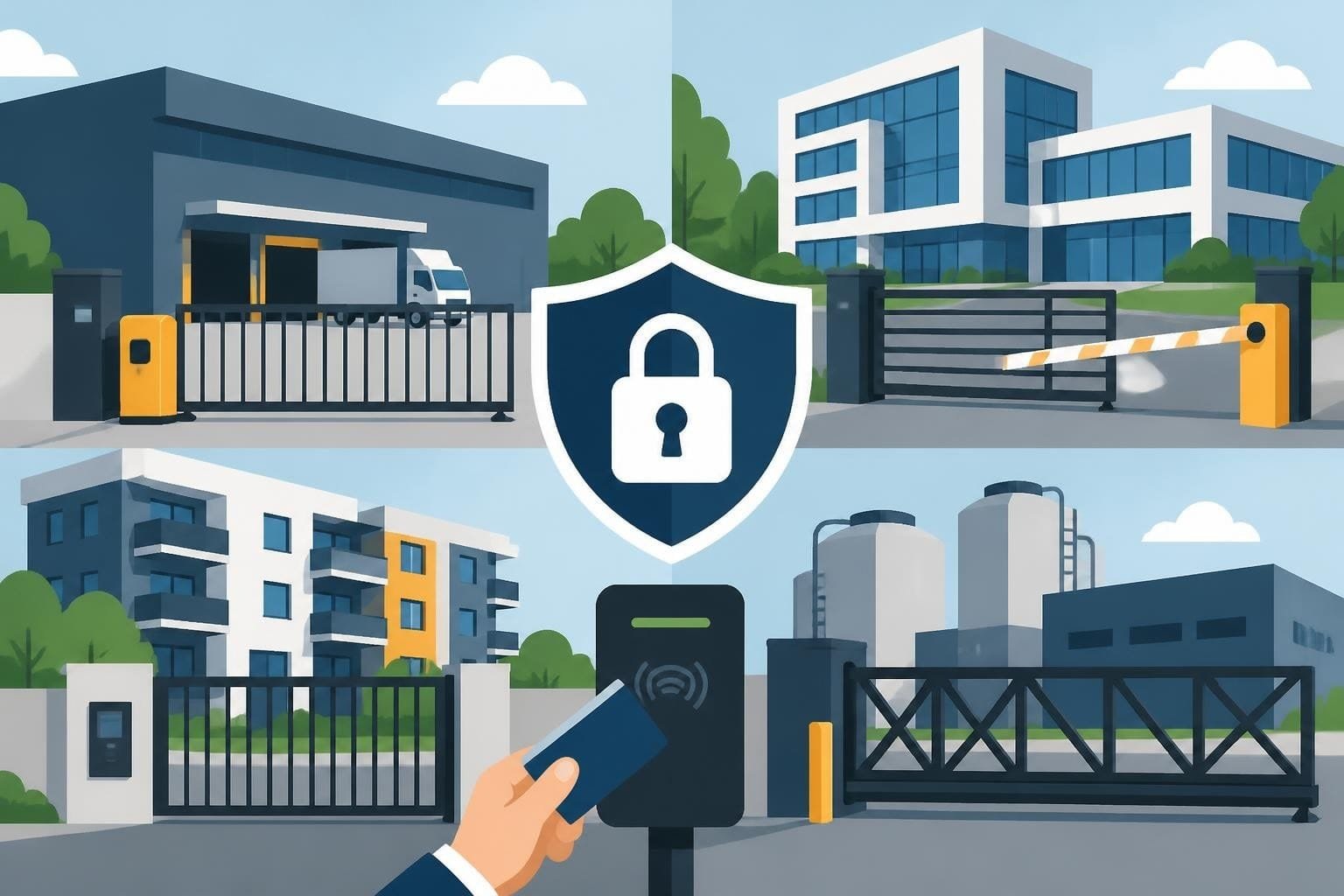
Commercial applications demand higher duty-cycle ratings, often requiring 50-100 or more daily operations. Reliability becomes critical as gate failures directly impact business operations. Commercial operators require robust construction, commercial-grade components, and comprehensive access control to manage employee, vendor, and visitor traffic.
Working with Professional Installers
Professional installation ensures code compliance and optimal performance. Qualified technicians understand local building code requirements and proper implementation of safety features. They properly size operators based on actual gate weight and wind loading rather than rough estimates that lead to under or over-specification.
Experience matters significantly. Installers familiar with your specific gate type and local conditions anticipate challenges and implement solutions proven effective in similar applications. They maintain relationships with manufacturers for technical support and warranty service when issues arise.
When evaluating installers, consider:
- Licensing and insurance: Verify contractor licenses, liability coverage, and workers' compensation
- Manufacturer certifications: Factory-trained technicians understand product-specific nuances
- Local experience: Familiarity with Los Angeles requirements and common site conditions
- Service capabilities: Post-installation support and maintenance availability
- References: Recent projects similar to your application
An auto fence gate opener transforms property access through the strategic combination of mechanical reliability, sophisticated electronics, and thoughtful safety design. From understanding the regulatory landscape to selecting appropriate features for your specific needs, informed decisions lead to systems that deliver years of dependable service. When you're ready to enhance your property with automated gate access, Gates & Garage Door Express Inc. brings family-owned dedication and same-day service expertise to every installation and repair throughout Los Angeles.