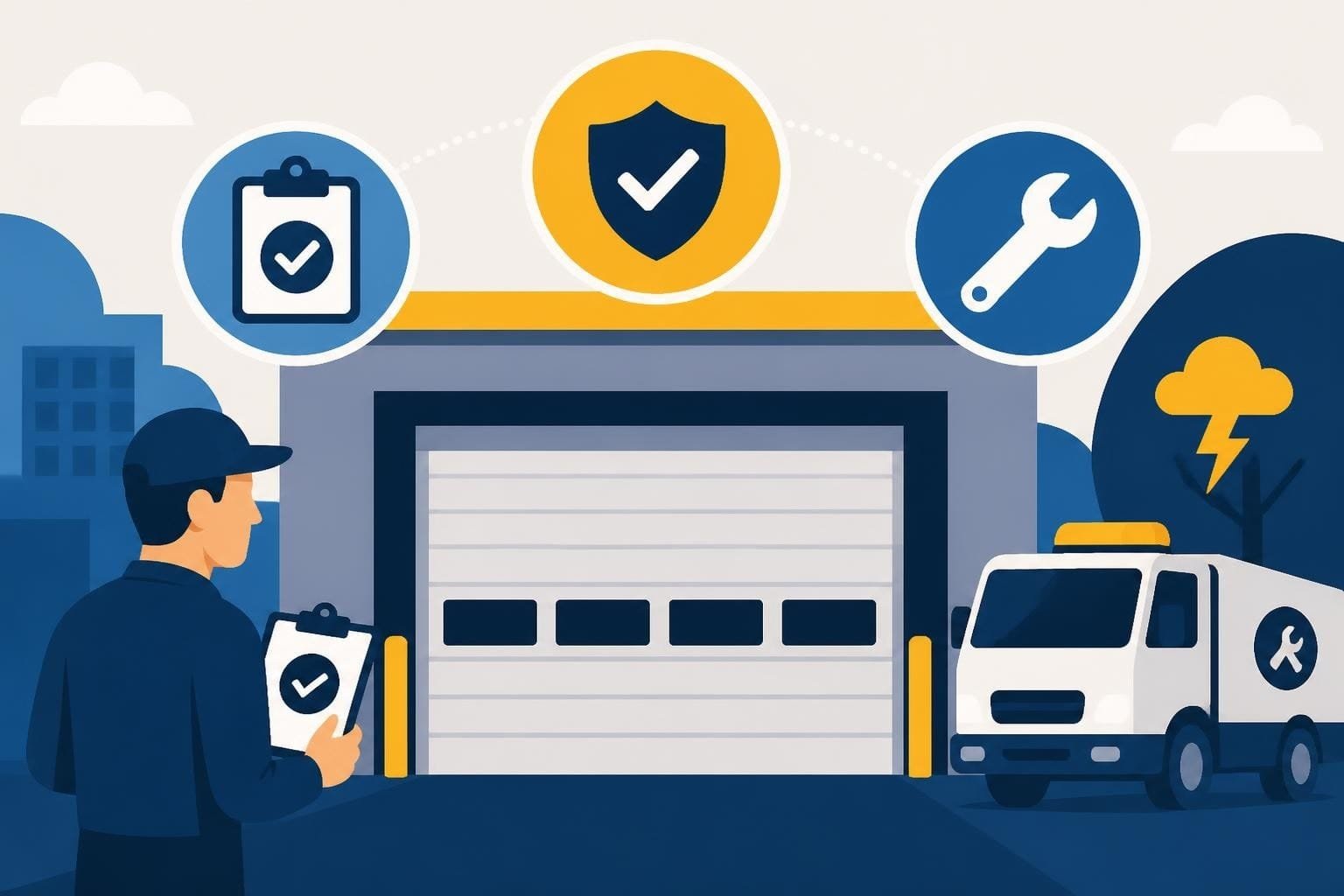

Commercial properties rely on functional garage doors for daily operations, security, and customer access. Whether managing a warehouse, retail space, parking structure, or industrial facility, understanding the scope and importance of commercial garage door service can prevent costly downtime and ensure workplace safety. This comprehensive guide explores maintenance best practices, regulatory compliance, and strategic planning for commercial door systems in 2026.
Understanding Commercial Garage Door Systems
Commercial garage doors differ significantly from residential systems in construction, operation, and maintenance requirements. These heavy-duty installations typically feature steel construction, high-cycle springs, and industrial-grade operators designed to withstand thousands of cycles annually.
Types of Commercial Door Systems
The most common commercial configurations include sectional overhead doors, rolling steel doors, fire-rated doors, and high-speed performance doors. Each type serves specific operational needs and presents unique service considerations.
Sectional overhead doors dominate loading docks and vehicle service bays, offering insulation options and customizable panel configurations. Rolling steel doors provide maximum security for storefronts and warehouses, while fire-rated assemblies meet code requirements for separation between spaces. High-speed doors optimize climate control in temperature-sensitive environments like food processing facilities.
| Door Type | Typical Cycle Rating | Primary Applications | Service Frequency |
|---|---|---|---|
| Sectional Overhead | 10,000-25,000 cycles | Loading docks, vehicle bays | Quarterly |
| Rolling Steel | 50,000+ cycles | Security, storefronts | Bi-annually |
| Fire-Rated | Varies by rating | Code-required separations | Annually (minimum) |
| High-Speed | 100,000+ cycles | Climate-controlled spaces | Monthly |
Understanding your door system's classification helps establish appropriate service intervals and budget expectations. Heavy-use environments demand more frequent attention than occasional-use applications.
Critical Components Requiring Regular Service
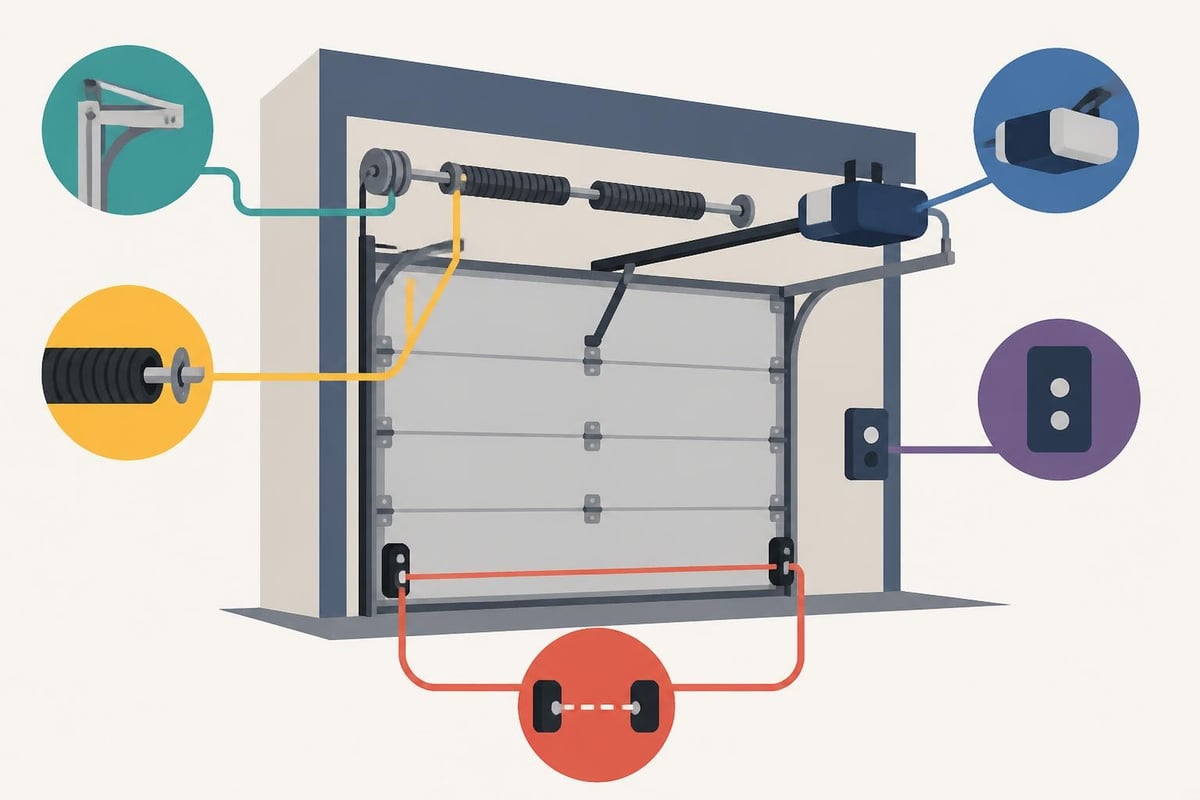
Commercial garage door service encompasses numerous mechanical and electrical components that work in concert to provide reliable operation. Each element requires specific attention during maintenance visits.
Spring Systems and Counterbalance Mechanisms
Torsion springs bear the door's full weight and represent the highest-wear component in most systems. These tightly wound steel coils gradually lose tension through normal use, eventually requiring replacement.
Commercial springs typically last 10,000 to 25,000 cycles depending on quality and door weight. High-cycle applications may exhaust springs within 12-18 months, while light-duty installations can operate for several years before replacement becomes necessary.
Extension springs appear on some older or lighter-duty installations. These stretched coils pose greater safety risks than torsion springs and require additional safety cables to prevent uncontrolled release during failure.
Professional technicians measure spring tension during service visits, identifying weakening components before catastrophic failure occurs. Preventive spring replacement costs significantly less than emergency repairs following sudden failure.
Operator and Control Systems
Electric operators transform commercial doors into automated systems that improve efficiency and security. These motorized units contain multiple serviceable components including motors, drive mechanisms, circuit boards, and safety sensors.
Modern operators incorporate sophisticated control logic for soft-start acceleration, obstacle detection, and battery backup systems. Regular service includes lubricating drive mechanisms, testing safety reversing features, and verifying proper force adjustments.
The UL 325 standard established critical safety requirements for door operators, including entrapment protection that has evolved significantly since the standard's introduction. Compliance verification should occur during every service visit.
Track and Roller Assemblies
Vertical and horizontal tracks guide door movement while rollers enable smooth operation. Commercial installations typically use ball-bearing rollers rated for heavy-duty service cycles.
Misaligned tracks create excessive wear on rollers and place uneven stress on spring systems. Service technicians use precision levels to verify track alignment, making adjustments before minor misalignment causes major component damage.
Roller inspection reveals bearing condition through visual examination and manual rotation testing. Rough rotation, visible wear patterns, or excessive play indicate replacement needs before complete failure disrupts operations.
Regulatory Compliance and Safety Standards
Commercial facilities face stringent regulatory requirements governing door safety, fire protection, and accessibility. Understanding these mandates helps property managers prioritize service activities and avoid costly violations.
Fire Door Inspection Requirements
Fire-rated door assemblies must comply with NFPA 80 standards for inspection, testing, and maintenance. These regulations mandate annual inspections by qualified technicians who verify proper operation, seal integrity, and label presence.
Fire door service includes checking closer operation, latch engagement, seal condition, and clearance dimensions. Any deficiencies require immediate correction to maintain the assembly's fire rating. Documentation of inspections and repairs must be maintained for authority having jurisdiction review.
Commercial garage door service for fire-rated installations demands specialized knowledge of listing requirements and acceptable repair methods. UL fire-rated door guidelines explain how modifications or repairs can void listings if not performed according to manufacturer specifications.
ADA Accessibility Compliance
Powered entrance doors serving public accommodations must meet specific requirements outlined in the Access Board’s ADA guidance. These standards address opening force, maneuvering clearances, and automatic operator performance.
Service technicians verify that opening force remains within acceptable limits and safety sensors function properly to prevent entrapment. Regular testing ensures doors meet accessibility requirements while maintaining safety for all users.
DASMA Technical Standards
The Door & Access Systems Manufacturers Association publishes technical data sheets covering installation, testing, and maintenance procedures for commercial doors. These industry-backed standards provide guidance for wind load ratings, air leakage performance, and proper service intervals.
Following DASMA recommendations helps ensure service activities align with manufacturer specifications and industry best practices. Professional service providers reference these standards when developing maintenance protocols and training technicians.
Preventive Maintenance Programs
Structured maintenance programs deliver superior value compared to reactive repair approaches. Scheduled service prevents unexpected failures, extends component life, and maintains warranty coverage.
Establishing Service Intervals
Appropriate service frequency depends on cycle count, environmental conditions, and operational criticality. High-volume facilities benefit from monthly inspections while moderate-use installations typically require quarterly attention.
- Document baseline conditions during initial service including component serial numbers, installation dates, and performance measurements
- Track cycle counts using operator displays or external counters to predict component replacement timing
- Schedule seasonal adjustments addressing temperature-related expansion, contraction, and lubrication needs
- Plan annual comprehensive inspections including all safety systems, structural components, and electrical connections
- Budget for predictable replacements based on expected component lifecycles and documented wear patterns
Environmental factors accelerate wear in coastal areas with salt exposure, industrial settings with airborne contaminants, or temperature extremes affecting lubricants and seals.
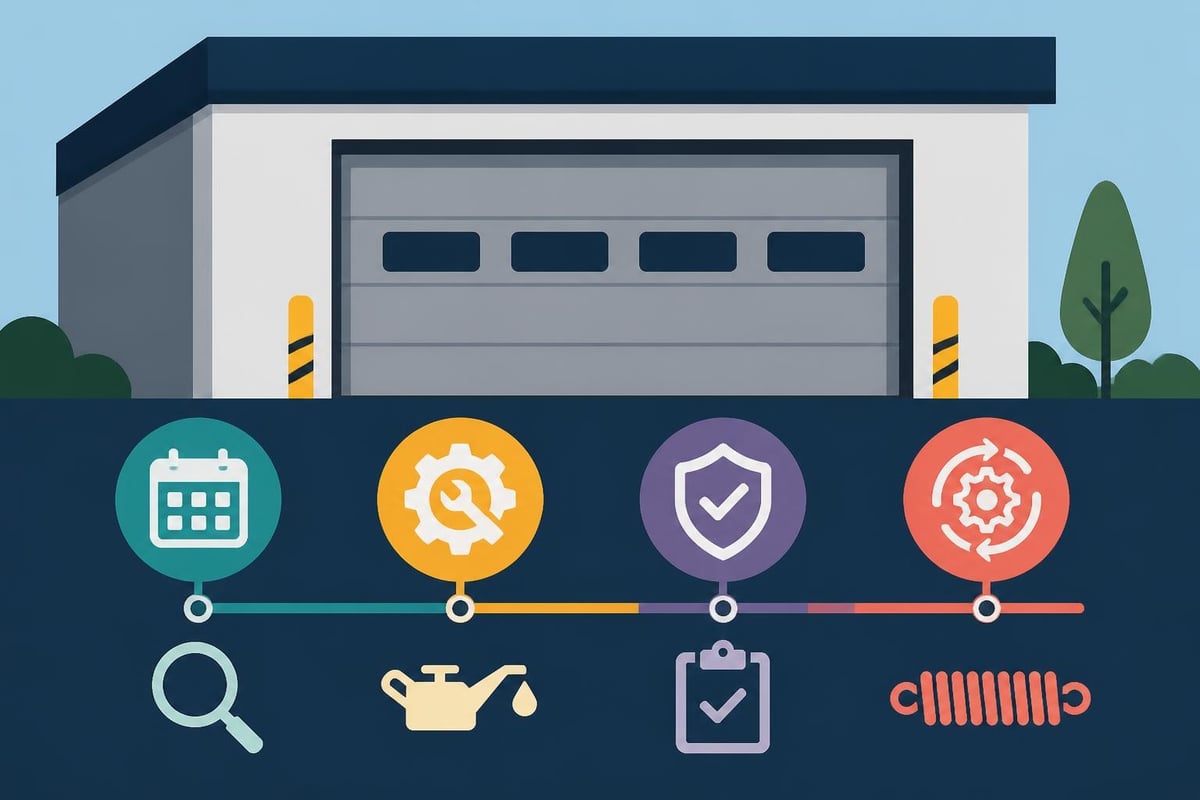
Service Checklist Components
Comprehensive commercial garage door service addresses mechanical, electrical, and safety systems through systematic inspection procedures.
Mechanical system checks include:
- Spring tension measurement and wear assessment
- Track alignment verification using precision levels
- Roller bearing condition and replacement evaluation
- Cable wear inspection and terminal fitting security
- Hardware torque verification on structural bolts
- Hinge and bracket examination for stress cracks
Operator and electrical testing covers:
- Motor amperage draw under load
- Control board diagnostic code review
- Safety sensor alignment and obstruction detection
- Emergency release mechanism operation
- Battery backup system charge and runtime testing
- Wiring connection security and insulation integrity
Safety compliance verification encompasses:
- Photo-eye obstruction reversal testing
- Edge sensor entrapment protection validation
- Manual emergency operation functionality
- Warning label presence and legibility
- Clearance dimension measurements
- Auto-reverse force limit adjustments
Documentation from each service visit creates valuable maintenance history supporting warranty claims, insurance requirements, and property transaction disclosures.
Energy Efficiency Considerations
Commercial garage doors significantly impact building energy consumption through heat transfer and air infiltration. Strategic service and upgrade decisions reduce operating costs while improving occupant comfort.
Insulation Performance
Thermal efficiency varies dramatically across door types and construction methods. Insulated sectional doors typically achieve R-values between 6.0 and 18.0 depending on panel thickness and insulation type.
| Insulation Type | Typical R-Value | Best Applications | Cost Premium |
|---|---|---|---|
| Polystyrene foam | 6.0 – 10.0 | Standard climate control | 15-25% |
| Polyurethane foam | 12.0 – 18.0 | Extreme climates | 30-50% |
| None (single layer) | 0 – 2.0 | Unconditioned spaces | Baseline |
Regular service maintains insulation performance by addressing seal wear, panel damage, and weather-stripping deterioration. Even high-performance doors lose efficiency when gaps develop around perimeters or between sections.
The Department of Energy’s recent regulations on walk-in cooler and freezer door requirements highlight increasing regulatory focus on commercial door energy performance. While these specific standards target refrigerated applications, the trend toward stricter energy requirements will likely expand to general commercial doors.
Seal Replacement and Weather-stripping
Bottom seals contact loading dock surfaces thousands of times annually, creating inevitable wear. Deteriorated seals allow conditioned air loss, pest entry, and moisture infiltration.
Service visits should include seal inspection and replacement when compression set or physical damage compromises performance. Various seal profiles accommodate different floor conditions and gap dimensions.
Perimeter weather-stripping between door sections and jambs requires periodic replacement as material hardens or compresses. Modern materials offer improved durability compared to traditional rubber compounds.
Cost Analysis and Budgeting
Understanding commercial garage door service costs enables accurate budget planning and informed decision-making between repair and replacement options.
Routine Maintenance Investment
Standard preventive service visits typically range from $150 to $400 depending on door size, system complexity, and service scope. Multi-door facilities often negotiate reduced per-door rates through comprehensive service agreements.
Annual maintenance costs for typical commercial installations:
- Single sectional door: $600-$1,200
- Rolling steel door: $400-$800
- Fire-rated assembly: $800-$1,500 (including mandated annual testing)
- High-speed door: $1,200-$2,400
These investments prevent emergency service calls costing $500-$1,500 for after-hours response and rush repairs. Unplanned downtime typically exceeds direct repair costs through lost productivity and customer access issues.
Component Replacement Economics
Major component failures require budget allocation for parts and labor beyond routine service costs. Understanding typical replacement expenses aids long-term planning.
Common replacement scenarios include spring systems ($300-$800), operator units ($800-$2,500), panel sections ($400-$1,200 each), and complete track assemblies ($600-$1,500). Labor represents 40-60% of total replacement costs for most components.
Facilities managing multiple doors benefit from standardizing equipment brands and models. Parts inventory for common components reduces downtime while volume purchasing lowers per-unit costs.
Selecting Professional Service Providers
Commercial garage door service quality varies significantly across service providers. Careful selection ensures safety compliance, warranty preservation, and cost-effective maintenance.
Qualification Verification
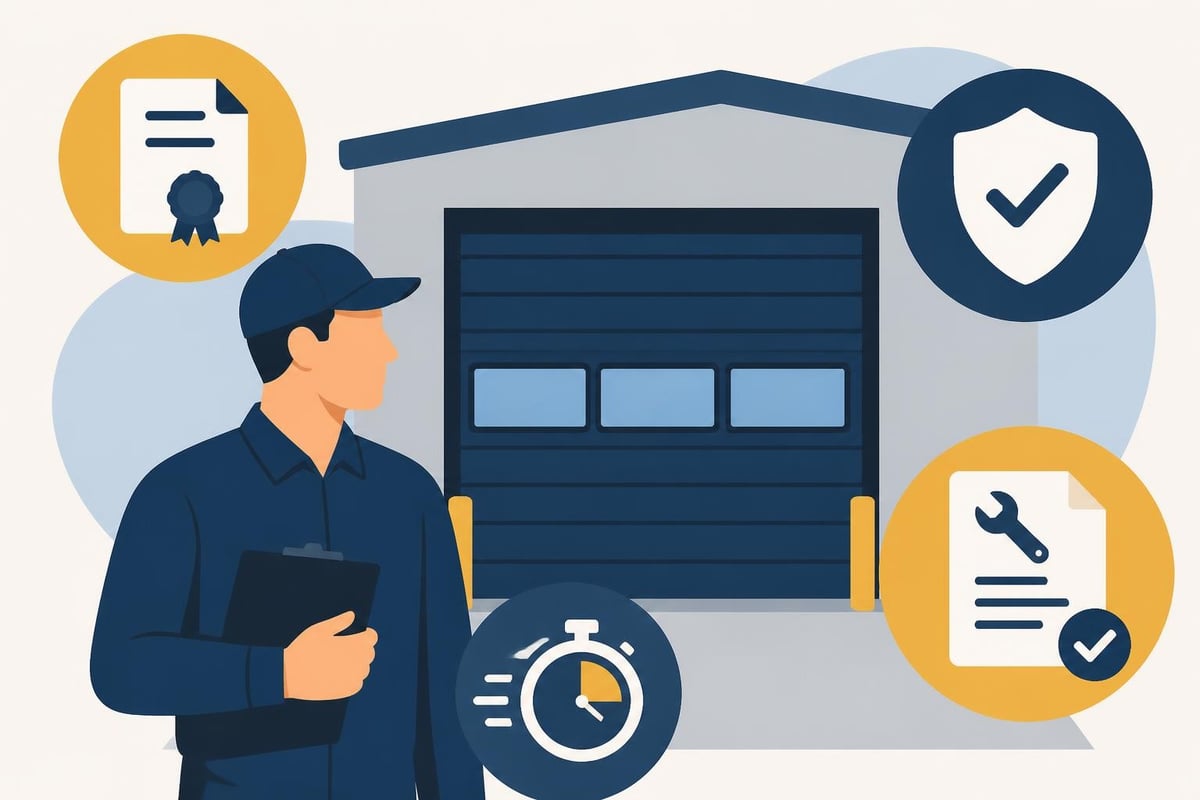
Professional technicians should demonstrate manufacturer training certifications, insurance coverage, and familiarity with relevant building codes. The Door and Hardware Institute offers education resources and certification programs establishing industry competency standards.
Request documentation of technician qualifications including specific training on your door types and operator brands. Generic handyman services rarely possess the specialized knowledge commercial systems require.
Service Agreement Considerations
Comprehensive maintenance contracts establish clear expectations for service frequency, response times, and included activities. Well-structured agreements benefit both parties through predictable scheduling and guaranteed revenue.
Critical contract elements include:
- Specific service activities performed during scheduled visits
- Emergency response time commitments and after-hours availability
- Parts and labor coverage definitions
- Price adjustment terms and agreement duration
- Cancellation provisions and renewal procedures
Compare proposals from multiple providers considering total value rather than lowest price alone. Inadequate service intervals or limited scope create false savings that increase long-term costs.
Emergency Preparedness
Despite preventive maintenance efforts, unexpected failures occasionally occur. Advance planning minimizes disruption when emergency service becomes necessary.
Identifying Critical Systems
Not all commercial doors warrant 24/7 emergency service coverage. Prioritize systems based on operational impact, security requirements, and alternative access availability.
Loading dock doors supporting just-in-time delivery schedules demand immediate attention while secondary or redundant access points can tolerate next-business-day response. Document criticality ratings for each door to guide emergency decision-making.
Establishing Response Protocols
Develop written procedures addressing door failures during business hours and after-hours periods. Clear protocols reduce confusion and accelerate appropriate response.
Emergency contacts should include primary service provider information, backup vendor options, and internal facility management personnel. Many commercial garage door service providers maintain after-hours emergency lines for urgent situations.
Property managers in the Los Angeles area can access same-day emergency response through providers like Gates & Garage Door Express Inc., which specializes in commercial and residential door systems requiring urgent attention.
Consider temporary solutions for prolonged outages including manual operation procedures, alternative access routes, and security measures for inoperable doors. Advanced planning prevents improvised responses under pressure.
Technology Integration and Smart Systems
Modern commercial garage door service increasingly involves networked operators, remote monitoring, and predictive maintenance capabilities enabled by connected devices.
Remote Access and Monitoring
Cloud-connected operators allow property managers to monitor door status, grant temporary access, and receive operational alerts from any internet-connected device. These systems provide valuable data for maintenance planning and security monitoring.
Real-time cycle counting enables precise component replacement scheduling based on actual usage rather than calendar intervals. Alerts notify managers of unusual activity patterns, extended open durations, or operational anomalies requiring attention.
Predictive Maintenance Analytics
Advanced operator systems track performance metrics including motor current draw, cycle completion times, and reversal frequencies. Machine learning algorithms identify developing problems before catastrophic failures occur.
Rising motor amperage may indicate increasing friction from misaligned tracks or failing bearings. Extended cycle times suggest operator adjustments needed or approaching spring replacement requirements. These insights allow proactive service scheduling during planned downtime rather than emergency response.
Integration with building management systems provides comprehensive facility oversight while enabling automated responses to specific conditions. Doors can close automatically during security alerts or open during emergency evacuations according to programmed logic.
Industry Trends Shaping Service Requirements
Commercial garage door service evolves alongside technological advancement, regulatory changes, and shifting operational priorities in 2026.
Sustainability and Environmental Considerations
Green building initiatives increasingly influence door selection and maintenance practices. Energy-efficient models reduce carbon footprints while lowering operating costs through improved insulation and optimized operator algorithms.
Service providers now emphasize sustainable practices including proper disposal of replaced components, environmentally-friendly lubricants, and energy consumption optimization during routine maintenance. These approaches align with corporate sustainability goals while demonstrating environmental stewardship.
Labor Shortages and Training Challenges
The commercial door industry faces technician shortages as experienced professionals retire faster than new entrants complete training. This dynamic increases service costs while potentially extending response times for non-emergency work.
Property managers should establish relationships with qualified service providers before urgent needs arise. Long-term partnerships ensure priority scheduling and consistent service quality despite industry-wide capacity constraints.
Regular commercial garage door service protects your investment, ensures safety compliance, and prevents operational disruptions that impact your business. Professional maintenance delivered on appropriate schedules extends equipment life while reducing total ownership costs. Gates & Garage Door Express Inc. provides comprehensive commercial and residential door service throughout Los Angeles with same-day emergency response and preventive maintenance programs tailored to your facility's specific needs. Contact our experienced team to schedule an assessment and develop a customized service plan that keeps your operations running smoothly.