
Property owners seeking reliable automatic gate solutions consistently turn to industry-leading manufacturers with proven track records. A liftmaster electric gate opener represents decades of engineering expertise, offering robust automation for residential driveways and commercial properties throughout Los Angeles and beyond. Understanding the technology, features, and maintenance requirements of these systems helps property owners make informed decisions that enhance security, convenience, and property value. This comprehensive guide explores everything from model selection to compliance requirements, ensuring you have the knowledge needed to choose and maintain the right gate automation solution.
Understanding LiftMaster Electric Gate Opener Technology
The foundation of any automated gate system lies in its operator mechanism. LiftMaster has established itself as a trusted brand through continuous innovation in motor design, control systems, and safety features. Modern liftmaster electric gate opener models utilize advanced linear actuator technology, swing arm mechanisms, or slide gate operators depending on gate configuration and weight requirements.
Linear actuator systems work particularly well for residential swing gates, offering quiet operation and weather-resistant construction. These units mount directly to the gate, pushing or pulling it through its arc of travel with precision control. The mechanical advantage of linear motion provides consistent performance across varying loads and weather conditions.
Motor Types and Power Configurations
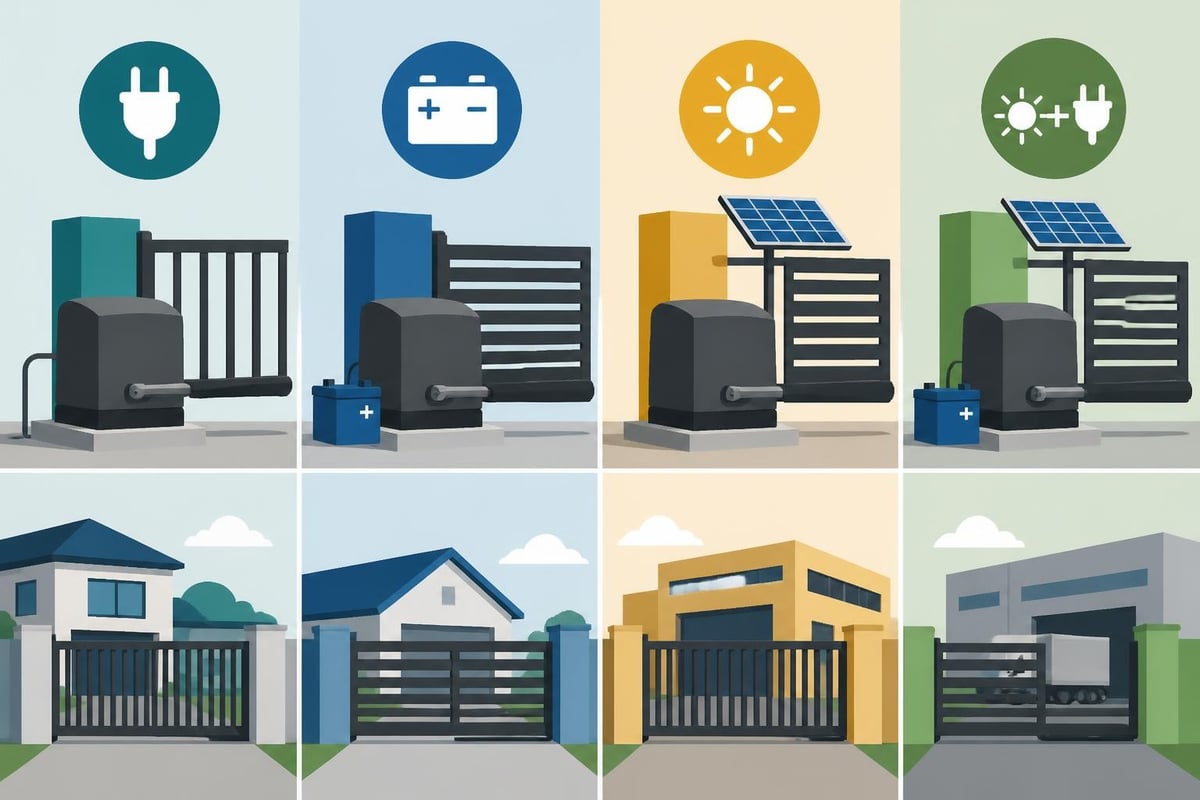
Different applications demand specific motor configurations:
- AC-powered operators: Continuous-duty motors for high-cycle commercial installations
- DC battery backup systems: Uninterrupted operation during power outages
- Solar-powered options: Off-grid solutions for remote gate locations
- Hybrid configurations: AC primary power with integrated battery backup
The LiftMaster residential gate operator lineup showcases various power options tailored to specific use cases. Selecting the appropriate power configuration depends on gate weight, cycle frequency, power availability, and backup requirements.
DC-powered systems have gained popularity in residential settings due to their soft-start and soft-stop capabilities, which reduce mechanical stress on gate hardware. These systems also integrate seamlessly with battery backup, ensuring access during California's occasional power disruptions.
Key Features That Distinguish Premium Gate Operators
Modern gate automation extends far beyond simple open-and-close functionality. A quality liftmaster electric gate opener incorporates multiple layers of safety, connectivity, and control features that enhance both security and user experience.
| Feature Category | Standard Features | Premium Additions |
|---|---|---|
| Safety Systems | Photoelectric sensors, obstruction detection | Monitored entrapment protection, multiple sensor zones |
| Access Control | Single-button remotes, keypad compatibility | MyQ smartphone control, multi-user management |
| Backup Power | Optional battery add-on | Integrated battery with status monitoring |
| Timer Functions | Basic open/close scheduling | Advanced scheduling, vacation mode, auto-close |
MyQ Connectivity and Smart Integration
The integration of MyQ technology represents a significant advancement in gate automation. This smartphone-based platform allows property owners to control their gates remotely, receive activity notifications, and grant temporary access to visitors or service providers. The system maintains an activity log, providing valuable security information about who accessed the property and when.
Smart home integration has become increasingly important for Los Angeles homeowners who value seamless automation. MyQ-enabled liftmaster electric gate opener models connect with popular platforms including Amazon Alexa, Google Assistant, and IFTTT, enabling voice control and automated routines.
For properties requiring comprehensive electric gate repair services, understanding these advanced features helps technicians diagnose connectivity issues and optimize system performance during service calls.
Safety Standards and Compliance Requirements
Gate operator safety represents a critical consideration that goes beyond convenience. The UL 325 standard governs safety requirements for gate operators, establishing mandatory entrapment protection devices based on the gate's operating characteristics and location.
UL 325 Classification System
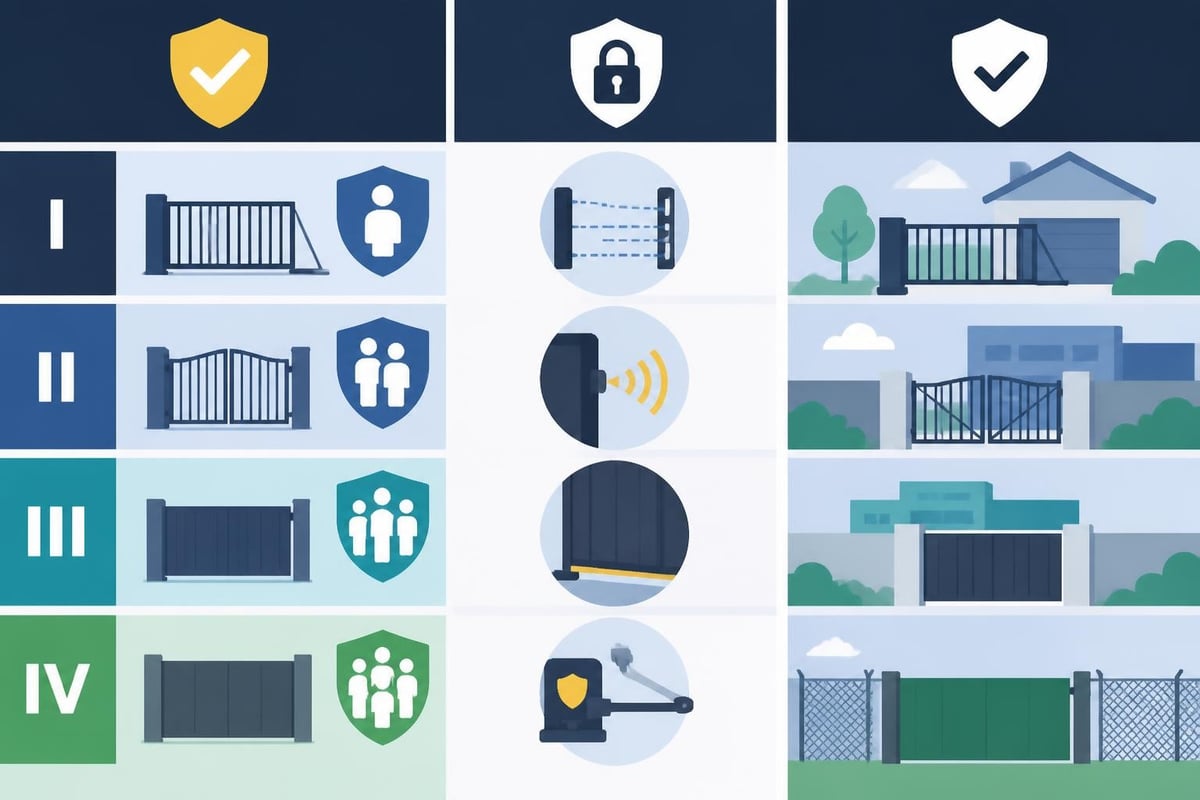
Gate operators fall into different UL 325 classes based on their operation:
- Class I: Vehicular gates in commercial or public locations (high-traffic)
- Class II: Vehicular gates in commercial locations (restricted access)
- Class III: Vehicular gates in residential locations
- Class IV: Pedestrian gates in all locations
Each classification mandates specific types of entrapment protection. Class I gates require the most comprehensive protection, including monitored inherent entrapment sensing or multiple independent safety devices. Understanding these requirements ensures compliance with local building codes and liability protection.
The DASMA Technical Data Sheet #353 provides detailed guidance on implementing UL 325 requirements across different gate configurations. Professional installers reference this document to ensure proper safety device installation and system integration.
Required Safety Devices and Their Functions
Modern liftmaster electric gate opener installations incorporate multiple safety mechanisms:
- Photoelectric sensors: Detect obstructions in the gate's path
- Edge sensors: Detect contact with objects during gate travel
- Loop detectors: Sense vehicles approaching or in the gate area
- Monitored entrapment protection: Verifies safety device functionality before each cycle
The manufacturer’s UL guidelines explain how these devices work together to create comprehensive protection. Proper installation and regular testing of safety systems prevent accidents and ensure continued compliance.
Model Selection for Different Applications
Choosing the right liftmaster electric gate opener requires careful consideration of gate specifications, usage patterns, and environmental factors. Los Angeles properties range from compact urban residential lots to sprawling commercial facilities, each presenting unique requirements.
Residential Swing Gate Applications
Single-family homes typically utilize swing gates ranging from 10 to 16 feet in width. The gate weight, material composition, and wind exposure determine operator sizing. Aluminum gates require less force than wrought iron or steel gates, affecting motor selection and arm configuration.
Key residential considerations include:
- Maximum gate weight capacity (typically 500-900 pounds per leaf)
- Wind load resistance in exposed coastal areas
- Desired opening speed (2-6 seconds per operation)
- Battery backup duration (15-50 cycles during outage)
- Aesthetic integration with property design
The LA400 series represents a popular choice for residential swing gates, offering reliable performance in a compact, weather-resistant package. These units provide adjustable opening speeds and forces, allowing customization to specific gate characteristics.
Commercial and High-Traffic Installations
Commercial properties demand robust operators capable of handling hundreds of daily cycles. Industrial-duty liftmaster electric gate opener models feature heavy-duty components, enhanced cooling systems, and extended warranty coverage designed for demanding applications.
| Application Type | Daily Cycles | Recommended Features | Typical Models |
|---|---|---|---|
| Residential | 10-30 | Battery backup, MyQ, soft start/stop | LA400, CSW24U |
| Multi-family | 50-100 | Commercial-duty motor, access control integration | CSL24U, SL3000UL |
| Commercial/Industrial | 200-500+ | Continuous-duty rating, redundant safety, traffic control | Elite CSW200, SL585 |
Commercial gate systems often integrate with property management software, allowing centralized control of multiple access points and detailed reporting capabilities. This integration requires operators with compatible control boards and communication protocols.
Installation Considerations and Best Practices
Proper installation forms the foundation of reliable gate operation. While professional installation remains strongly recommended, understanding the process helps property owners prepare sites and communicate effectively with installers.
Site Preparation Requirements
Before operator installation begins, several site conditions must be verified:
- Electrical service: Dedicated 110V circuit with GFCI protection at operator location
- Gate alignment: Properly hung gates with smooth manual operation
- Swing clearance: Adequate space for gate travel without obstructions
- Foundation: Solid mounting surface for operator and safety device posts
- Control access: Protected location for keypads and card readers
The DASMA Technical Data Sheet #352 outlines comprehensive design and installation guidelines for automatic vehicular gate systems. Following these industry standards ensures safe, code-compliant installations.
Wiring and Control Integration
Modern liftmaster electric gate opener systems require careful attention to wiring practices. Low-voltage control wiring must maintain proper separation from AC power conductors, and all connections should use weatherproof enclosures rated for outdoor use.
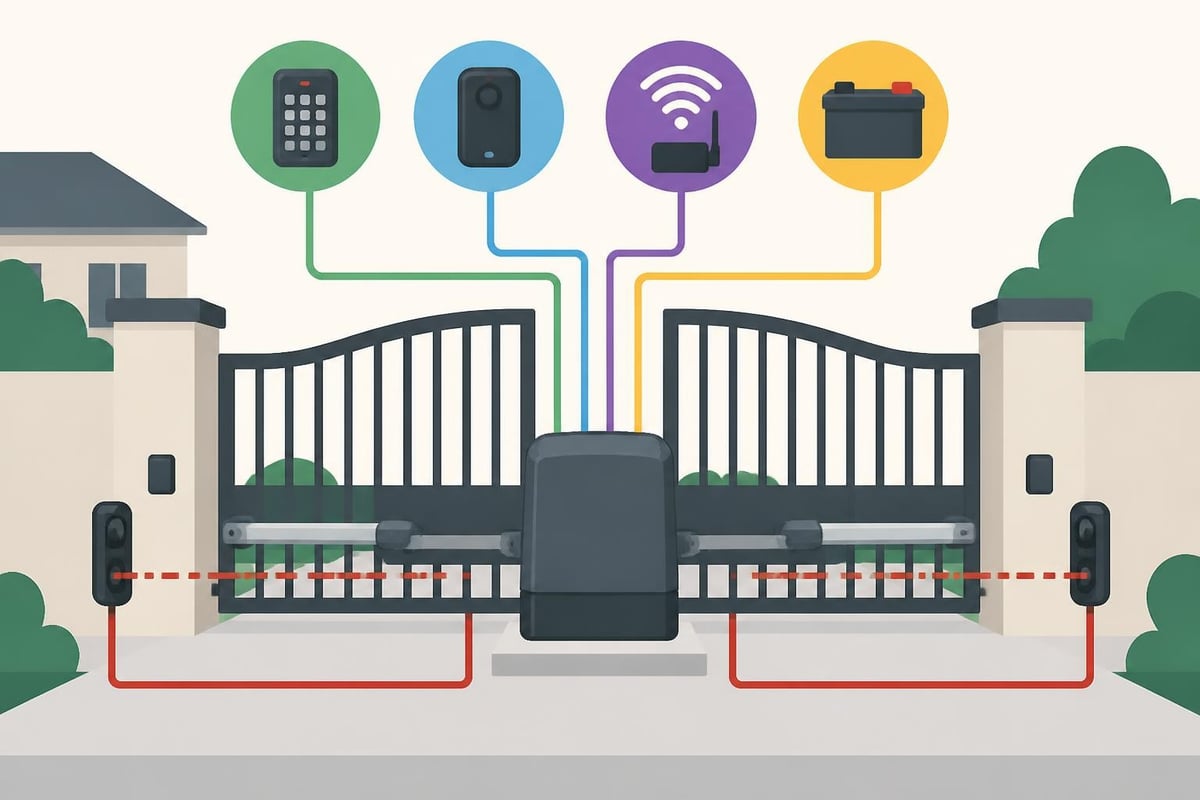
Critical wiring considerations include:
- Using appropriate wire gauge for run lengths (voltage drop calculations)
- Proper grounding of operator chassis and control enclosure
- Shielded cable for sensor connections in electrically noisy environments
- Surge protection on AC power and telephone entry circuits
- Conduit protection for exposed wiring runs
Control board programming allows customization of opening speed, force limits, auto-close timing, and entrapment sensitivity. Installers reference the official installation manual for specific programming procedures and adjustment parameters.
Maintenance Requirements and Service Intervals
Regular maintenance extends operator lifespan and prevents unexpected failures. A well-maintained liftmaster electric gate opener can provide 15-20 years of reliable service, while neglected systems often require premature replacement.
Routine Maintenance Schedule
Professional gate service providers recommend the following maintenance intervals:
Monthly (Owner-Performed):
- Visual inspection of gate alignment and hardware condition
- Test safety sensor function using obstruction
- Verify auto-reverse operation
- Clean photoeye lenses
Quarterly:
- Lubricate pivot points and hinges
- Check hardware tightness
- Test battery backup function
- Inspect wiring for damage
Annual (Professional Service):
- Comprehensive safety system testing
- Motor and gearbox inspection
- Control board diagnostics
- Force and speed adjustment verification
- Compliance documentation update
Los Angeles' coastal climate presents specific challenges including salt air corrosion and temperature variations. Properties within five miles of the Pacific Ocean benefit from increased inspection frequency and corrosion-preventive treatments.
Common Issues and Troubleshooting
Understanding typical failure modes helps property owners identify when professional service is required. The most common liftmaster electric gate opener issues include:
| Symptom | Possible Cause | Service Required |
|---|---|---|
| Gate won't respond to remote | Transmitter battery, receiver module, antenna | Basic troubleshooting or service call |
| Gate reverses immediately | Safety sensor misalignment, obstruction, force setting | Safety system inspection |
| Intermittent operation | Loose wiring, control board failure, power issues | Electrical diagnostics |
| Slow or labored movement | Low battery, mechanical binding, motor wear | Mechanical and electrical service |
| Complete system failure | Power outage, blown fuse, major component failure | Emergency service required |
Properties requiring assistance with gate performance issues can benefit from professional gate repair services that specialize in LiftMaster systems and maintain factory-trained technicians.
Battery Backup Systems and Power Management
California's grid reliability improvements notwithstanding, power outages still occur with sufficient frequency to warrant battery backup consideration. A liftmaster electric gate opener with integrated or optional battery backup ensures continued access during electrical service interruptions.
Battery Technology Options
Modern gate operators utilize two primary battery technologies:
Sealed Lead-Acid (SLA) batteries offer proven reliability at moderate cost. These batteries typically provide 15-30 gate cycles per charge and require replacement every 2-4 years depending on cycle frequency and environmental conditions.
Lithium-ion batteries represent the premium option, delivering 30-50 cycles per charge with extended service life (5-7 years). The higher initial investment is offset by reduced replacement frequency and superior performance in extreme temperatures.
Battery capacity calculations must account for gate weight, desired backup duration, and seasonal temperature variations. Los Angeles' mild climate provides favorable conditions for battery performance, though installations in direct sunlight require thermal management consideration.
Solar Power Integration
Remote gate locations without convenient AC power access benefit from solar-powered operation. Complete solar kits include photovoltaic panels, charge controllers, deep-cycle batteries, and appropriately sized liftmaster electric gate opener models optimized for DC operation.
Solar system sizing depends on:
- Daily gate cycle count
- Available sunlight (Southern California receives excellent solar resources)
- Battery bank capacity for multi-day autonomy
- Seasonal variation in solar collection
Professional solar gate installations require careful panel positioning, robust battery enclosures, and charge management to prevent over-discharge damage. These systems provide excellent long-term value for appropriate applications while eliminating recurring electrical costs.
Integration with Access Control Systems
Modern property security extends beyond simple gate automation to comprehensive access management. A liftmaster electric gate opener serves as the execution layer within broader access control architectures, responding to authentication from various credential sources.
Access Control Technology Options
Property owners can choose from multiple access credential technologies:
- RF transmitters: Traditional clicker remotes (318/390 MHz)
- Keypads: PIN code entry for visitors and service providers
- Card readers: Proximity or smart cards for multi-user facilities
- Smartphone apps: MyQ or third-party access management platforms
- Intercom systems: Video verification before granting access
- License plate recognition: Automated vehicle identification
Each technology offers distinct advantages in security, convenience, and management capability. Residential properties typically combine transmitters, keypads, and smartphone control, while commercial facilities often deploy card readers or license plate recognition for scalability.
The ICC references to automatic gate requirements include provisions for access control integration in fire safety contexts, particularly for emergency vehicle access. These code requirements influence system design in multi-family and commercial projects.
Multi-User Management
Commercial and multi-family properties benefit from access control systems that track individual users and provide detailed audit trails. Modern liftmaster electric gate opener installations integrate with cloud-based platforms offering:
- Individual user credentials with scheduling restrictions
- Temporary access codes for contractors or guests
- Activity logging with user identification
- Remote management via web portal or smartphone app
- Integration with property management software
This level of control provides both security and operational insight, allowing property managers to identify usage patterns and optimize access policies.
Environmental Considerations and Weather Protection
Los Angeles' Mediterranean climate offers generally favorable conditions for gate automation, though coastal properties face salt air exposure while inland areas experience greater temperature extremes. A properly specified liftmaster electric gate opener accounts for local environmental factors.
Coastal Installation Challenges
Properties within the coastal zone (typically within 3-5 miles of the ocean) face accelerated corrosion from salt-laden air. Protective measures include:
- Stainless steel mounting hardware
- Marine-grade electrical connections and enclosures
- Regular cleaning of exposed components
- Protective coatings on aluminum and steel parts
- Enhanced inspection schedules
Gate operators carry IP (Ingress Protection) ratings indicating their resistance to dust and moisture. Coastal installations benefit from higher IP ratings (IP65 or better) providing enhanced environmental protection.
Temperature and UV Exposure
Inland Los Angeles locations can experience summer temperatures exceeding 100°F, placing thermal stress on electronic components and battery systems. Strategic operator placement in shaded locations extends component life and maintains optimal performance.
UV exposure degrades plastic components and wiring insulation over time. Quality liftmaster electric gate opener installations utilize UV-stabilized materials and protective conduit for exposed wiring runs, preventing premature failure from sun exposure.
Cost Considerations and Return on Investment
Understanding the total cost of gate automation helps property owners make informed investment decisions. The initial equipment and installation expense represents only one component of the total lifecycle cost.
Initial Investment Breakdown
A typical residential liftmaster electric gate opener installation includes:
| Component | Cost Range | Notes |
|---|---|---|
| Gate Operator Unit | $800-$2,500 | Varies by model and features |
| Installation Labor | $600-$1,500 | Depends on site complexity |
| Safety Devices | $200-$600 | Sensors, edge protection |
| Access Controls | $150-$800 | Keypads, transmitters, smartphone integration |
| Electrical Work | $300-$800 | Dedicated circuit installation |
| Total Investment | $2,050-$6,200 | Typical residential range |
Commercial installations involve higher costs due to larger gates, industrial-duty operators, and more sophisticated access control integration. These projects typically range from $5,000 to $15,000 depending on complexity.
Long-Term Value Proposition
Property automation delivers value beyond initial convenience. Security enhancement reduces insurance premiums for some property owners, while curb appeal improvements contribute to property value. Commercial properties realize operational savings through reduced security staffing and improved traffic flow management.
Energy-efficient DC operators consume minimal power during standby, typically under $20 annually in electricity costs. Regular maintenance prevents costly emergency repairs and extends equipment lifespan, protecting the initial investment.
Warranty Coverage and Service Support
Manufacturer warranty terms significantly impact total cost of ownership. LiftMaster provides tiered warranty coverage based on application and operator model, typically offering:
- Consumer residential: 3-5 year warranty on motor and electronics
- Commercial: 2-3 year warranty with provisions for high-cycle applications
- Extended coverage: Available through authorized dealers for premium models
Warranty coverage requires professional installation by licensed contractors and adherence to maintenance schedules. Property owners should retain installation documentation and service records to support warranty claims.
Local service availability matters significantly for gate automation reliability. Los Angeles benefits from numerous authorized service providers maintaining factory-trained technicians and comprehensive parts inventory, ensuring prompt response for service needs.
Future Trends in Gate Automation Technology
The gate automation industry continues evolving with advances in connectivity, artificial intelligence, and sustainable energy. Understanding emerging trends helps property owners future-proof their investments.
Predictive maintenance algorithms monitor operator performance metrics, identifying potential failures before they occur. This technology, now appearing in premium liftmaster electric gate opener models, schedules maintenance based on actual component wear rather than arbitrary time intervals.
Enhanced security integration connects gate systems with comprehensive property security platforms, coordinating with surveillance cameras, alarm systems, and lighting control. Artificial intelligence analyzes access patterns, identifying anomalous behavior for security alerts.
Sustainable power systems incorporate improved solar efficiency and energy storage, making off-grid operation practical for more applications. Advanced power management extends battery life and reduces environmental impact.
Selecting and maintaining a liftmaster electric gate opener requires understanding technology options, safety requirements, and long-term service needs specific to your property's unique characteristics. Whether upgrading existing automation or planning a new installation, partnering with experienced professionals ensures optimal performance, safety compliance, and lasting value. For expert installation, maintenance, and repair services throughout Los Angeles, Gates & Garage Door Express Inc. provides family-owned service backed by factory training and a commitment to customer satisfaction, with same-day emergency support available when you need it most.