
Automatic gate motors serve as the heart of modern access control systems, providing convenience and security for residential and commercial properties. When these motors fail, property owners face immediate security concerns and operational disruptions. Understanding the repair process, common failure points, and professional solutions helps property managers and homeowners make informed decisions when their gate systems malfunction. This comprehensive guide explores the technical aspects of auto gate motor repair, from initial diagnostics through successful restoration.
Understanding Auto Gate Motor Systems
Auto gate motors combine electrical engineering, mechanical components, and control systems to operate swing gates, slide gates, and barrier systems. These motors typically range from fractional horsepower units for residential applications to multi-horsepower industrial motors for heavy commercial gates.
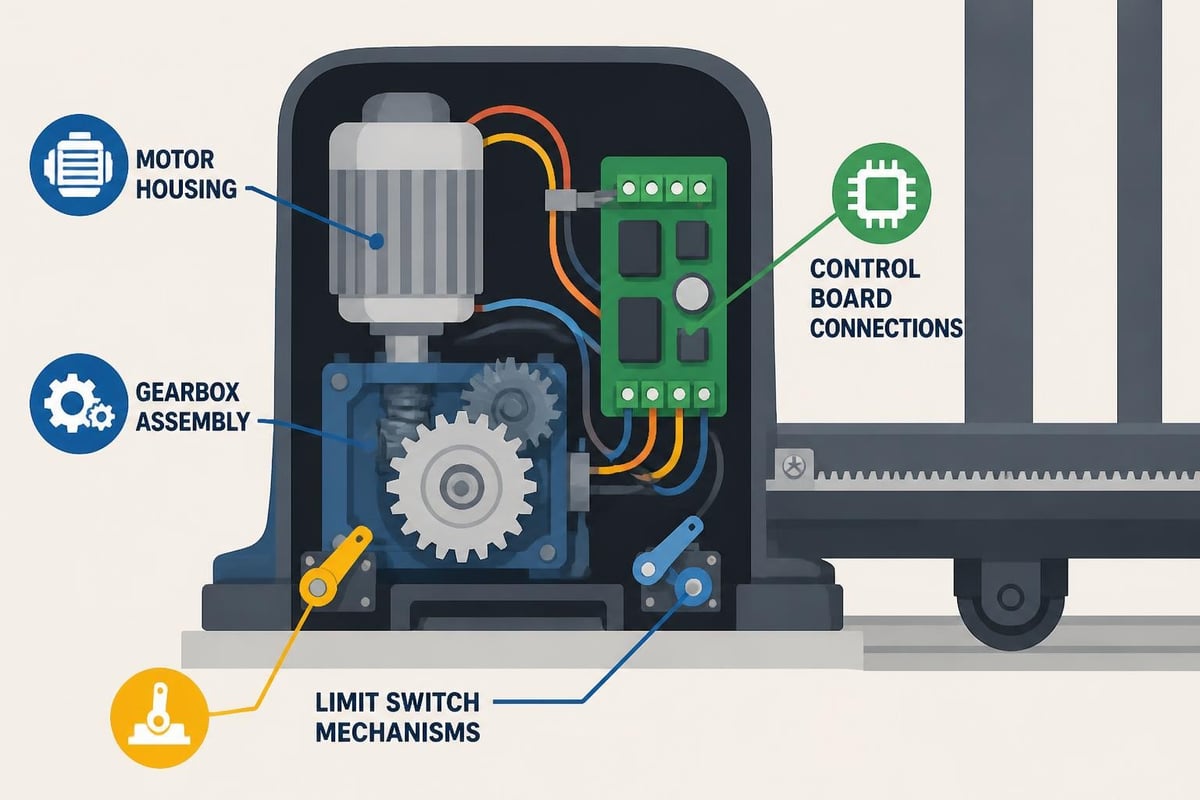
The motor assembly includes several critical components that work together. The motor itself provides rotational force, while the gearbox reduces speed and increases torque for gate movement. Control boards manage power delivery, safety features, and communication with access control devices. The limit switch system determines gate travel endpoints, and safety sensors prevent entrapment accidents.
Motor Types and Applications
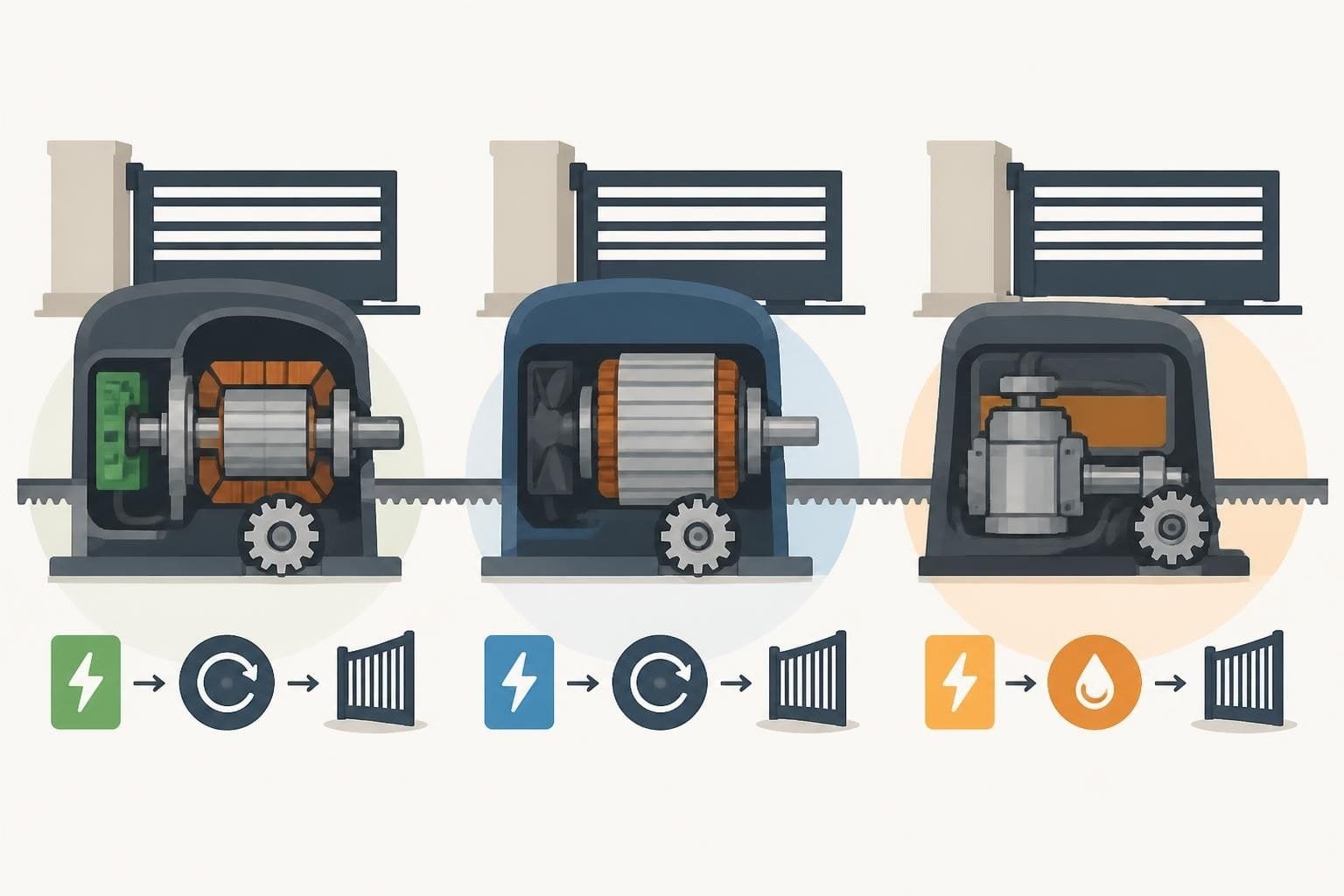
Different gate configurations require specific motor designs. Swing gate operators use articulated arms or ram-style actuators, converting motor rotation into pushing or pulling force. Slide gate motors employ direct drive or chain drive systems to move gates laterally along tracks. Each design presents unique repair challenges and component vulnerabilities.
The installation manual for heavy-duty slide gate operators demonstrates the complexity of modern gate systems, with detailed wiring diagrams and safety requirements that technicians must understand for effective repairs.
Common Motor Failure Modes
Motor failures typically manifest through specific symptoms that indicate underlying problems. Recognizing these patterns accelerates diagnosis and reduces repair costs by preventing secondary damage.
| Symptom | Probable Cause | Urgency Level |
|---|---|---|
| Motor hums but won't turn | Capacitor failure, seized bearings | High – immediate repair needed |
| Intermittent operation | Thermal overload, loose connections | Medium – repair within 48 hours |
| Complete dead motor | Control board failure, power supply issue | High – security compromise |
| Slow or weak movement | Worn gears, low voltage, motor degradation | Medium – schedule maintenance |
| Excessive noise | Bearing wear, gear damage, loose components | Medium – prevent further damage |
Electrical Component Failures
Capacitor failure represents the most common electrical issue in auto gate motor repair. Start capacitors provide the initial torque boost for motor startup, while run capacitors improve efficiency during operation. When capacitors degrade, motors struggle to start or fail completely. Testing capacitors requires specialized meters that measure capacitance and equivalent series resistance.
Control board failures often result from power surges, moisture intrusion, or component aging. Modern gate operators use microprocessor-based controllers that manage multiple functions simultaneously. A single failed component on the board can disable the entire system. Professional technicians diagnose board failures through voltage testing, visual inspection for burnt components, and systematic signal tracing.
Thermal protection devices safeguard motors from overheating by interrupting power when safe temperature thresholds are exceeded. Frequent thermal trips indicate underlying problems such as insufficient ventilation, overloaded gates, or failing motor windings. The Baldor motor technical documentation provides comprehensive troubleshooting procedures for thermal protection systems and common motor failure modes.
Diagnostic Procedures and Tools
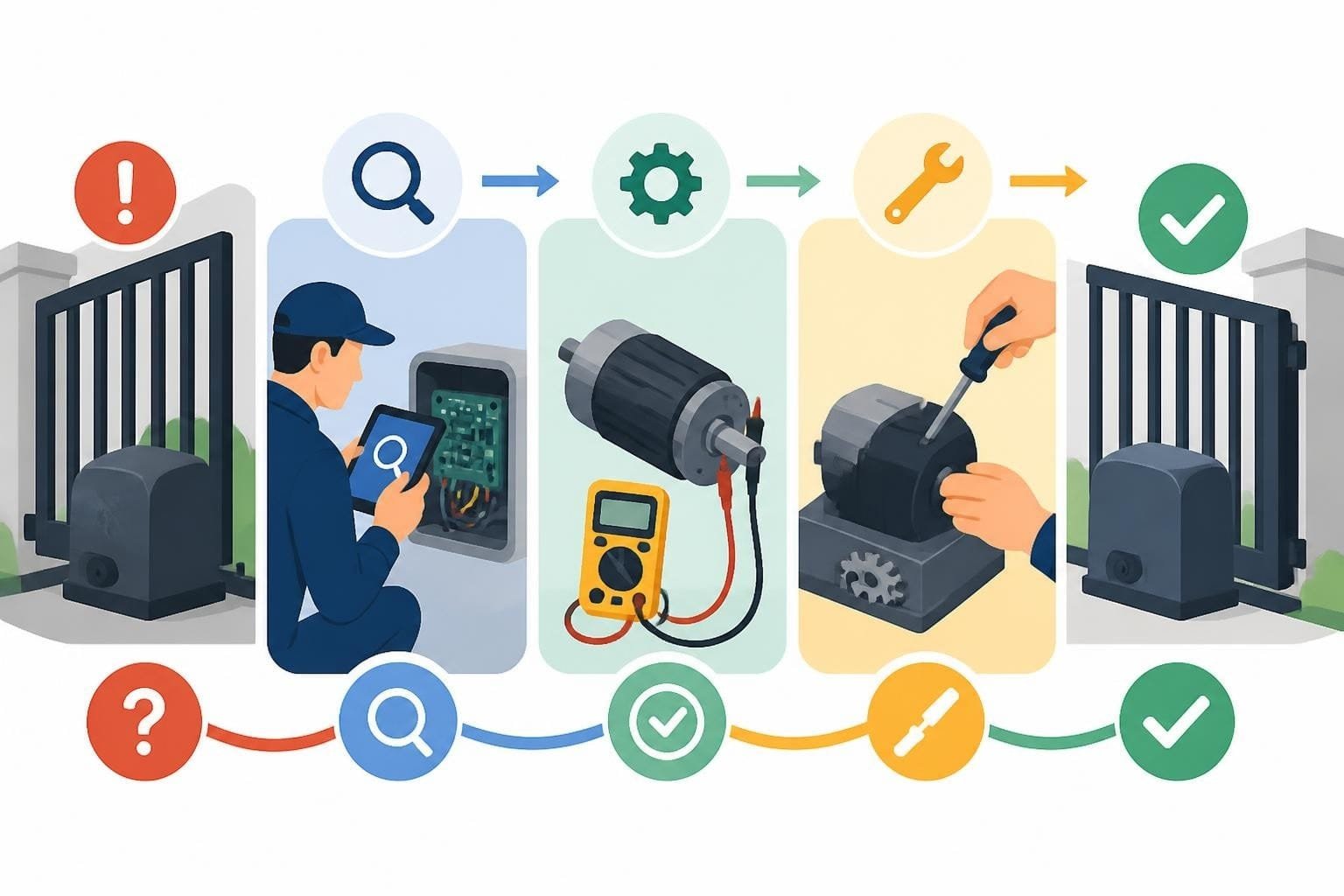
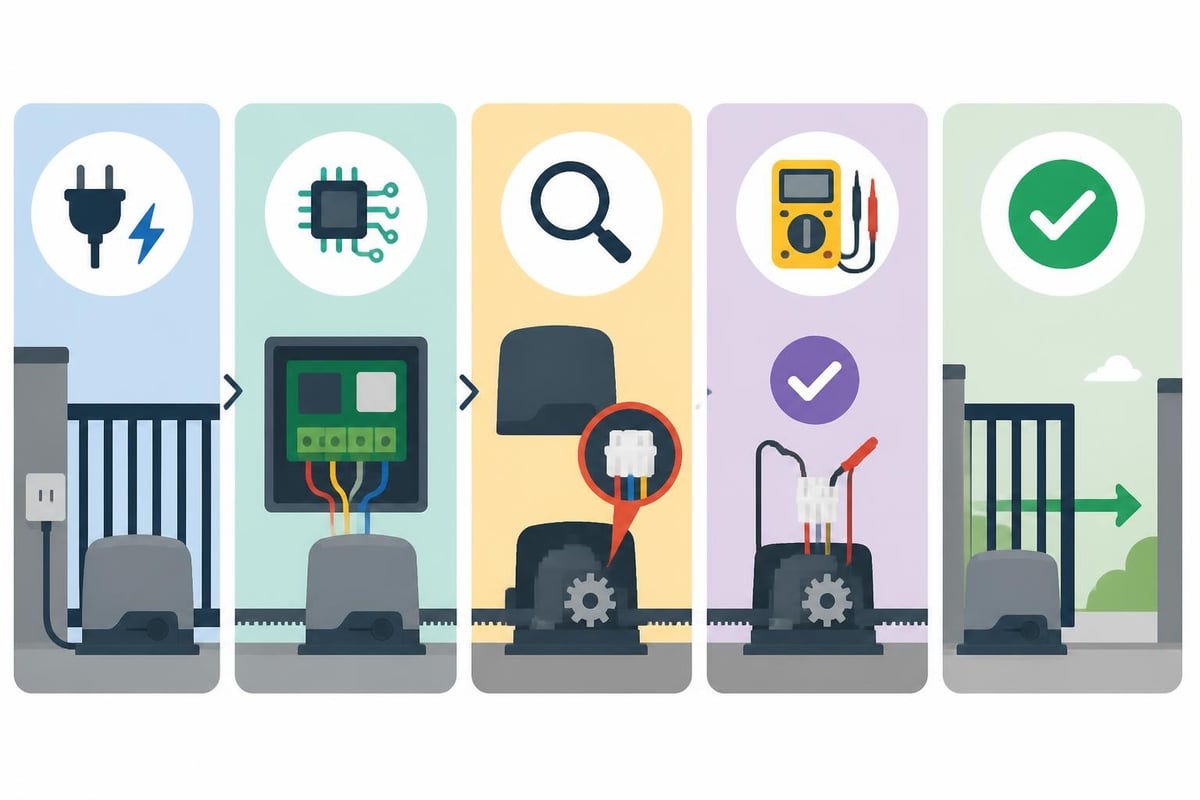
Systematic diagnosis forms the foundation of efficient auto gate motor repair. Professional technicians follow structured protocols that identify root causes rather than merely addressing symptoms.
Initial Assessment Steps
- Visual inspection examines the motor housing, wiring connections, and mechanical linkages for obvious damage
- Power verification confirms proper voltage delivery at the motor terminals using digital multimeters
- Control signal testing validates that the control board sends appropriate commands to the motor
- Load testing evaluates motor performance under actual gate operating conditions
- Safety system verification ensures all entrapment protection devices function correctly
The diagnostic process must account for UL 325 safety requirements that govern gate operator design and installation. These standards mandate specific entrapment protection features that technicians must preserve during repairs.
Essential Testing Equipment
Professional auto gate motor repair requires specialized diagnostic tools. Digital multimeters measure voltage, current, and resistance across motor components. Clamp-on ammeters assess motor current draw without breaking circuit connections, revealing overload conditions or efficiency losses. Capacitor testers provide accurate measurements of capacitance values and leakage current.
Advanced diagnostic equipment includes:
- Infrared thermometers for non-contact temperature measurement
- Insulation resistance testers (meggers) for winding integrity verification
- Oscilloscopes for analyzing control signal timing and quality
- Torque meters for mechanical load assessment
- Gate force measurement devices for entrapment protection compliance
Mechanical Component Repair
The mechanical drivetrain converts motor rotation into gate movement. Gearboxes reduce motor speed while multiplying torque, enabling smaller motors to move heavy gates efficiently. Over time, gear wear, lubricant degradation, and seal failures compromise gearbox performance.
Gearbox inspection reveals wear patterns that indicate misalignment, overloading, or lubrication problems. Metal shavings in the lubricant suggest advanced gear wear requiring complete gearbox replacement. Proper lubrication extends component life significantly, but many operators use incorrect lubricants that accelerate wear rather than prevent it.
Bearing Replacement Procedures
Motor bearings support the rotating shaft and must withstand continuous operation in outdoor environments. Bearing failure produces distinctive grinding noises and causes shaft wobble that damages other components. Auto gate motor repair often includes bearing replacement as a preventive measure during major service.
The replacement process requires specialized bearing pullers and installation tools. Technicians must measure shaft dimensions precisely and select bearings with appropriate load ratings and environmental seals. Improper bearing installation causes premature failure and potential safety hazards.
| Bearing Type | Application | Expected Lifespan | Replacement Indicator |
|---|---|---|---|
| Sealed ball bearings | Light-duty residential | 5-8 years | Roughness, noise |
| Tapered roller bearings | Heavy commercial | 8-12 years | Excessive play, heat |
| Sleeve bearings | Fractional HP motors | 3-5 years | Shaft scoring, wobble |
Control System Repairs
Modern gate operators integrate sophisticated control systems that manage safety features, access control integration, and automated scheduling. Control board repairs require electronics expertise and access to manufacturer-specific diagnostic information.
Circuit board troubleshooting begins with visual inspection for obvious damage such as burnt components, cracked solder joints, or corrosion. Moisture intrusion commonly damages boards in outdoor gate operators, creating conductive paths that cause shorts or erratic behavior. Professional repair involves component-level diagnostics and selective part replacement.
Relay failures represent another common control system issue. Relays switch high-current motor circuits under control board command. Repeated switching cycles wear relay contacts, eventually causing failure to energize or release. Testing relays requires observing contact operation while measuring coil voltage and contact continuity.
Safety Circuit Maintenance
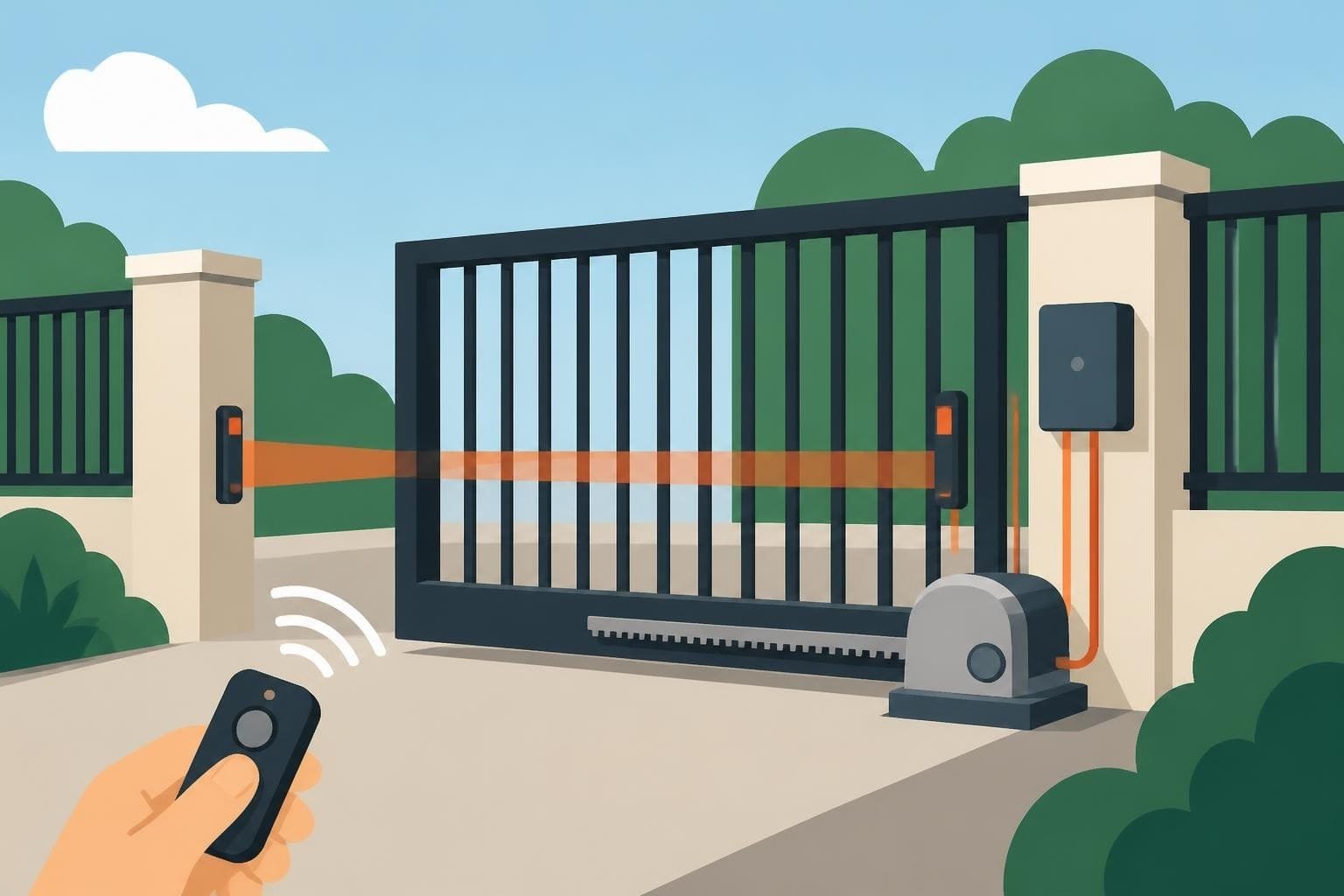
Gate operator safety systems prevent injuries and comply with regulatory requirements. Photo-eye sensors detect obstructions in the gate path, reversing operation when interrupted. Edge sensors mounted on gate leading edges detect contact with objects or people. These systems require regular testing and calibration.
The DASMA technical data sheets provide authoritative guidance on safety system installation and inspection procedures. Professional technicians verify safety compliance during every auto gate motor repair, documenting proper operation of all entrapment protection devices.
Safety circuit failures often result from environmental exposure. Photo-eye lenses accumulate dirt and moisture, reducing beam reliability. Wiring connections corrode in outdoor installations, creating intermittent failures. Edge sensors degrade from repeated impact and weather exposure. Comprehensive repairs address these systematic vulnerabilities.
Professional vs. DIY Repair Considerations
Property owners frequently face decisions about handling auto gate motor repair internally versus hiring professional technicians. This choice involves technical complexity, safety requirements, warranty implications, and cost factors.
DIY repair limitations include:
- Lack of specialized diagnostic equipment
- Limited access to manufacturer technical support
- Warranty voiding on newer equipment
- Safety compliance uncertainty
- Component sourcing challenges for proprietary parts
Professional repair services bring manufacturer training, specialized tools, and liability insurance that protects property owners. Experienced technicians diagnose problems faster and avoid collateral damage from incorrect repairs. For complex issues involving control boards or safety systems, professional service proves more cost-effective than multiple DIY attempts.
However, certain maintenance tasks suit DIY approaches. Lubricating mechanical components, cleaning photo-eyes, and testing safety systems require minimal tools and technical knowledge. Property owners who perform regular preventive maintenance reduce major repair frequency and extend system lifespan.
When to Call Professional Services
Specific situations demand professional intervention. Electrical failures involving control boards or motor windings require expertise and safety protocols beyond typical DIY capabilities. Safety system malfunctions create liability exposure that necessitates certified repairs. Warranty coverage usually requires authorized service providers for repair work.
Professional electric gate repair services offer comprehensive diagnostics, genuine replacement parts, and warranty-backed workmanship. Technicians trained in multiple manufacturer systems efficiently diagnose cross-brand issues and recommend appropriate solutions.
Preventive Maintenance Programs
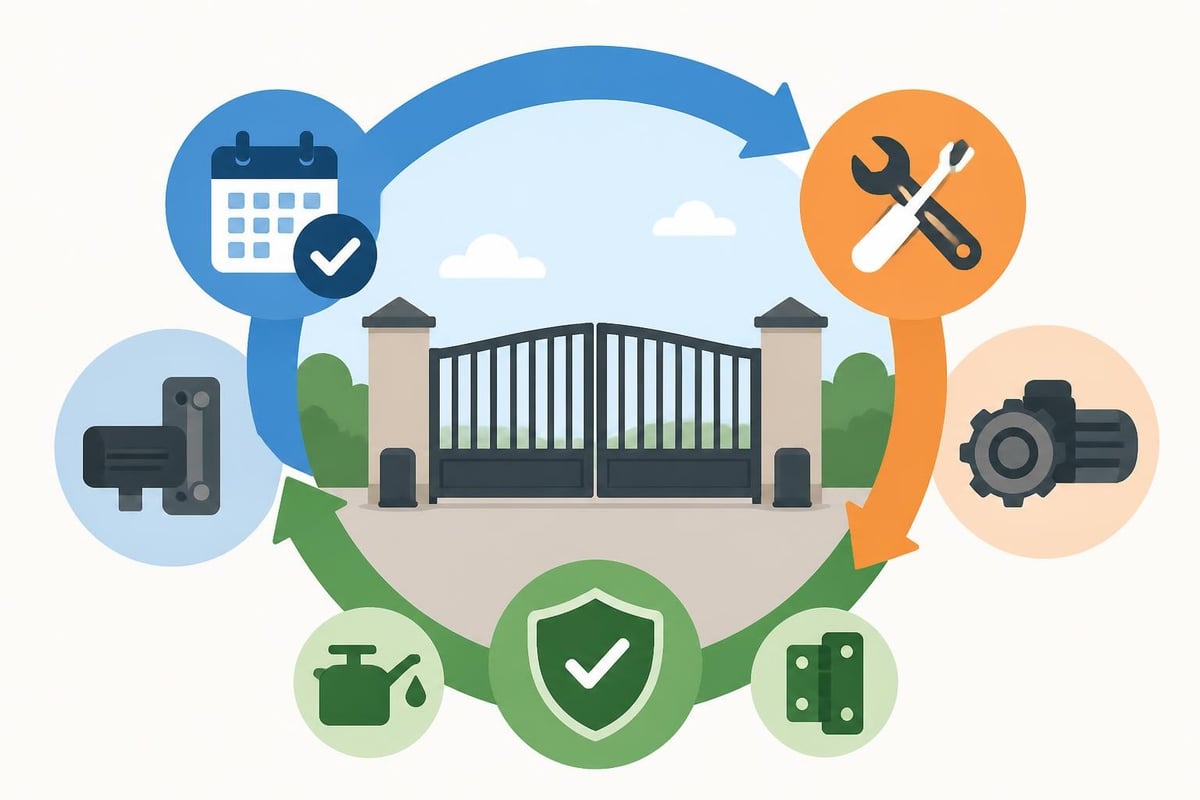
Scheduled maintenance dramatically reduces emergency auto gate motor repair incidents. Systematic inspection and service intervals identify developing problems before complete failures occur.
Recommended Maintenance Schedule
Monthly checks include:
- Visual inspection of motor, gearbox, and mechanical linkages
- Photo-eye cleaning and alignment verification
- Gate balance and smooth travel assessment
- Remote control and keypad operation testing
Quarterly service involves:
- Control board visual inspection and connection tightening
- Safety system functional testing
- Current draw measurement and comparison to baseline
- Lubrication of pivot points and moving components
Annual comprehensive service addresses:
- Gearbox oil change or grease repacking
- Bearing inspection and replacement if needed
- Complete electrical connection audit
- Safety force testing and adjustment
- Detailed operational log documentation
The manufacturer resources for gate operators provide detailed maintenance schedules specific to equipment models, helping property managers develop appropriate service programs.
Motor Replacement vs. Repair Decisions
Cost-benefit analysis guides the choice between repairing existing motors and complete replacement. Several factors influence this decision beyond simple repair estimates.
Motor age significantly affects repair wisdom. Motors approaching or exceeding manufacturer-rated lifespan often develop multiple concurrent problems. Repairing one component may provide only temporary relief before another failure occurs. Replacement with modern, energy-efficient operators provides better long-term value.
| Decision Factor | Favor Repair | Favor Replacement |
|---|---|---|
| Motor age | Under 5 years | Over 10 years |
| Repair cost | Under 40% of new | Over 60% of new |
| Energy efficiency | Recent model | Pre-2015 technology |
| Parts availability | OEM parts stocked | Obsolete components |
| Safety compliance | Meets current UL 325 | Predates modern standards |
Technology advancement provides another replacement consideration. Modern gate operators offer smartphone integration, battery backup systems, improved safety features, and enhanced security. These capabilities justify replacement even when repairs remain technically feasible.
Code Compliance and Safety Standards
Auto gate motor repair must maintain compliance with current safety regulations. The ANSI/UL 325 standard establishes requirements for automatic gate operators, including entrapment protection, emergency operation, and fail-safe design.
Repairs that modify safety systems require particular attention to compliance. Adding or replacing components must not compromise entrapment protection or emergency release functions. Professional technicians document safety system operation before and after repairs, ensuring continued compliance.
Local building codes often reference UL 325 requirements, making compliance mandatory rather than optional. Insurance considerations also favor compliant installations, as non-compliant systems may void liability coverage following accidents.
Emergency Repair Situations
Gate motor failures often constitute security emergencies requiring immediate response. Gates stuck in closed positions prevent property access, while gates stuck open create security vulnerabilities. Professional repair services offer emergency response for critical situations.
Emergency diagnostics prioritize restoring basic functionality, with comprehensive repairs scheduled subsequently. Technicians may bypass failed components temporarily to restore gate operation, then return for permanent repairs during business hours. This staged approach balances security needs with cost-effective repair practices.
Property owners should maintain relationships with qualified repair services before emergencies occur. Established service agreements often include priority response and discounted emergency rates. For businesses relying on automatic gates for access control, such relationships constitute essential operational planning.
Environmental Factors in Motor Longevity
Climate and installation environment profoundly affect motor lifespan and repair frequency. Coastal installations face accelerated corrosion from salt air. Desert locations contend with extreme temperature swings and abrasive dust. Understanding environmental challenges helps prevent failures through appropriate equipment selection and maintenance.
Motor enclosures provide the primary defense against environmental damage. NEMA-rated enclosures specify protection levels against moisture, dust, and temperature extremes. Installations in challenging environments benefit from higher-rated enclosures that increase initial cost but dramatically reduce repair frequency.
Ventilation requirements balance environmental protection with heat dissipation needs. Motors generate heat during operation that must escape to prevent thermal damage. Sealed enclosures in hot climates may require forced ventilation or heat sinks to maintain safe operating temperatures.
Integration with Access Control Systems
Modern gate operators integrate with sophisticated access control platforms including card readers, keypads, telephone entry systems, and network-connected controllers. Auto gate motor repair must preserve these integrations while addressing mechanical and electrical failures.
Control system compatibility challenges arise when replacing older motors with modern equivalents. Interface requirements between access control devices and gate operators vary by manufacturer and model. Professional technicians understand these compatibility requirements and configure replacement systems appropriately.
Network-connected gate operators enable remote monitoring and control but introduce cybersecurity considerations. Repairs involving control boards or communication modules must maintain network security configurations. Password protection, encryption settings, and access logging require preservation or proper reconfiguration during repairs.
Cost Factors and Budget Planning
Auto gate motor repair costs vary significantly based on failure type, equipment brand, and service provider. Understanding cost components helps property owners budget appropriately and evaluate repair proposals.
Typical cost breakdown includes:
- Diagnostic fee (often applied to repair if authorized)
- Parts cost (genuine vs. aftermarket considerations)
- Labor charges (hourly rate or flat-rate pricing)
- Emergency service premiums for after-hours work
- Travel charges for remote locations
Obtaining multiple repair estimates provides cost comparison opportunities but requires consistent problem descriptions. Detailed diagnostic reports from the initial service call facilitate accurate competitive bidding for major repairs.
Warranty considerations affect repair costs substantially. Equipment under manufacturer warranty may qualify for free repairs through authorized service providers. Extended warranty programs purchased at installation reduce lifetime ownership costs for commercial installations with critical access control requirements.
Understanding auto gate motor repair requirements empowers property owners to maintain reliable access control systems while managing costs effectively. Regular maintenance prevents most major failures, while prompt professional attention to developing problems minimizes repair expenses and security disruptions. Whether you're facing an immediate motor failure or planning preventive service, working with experienced technicians ensures proper diagnosis, compliant repairs, and lasting solutions. Gates & Garage Door Express Inc. combines family-owned service values with professional expertise to deliver same-day emergency repairs and comprehensive maintenance programs throughout Los Angeles, helping property owners maintain secure, reliable automatic gate systems year-round.