
Modern property security and convenience have been transformed by automated entry systems that provide seamless access while maintaining robust protection. Whether for residential driveways or commercial facilities, these systems have become essential infrastructure that combines mechanical reliability with intelligent control. Understanding the components, installation requirements, safety regulations, and maintenance needs helps property owners make informed decisions that protect their investment and ensure long-term reliability.
Understanding Automatic Gate Opener Systems
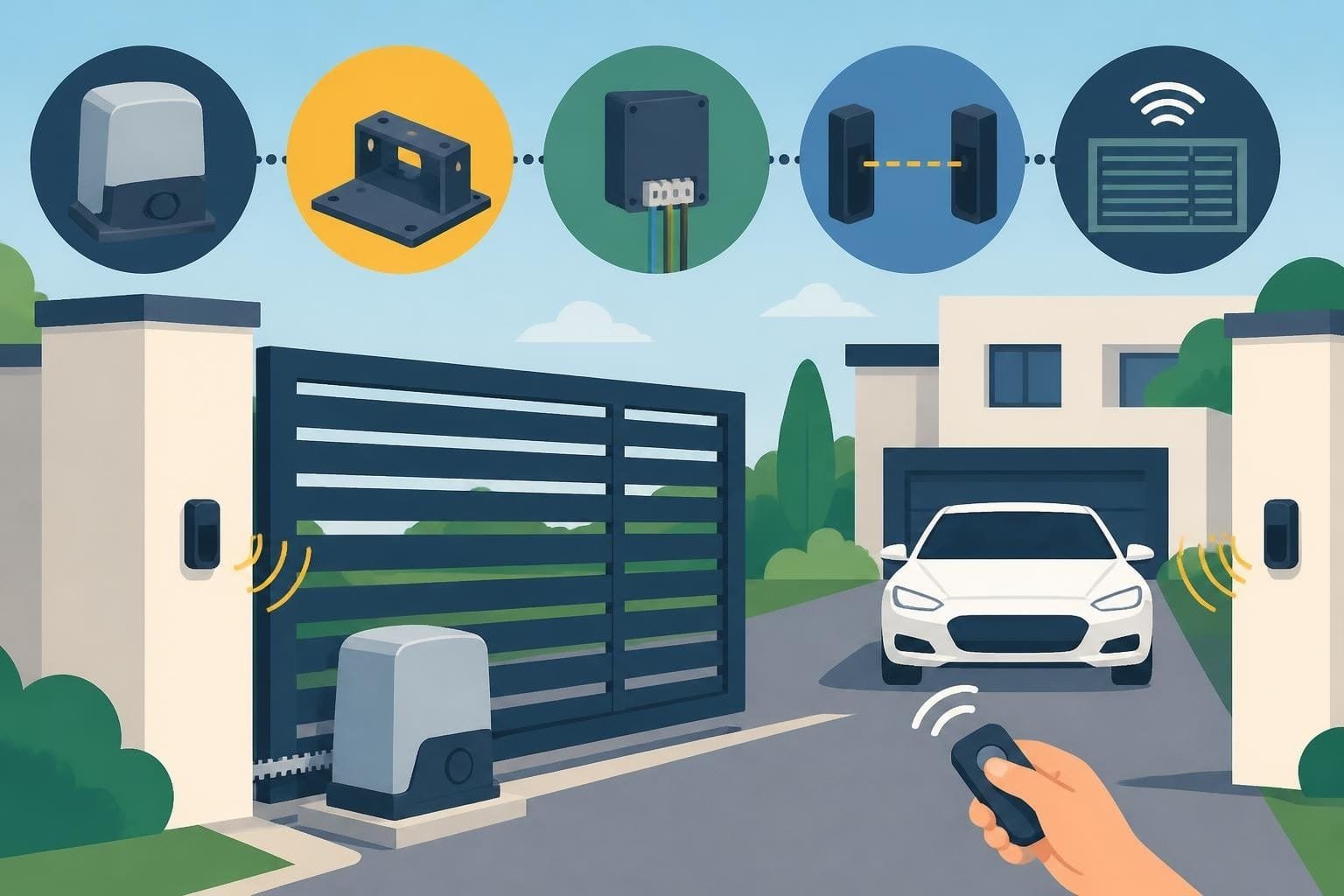
An automatic gate opener consists of several integrated components that work together to provide controlled access. The motor unit serves as the heart of the system, converting electrical energy into mechanical force. Control boards process signals from various input devices, while safety sensors prevent accidents by detecting obstacles in the gate's path.
The basic architecture includes:
- Motor assembly with gear reduction for torque multiplication
- Control board managing logic, timing, and safety functions
- Limit switches defining open and closed positions
- Safety sensors including photoelectric eyes and edge sensors
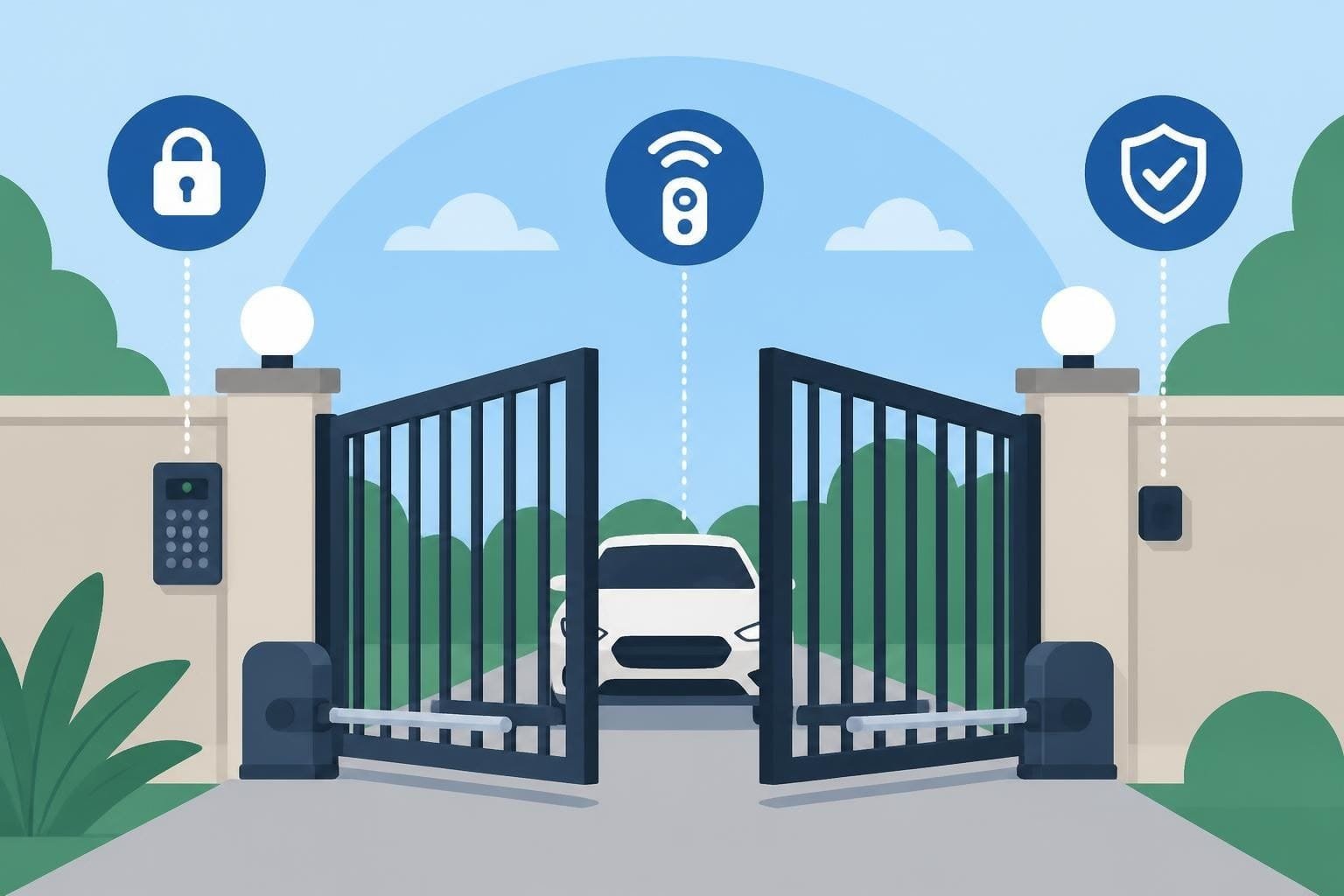
- Access control devices such as keypads, card readers, or remotes
Different gate configurations require specific opener types. Swing gates demand openers that can push or pull the gate panels through an arc, while sliding gates need linear actuators or chain-drive systems that move panels horizontally along a track. The physical characteristics of your gate, including weight, width, and usage frequency, determine the appropriate motor size and mechanism.
Types of Automatic Gate Openers
Swing gate operators come in several configurations based on mounting location and power transmission. Articulated arm operators mount to the gate post and connect to the gate via a hinged arm, ideal for gates that open inward where space behind the post is limited. Ram-style operators use a piston mechanism for direct linear force, suitable for heavy-duty applications. Underground operators hide completely beneath the gate pivot point, offering aesthetic advantages for high-end installations.
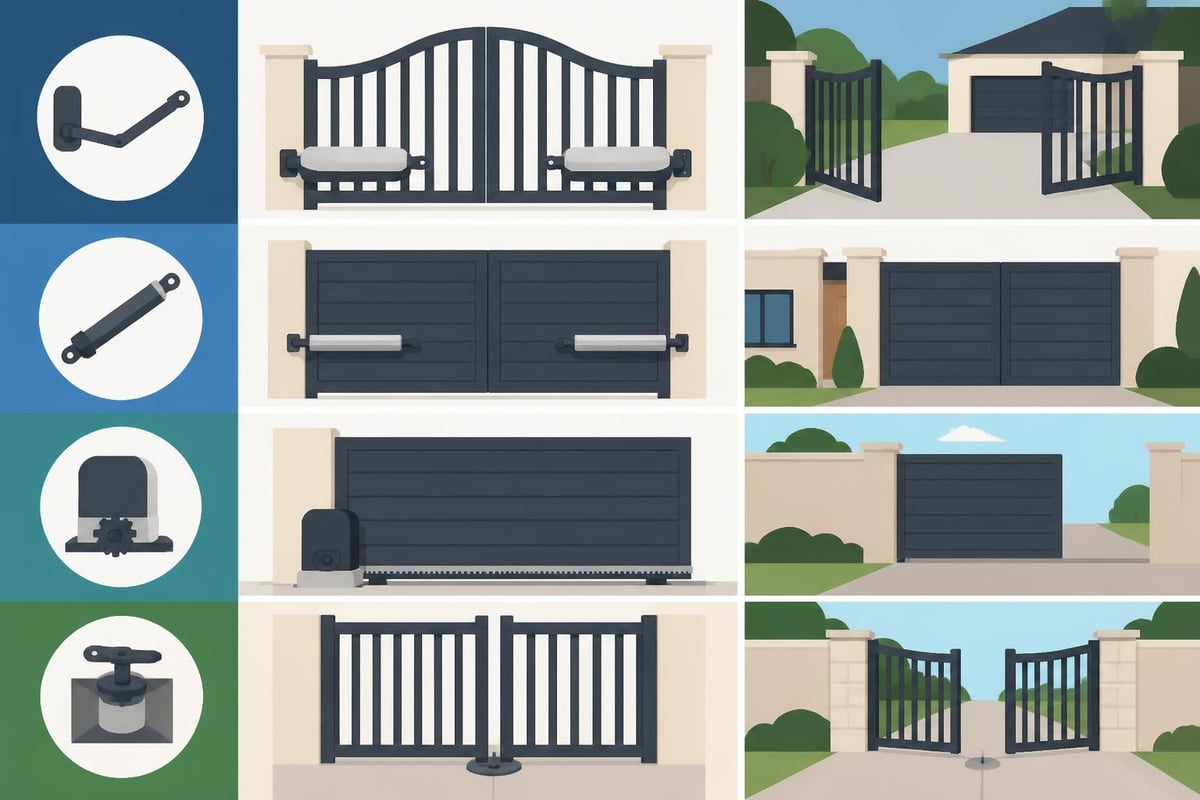
Sliding gate operators typically use either chain-drive or rack-and-pinion systems. Chain-drive units connect to the gate via a chain loop, similar to garage door openers, while rack-and-pinion systems engage a toothed rail mounted on the gate. Commercial and industrial applications often specify rack-and-pinion for superior durability and precise control.
| Opener Type | Best Application | Weight Capacity | Typical Duty Cycle |
|---|---|---|---|
| Articulated Arm | Residential swing gates | Up to 800 lbs | 30% (residential) |
| Linear Ram | Heavy commercial swing | Up to 2,000 lbs | 50% (commercial) |
| Underground Swing | High-end residential | Up to 1,200 lbs | 30% (residential) |
| Sliding Chain-Drive | Residential/light commercial | Up to 1,500 lbs | 40% (standard) |
| Sliding Rack-Drive | Commercial/industrial | Up to 5,000 lbs | 100% (continuous) |
Safety Standards and Regulatory Compliance
Safety regulations governing automatic gate opener installations have evolved significantly to address entrapment and crushing hazards. The ANSI/CAN/UL 325 standard establishes comprehensive requirements for door, driveway, and gate operators, classifying systems by application type and specifying appropriate safety features for each class.
Class I through Class IV designations reflect increasing levels of public access and associated risk. Residential installations typically fall under Class I or II, requiring basic entrapment protection. Commercial facilities with frequent public access require Class III or IV compliance, mandating redundant safety systems and emergency stop capabilities.
The ASTM F2200 standard complements UL 325 by addressing the physical construction of automated vehicular gates, specifying guard requirements, gap dimensions, and structural integrity. Together, these standards form the foundation for safe installations.
Essential Safety Features
Modern automatic gate opener systems incorporate multiple layers of protection. Photoelectric sensors create an invisible beam across the gate's path, reversing or stopping motion when interrupted. Pressure-sensitive edge sensors detect contact with obstacles, immediately halting gate movement. These devices must be tested regularly and positioned according to manufacturer specifications and code requirements.
Obstruction detection systems monitor motor current or use optical encoders to identify unexpected resistance. When the gate encounters an obstacle, these systems reverse direction before significant force can be applied. Timer-to-close features automatically reverse gates that haven't fully closed within a preset interval, preventing prolonged obstruction of driveways.
Battery backup systems ensure gate operation during power outages, critical for maintaining security and preventing lockouts. Solar-powered options provide sustainable energy for remote installations without electrical infrastructure. The National Electrical Code governs electrical installation requirements, including proper grounding, circuit protection, and conduit specifications.
Installation Considerations and Best Practices
Proper installation begins with thorough site assessment. Foundation requirements vary based on soil conditions, gate weight, and local frost depth. Concrete pads must cure completely before mounting operators, typically requiring 7 to 14 days depending on weather conditions. Gate alignment proves critical for smooth operation and longevity, as misalignment causes excessive wear on motors and mechanical components.
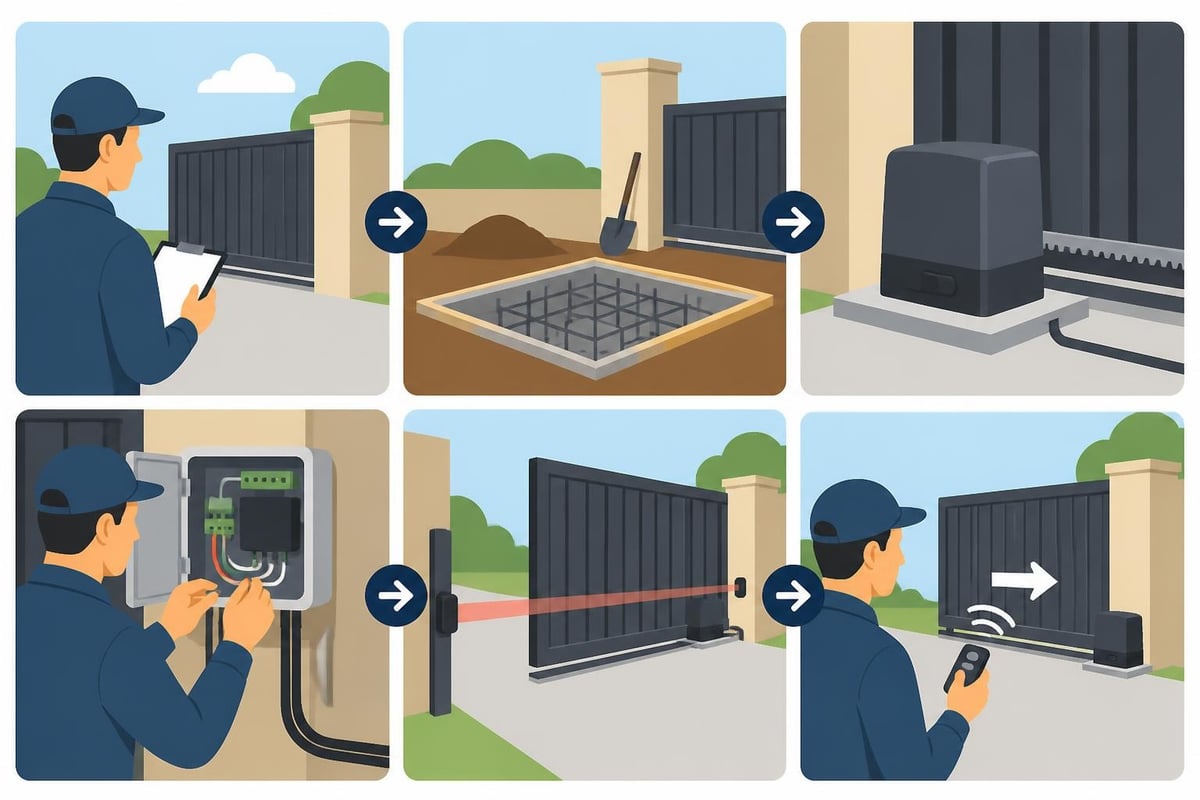
Professional installers follow systematic procedures outlined in resources like the automatic gate operator installation guide to ensure compliance and reliability:
- Site preparation including excavation, conduit placement, and foundation work
- Electrical rough-in with proper grounding and circuit protection
- Operator mounting ensuring level installation and proper alignment
- Gate attachment with secure hardware rated for dynamic loads
- Control board programming setting limits, force adjustments, and timing
- Safety device installation positioning sensors per code requirements
- Testing and adjustment verifying all safety features and operational parameters
- Final inspection documenting compliance with applicable standards
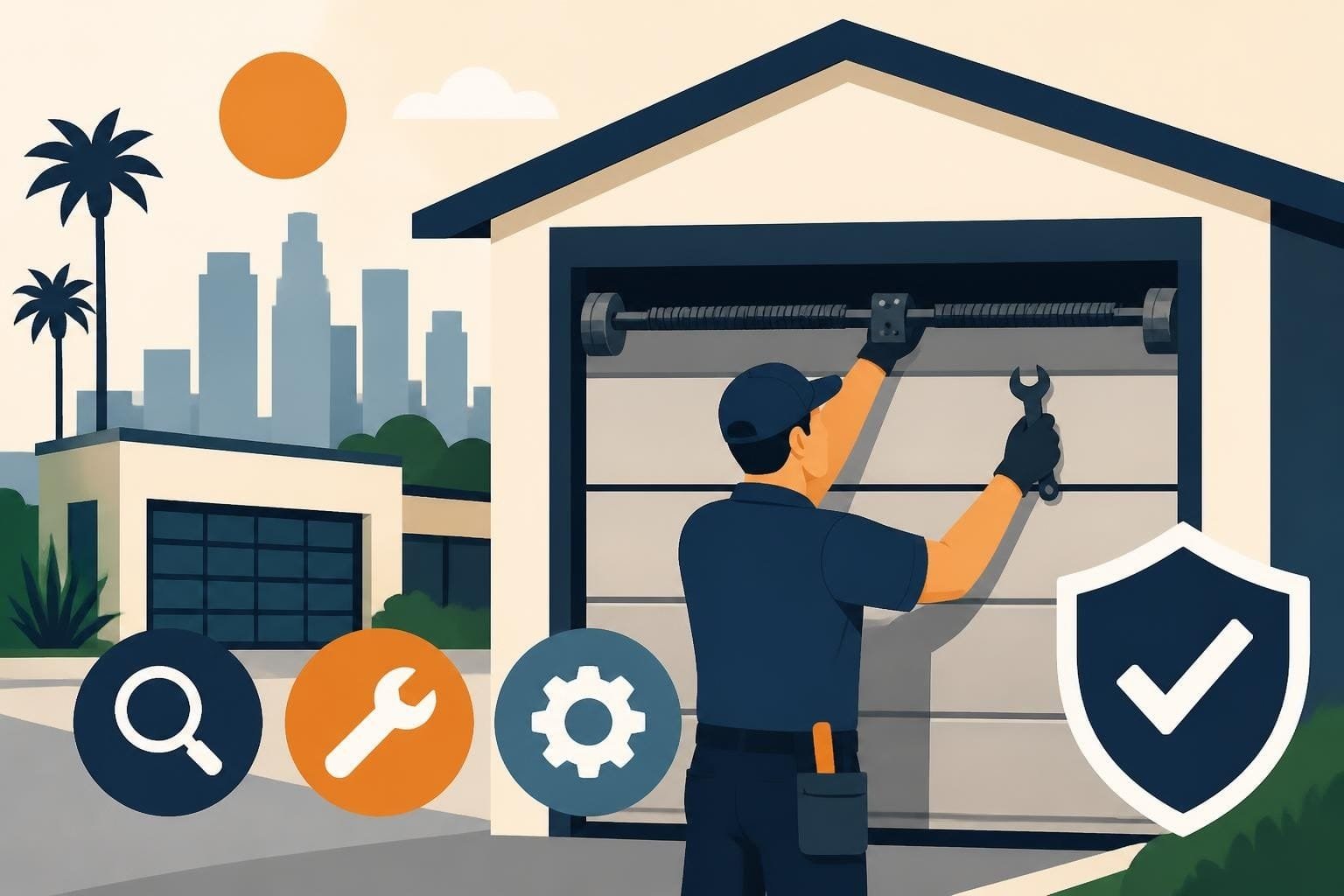
Los Angeles area installations must account for seismic considerations, requiring additional bracing and flexible electrical connections. When you need professional installation or repair, experienced providers like those specializing in electric gate repair understand local code requirements and installation challenges specific to Southern California.
Sizing and Specification
Matching opener capacity to gate requirements prevents premature failure and ensures reliable operation. Calculate total gate weight including any decorative elements, then add a safety factor of 20 to 30 percent. Usage frequency significantly impacts specification, as gates operating dozens of times daily require commercial-duty operators with higher duty cycles.
Wind load calculations become important for large surface area gates in exposed locations. Solid panel gates experience greater wind resistance than open designs, requiring more powerful operators. Manufacturers provide wind rating specifications that should match local conditions.
Access Control Integration and Smart Features
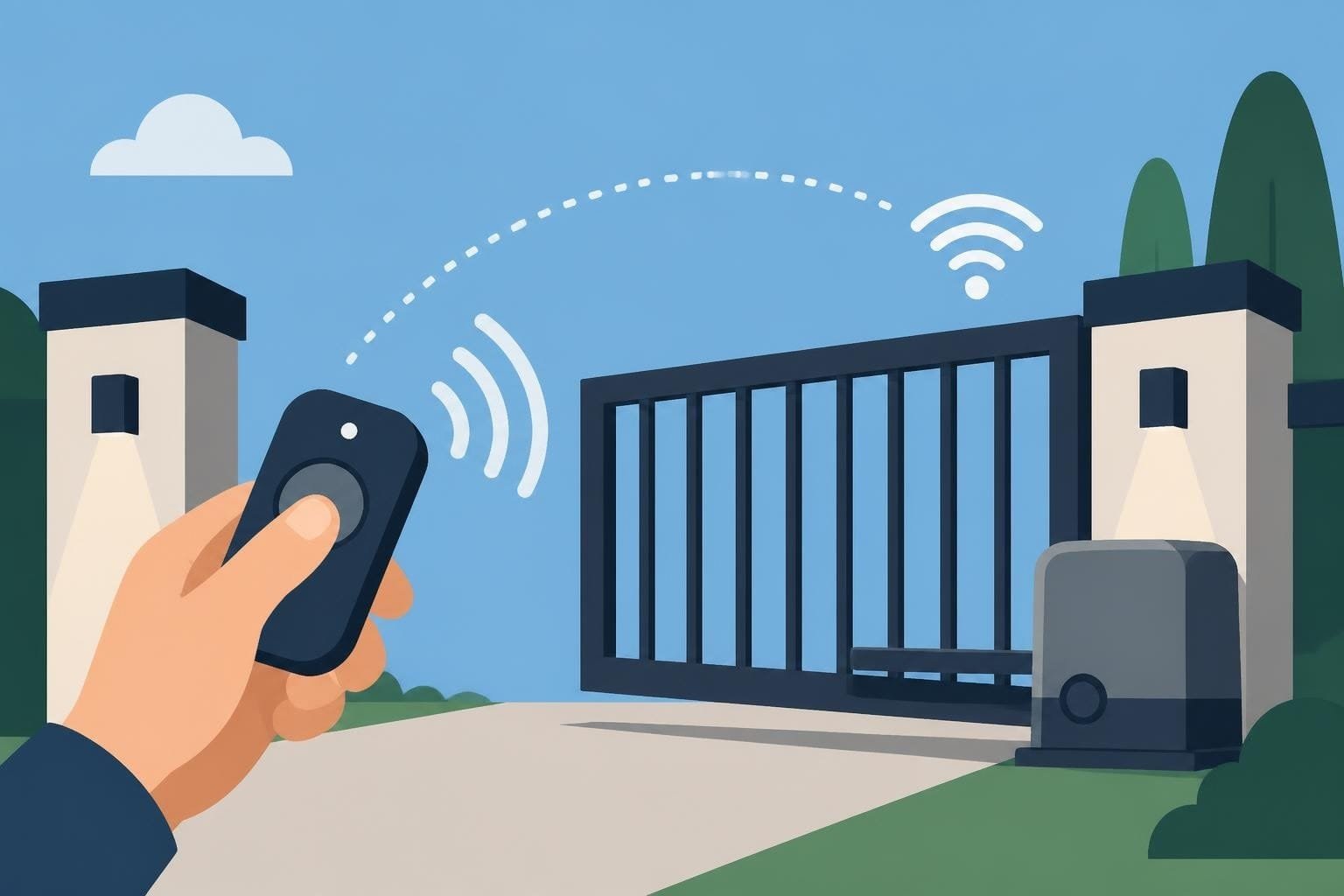
Modern automatic gate opener systems integrate with sophisticated access control platforms. Traditional methods include radio frequency remotes operating on 300-433 MHz bands, though newer systems employ secure rolling-code technology that generates unique transmission codes for each operation, preventing code grabbing attacks.
Keypads offer code-based access with options for temporary codes, useful for delivery personnel or short-term guests. Intercom systems combine audio or video communication with remote release capabilities, essential for multifamily properties. Card readers using proximity or smart card technology provide audit trails and easy credential management for commercial applications.
Advanced systems incorporate:
- License plate recognition automatically opening for authorized vehicles
- Smartphone control via dedicated apps or smart home platforms
- Biometric authentication using fingerprint or facial recognition
- Geofencing triggers initiating gate opening as authorized users approach
- Cloud connectivity enabling remote monitoring and control from anywhere
The Matter protocol integration represents the latest evolution in smart home connectivity, allowing automatic gate openers to seamlessly integrate with multiple ecosystems including Apple HomeKit, Google Home, and Amazon Alexa. This standardization simplifies installation and ensures long-term compatibility as smart home platforms evolve.
Cybersecurity Considerations
Connected gate systems introduce cybersecurity concerns that must be addressed through proper network configuration and security practices. Following NIST guidance for IoT device security helps protect against unauthorized access and ensures privacy.
Best practices include changing default passwords immediately upon installation, implementing network segmentation to isolate IoT devices from critical systems, and maintaining firmware updates to address discovered vulnerabilities. Encrypted communication protocols prevent interception of control signals, while two-factor authentication adds an additional security layer for remote access applications.
Research into gate automation systems using access control mechanisms demonstrates emerging technologies including RFID integration and biometric verification that balance security with user convenience.
Maintenance Requirements and Troubleshooting
Regular maintenance extends automatic gate opener lifespan and prevents costly emergency repairs. Monthly visual inspections should identify loose hardware, damaged components, or debris accumulation. Safety sensors require cleaning and alignment verification, as dirt or misalignment can cause false triggers or safety failures.
Lubrication schedules depend on climate and usage intensity. Hinges, rollers, and chain drives need appropriate lubricants applied every three to six months. Avoid over-lubrication, which attracts dirt and accelerates wear. Use lithium-based grease for mechanical components and silicone spray for weatherproofing electrical connections.
Quarterly maintenance tasks include:
- Testing all safety devices including photoelectric eyes and edge sensors
- Verifying battery backup operation and charge levels
- Checking motor mounting bolts for proper torque
- Inspecting gate alignment and adjusting if necessary
- Cleaning control board enclosures and checking for moisture intrusion
- Testing manual release mechanisms for emergency operation
Annual professional service should include comprehensive system evaluation, electrical connection inspection, and preventive component replacement. Control boards have finite lifespans due to capacitor degradation, typically requiring replacement every 8 to 12 years depending on environmental conditions and power quality.

Common Issues and Solutions
Intermittent operation often results from loose electrical connections or failing limit switches. Systematic diagnosis begins with verifying power supply voltage and checking for proper control board indication lights. Erratic behavior may indicate radio frequency interference from nearby transmitters or deteriorating receiver modules.
Gates that reverse immediately upon closing typically have misadjusted force settings or improperly positioned safety sensors. Consult manufacturer specifications for proper adjustment procedures, as excessive force creates safety hazards while insufficient force prevents reliable closing.
| Symptom | Likely Cause | Solution |
|---|---|---|
| No response to commands | Power supply failure, dead remote battery | Check circuit breaker, replace battery, verify connections |
| Gate reverses mid-cycle | Safety sensor obstruction, force setting | Clean sensors, adjust force limits, check alignment |
| Slow operation | Low battery, worn motor brushes | Charge/replace battery, inspect motor, check voltage |
| Partial opening only | Limit switch misadjustment | Reprogram open/close limits per manual |
| Excessive noise | Worn bearings, loose hardware | Lubricate components, tighten mounting bolts, inspect rollers |
Energy Efficiency and Sustainable Options
Energy consumption varies dramatically between operator types and usage patterns. Standby power draw for control boards and receivers typically ranges from 5 to 15 watts, accumulating to 44 to 131 kWh annually. Motor efficiency improvements in recent years have reduced operational energy requirements, with modern units consuming 30 to 40 percent less electricity than older designs.
Solar-powered systems eliminate grid dependency while providing sustainable operation. Photovoltaic panels sized for local solar radiation levels charge battery banks that power both standby electronics and motor operation. Proper sizing accounts for seasonal variation and consecutive cloudy days, typically requiring 50 to 100 watt panels with 100+ amp-hour battery capacity for residential applications.
LED indicator lights, efficient transformers, and sleep mode programming reduce parasitic loads. Timer controls that power down non-essential functions during predictable low-use periods can cut standby consumption by 60 percent or more without impacting functionality.
For property owners in Los Angeles seeking professional service, experienced technicians understand both traditional and modern automatic gate opener systems. Whether you need installation guidance, repairs, or system upgrades, specialists in gate repair services provide comprehensive solutions.
Commercial vs. Residential Applications
Duty cycle ratings distinguish residential and commercial automatic gate opener specifications. Residential operators designed for 20 to 30 cycles per day cannot withstand commercial demands of 100+ daily operations. Commercial-duty motors feature enhanced cooling, heavier construction, and upgraded components that tolerate continuous use.
Access control complexity scales with application size. Single-family homes may require only remote control access, while multifamily properties need intercom systems with individual unit calling. Commercial facilities demand comprehensive platforms integrating multiple credential types, visitor management, and centralized monitoring.
Insurance and liability considerations influence commercial specifications. Higher safety requirements, redundant protection systems, and detailed maintenance documentation protect property owners from potential claims. Professional installation by licensed contractors ensures compliance and provides documentation valuable for insurance underwriting.
Future Trends and Emerging Technologies
Artificial intelligence integration represents the next evolution in gate automation. Machine learning algorithms analyze usage patterns, predicting access needs and optimizing operation timing. Anomaly detection identifies unusual activity, triggering alerts for potential security concerns.
Vehicle-to-infrastructure communication enables gates to receive authentication directly from approaching automobiles, eliminating the need for separate credentials. As connected vehicle adoption increases, this seamless integration will become standard for high-end installations.
Enhanced sensors using LIDAR and advanced computer vision provide three-dimensional obstacle detection far superior to simple photoelectric beams. These systems distinguish between vehicles, pedestrians, and pets, adjusting response appropriately and reducing nuisance reversals while maintaining safety.
Predictive maintenance algorithms monitor operational parameters, identifying developing problems before failure occurs. Vibration analysis, current monitoring, and cycle counting allow systems to schedule service proactively, minimizing downtime and extending component life.
Selecting and maintaining an automatic gate opener requires understanding mechanical systems, safety regulations, access control options, and ongoing maintenance needs. From initial specification through daily operation, attention to proper sizing, professional installation, and preventive care ensures reliable performance and maximizes return on investment. Gates & Garage Door Express Inc. brings decades of family-owned expertise to automatic gate installations and repairs throughout Los Angeles, offering same-day emergency service and comprehensive maintenance programs that keep your property secure and accessible. Contact their experienced team today for professional guidance tailored to your specific needs.