
Selecting the right commercial gate opener represents a critical investment in property security, operational efficiency, and liability management. Unlike residential systems, commercial applications demand robust engineering, regulatory compliance, and integration capabilities that align with business operations. Whether you manage a warehouse complex, parking facility, gated community, or industrial site, understanding the technical specifications, safety requirements, and maintenance obligations of automated gate systems ensures long-term value and risk mitigation.
Understanding Commercial Gate Opener Classifications
Commercial gate operators fall into distinct categories based on application intensity and duty cycle. The Door and Access Systems Manufacturers Association (DASMA) and Underwriters Laboratories define these classifications to help specifiers match equipment to real-world demands.
Duty Cycle and Usage Classes
A commercial gate opener must be rated for its expected usage pattern. Class I operators handle light commercial applications with 10-15 cycles per day, suitable for small office parks or storage facilities with minimal traffic. Class II systems manage medium-duty applications up to 50 cycles daily, typical of apartment complexes and moderate-traffic commercial sites. Class III operators serve high-traffic environments exceeding 100 cycles per day, including parking structures, distribution centers, and busy retail locations.
Duty cycle extends beyond mere frequency. Continuous-duty ratings specify how long the motor can run before requiring a cooling period, typically expressed as a percentage (25%, 50%, or 100% duty cycle). A gate servicing a warehouse with constant truck traffic requires 100% continuous duty, while an office park gate may function adequately with 50% duty.
| Usage Class | Daily Cycles | Typical Applications | Duty Cycle Required |
|---|---|---|---|
| Class I | 10-15 | Small offices, light storage | 25% |
| Class II | 30-50 | Apartments, moderate commercial | 50% |
| Class III | 100+ | Parking structures, distribution | 100% |
| Class IV | 250+ | High-security, industrial | 100% continuous |
Gate Type Compatibility
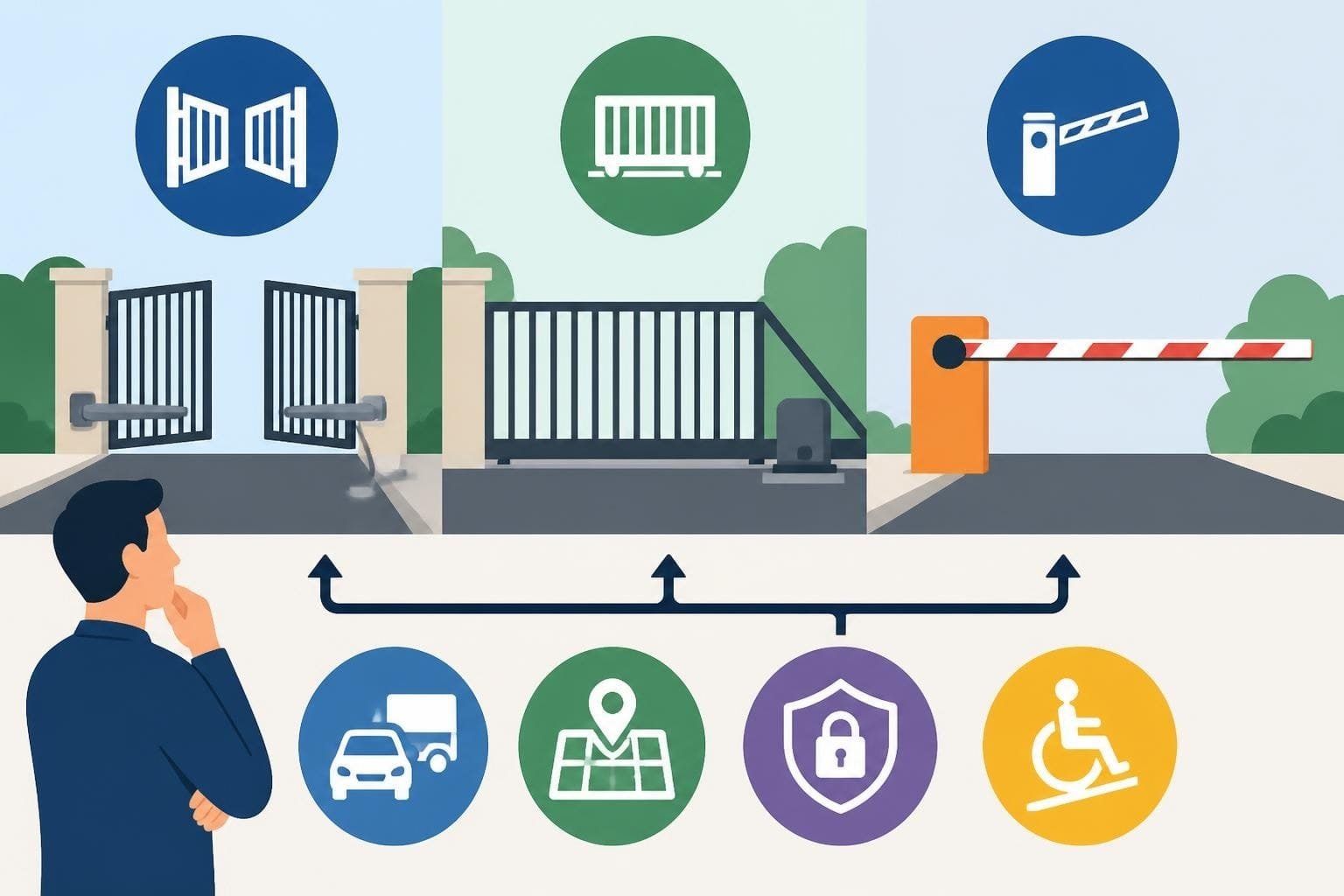
The physical gate configuration dictates operator selection. Swing gate operators use articulating arms or underground actuators to push gates open along an arc, requiring adequate clearance and level ground. These systems work well for entrance aesthetics but demand more space than alternatives.
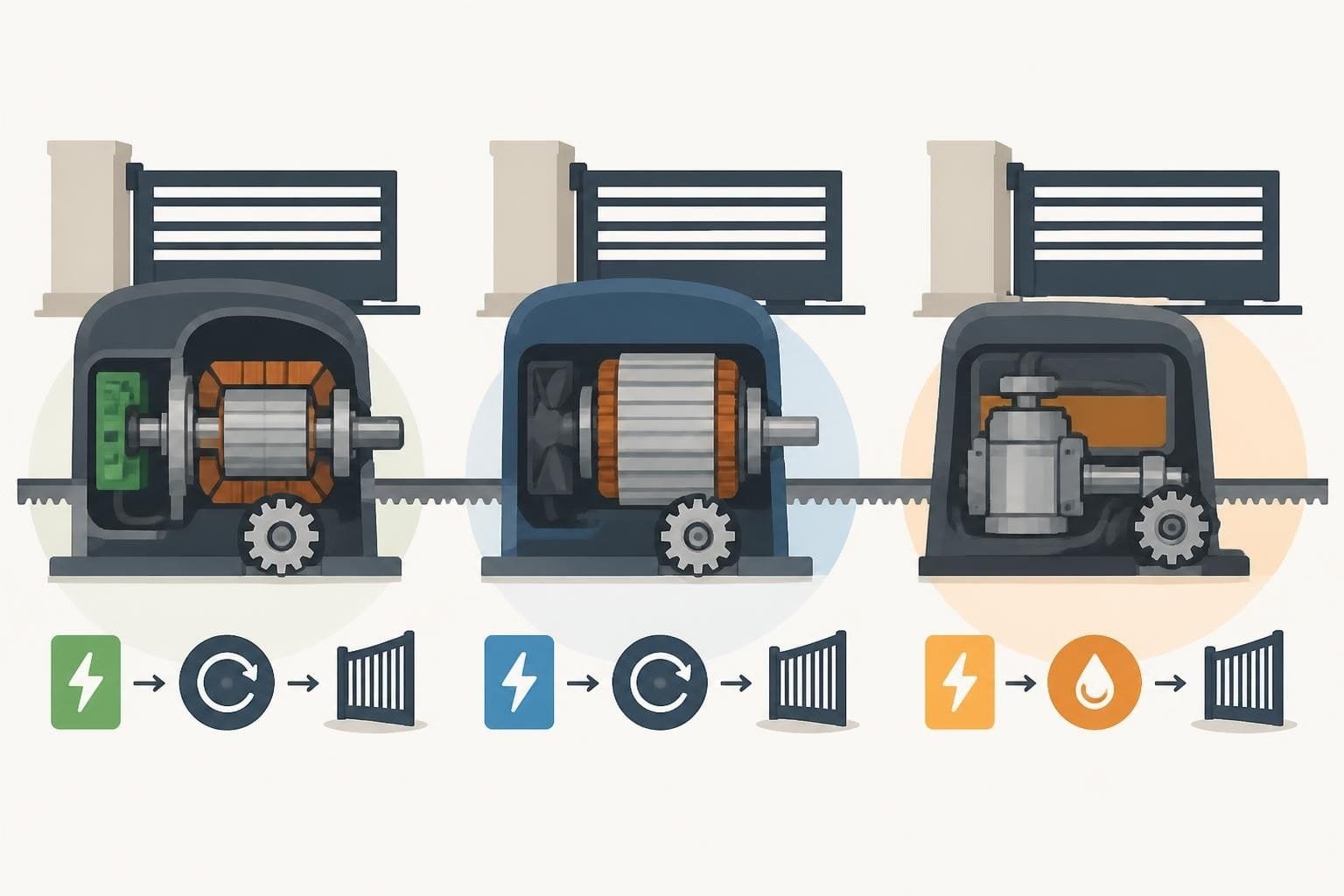
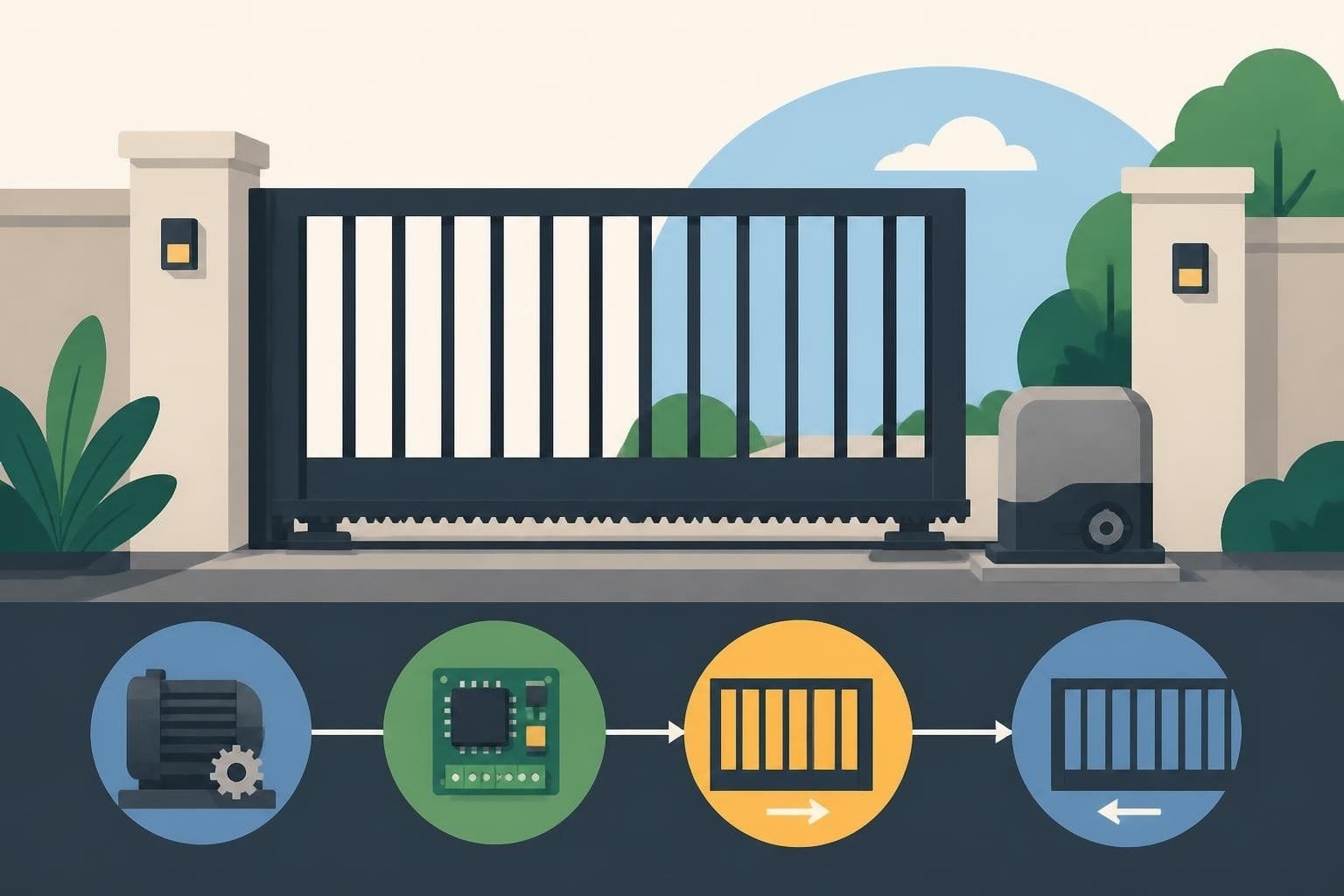
Sliding gate operators move gates laterally along a track, offering space efficiency and superior wind resistance. Most commercial installations favor sliding mechanisms for their reliability and compact footprint. Chain-drive, belt-drive, and rack-and-pinion systems each offer distinct advantages in noise, maintenance, and power requirements.
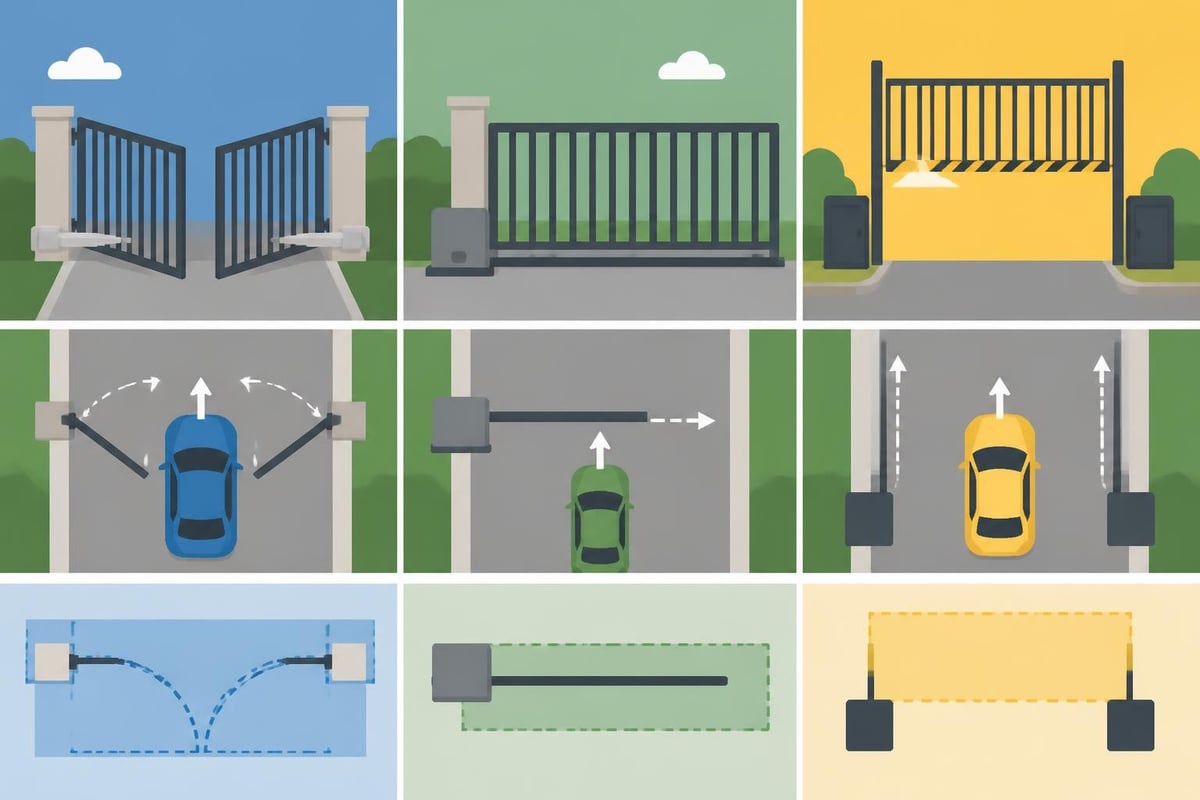
Barrier arm operators provide rapid cycling for high-volume traffic control, common in parking facilities where speed and throughput outweigh security perimeter needs. These systems typically integrate with access control and payment systems for seamless operation.
Safety Standards and Regulatory Compliance
Commercial gate installations must satisfy stringent safety requirements that protect users, bystanders, and property owners from liability. UL 325 certification establishes the minimum safety performance standards for vehicular gate operators, mandating specific entrapment protection devices and control features.
UL 325 Requirements for Commercial Applications
Every commercial gate opener sold in the United States requires UL 325 listing, which classifies operators into distinct categories based on application and inherent entrapment risk. Class 1 operators serve vehicular gates in commercial and industrial locations not intended for residential use. Class 2 operators apply to vehicular gates in commercial and residential locations. The classification determines required safety features and testing protocols.
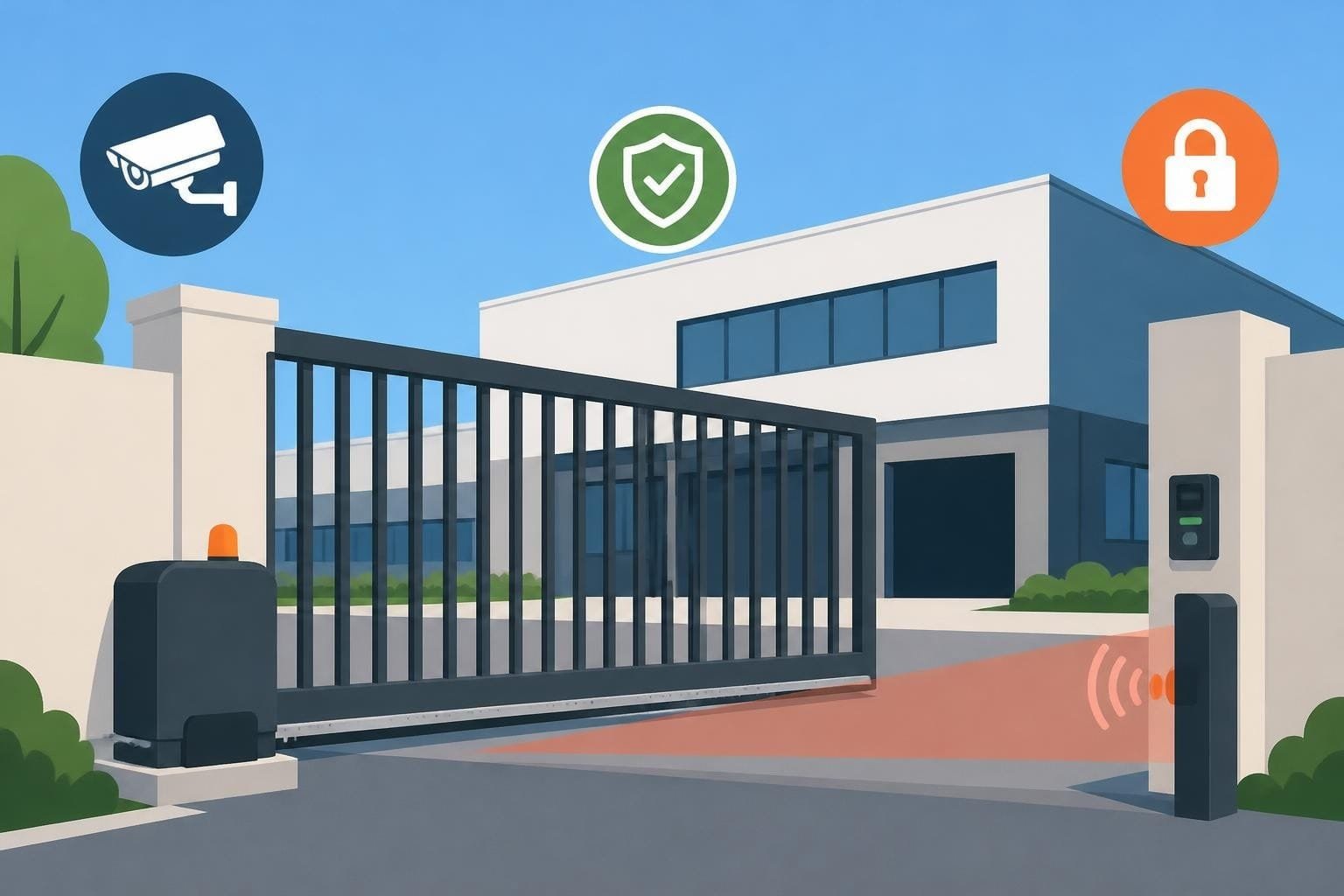
The standard mandates external entrapment protection devices that detect obstructions and reverse gate movement before injury occurs. Photo eyes, edge sensors, and loop detectors must function as primary safety devices, not secondary accessories. UL’s guidance on external entrapment protection details approved devices and installation requirements updated in recent standard revisions.
ADA Accessibility Compliance
Commercial properties must ensure automated gates comply with Americans with Disabilities Act requirements. The United States Access Board’s technical guide specifies clear opening widths, maneuvering clearances, and operating force limitations for accessible routes.
Key ADA considerations include:
- Maximum opening force of 5 pounds for accessible gates
- Clear width of 32 inches minimum for pedestrian access
- Level maneuvering space on both sides of the gate
- Controls positioned within accessible reach ranges (15-48 inches)
- Audio and visual signaling for gate movement
Many commercial installations require separate pedestrian gates or integrated access points within larger vehicular gates to satisfy accessibility requirements without compromising security or traffic flow.
Technical Specifications and Performance Criteria
Matching a commercial gate opener to site requirements demands careful evaluation of technical parameters beyond basic gate type compatibility. Understanding power requirements, environmental ratings, and integration capabilities prevents costly mismatches and premature failures.
Power and Motor Specifications
Commercial operators range from 1/2 HP to 2 HP depending on gate weight and wind load requirements. A properly specified motor handles the calculated gate load with 20-30% reserve capacity to accommodate aging components and adverse conditions. Three-phase power (208V, 240V, 480V) serves most industrial applications, offering superior efficiency and reliability compared to single-phase alternatives.
Solar-powered operators have evolved to serve remote locations and sustainability initiatives. Modern photovoltaic systems with battery backup can power Class II operators reliably in most climates, though calculations must account for seasonal variation and consecutive cloudy days. Battery capacity typically ranges from 35-200 amp-hours depending on daily cycles and backup duration requirements.
Environmental and Weather Resistance
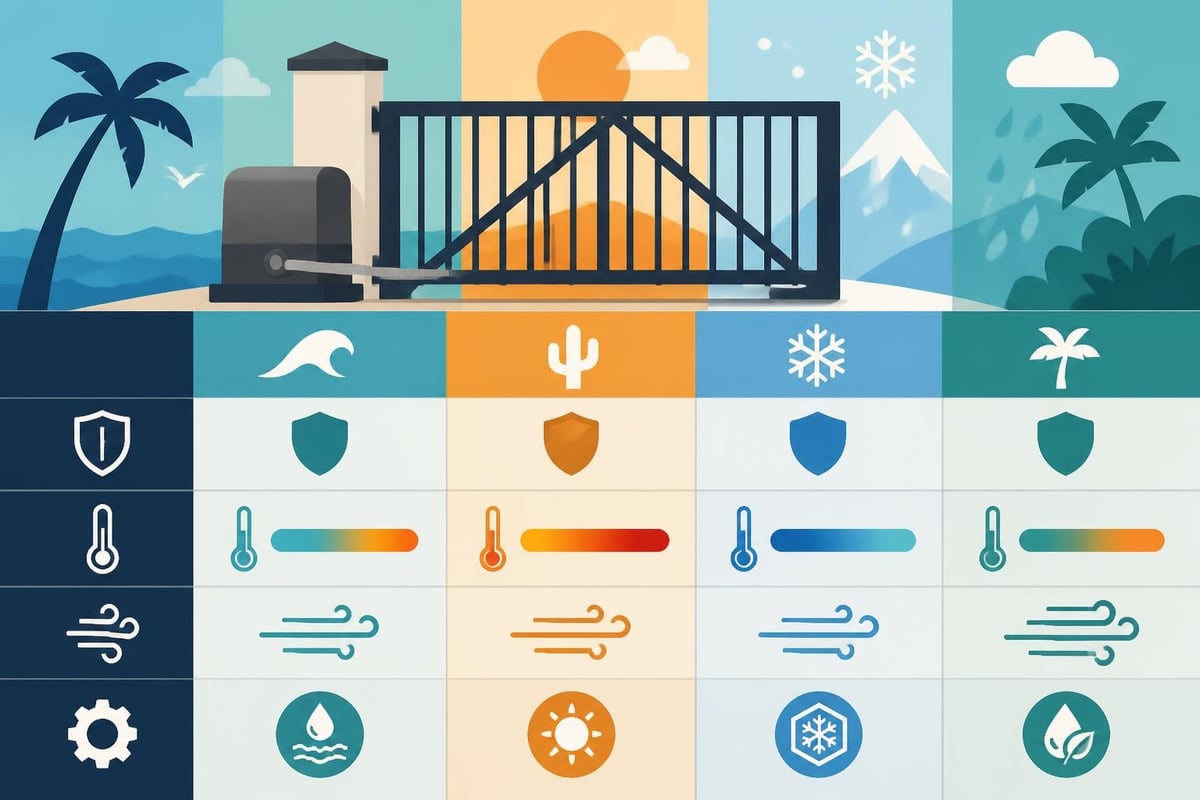
Coastal, desert, and extreme-climate installations require enhanced environmental protection. NEMA 4X ratings provide dust-tight and water-resistant enclosures essential for outdoor electronics exposed to salt air, driving rain, or blowing sand. Standard NEMA 1 enclosures suffice only for protected locations.
Temperature ratings become critical in regions experiencing extreme heat or cold. Commercial operators rated for -40°F to 140°F operation ensure year-round reliability without seasonal failures or reduced performance. Heaters and fans may be necessary to maintain optimal operating temperatures in extreme environments.
Access Control Integration and Security Features
Modern commercial gate operators function as components within comprehensive access control ecosystems rather than standalone devices. Integration capabilities determine long-term value and operational flexibility as security requirements evolve.
Access Control Technologies
Proximity card readers remain the commercial standard, balancing security, convenience, and cost-effectiveness. Wiegand protocol provides universal compatibility across reader and controller manufacturers, simplifying system design and future upgrades. Long-range UHF RFID readers enable hands-free access for fleet vehicles and frequent users.
Mobile credentials using Bluetooth and smartphone applications represent the fastest-growing access method. These systems eliminate card issuance costs and enable remote credentialing and deactivation. Integration requires gate operators with compatible control boards or external relay interfaces.
Biometric systems incorporating fingerprint, facial recognition, or iris scanning provide highest-security applications where credential sharing or unauthorized access poses unacceptable risk. These systems typically integrate through TCP/IP networks rather than direct gate operator connections.
Cloud-Based Management Systems
Internet-connected commercial gate operators enable remote monitoring, diagnostics, and control through cloud platforms. Real-time status reporting alerts facility managers to gate failures, security breaches, or maintenance needs before impacting operations. When selecting equipment, compatibility with major access control platforms and willingness of manufacturers to provide API documentation ensures long-term integration flexibility.
For properties requiring professional maintenance, access to diagnostic data helps service providers like those offering electric gate repair identify issues remotely and arrive on-site with appropriate parts and knowledge.
| Integration Feature | Benefit | Implementation Consideration |
|---|---|---|
| Wiegand protocol | Universal reader compatibility | Standard on most operators |
| TCP/IP connectivity | Cloud management, remote access | Requires network infrastructure |
| Dry contact relays | Custom device integration | Verify relay ratings |
| Mobile app control | User convenience, remote management | Subscription fees may apply |
Installation Considerations and Site Preparation
Proper installation determines commercial gate opener performance, longevity, and safety compliance more than any other factor. Site conditions, power availability, and structural requirements must be evaluated before equipment selection.
Foundation and Structural Requirements
Gate weight and wind load calculations drive foundation design. ASTM F2200 specifications establish structural and dimensional requirements for automated vehicular gates, including post sizing, embedment depth, and concrete specifications. Undersized foundations cause premature operator failure, misalignment, and safety hazards.
Wind load calculations must account for local building codes and exposed gate surface area. A solid steel or wood gate presents substantially higher wind resistance than ornamental iron or chain-link construction. Operators must be sized to open and close gates safely in maximum design wind conditions.
Electrical Infrastructure
Commercial installations require dedicated circuits sized for motor starting current and accessory loads. Typical installations demand 20-30 amp circuits with appropriate overcurrent protection and disconnects accessible within sight of the operator. Conduit runs must follow electrical codes and protect wiring from physical damage and moisture infiltration.
Loop detectors for vehicle presence sensing require saw-cut slots in pavement with properly installed wire loops and sealant. Professional installation ensures reliable detection and prevents pavement deterioration. The DASMA technical guidance on UL 325 compliance provides installation best practices that prevent common code violations.
Maintenance Programs and Lifecycle Management
Commercial gate operators require scheduled maintenance to deliver rated service life and maintain safety compliance. Deferred maintenance accelerates wear, increases energy consumption, and elevates liability risk from safety system failures.
Preventive Maintenance Schedules
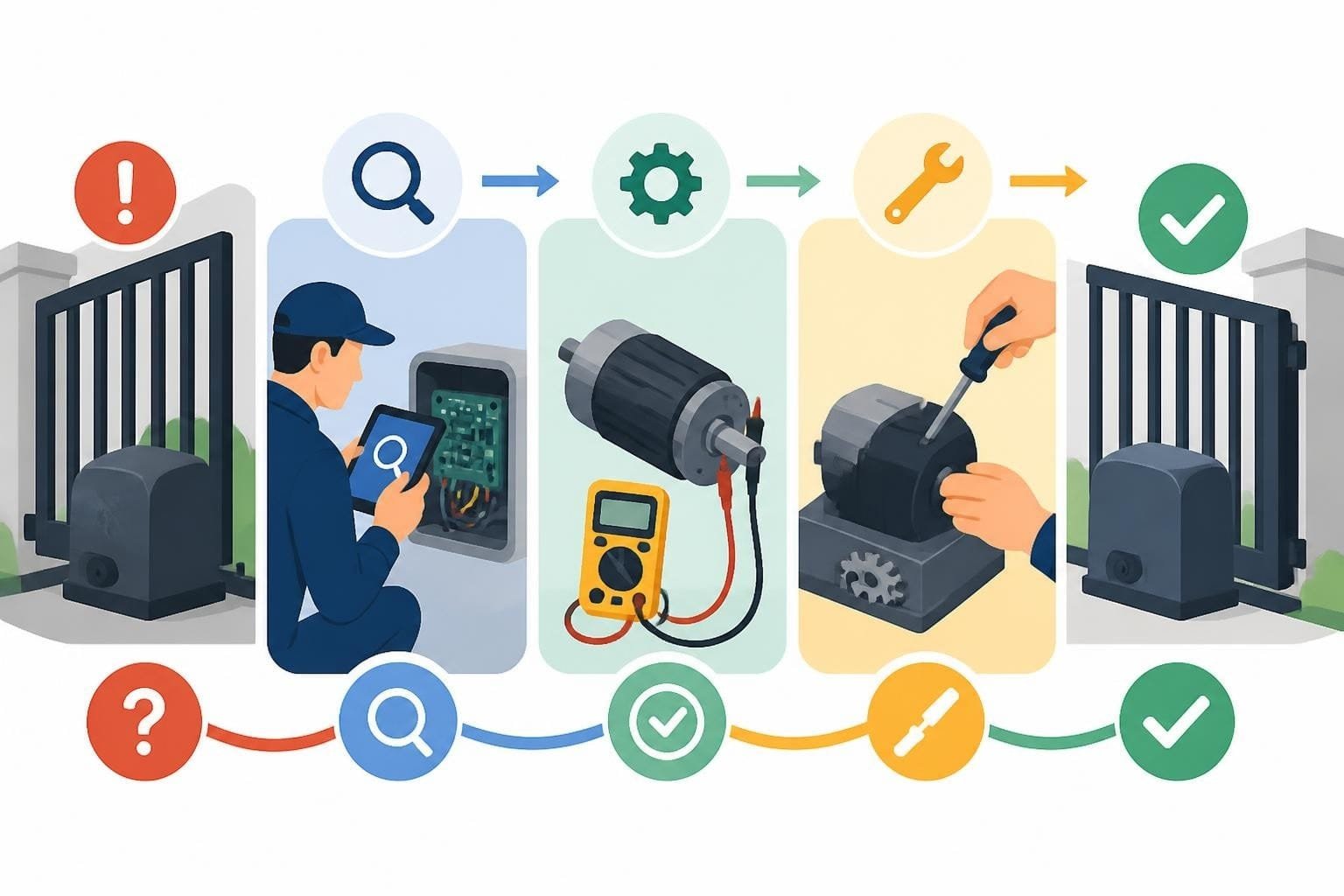
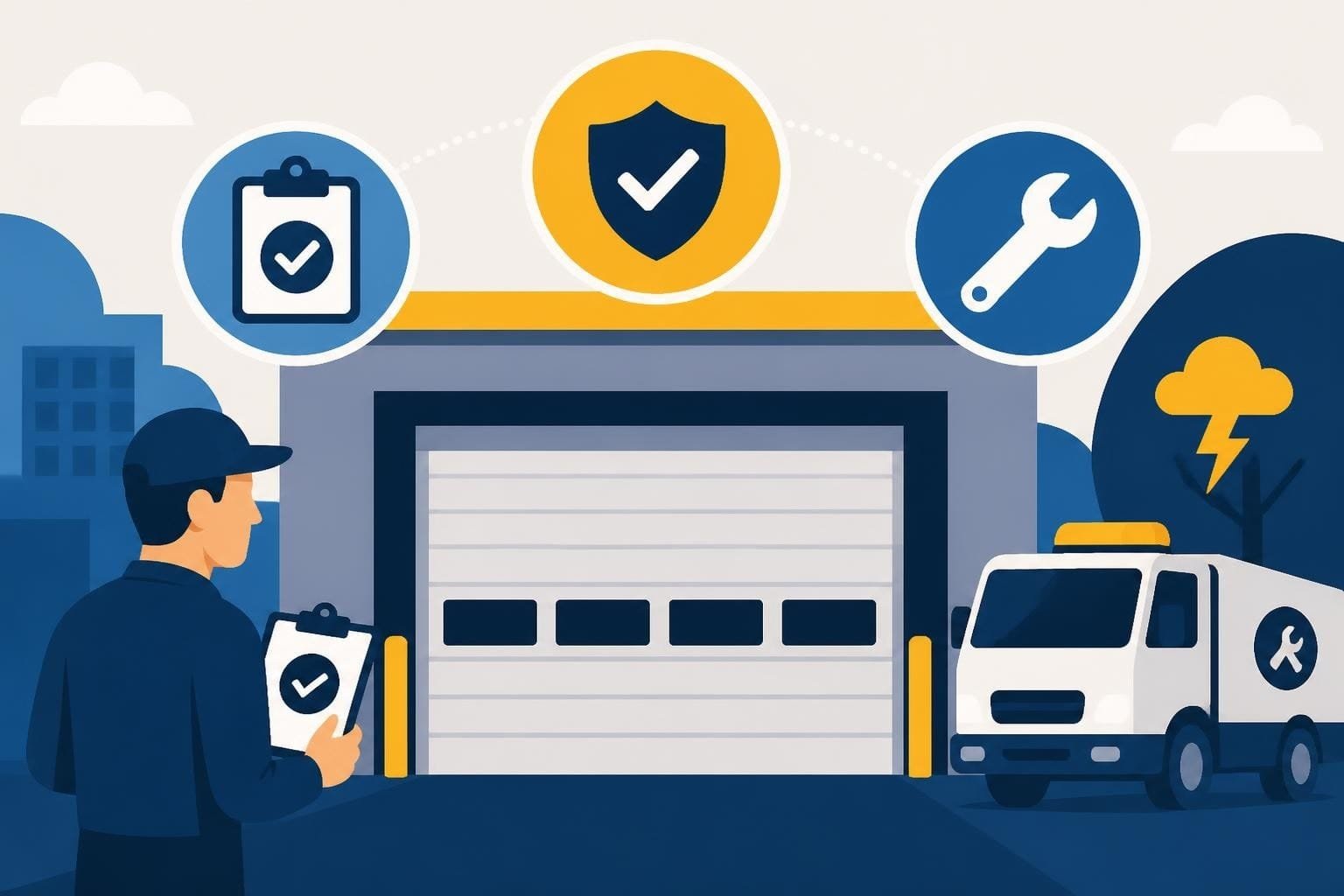
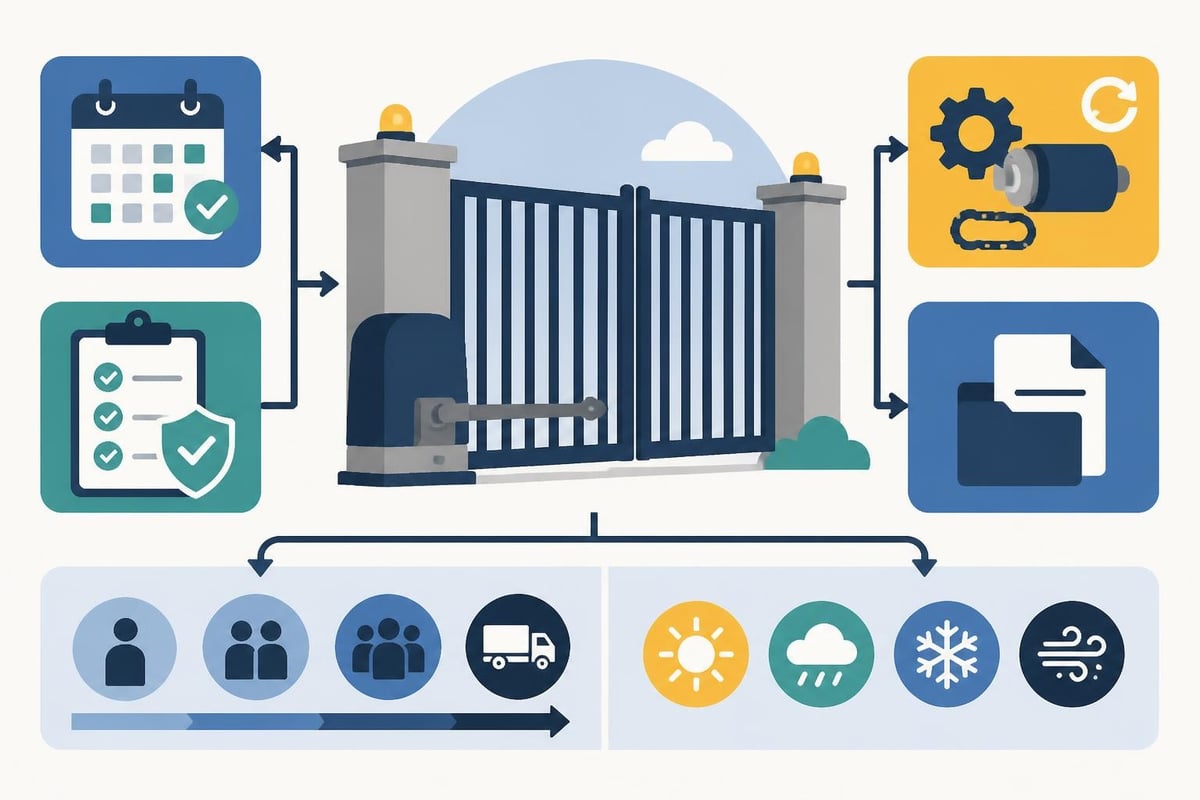
Quarterly inspections should verify safety device function, lubricate moving components, check electrical connections, and test emergency release mechanisms. Annual comprehensive inspections include motor performance testing, structural assessment, and documentation of safety compliance.
The DASMA Gate System Safety guidelines recommend specific maintenance intervals based on usage class and environmental exposure. High-cycle installations may require monthly service to prevent unexpected failures during peak operational periods.
Component Replacement Planning
Understanding typical component service life enables budget planning and prevents emergency repairs. Photo eyes and edge sensors typically require replacement every 3-5 years as environmental exposure degrades optical systems. Control boards last 7-10 years but may require earlier replacement as manufacturers discontinue legacy models. Motors and gearboxes in properly maintained systems often exceed 15 years in moderate-duty applications.
Common maintenance requirements include:
- Lubricating chains, hinges, and bearings quarterly
- Testing safety reversal systems monthly
- Inspecting battery backup systems semi-annually
- Verifying access control integration quarterly
- Professional inspection annually
- Documentation of all service and testing
Properties in Los Angeles and similar urban environments benefit from established service relationships that provide emergency gate repair capabilities when unexpected failures occur outside business hours.
Cost Analysis and Total Ownership Considerations
Commercial gate opener investments extend beyond initial equipment and installation costs. Comprehensive financial analysis accounts for energy consumption, maintenance expenses, insurance implications, and productivity impacts over expected service life.
Initial Investment Components
Equipment costs range from $2,500 for basic Class I systems to $15,000+ for heavy-duty industrial operators with advanced integration. Installation typically adds 30-50% to equipment costs depending on site preparation requirements, electrical infrastructure needs, and access control complexity.
Site preparation represents a variable cost heavily influenced by existing conditions. Projects requiring concrete work, trenching for power and communication lines, or structural modifications to accommodate operators can exceed equipment costs. Accurate site surveys and soil testing prevent costly surprises during installation.
Operating Cost Projections
Energy consumption varies dramatically based on motor size, duty cycle, and climate control requirements. A 1 HP operator cycling 100 times daily consumes approximately 300-400 kWh annually at typical efficiency ratings. Solar installations eliminate utility costs but carry higher initial investment and battery replacement expenses.
Maintenance contracts typically cost 15-25% of initial system investment annually, covering scheduled service, priority emergency response, and parts replacement. Self-maintained systems reduce annual costs but require trained personnel and parts inventory.
| Cost Category | Year 1 | Years 2-5 (Annual) | Years 6-10 (Annual) |
|---|---|---|---|
| Equipment | $8,500 | – | – |
| Installation | $3,500 | – | – |
| Energy | $120 | $120 | $135 |
| Maintenance | $800 | $1,200 | $1,500 |
| Repairs | Warranty | $400 | $800 |
| Total | $12,920 | $1,720 | $2,435 |
Risk Management and Liability
Properly specified and maintained commercial gate operators reduce premises liability exposure by demonstrating reasonable care and safety compliance. Insurance carriers often offer premium reductions for properties with documented maintenance programs and current safety certifications. Conversely, gate-related injuries at properties with deferred maintenance or non-compliant systems result in substantial liability awards.
CISA procurement guidance for physical security systems emphasizes documentation requirements and performance standards relevant to government and critical infrastructure applications, providing useful frameworks for commercial specifications.
Advanced Features and Future-Ready Technologies
The commercial access control industry continues evolving with enhanced connectivity, artificial intelligence, and user experience improvements. Forward-looking installations incorporate infrastructure supporting future capabilities without requiring complete system replacement.
Artificial Intelligence and Predictive Analytics
Machine learning algorithms analyze usage patterns to predict maintenance needs before failures occur. Predictive diagnostics monitor motor current draw, cycle times, and environmental conditions to identify developing problems indicated by subtle performance changes. These systems alert facility managers to schedule service during planned downtime rather than experiencing emergency failures.
Traffic flow optimization uses historical data to adjust gate operation parameters for peak efficiency. Systems learn typical usage patterns and pre-position gates or adjust timing to minimize vehicle queuing while maintaining security protocols.
Cybersecurity Considerations
Internet-connected gate operators require robust cybersecurity measures protecting against unauthorized access and operational disruption. Network segmentation isolates access control systems from general business networks, limiting attack surfaces. Regular firmware updates address discovered vulnerabilities, requiring operators with manufacturer-supported update mechanisms.
Encryption protocols protecting credentials and commands prevent interception and replay attacks. Systems transmitting sensitive data should implement TLS 1.3 or equivalent encryption standards. Evaluating manufacturers' security practices and incident response capabilities becomes as important as mechanical specifications.
Sustainability and Energy Efficiency
Beyond solar power, modern commercial gate operators incorporate energy-saving features reducing operational costs and environmental impact. Standby mode reduces power consumption during inactive periods while maintaining security monitoring. Regenerative braking in some high-end operators captures energy during gate closing cycles, returning power to battery systems.
LED lighting, low-power control electronics, and efficient motor designs cumulatively reduce energy consumption 40-60% compared to legacy systems. Properties pursuing LEED certification or similar sustainability standards benefit from documenting energy-efficient access control systems.
Vendor Selection and Long-Term Support
Choosing a commercial gate operator manufacturer involves evaluating technical capabilities, support infrastructure, and financial stability to ensure parts availability and service support throughout the system's operational life.
Manufacturer Evaluation Criteria
Technical support accessibility determines how quickly installation challenges and operational issues receive expert guidance. Manufacturers offering 24/7 technical support lines, comprehensive documentation libraries, and dealer training programs enable faster problem resolution and better long-term outcomes.
Parts availability guarantees protect against obsolescence forcing premature system replacement. Leading manufacturers commit to 10-15 year parts availability for discontinued models, ensuring aging systems remain serviceable until planned replacement cycles.
Warranty terms reveal manufacturer confidence and support commitment. Standard commercial warranties cover 2-3 years for parts and labor, while premium manufacturers offer extended coverage up to 5 years. Understanding warranty exclusions and service requirements prevents unexpected costs and coverage disputes.
Local Service Provider Capabilities
Even the most reliable equipment eventually requires professional service. Establishing relationships with qualified local service providers before emergencies arise ensures rapid response and consistent service quality. Providers specializing in gate repair in Los Angeles understand local building codes, common site challenges, and environmental factors affecting system performance.
Evaluate service providers based on:
- Manufacturer certifications and training
- Emergency response times and availability
- Parts inventory and sourcing relationships
- Documentation and compliance reporting
- Customer references from similar applications
Selecting and maintaining a commercial gate opener requires balancing immediate needs with long-term operational requirements, safety compliance, and integration capabilities. Proper specification, professional installation, and scheduled maintenance ensure reliable performance, regulatory compliance, and optimal return on investment throughout the system's service life. Whether you need expert installation, routine maintenance, or emergency repairs for your commercial gate system, Gates & Garage Door Express Inc. provides comprehensive service backed by family-owned commitment to quality and same-day emergency response throughout Los Angeles.