
Property managers, facility directors, and business owners face mounting pressure to protect assets, personnel, and sensitive areas from unauthorized access. A well-designed commercial security gate serves as the critical first line of defense, combining physical barriers with intelligent access control to regulate vehicle and pedestrian traffic. As threats evolve and technology advances, understanding the technical requirements, regulatory compliance, and operational best practices for these systems has never been more important for organizations across industrial, institutional, and commercial sectors.
Understanding Commercial Security Gate Classifications
Not all security gates are created equal. The appropriate gate type depends on threat assessment, traffic volume, and site-specific requirements.
Crash-Rated vs. Standard Barriers
Crash-rated gates undergo rigorous testing to meet standards such as ASTM F2656, which classifies barriers by their ability to stop vehicles at specific speeds and weights. These gates are essential for high-security facilities, government buildings, and critical infrastructure where vehicle-borne threats pose significant risk. The CISA Vehicle Incident Prevention and Mitigation Security Guide provides detailed federal guidance on selecting and deploying vehicle barriers based on threat analysis.
Standard commercial security gate installations, conversely, prioritize controlled access over forced-entry resistance. They deter casual trespass and manage traffic flow but aren't engineered to stop determined vehicle attacks.
| Gate Classification | Primary Function | Typical Applications | Key Standards |
|---|---|---|---|
| Crash-rated (K-rated) | Vehicle attack prevention | Embassies, power plants, data centers | ASTM F2656, DOS SD-STD-02.01 |
| High-security perimeter | Intrusion resistance | Prisons, military bases, airports | ASTM F2200 Class IV |
| Commercial access control | Traffic management | Office parks, warehouses, gated communities | ASTM F2200 Class I-III |
| Light-duty pedestrian | Pedestrian control | Parks, event venues, retail | UL 325, local building codes |
Construction Materials and Durability
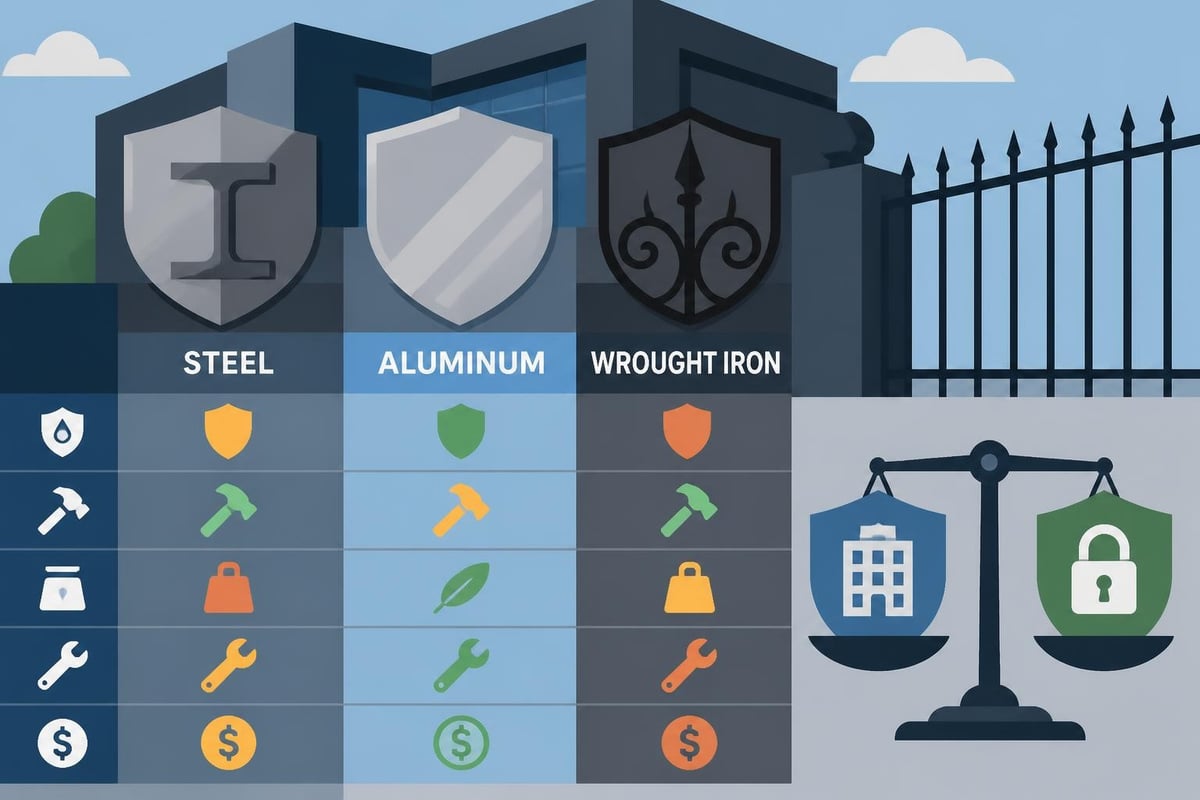
Material selection directly impacts longevity, maintenance costs, and aesthetic integration. Steel gates dominate commercial applications due to their strength-to-weight ratio and weldability. Aluminum offers corrosion resistance in coastal environments but sacrifices impact strength. Wrought iron provides traditional aesthetics with substantial security, though it requires ongoing corrosion protection.
Safety Standards and Regulatory Compliance
Commercial security gate installations must satisfy multiple overlapping code requirements governing operator safety, accessibility, and emergency egress.
UL 325 Operator Requirements
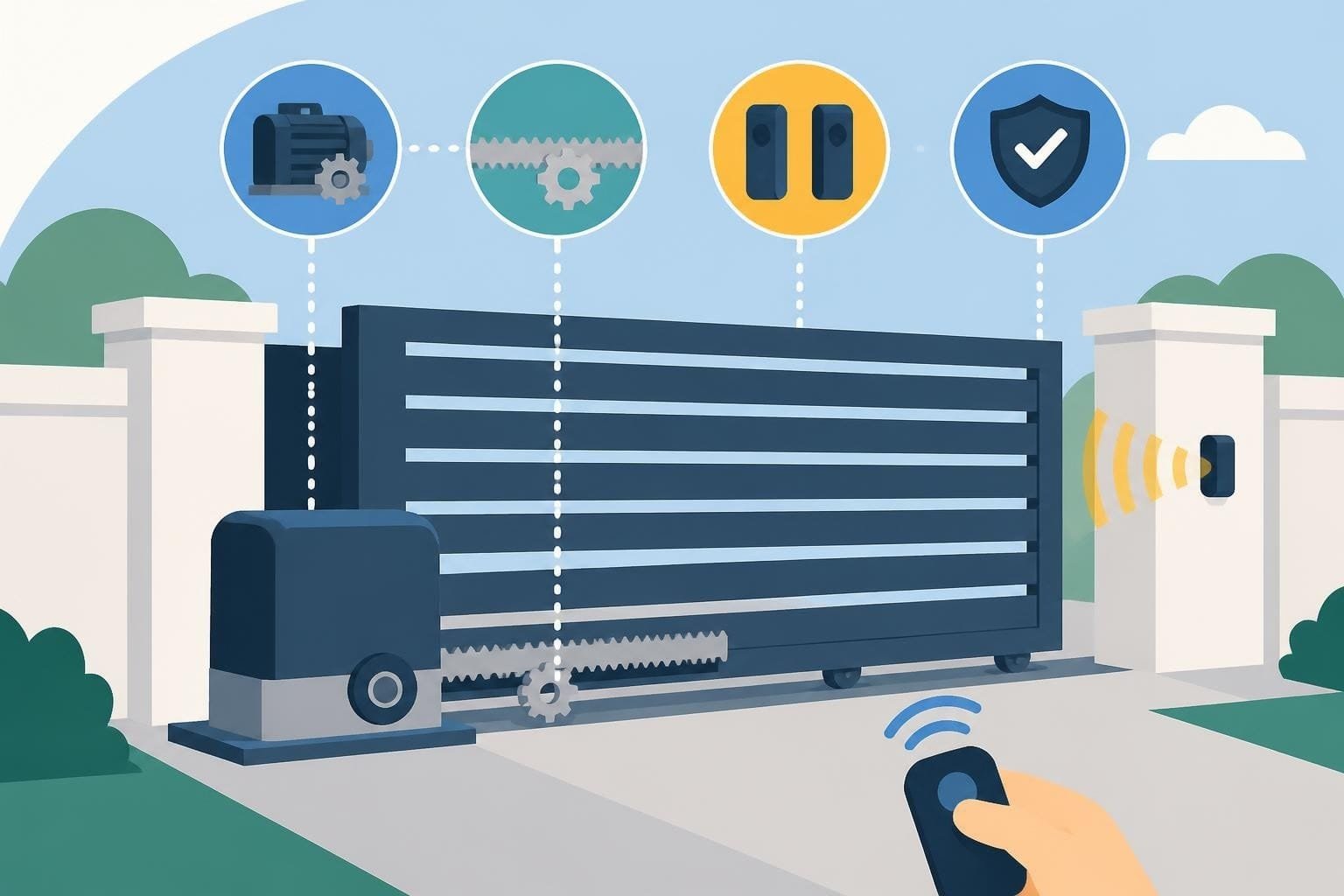
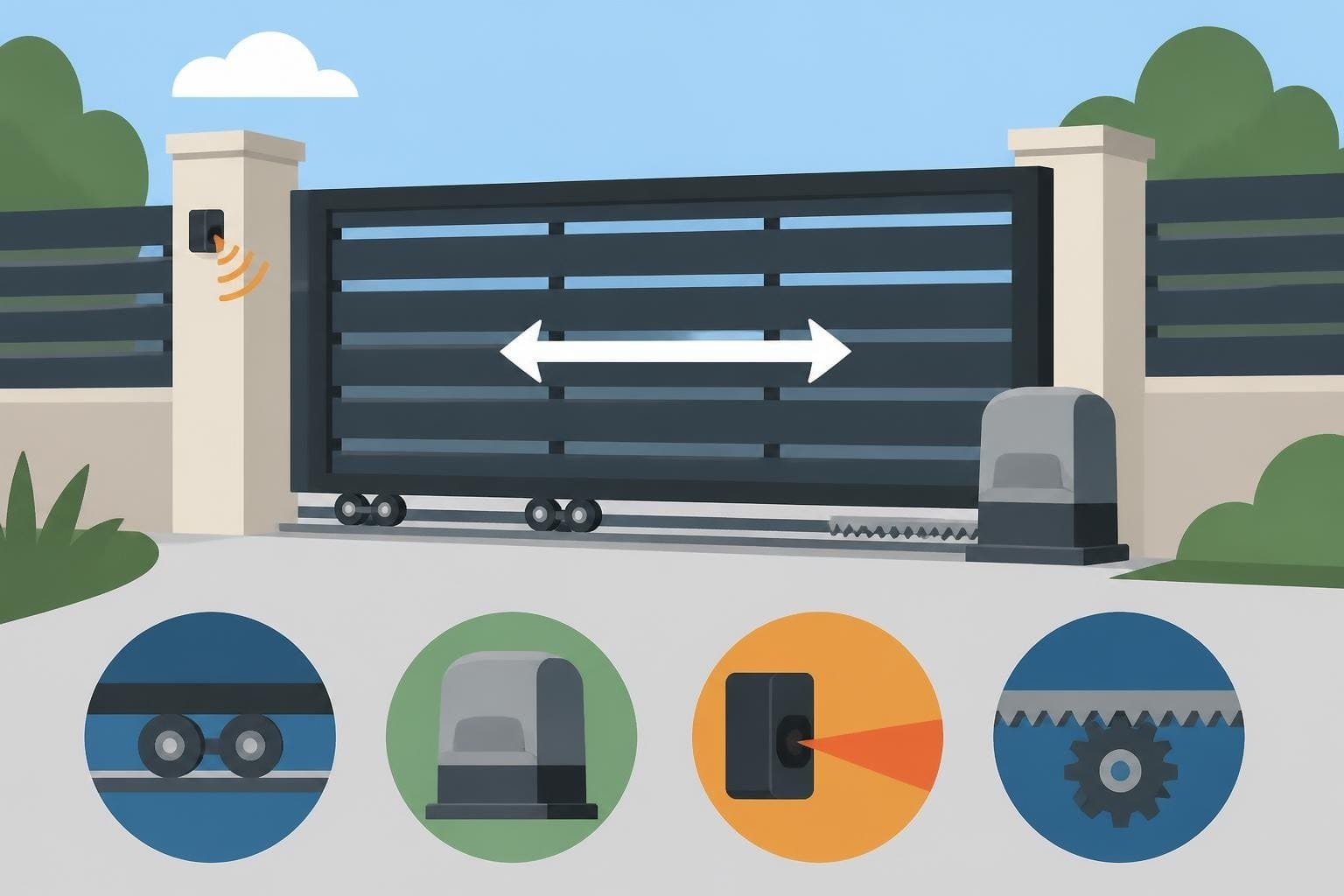
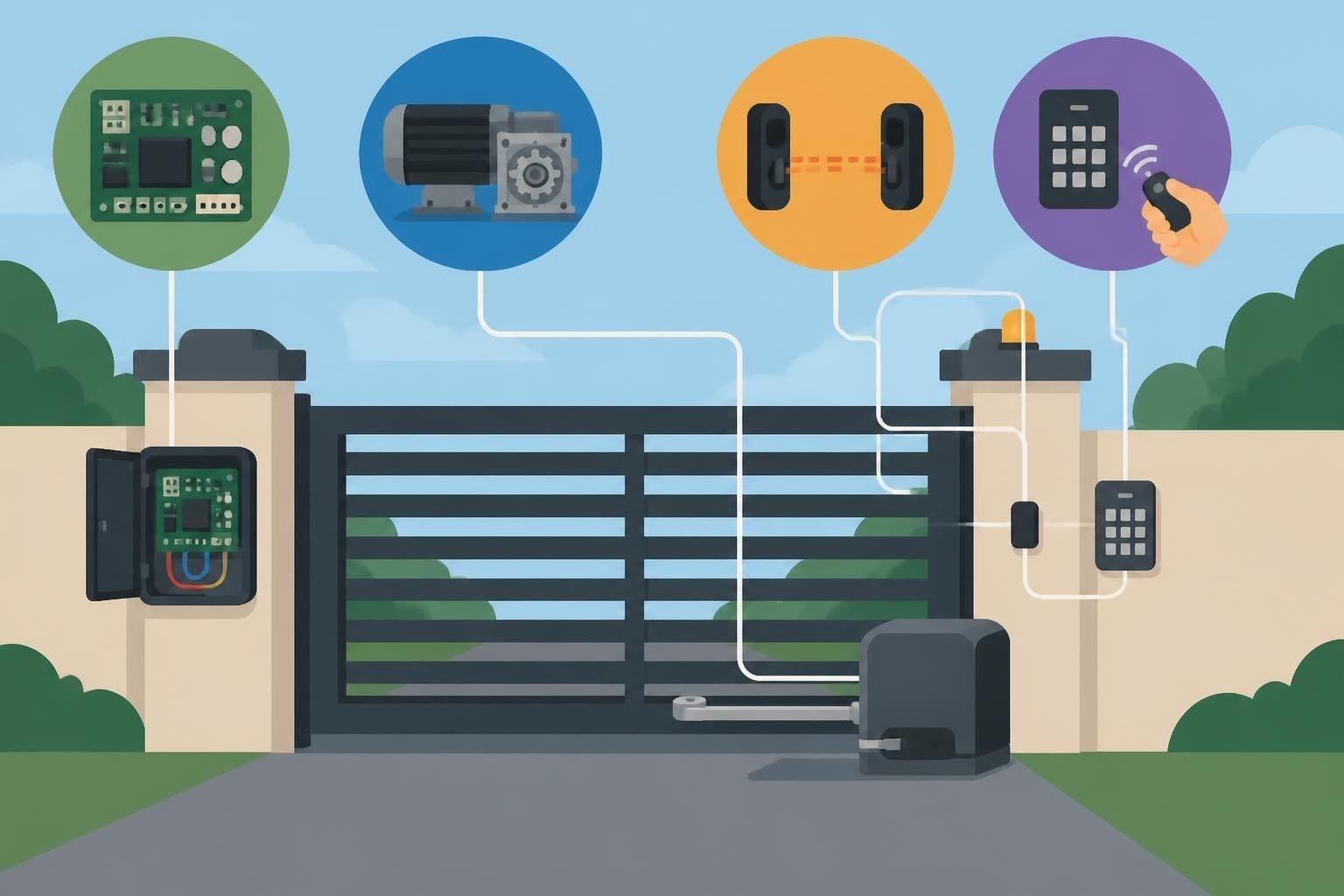
The UL 325 standard governs gate operator safety requirements, mandating entrapment protection devices on all powered gates. Compliant systems incorporate multiple safety layers: photo-eye sensors detect obstructions in the gate path, edge sensors provide contact-based detection, and monitored safety circuits ensure continuous protection.
For commercial installations, UL 325 Type B operators (vehicular gates) require:
- Primary entrapment protection (non-contact sensors)
- Secondary entrapment protection (contact sensors or inherent force limiting)
- Monitored safety circuits with fault detection
- Emergency release mechanisms accessible to operators
Regular testing and documentation of safety devices isn't optional. It's a liability shield and operational necessity.
ADA Accessibility Considerations
Commercial gates serving public-facing facilities must comply with ADA Standards for Accessible Design. Key requirements include:
- Maximum opening force specifications for manual gates
- Clear width requirements for wheelchairs (minimum 32 inches)
- Timing allowances for pedestrian passage through automated gates
- Accessible controls positioned within reach ranges (15-48 inches)
Pedestrian access gates adjacent to vehicle barriers require particular attention. The CISA Venue Guide for Security Enhancements recommends separating pedestrian and vehicle flows while maintaining security equivalence across both access points.
Fire Code and Emergency Egress
A commercial security gate that impedes emergency evacuation violates fundamental life-safety principles. NFPA resources establish that gates across designated egress paths must incorporate fail-safe mechanisms that unlock or open automatically during fire alarm activation or power failure.
Fire department access presents another critical consideration. Many jurisdictions require Knox boxes or approved emergency override systems that grant first responders immediate entry without compromising day-to-day security protocols.
Access Control Integration and Technology
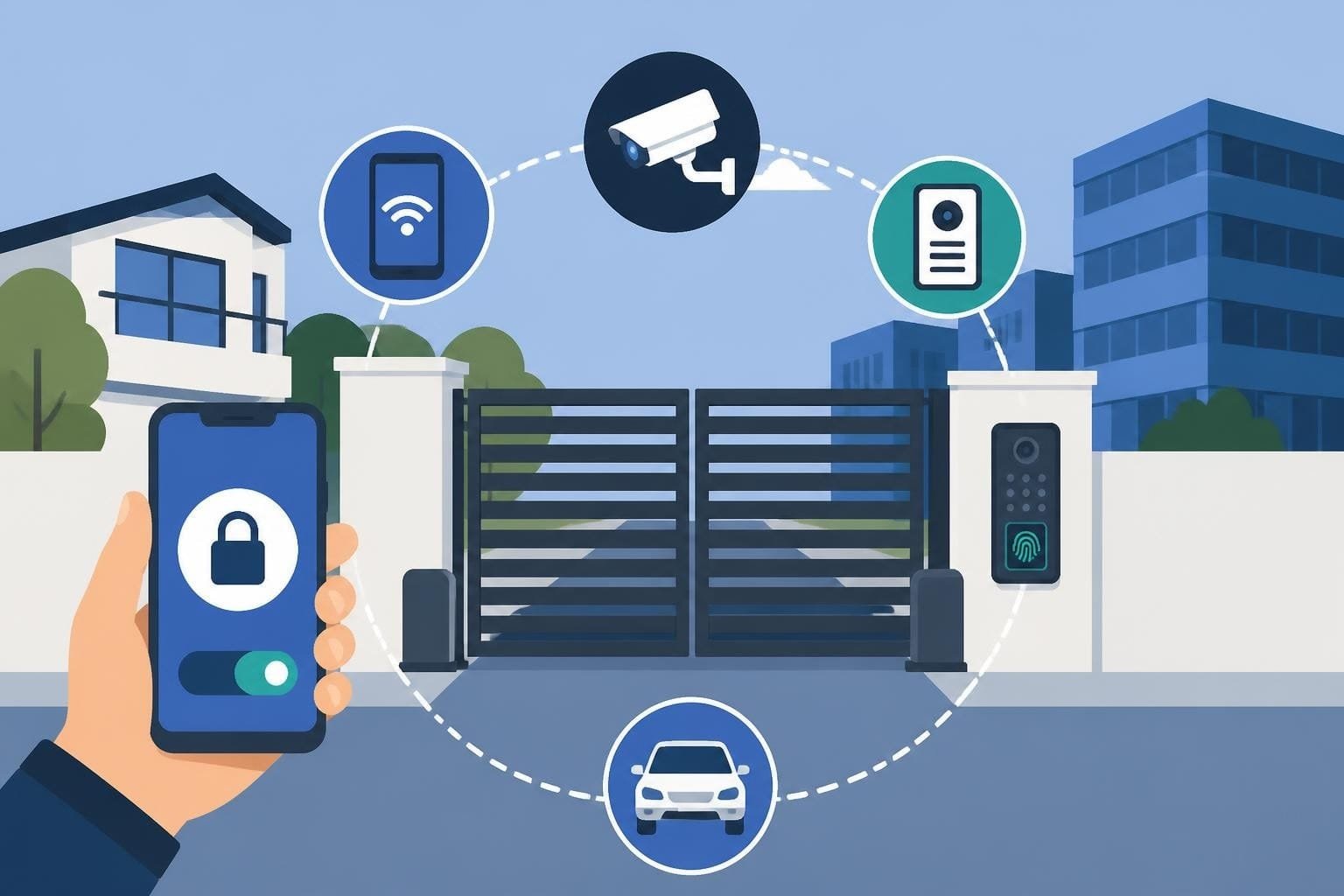
Modern commercial security gate systems function as integrated components within broader access management architectures rather than standalone barriers.
Credential Technologies
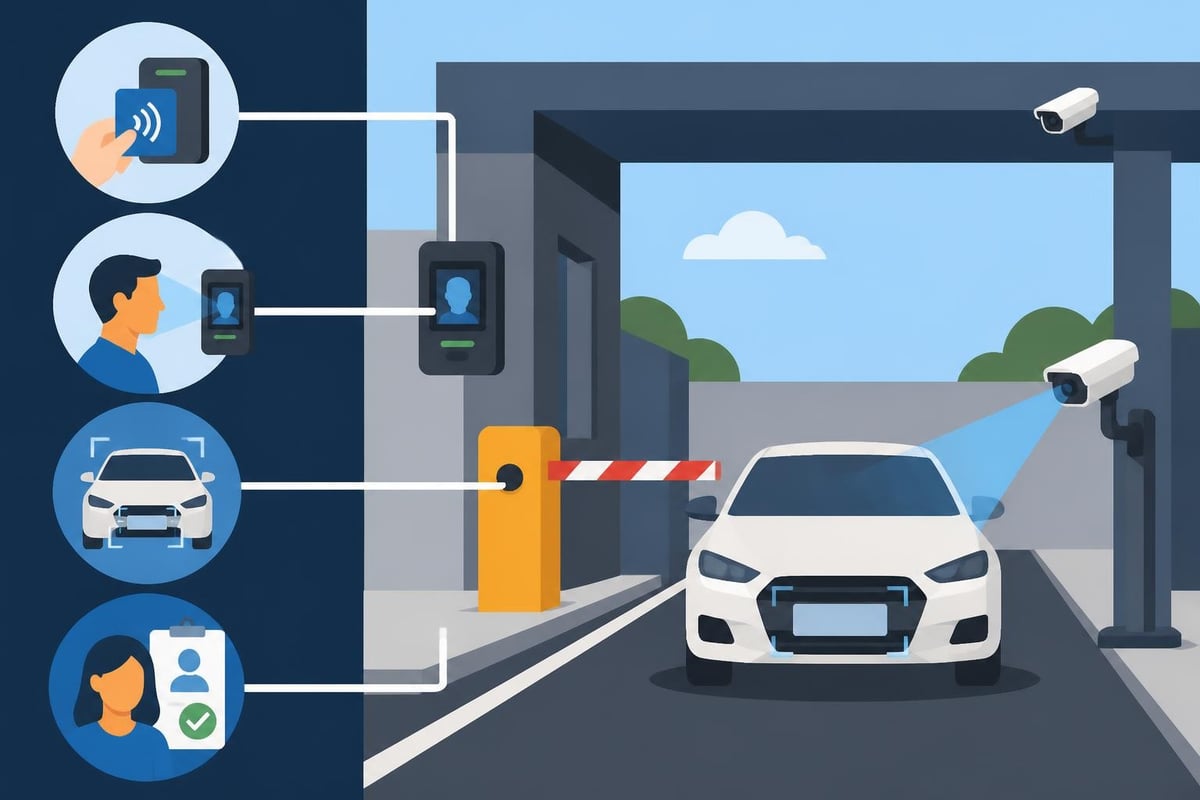
The shift from simple keypads and proximity cards to multi-factor authentication reflects evolving security requirements:
- RFID proximity cards remain ubiquitous for their balance of convenience and cost
- Biometric readers (fingerprint, facial recognition) eliminate credential sharing and loss
- Mobile credentials leverage smartphones for touchless, user-friendly access
- License plate recognition automates vehicle identification for high-traffic facilities
Many organizations now deploy layered credential systems: RFID for general employee access, biometrics for restricted areas, and visitor management integration for temporary credentials.
Cloud-Based vs. On-Premise Systems
The access control architecture decision impacts scalability, cybersecurity posture, and operational flexibility.
Cloud-based platforms offer:
- Remote management from any internet connection
- Automatic software updates and security patches
- Simplified multi-site administration
- Subscription-based cost structure
On-premise systems provide:
- Full data sovereignty and privacy control
- Independence from internet connectivity
- One-time capital expenditure model
- Potential for air-gapped security in sensitive facilities
Hybrid architectures are gaining traction, combining local processing for real-time access decisions with cloud synchronization for management and reporting.
Cybersecurity Considerations for Connected Gates
As commercial security gate systems embrace IoT connectivity, they inherit cybersecurity vulnerabilities. The NIST SP 800-213 IoT Device Cybersecurity Guidance establishes baseline security capabilities for networked devices, including:
- Device identification and authentication
- Secure software update mechanisms
- Data protection through encryption
- Cybersecurity event logging
The 2024 Benchmark Report on IoT Security reveals that 57% of organizations experienced IoT-related security incidents in the past year. For commercial security gate deployments, this mandates network segmentation, strong authentication, and regular firmware updates.
Installation Best Practices
Proper installation determines whether a commercial security gate meets its design specifications or becomes a maintenance liability.
Site Assessment and Planning
Before breaking ground, comprehensive site evaluation should address:
- Soil conditions and foundation requirements – Gate operator loads and wind forces demand properly engineered foundations
- Utility conflicts – Underground electrical, water, and communications infrastructure
- Drainage patterns – Standing water accelerates corrosion and damages operators
- Sight lines and traffic patterns – Adequate queuing space and clear visibility for approaching vehicles
- Security integration points – Conduit paths for cameras, intercoms, and control wiring
Professional installers conduct topographic surveys and coordinate with utility location services to prevent costly surprises during excavation.
Operator Sizing and Specification
Underpowered operators are the leading cause of premature commercial security gate failure. Proper sizing accounts for:
- Gate weight (including hardware, panic bars, and access control equipment)
- Wind loading based on gate surface area and local wind speeds
- Duty cycle requirements (continuous operation vs. intermittent use)
- Environmental conditions (temperature extremes, corrosion exposure)
The ASTM F2200 standard provides performance classifications that match operator capabilities to application demands. Class III and IV operators suit high-frequency commercial applications, while Class I and II serve light-duty needs.
Electrical and Control Wiring
Professional-grade installations follow strict electrical codes and industry best practices:
- Dedicated circuits for gate operators (prevent voltage drops from shared circuits)
- Conduit protection for all underground and exposed wiring
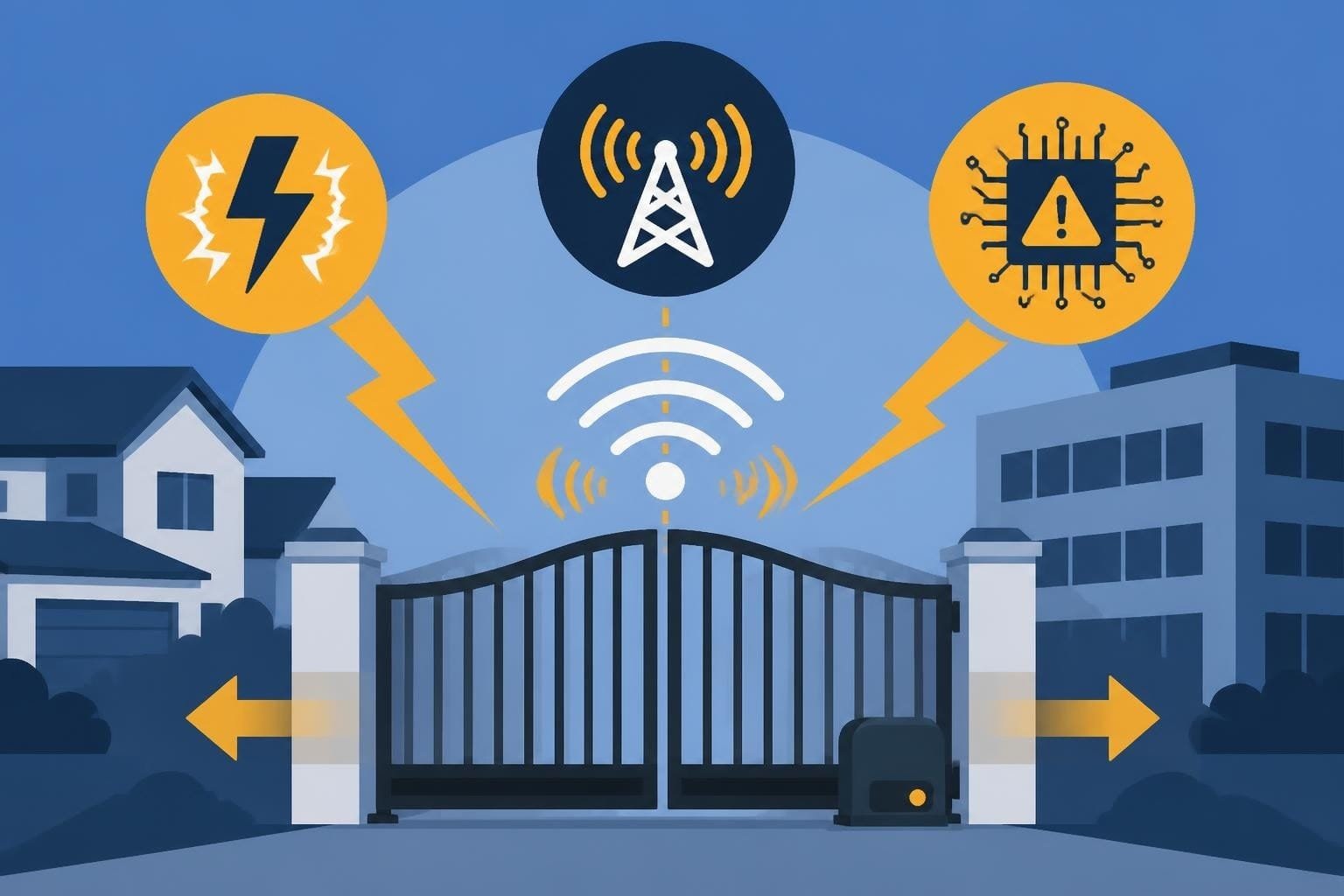
- Surge protection on all control circuits and communication lines
- Proper grounding to prevent electrical faults and lightning damage
- Battery backup systems for emergency operation during power outages
For facilities requiring electric gate repair services, electrical installation quality often determines whether issues stem from component failure or installation defects.
Maintenance Programs and Lifecycle Management
A commercial security gate represents a significant capital investment. Strategic maintenance extends useful life and prevents catastrophic failures.
Preventive Maintenance Schedules
Systematic inspection and service intervals prevent minor issues from escalating:
| Interval | Inspection Items | Service Tasks |
|---|---|---|
| Weekly | Visual inspection, safety sensor test, manual release check | Clean photo-eyes, test emergency stop |
| Monthly | Operator mounting integrity, gate alignment, unusual noise | Lubricate moving parts, adjust limit switches |
| Quarterly | Structural connections, hinge wear, operator belt/chain tension | Tighten hardware, test battery backup |
| Annually | Foundation condition, full safety system audit, access control integration | Professional comprehensive service |
Documentation of all maintenance activities creates an audit trail that demonstrates due diligence and supports warranty claims.
Common Failure Modes and Diagnostics
Understanding typical failure patterns enables faster diagnosis and repair:
Intermittent operation often indicates:
- Loose electrical connections creating high-resistance points
- Failing photo-eye sensors with marginal alignment
- Inadequate battery backup capacity
- Control board component degradation
Complete failure to operate typically stems from:
- Tripped circuit breakers or blown fuses
- Severed communication between controller and operator
- Mechanical obstruction or seized components
- Safety sensor activation (genuine or false detection)
Erratic behavior or partial operation suggests:
- Limit switch misalignment or failure
- Encoder feedback problems in modern digital operators
- Radio interference affecting wireless access control
- Software glitches in programmable logic controllers
Professional service providers maintain diagnostic equipment and manufacturer-specific technical documentation that accelerates troubleshooting beyond basic visual inspection.
Lifecycle Replacement Considerations
Even well-maintained commercial security gate systems eventually require replacement rather than continued repair. Decision factors include:
- Age and obsolescence – Operators older than 15 years often lack replacement parts
- Technology gaps – Legacy systems can't integrate modern access control or safety features
- Compliance changes – Evolving codes may render existing installations non-compliant
- Total cost of ownership – Frequent repairs may exceed replacement costs
- Security requirement evolution – Threat assessments may demand higher-rated barriers
Organizations should budget for major component replacement or system overhaul at 15-20 year intervals, with annual maintenance costs typically running 3-5% of initial installation value.
Operational Efficiency and User Experience
The best commercial security gate balances robust security with seamless authorized access.
Traffic Flow Optimization
High-volume facilities require careful consideration of throughput capacity:
- Queue analysis determines necessary stacking distance to prevent traffic backup onto public roads
- Multi-lane configurations with dedicated entry and exit gates double capacity
- Express lanes with license plate recognition eliminate credential presentation delays for frequent users
- Intercom positioning allows driver interaction without door opening in inclement weather
Peak traffic periods often reveal undersized gate systems. Morning arrival rushes and shift changes create sustained high-volume demands that test operator duty cycle ratings.
Visitor Management Integration
Modern commercial security gate installations increasingly incorporate pre-registration and visitor management platforms:
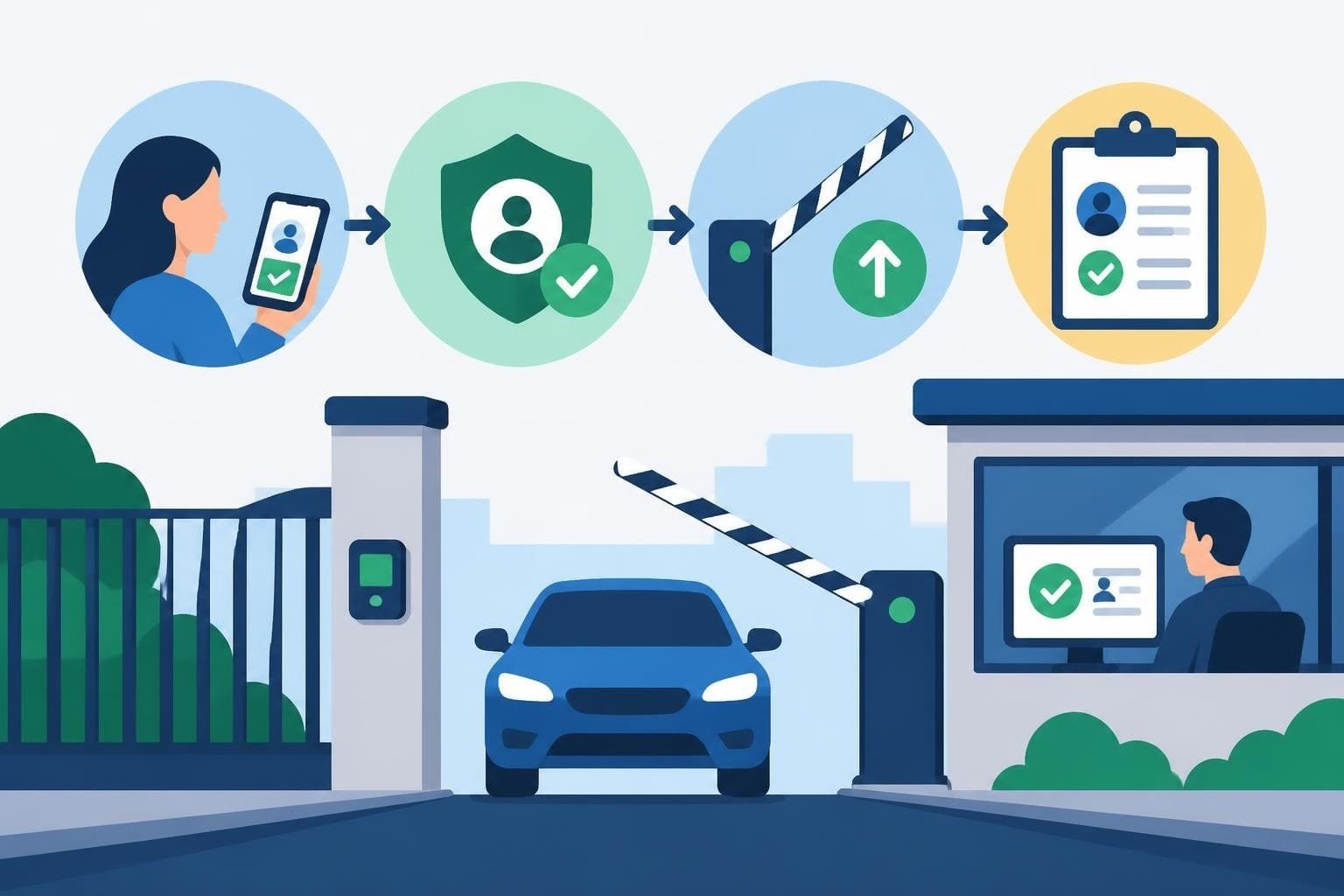
- Visitors receive access credentials via email or SMS before arrival
- License plate data synchronizes with gate recognition systems
- Host notification occurs automatically upon visitor check-in at gate
- Time-limited credentials expire automatically after visit window
- Audit trails capture all access events for security review
This integration eliminates guard stations at many facilities while maintaining superior access control and visitor tracking compared to manual processes.
Seasonal and Environmental Adaptations
Climate conditions demand specific commercial security gate considerations:
Cold climates require:
- Heated operator enclosures to prevent freezing
- Arctic-grade lubricants for sub-zero operation
- Snow and ice detection to prevent damage during clearing operations
- Increased safety sensor sensitivity to detect snow accumulation
Hot, arid environments need:
- Enhanced dust sealing on operator mechanisms
- UV-resistant gate finishes and wiring insulation
- Thermal management for operators exposed to direct sunlight
- Increased lubrication intervals due to dust contamination
Coastal installations face:
- Accelerated corrosion requiring stainless steel or specialized coatings
- Salt fog protection for electronic components
- More frequent inspection and maintenance cycles
- Consideration of hurricane or storm surge resistance
Future Trends in Commercial Gate Security
The commercial security gate industry continues evolving through technology integration and changing threat landscapes.
Artificial Intelligence and Predictive Analytics
Machine learning algorithms now analyze access patterns to identify anomalies indicative of security threats or operational inefficiencies. Predictive maintenance systems monitor operator performance metrics, flagging components likely to fail before breakdown occurs.
AI-enhanced video analytics distinguish between authorized users, delivery vehicles, tailgating attempts, and potential security threats, automating responses that previously required human monitoring.
Sustainable and Energy-Efficient Systems
Environmental considerations drive innovation in commercial security gate design:
- Solar-powered operators with advanced battery management eliminate trenching for electrical service
- Regenerative braking captures energy during gate closing cycles
- LED lighting and low-power control systems reduce operational costs
- Recyclable materials and sustainable manufacturing processes appeal to ESG-conscious organizations
Integration with Broader Smart Building Ecosystems
Commercial security gate systems increasingly function as nodes within comprehensive building management platforms. Integration points include:
- Elevator dispatch systems that prepare cars based on gate access events
- Parking management platforms that reserve spaces based on credential type
- Facility utilization analytics that correlate access data with space usage
- Emergency management systems that coordinate lockdown procedures across all access points
Organizations investing in commercial gate service should evaluate vendor capabilities for API integration and platform openness to support future expansion.
A properly specified, installed, and maintained commercial security gate provides decades of reliable service while adapting to evolving security requirements and technological capabilities. Whether you're planning a new installation, upgrading legacy systems, or troubleshooting existing equipment, professional expertise ensures compliance, safety, and operational efficiency. Gates & Garage Door Express Inc. brings family-owned dedication and technical expertise to commercial and residential gate systems throughout Los Angeles, offering same-day emergency service when security can't wait.