
Property owners across residential and commercial sectors increasingly rely on automated access control to enhance security, convenience, and curb appeal. An electric sliding gate opener represents one of the most efficient solutions for properties with limited swing clearance or heavy-traffic requirements. These motorized systems move gates horizontally along a track, powered by robust motors and controlled through various access methods. Understanding the components, selection criteria, installation requirements, and maintenance needs ensures you invest in a solution that delivers reliable performance for years to come.
Understanding Electric Sliding Gate Opener Systems
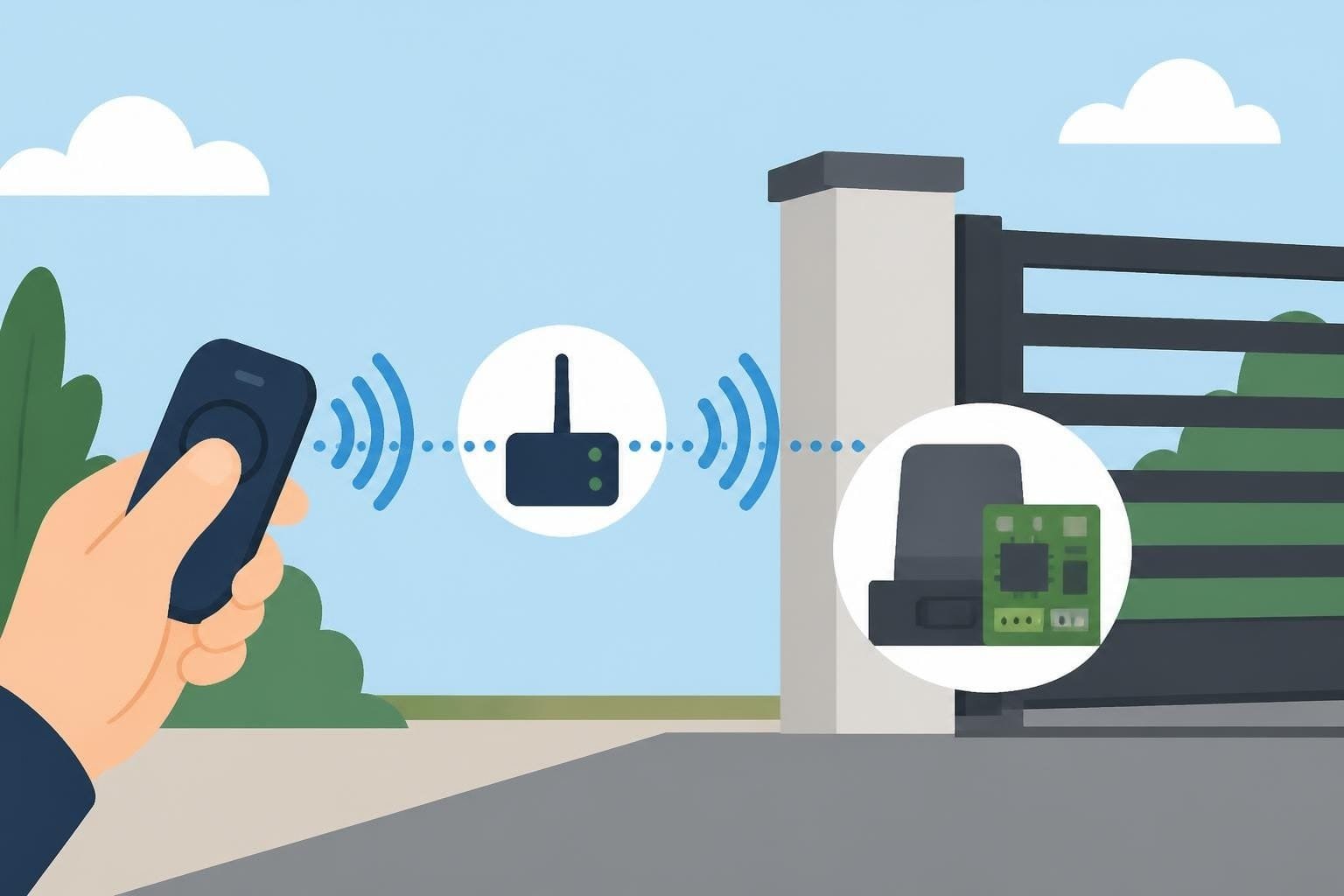
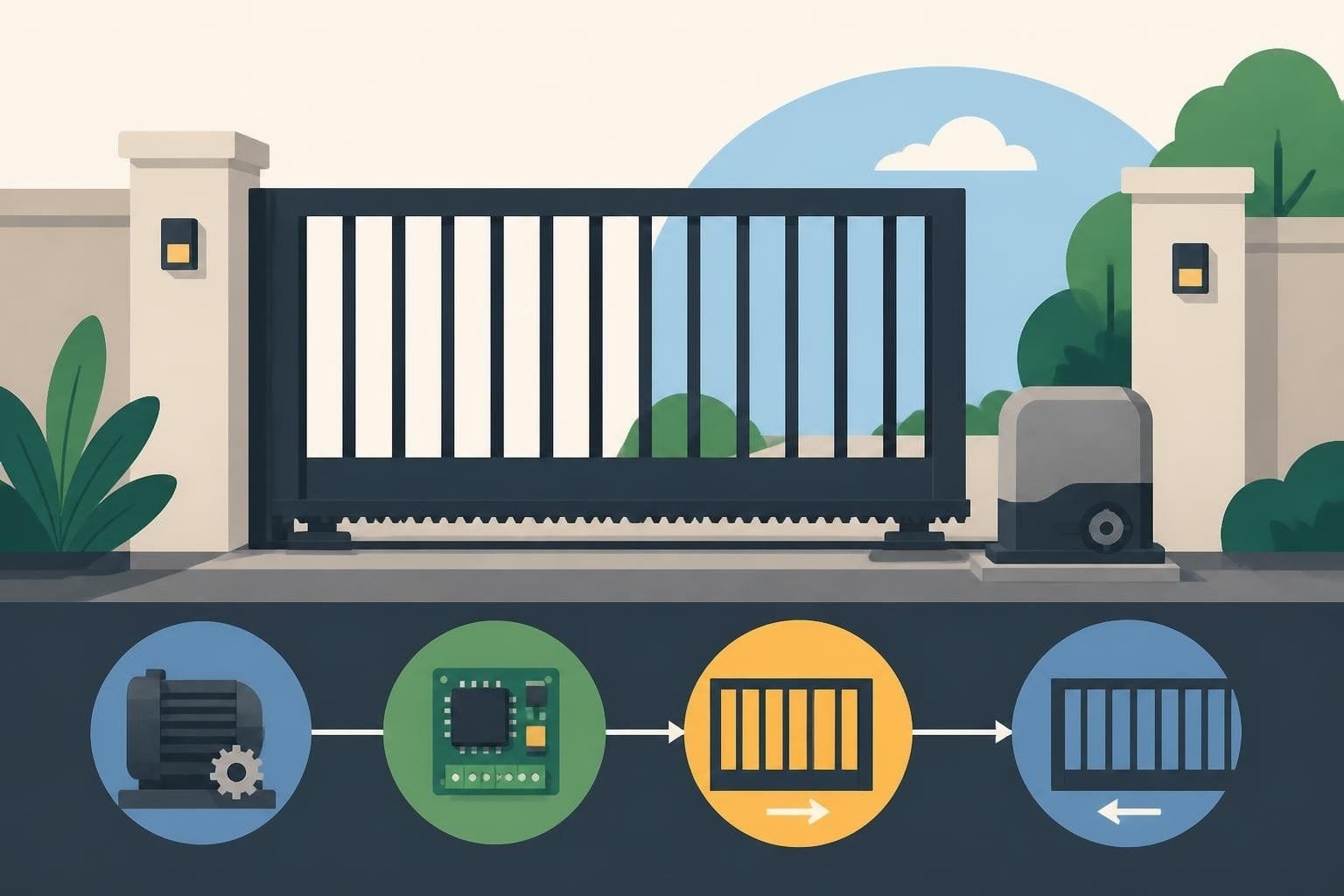
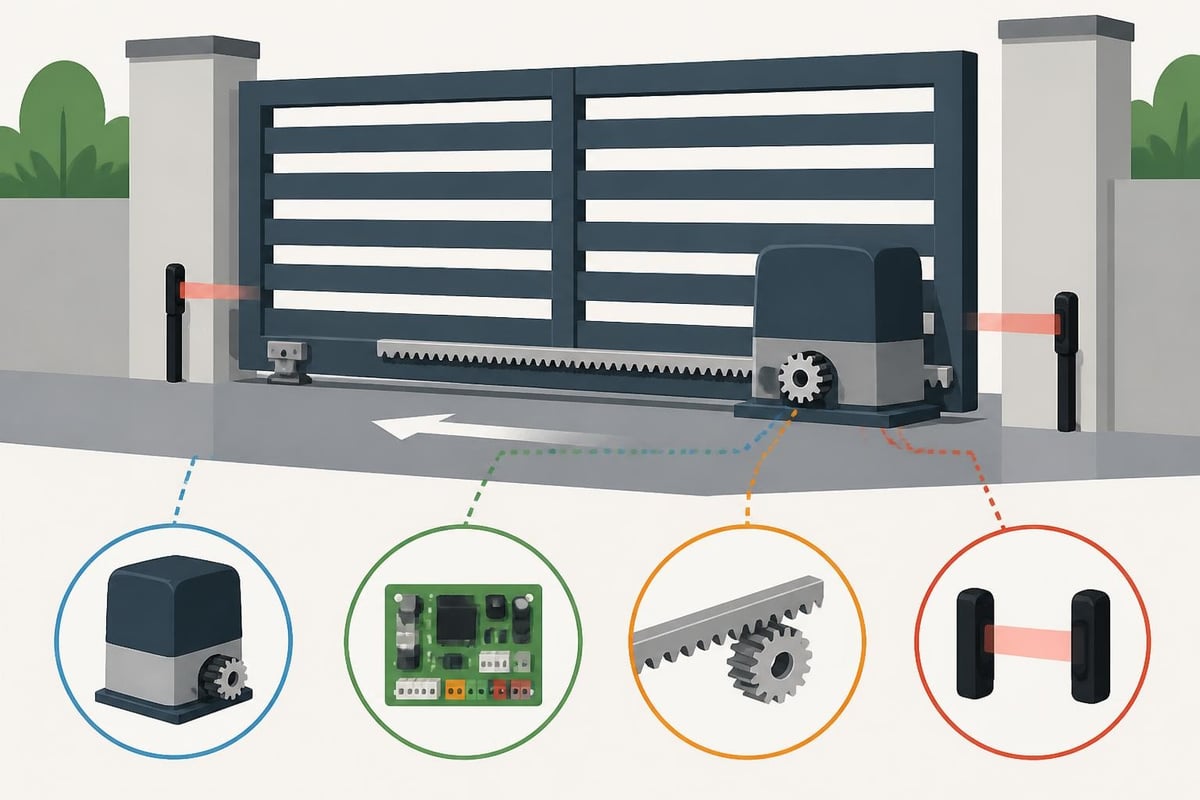
An electric sliding gate opener consists of several integrated components working together to automate gate movement. The motor assembly drives a rack-and-pinion or chain-drive mechanism that moves the gate along a ground track or cantilever support system. Control boards manage the electrical inputs, safety features, and operational logic.
Modern systems incorporate multiple safety mechanisms to comply with UL 325 safety standards, which establish requirements for entrapment protection and operational safety. These features include infrared photo eyes, pressure-sensitive edge sensors, and auto-reverse functions that detect obstacles in the gate's path.
Core Components and Their Functions
The motor unit typically mounts near the gate's closed position and delivers power through a reduction gearbox. This configuration provides the torque necessary to move gates weighing hundreds or thousands of pounds. The control board processes signals from remote controls, keypads, vehicle loops, and safety sensors.
Key components include:
- Motor and gearbox assembly that generates movement power
- Rack gear or chain drive that translates rotational motion to linear movement
- Control board managing inputs, outputs, and safety logic
- Track system guiding the gate's horizontal movement
- Safety sensors including photo eyes and edge sensors
- Access control devices such as remotes, keypads, or card readers
Power requirements vary by gate size and usage frequency. Residential systems typically operate on standard 110V household current, while commercial installations often require 220V or three-phase power for heavier gates and higher duty cycles.
Selecting the Right System for Your Property
Choosing an appropriate electric sliding gate opener requires evaluating several critical factors. Gate weight stands as the primary consideration, as motors are rated for specific weight capacities with safety margins built in. Always select an opener rated for at least 20% more than your actual gate weight to ensure longevity and reliable operation.
Duty cycle represents another crucial specification. Residential systems typically handle 10-30 cycles per day, while commercial operators must accommodate hundreds of daily openings. The Door & Access Systems Manufacturers Association provides technical guidance on matching operator classes to usage requirements.
Residential vs. Commercial Applications
| Feature | Residential Systems | Commercial Systems |
|---|---|---|
| Daily Cycles | 10-30 openings | 100-500+ openings |
| Gate Weight Capacity | 500-1,800 lbs | 1,800-8,000+ lbs |
| Power Supply | 110V single-phase | 220V or three-phase |
| Average Cost | $800-$2,500 | $2,500-$8,000+ |
| Duty Cycle Rating | Light to medium | Heavy to continuous |
| Backup Battery | Optional | Typically required |
Climate conditions influence system selection significantly. Properties in coastal areas require corrosion-resistant components and sealed control boxes. Cold-climate installations benefit from heated control boards and low-temperature lubricants that maintain performance in freezing conditions.
Power and Backup Considerations
Power availability dictates installation approach. Properties with reliable grid access typically use AC-powered systems with battery backup for outages. Remote locations may require solar-powered configurations, following Department of Energy solar photovoltaic design principles to size panels and battery banks appropriately.
Battery backup capacity should maintain operation for at least 24 hours during power failures, with capacity calculations based on expected cycle frequency during that period. Commercial installations often require expanded backup to ensure continuous security and access during extended outages.
Installation Requirements and Process
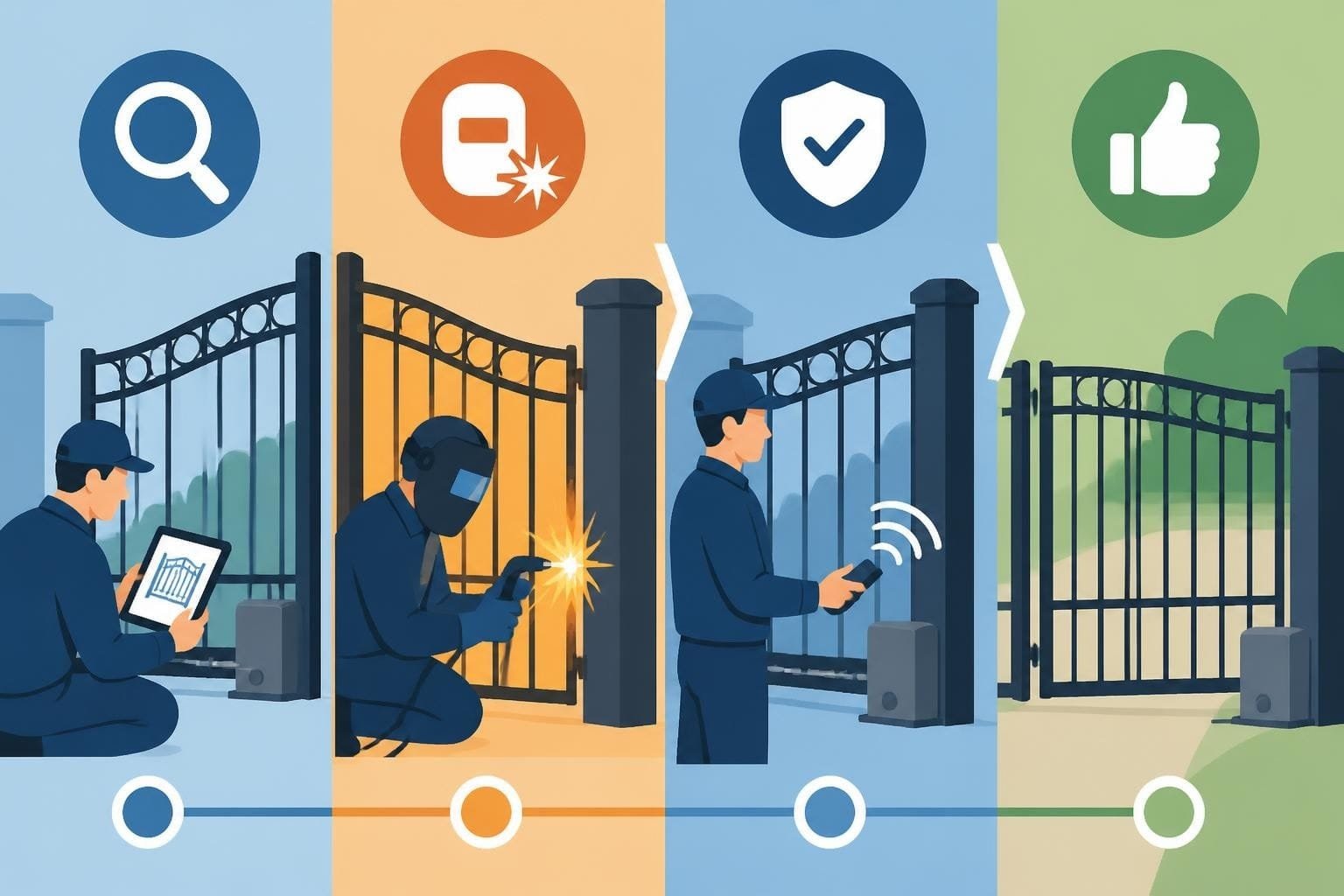
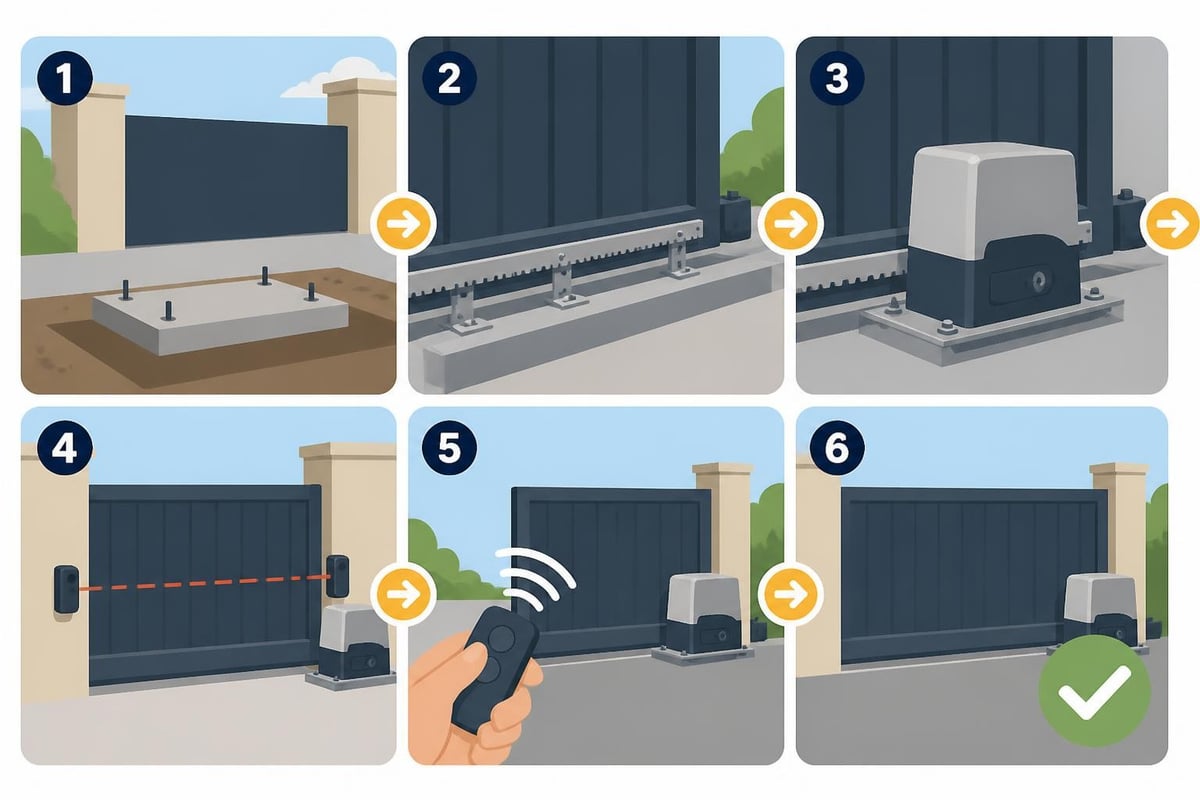
Professional installation of an electric sliding gate opener involves precise alignment, proper foundation work, and comprehensive safety system integration. The process begins with site assessment to verify clearance, evaluate the existing gate condition, and identify any obstacles or challenges.
Foundation preparation proves critical for long-term performance. The track must rest on a level, stable base, typically consisting of a concrete pad extending the gate's full travel distance plus additional clearance. Post locations require concrete footings sized according to local frost depth and soil conditions.
Step-by-Step Installation Overview
- Site preparation and measurement to verify all clearances and dimensions
- Foundation and track installation with proper leveling and anchoring
- Motor mounting and alignment ensuring correct rack engagement
- Control board installation in weatherproof enclosure
- Safety sensor placement following manufacturer specifications and code requirements
- Wiring and electrical connections completed by licensed electrician
- System programming and adjustment of limits, speeds, and sensitivity
- Safety testing and verification of all entrapment protection features
Compliance with ADA accessibility guidelines may be required for commercial properties or residential properties where the gate forms part of a public accommodation. This includes ensuring adequate maneuvering clearances and, in some cases, providing alternative access methods.
When dealing with malfunctioning systems or upgrading older installations, electric gate repair services can assess existing infrastructure and recommend whether repair or replacement offers the best value.
Safety Standards and Compliance
Safety represents the paramount concern in electric sliding gate opener installation and operation. Federal regulations through the Consumer Product Safety Commission and industry standards through UL establish strict requirements for entrapment protection. The UL 325 standard specifically addresses gate operators and requires Type A (vehicular) and Type B (pedestrian) operators to incorporate specific safety features based on their application.
Required Safety Features
Modern electric sliding gate opener systems must include multiple layers of protection:
- Primary entrapment protection through monitored photo eyes or contact sensors
- Secondary entrapment protection via inherent force sensing or additional sensors
- Emergency release mechanism allowing manual operation during power failure
- Visual warning devices indicating gate movement
- Audible alarms for commercial applications
- Edge sensors detecting contact with obstacles
The CPSC final rule on gate safety provides additional context on federal safety requirements, particularly regarding entrapment hazards and the mechanisms necessary to prevent serious injuries.
Testing frequency depends on usage and local requirements. Commercial installations typically require monthly safety checks, while residential systems benefit from quarterly inspections. Documentation of safety tests protects property owners from liability and ensures ongoing compliance.
Access Control Integration Options
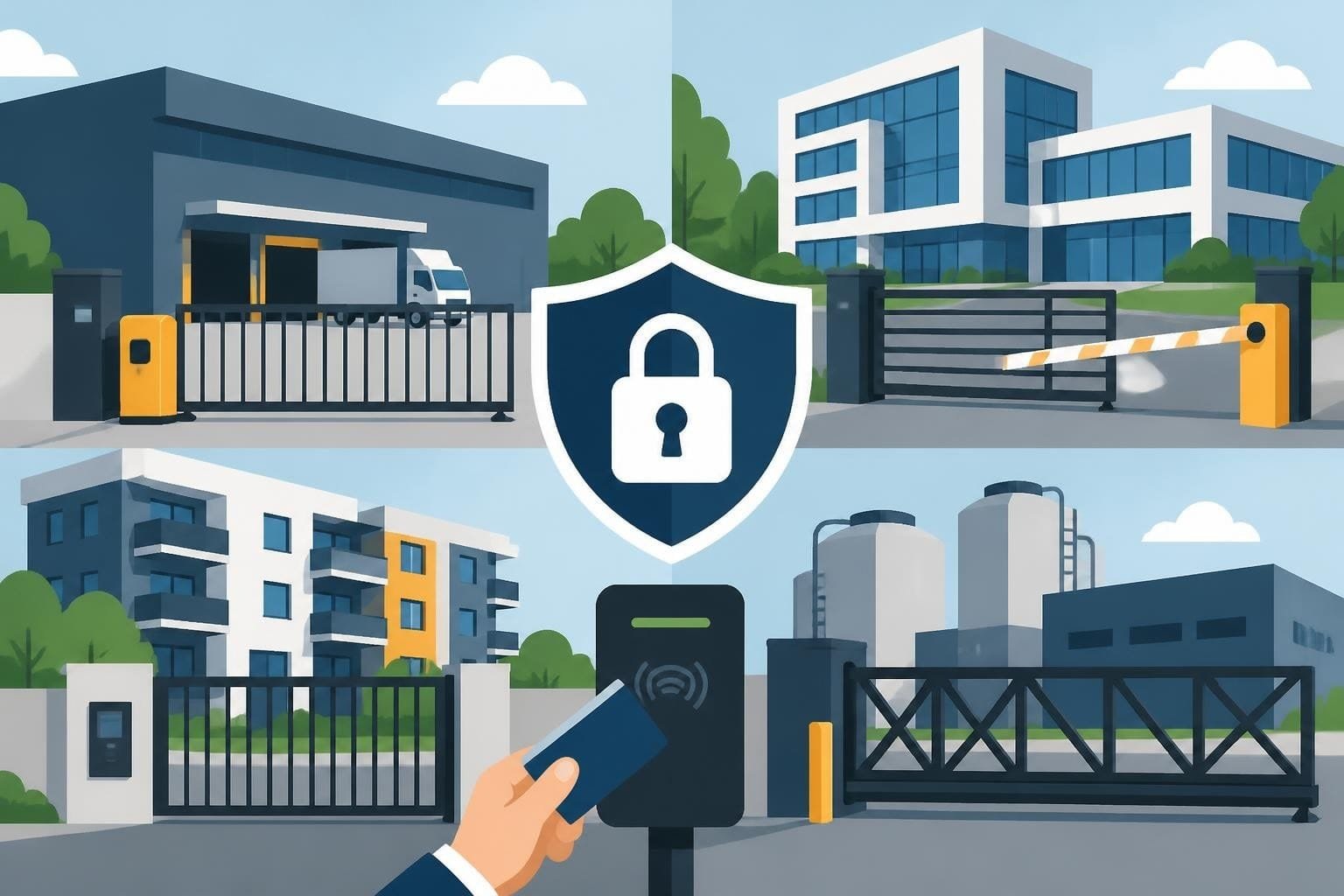
An electric sliding gate opener becomes significantly more functional when integrated with sophisticated access control systems. Modern installations support multiple access methods, allowing property owners to tailor security levels to their specific needs.
Common access control options include:
- Radio frequency remote controls with rolling code encryption
- Keypad entry systems with programmable user codes
- Proximity card or fob readers
- Smartphone control via Wi-Fi or Bluetooth connectivity
- Vehicle loop detectors for automatic exit
- Intercom systems with video verification
- License plate recognition cameras
Cybersecurity considerations have grown increasingly important as gate systems incorporate network connectivity. Following NIST guidelines for IoT device security helps protect against unauthorized access through digital vulnerabilities. Change default passwords, implement strong authentication, and segment gate control networks from general business or home networks.
Smart Home and Building Integration
Integration with broader automation systems enables advanced functionality. Electric sliding gate openers can communicate with home automation platforms, security systems, and building management systems to create coordinated responses to various events.
For commercial properties, integration with fire alarm systems becomes critical. NFPA 101 Life Safety Code requirements may mandate automatic gate opening during fire alarms to facilitate emergency vehicle access and building evacuation.
Maintenance and Troubleshooting
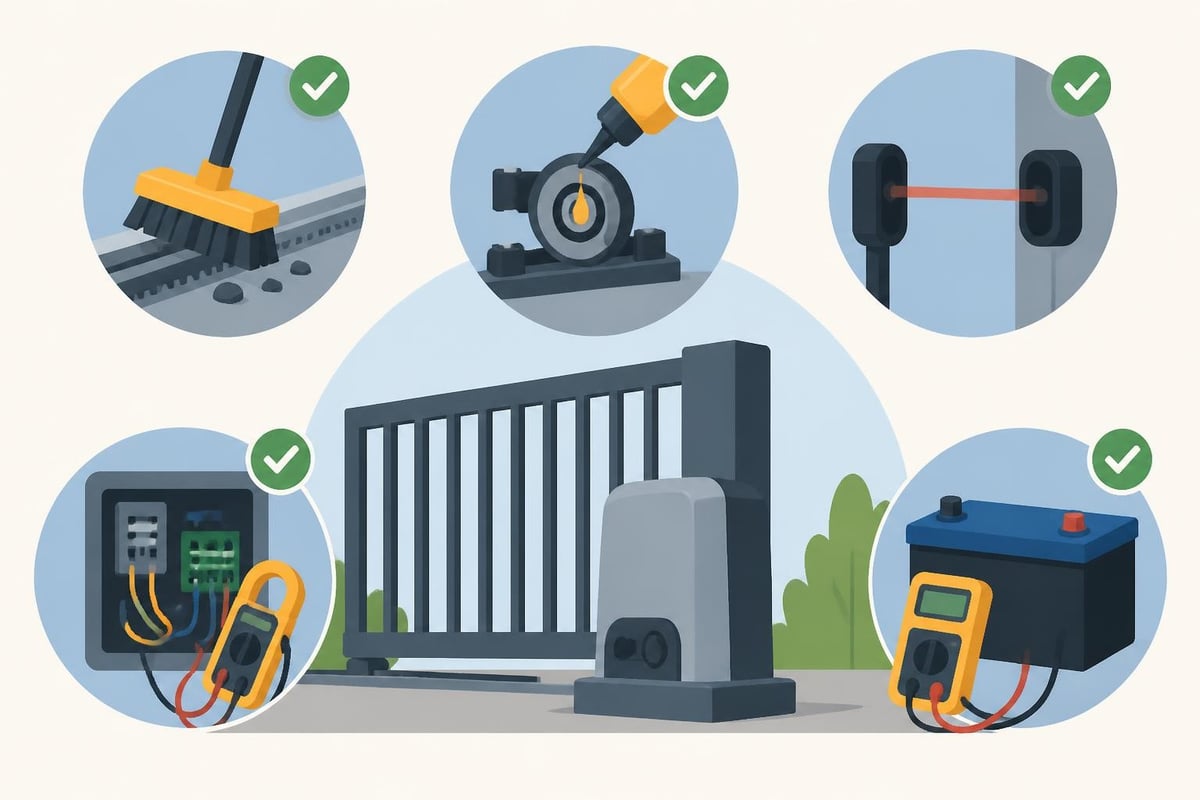
Preventive maintenance extends the lifespan of an electric sliding gate opener and prevents costly breakdowns. Establishing a regular maintenance schedule appropriate to usage intensity keeps systems operating smoothly year-round.
Routine Maintenance Schedule
| Task | Frequency | Description |
|---|---|---|
| Track cleaning | Monthly | Remove debris, leaves, and dirt from track |
| Wheel inspection | Monthly | Check for wear, proper alignment, and lubrication |
| Chain/rack check | Quarterly | Verify tension, lubricate, inspect for wear |
| Safety sensor test | Monthly | Verify photo eye alignment and function |
| Electrical connections | Quarterly | Inspect for corrosion, tightness, damage |
| Motor gear oil | Annually | Check level, top off or replace as needed |
| Battery backup test | Quarterly | Verify charge capacity and failover operation |
Track maintenance proves particularly important for sliding systems. Even small amounts of debris can increase motor strain and cause premature wear. Regular cleaning with a stiff brush and periodic washing prevent buildup. In environments with heavy dust or leaves, more frequent cleaning may be necessary.
Common Issues and Solutions
Motor failures often result from overwork rather than component defects. Gates that struggle to open or close smoothly place excessive strain on motors. Addressing binding, wheel wear, or track misalignment promptly prevents motor damage.
Control board issues frequently stem from power surges or moisture infiltration. Installing surge protection and ensuring proper enclosure sealing protects sensitive electronics. When boards do fail, professional diagnosis typically saves time and money compared to trial-and-error part replacement.
Battery backup systems require attention as batteries age. Lead-acid batteries typically last 3-5 years with proper maintenance, while lithium alternatives may extend to 7-10 years. Temperature extremes accelerate battery degradation, so climate-controlled enclosures extend battery life in harsh environments.
Advanced Features and Technology Trends
The electric sliding gate opener market continues evolving with advancing technology. Modern systems incorporate features that would have seemed futuristic just a decade ago, enhancing both convenience and security.
Solar power integration has matured significantly, making off-grid operation practical for remote properties. Today's solar gate operator kits include properly sized panels, charge controllers, and battery banks engineered specifically for gate operation cycles. Proper system sizing requires calculating daily power consumption and accounting for seasonal sunlight variations.
Emerging Technologies
IoT connectivity enables remote monitoring and control through smartphone applications. Property owners can receive notifications when gates open or close, grant temporary access to visitors, and review access logs. For commercial gate installations, these features streamline property management and enhance security oversight.
Artificial intelligence integration allows systems to learn usage patterns and optimize performance. Smart systems can adjust opening speeds based on traffic patterns, predict maintenance needs based on operational data, and detect unusual access attempts that may indicate security threats.
Voice control through smart home platforms provides hands-free operation. Integration with Amazon Alexa, Google Assistant, or Apple HomeKit enables voice commands for opening and closing, particularly convenient when arriving home with hands full or during inclement weather.
Vehicle detection technology has advanced beyond simple loop detectors. Modern systems use radar, lidar, or camera-based recognition to detect approaching vehicles with greater accuracy and faster response times. License plate recognition systems can automatically grant access to registered vehicles while denying entry to unknown plates.
Cost Factors and Budget Planning
Understanding the total cost of electric sliding gate opener ownership requires looking beyond initial purchase price. Installation complexity, ongoing maintenance, and potential repairs all contribute to lifetime expenses.
Equipment costs range significantly based on gate weight capacity, duty cycle rating, and included features. Basic residential systems start around $800-$1,200 for the opener alone, while commercial-grade operators range from $2,500-$6,000. High-security or heavy-duty installations can exceed $10,000 for equipment alone.
Complete Installation Cost Breakdown
Labor and installation typically add:
- Site preparation and foundation work: $500-$2,000
- Professional installation and wiring: $1,000-$3,000
- Access control system integration: $500-$2,500
- Permit fees and inspections: $200-$800
- Gate modifications if needed: $300-$1,500
Annual operating costs remain modest for most installations. Electricity consumption typically runs $30-$100 annually for residential systems, with commercial installations consuming proportionally more based on cycle frequency. Battery replacement every 3-5 years adds $100-$400 depending on capacity requirements.
Maintenance expenses average:
- Routine professional service: $150-$300 annually
- Unexpected repairs: Budget $200-$500 reserve
- Part replacements: Varies widely, $50-$1,000
- Emergency service calls: $200-$500 per incident
Properties in Los Angeles and similar urban markets may see higher labor rates for installation and service, while rural properties might incur travel charges. Obtaining multiple quotes helps establish realistic budget expectations for your specific location and requirements.
Warranty Coverage and Service Agreements
Warranty terms vary substantially between manufacturers and product lines. Standard warranties typically cover motor assemblies for 2-5 years, control boards for 1-3 years, and other components for 1 year. Commercial-grade equipment often includes extended warranties reflecting its higher cost and expected reliability.
Reading warranty terms carefully reveals important exclusions. Most warranties void if installation is performed by unlicensed individuals or if regular maintenance is neglected. Documentation of professional installation and maintenance preserves warranty coverage.
Service agreements provide peace of mind and often prove cost-effective for commercial installations. Annual contracts typically include scheduled preventive maintenance, priority emergency response, and discounted repair rates. For businesses where gate functionality directly impacts operations, service agreements minimize downtime risk.
What Service Agreements Should Include
- Scheduled preventive maintenance visits (2-4 annually)
- Priority response for breakdowns and emergencies
- Discounted parts and labor rates
- After-hours and weekend availability
- Temporary access solutions during extended repairs
- Annual safety compliance documentation
Comparing service agreement costs against estimated maintenance expenses helps determine value. Properties with simple gate systems and handy owners may prefer pay-as-you-go service, while complex commercial installations typically benefit from comprehensive agreements.
Environmental and Energy Efficiency Considerations
Electric sliding gate openers consume relatively modest energy, but opportunities exist to minimize environmental impact and reduce operating costs. Solar power represents the most direct approach to sustainable operation, particularly for remote locations or properties committed to renewable energy.
Standby power consumption deserves attention. While moving the gate requires significant power momentarily, control boards and access devices consume electricity continuously. Modern systems with energy-efficient control electronics reduce standby consumption to just 3-8 watts compared to 15-30 watts for older systems. Over a year, this efficiency improvement translates to measurable savings.
Energy-saving strategies include:
- LED indicator lights instead of incandescent
- Low-power standby modes in control boards
- Optimized opening speeds that balance convenience with energy use
- Solar panels for supplemental or complete power
- Motion-activated lighting instead of continuous illumination
- Properly sized motors that don't waste energy on overcapacity
Climate adaptations improve efficiency while extending system life. In hot climates, shading motor assemblies and control boxes reduces heat buildup that can damage electronics and accelerate lubricant breakdown. Cold-climate installations benefit from insulated enclosures and heating elements that maintain optimal operating temperatures.
Selecting durable, long-lasting components reduces environmental impact by minimizing replacement frequency. Commercial-grade motors and control boards, while initially more expensive, often prove more sustainable through their extended service life and reduced need for replacement parts.
Selecting and maintaining an electric sliding gate opener requires careful attention to capacity requirements, safety compliance, and ongoing maintenance needs. Whether for residential convenience or commercial security, the right system delivers years of reliable automated access control. Gates & Garage Door Express Inc. brings family-owned expertise to every installation and repair, offering same-day service throughout Los Angeles with the knowledge and commitment to keep your automated gate systems operating safely and efficiently. Contact Gates & Garage Door Express Inc. today to discuss your gate automation needs and experience the difference that professional service makes.