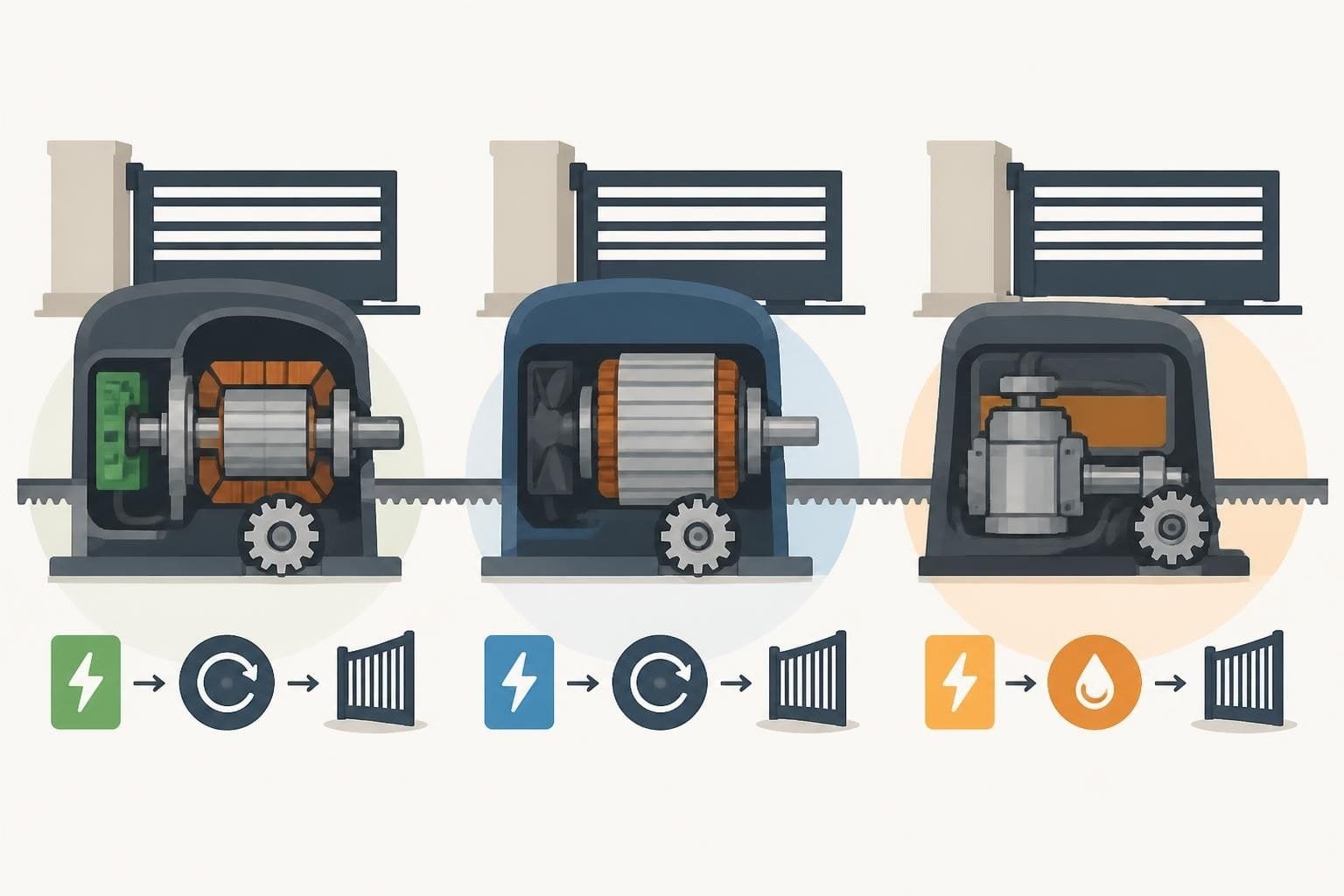

A gate opener motor serves as the heart of any automated gate system, converting electrical energy into the mechanical force needed to open and close gates reliably. Whether you're securing a residential driveway or managing access to a commercial facility, understanding how these motors work and what makes them suitable for different applications can save you time, money, and frustration. In 2026, gate opener motors have evolved to become more efficient, quieter, and smarter than ever before, integrating with modern home automation systems while maintaining the durability needed for years of daily operation.
Understanding Gate Opener Motor Fundamentals
The gate opener motor is fundamentally an electric motor specifically designed to withstand the unique demands of gate automation. Unlike general-purpose motors, these units must operate in outdoor environments, handle intermittent duty cycles, and provide precise speed control throughout the gate's travel path.
Core Operating Principles
At its most basic level, a gate opener motor transforms electrical current into rotational motion. This rotation is then transmitted through a gearing system that reduces speed while increasing torque, providing the force necessary to move gates weighing hundreds or even thousands of pounds. The motor receives signals from a control board that interprets commands from remote controls, keypads, or access control systems.
Modern gate opener motors incorporate several critical components:
- Armature or rotor assembly that creates the rotating magnetic field
- Stator housing that contains permanent magnets or electromagnetic coils
- Gearbox that multiplies torque and reduces output speed
- Electronic controller that manages power delivery and safety features
- Encoder or limit switches that track gate position
The integration of these components determines the motor's performance characteristics, including opening speed, maximum gate weight capacity, and duty cycle rating. Professional installers must match these specifications to the specific gate installation to ensure reliable operation.
Motor Types and Technologies
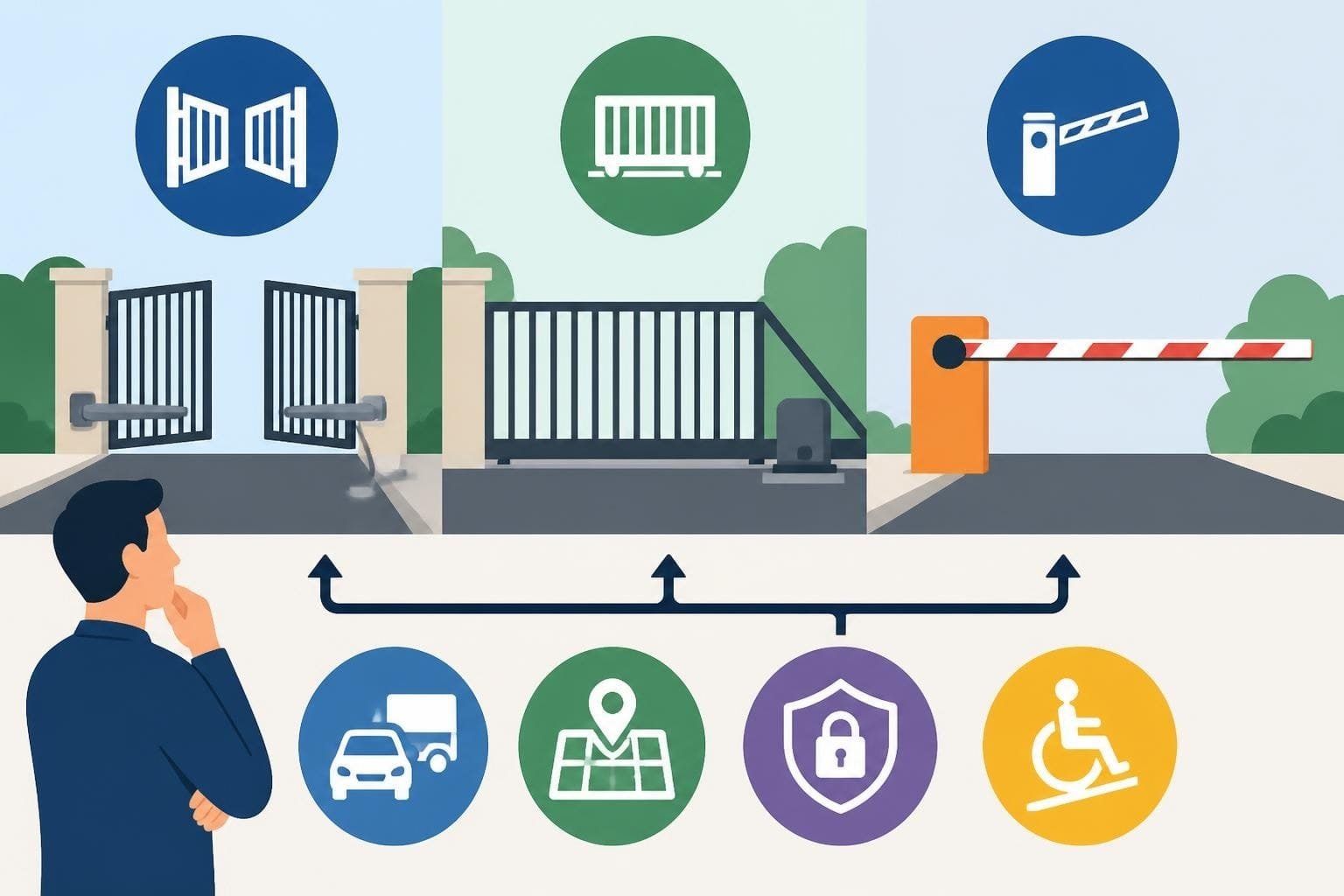
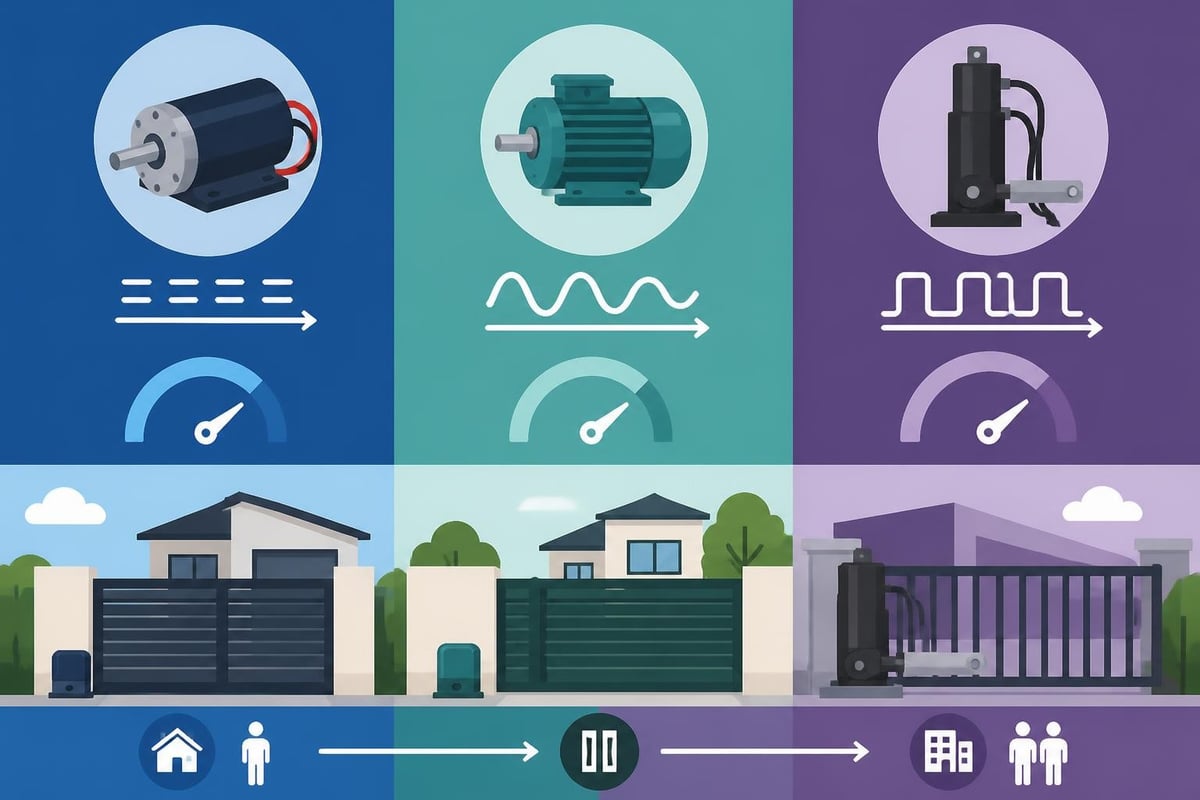
Gate opener motors fall into several distinct categories, each with unique advantages. DC motors have historically dominated residential applications due to their smooth operation and battery backup compatibility. These motors use permanent magnets and brushes to create rotation, though modern brushless DC designs have eliminated the maintenance concerns associated with traditional brushed motors.
AC induction motors represent the workhorse of commercial gate automation. According to the U.S. Department of Energy’s guidance on small electric motors, these motors offer excellent durability and efficiency for continuous-duty applications. They're particularly well-suited for high-traffic installations where gates open and close dozens or hundreds of times daily.
Hydraulic systems use an electric motor to drive a hydraulic pump rather than directly moving the gate. This approach provides exceptional force for heavy gates and offers smooth, quiet operation. The separation of the motor from the gate mechanism also provides flexibility in installation locations.
Selecting the Right Gate Opener Motor
Choosing an appropriate gate opener motor requires careful analysis of several factors that directly impact performance and longevity. The decision involves matching motor specifications to gate characteristics, usage patterns, and environmental conditions.
Weight and Size Considerations
The gate's weight represents the most critical factor in motor selection. Manufacturers rate their motors for specific weight capacities, but smart installers apply a safety margin of at least 20-30% to account for wind loading, age-related friction increases, and installation variables.
| Gate Type | Typical Weight Range | Recommended Motor Type | Duty Cycle |
|---|---|---|---|
| Single swing residential | 150-400 lbs | DC brushless 24V | 30-50% |
| Double swing residential | 300-800 lbs total | DC 24V dual | 30-50% |
| Commercial swing | 400-1200 lbs | AC induction | 80-100% |
| Sliding gate residential | 600-1500 lbs | DC 24V rack drive | 40-60% |
| Sliding gate commercial | 1500-5000+ lbs | AC 3-phase | 100% continuous |
Gate length also affects motor requirements, as longer gates experience greater wind resistance and require more precise speed control to prevent excessive slamming or bouncing at the closed position.
Duty Cycle Requirements
The duty cycle specification indicates how frequently a gate opener motor can operate without overheating. Residential installations typically require 30-50% duty cycles, meaning the motor can run for 30-50% of each time period before needing to cool. Commercial applications demand 80-100% continuous duty motors.
Calculating your required duty cycle:
- Count the number of gate cycles during your busiest hour
- Multiply cycles by the total opening plus closing time in seconds
- Divide by 3,600 (seconds per hour) to get the percentage
- Add 25% safety margin for peak periods and future growth
Properties experiencing 20-30 cycles per hour during rush periods need motors rated for at least 50% duty cycle. High-traffic commercial facilities should only consider continuous-duty rated motors to prevent premature failure.
Safety Standards and Compliance Requirements
Modern gate opener motors must comply with rigorous safety standards designed to prevent entrapment injuries and property damage. The UL 325 standard governs gate operator safety in North America, establishing requirements for force limits, obstruction detection, and protective devices.
Entrapment Protection Mechanisms
Gate opener motors manufactured after 2016 must incorporate primary entrapment protection systems that stop and reverse the gate when encountering an obstruction. This protection typically comes from one of three technologies: inherent force sensing, edge sensors, or photoelectric beams.
Inherent force sensing monitors motor current to detect increased resistance when the gate contacts an object. While cost-effective, this approach only works after contact has occurred. Edge sensors use pressure-sensitive strips mounted on the gate's leading edge to detect contact immediately. Photoelectric systems prevent contact entirely by creating an invisible beam across the gate's path.
According to DASMA Technical Data Sheet #353, commercial installations must typically employ non-contact obstruction detection systems, while residential applications may use contact-based systems provided they meet maximum force requirements.

Force Limitation Standards
The gate opener motor controller must limit the force exerted by the gate to prevent crushing injuries. Maximum forces vary based on gate type and application, but residential swing gates typically must not exceed 15 pounds of force during closing.
Testing procedures require installers to verify force limits using calibrated force gauges at multiple points along the gate's edge. When dealing with electric gate repair in Los Angeles, technicians regularly encounter older systems that don't meet current safety standards and require retrofitting with compliant motors and control systems.
Installation Considerations and Best Practices
Proper installation dramatically affects gate opener motor performance and longevity. Even the highest-quality motor will fail prematurely if installed incorrectly or paired with an improperly prepared gate.
Environmental Protection Requirements
Gate opener motors face constant exposure to weather, temperature extremes, and environmental contaminants. Moisture protection ranks as the primary concern, as water infiltration destroys electronic components and causes corrosion. Motors should carry at minimum an IP54 rating for outdoor installations, with IP65 or higher preferred for coastal areas or regions with heavy precipitation.
Temperature extremes affect motor performance in several ways. Cold weather increases lubricant viscosity, requiring motors to work harder during startup. Extreme heat accelerates insulation degradation and reduces the motor's duty cycle capability. Quality motors incorporate thermal protection switches that shut down operation before damage occurs.
Mounting and Alignment Precision
The motor's position relative to the gate determines mechanical advantage and wear patterns. Swing gate operators must be mounted at the correct distance from the hinge point-typically specified by the manufacturer based on gate weight and width.
Critical mounting dimensions include:
- Distance from hinge line to motor bracket
- Height of motor mounting point relative to gate frame
- Bracket reinforcement and concrete foundation depth
- Clearance for full gate swing without binding
- Accessibility for routine maintenance and adjustment
Sliding gates require precise alignment between the drive pinion and the gate's rack gear. Misalignment causes accelerated wear, increased noise, and reduced efficiency. Professional installers use alignment jigs and adjust the motor mounting until the pinion meshes correctly across the entire gate travel.
Maintenance Requirements for Longevity
A properly maintained gate opener motor can deliver 10-15 years of reliable service, while neglected units often fail within 3-5 years. Routine maintenance addresses the most common failure modes before they cause complete breakdowns.
Scheduled Inspection Intervals
Residential gate opener motors should receive professional inspection annually, while commercial installations require quarterly service. These inspections verify proper operation of all safety features, check for unusual wear patterns, and identify potential problems before they cause failures.
| Maintenance Task | Residential Frequency | Commercial Frequency | Critical Points |
|---|---|---|---|
| Safety system test | Annually | Quarterly | Photo eyes, force limits, auto-reverse |
| Lubrication service | Annually | Semi-annually | Gears, chains, hinges, rollers |
| Electrical connections | Every 2 years | Annually | Terminals, wire insulation, grounding |
| Mechanical alignment | Every 2 years | Annually | Rack mesh, hinge alignment, level |
| Battery backup test | Semi-annually | Quarterly | Load test, replacement at 3-4 years |
Documentation of maintenance activities proves valuable for warranty claims and helps identify recurring problems that might indicate incorrect motor specification or installation issues.
Common Failure Modes and Prevention
Gate opener motor failures typically stem from predictable causes that preventive maintenance can address. Capacitor failure ranks among the most common problems in AC motors, presenting as difficulty starting or humming without rotation. Capacitors degrade over time and should be replaced every 3-5 years as preventive maintenance.
Gear wear occurs gradually but accelerates rapidly once tooth profiles deteriorate beyond critical thresholds. Regular lubrication with appropriate gear oil dramatically extends gearbox life. Operators should use only manufacturer-specified lubricants, as incorrect products can cause seal degradation or insufficient protection.
Electronic component failure often results from voltage spikes caused by lightning or utility switching. Surge protection devices should be installed on all gate opener motor circuits and replaced after known lightning strikes or surge events.
Advanced Features in Modern Motors
The gate opener motor market in 2026 offers sophisticated features that enhance convenience, security, and integration with smart home systems. These capabilities extend beyond basic open-close functionality to provide comprehensive access management.
Smart Connectivity and Control
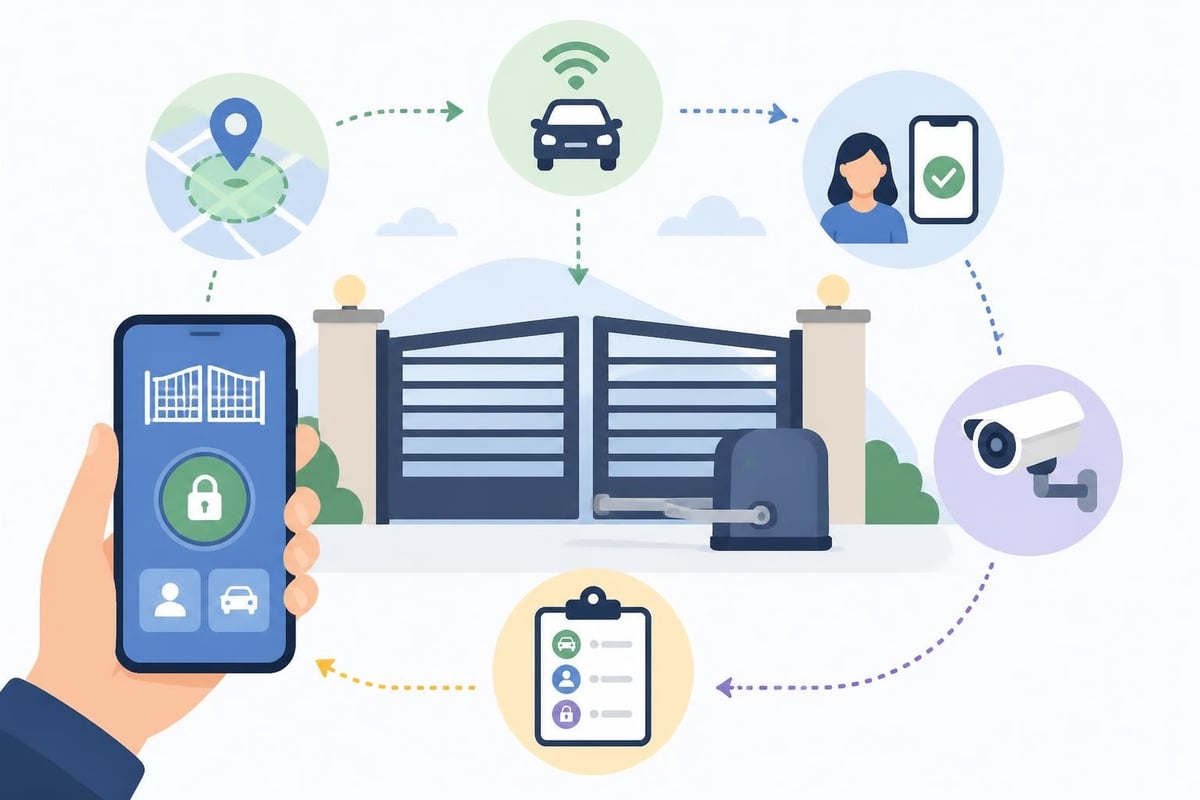
Modern gate opener motors incorporate Wi-Fi or cellular connectivity, enabling control and monitoring through smartphone applications. These systems allow property owners to grant temporary access to visitors, receive notifications when the gate operates, and monitor battery backup status remotely.
Integration capabilities include:
- Voice control through Amazon Alexa, Google Assistant, or Apple HomeKit
- Geofencing for automatic opening as vehicles approach
- Activity logging and access reporting
- Integration with security camera systems
- Scheduled access permissions for service providers
The electronic controls in these systems follow principles detailed in IEEE Spectrum’s coverage of electric motor technologies, incorporating sophisticated power electronics for smooth operation and energy efficiency.
Energy Efficiency Innovations
Recent motor designs significantly reduce power consumption through brushless motor technology and optimized control algorithms. Traditional AC motors draw continuous power when in standby mode, while modern DC brushless designs consume less than 5 watts when idle.
Solar-powered gate operators have become increasingly viable as panel efficiency improves and motor power requirements decrease. These systems can operate indefinitely without grid connection in most climates, making them ideal for remote locations or properties seeking energy independence.
Regenerative braking technology, borrowed from electric vehicles, captures energy during gate deceleration and returns it to the battery system. This feature extends battery runtime during power outages and reduces overall energy consumption.
Troubleshooting Common Motor Issues
Understanding basic gate opener motor diagnostics helps property owners identify problems early and communicate effectively with service technicians. While major repairs require professional expertise, some issues can be resolved through simple adjustments.
Diagnostic Approach for Motor Problems
When a gate opener motor malfunctions, systematic diagnosis begins with safety features. Many apparent motor failures actually result from intentional shutdowns triggered by safety sensors or limit switches.
Diagnostic sequence for non-responsive motors:
- Verify power supply at the motor using a multimeter
- Check all safety sensor alignments and cleanliness
- Test obstruction detection by triggering photo eyes
- Inspect limit switches for proper adjustment
- Examine control board for error codes or indicator lights
- Measure motor current draw during operation
- Listen for unusual sounds indicating mechanical problems
Intermittent operation often indicates electrical connection problems. Terminals exposed to weather develop corrosion that increases resistance, causing voltage drops under load. Cleaning connections and applying dielectric grease prevents this common problem.
When Professional Service Becomes Necessary
While property owners can handle basic troubleshooting, certain situations demand professional intervention. Attempting complex repairs without proper knowledge risks injury from the gate's stored energy or electrical shock hazards.
Call a professional for:
- Any safety feature malfunction or failure
- Electrical circuit modifications or additions
- Motor replacement or major component changes
- Programming or controller configuration issues
- Structural repairs to gate or mounting points
- Compliance upgrades to meet current safety standards
Resources like the Gate Safe guidance materials provide valuable safety information but aren't substitutes for hands-on professional expertise, particularly when dealing with commercial installations or compliance requirements.
Regulatory Compliance and Inspection Requirements
Properties with automated gates face ongoing compliance obligations under various safety regulations. Understanding these requirements helps property owners maintain legal compliance while ensuring user safety.
Commercial Property Obligations
Commercial facilities must comply with OSHA requirements regarding powered gate systems. Regular safety inspections verify compliance with UL 325 standards and document proper operation of all safety features.
Many jurisdictions require annual third-party safety inspections for commercial gates, particularly those at facilities serving vulnerable populations like schools or healthcare facilities. These inspections must be performed by certified technicians and documented for regulatory review.
Insurance carriers increasingly require evidence of proper maintenance and safety compliance for automated gate systems. Failure to maintain adequate documentation can result in coverage denial following an incident.
Residential Property Considerations
While residential properties face fewer regulatory requirements, homeowners associations often establish maintenance standards for community gates. Additionally, property owners bear liability for injuries caused by malfunctioning or unsafe gate systems.
The UK Health & Safety Executive guidance provides valuable perspective on risk assessment and safety measures, though UK and US standards differ in specific requirements. The underlying safety principles remain consistent across jurisdictions.
Documentation of maintenance activities, safety testing, and any repairs provides important liability protection. Property owners should retain service records for at least seven years and ensure contractors provide detailed documentation of all work performed.
Cost Considerations and Value Analysis
Investing in an appropriate gate opener motor involves balancing initial costs against long-term reliability and maintenance expenses. Understanding the total cost of ownership helps property owners make informed decisions.
Initial Investment Breakdown
Gate opener motor systems range from $500 for basic residential units to $5,000+ for heavy-duty commercial operators. The motor itself represents only part of the total installation cost.
| Component | Residential Range | Commercial Range | Notes |
|---|---|---|---|
| Motor unit | $300-800 | $1,200-3,500 | Includes basic controller |
| Safety accessories | $100-300 | $400-1,000 | Photo eyes, edge sensors |
| Installation labor | $400-800 | $1,000-2,500 | Varies by complexity |
| Electrical work | $200-500 | $500-1,500 | Circuit, conduit, grounding |
| Programming/setup | Included | $200-500 | Access control integration |
| Total project cost | $1,000-2,400 | $3,300-9,000 | Typical complete installation |
Higher initial investment in quality components typically reduces long-term costs through improved reliability and lower maintenance requirements. Premium motors often include better warranties and superior customer support.
Operating Cost Analysis
Annual operating costs for gate opener motors remain modest, primarily consisting of electricity consumption and routine maintenance. Residential systems typically consume 100-200 kWh annually, costing $15-30 at average electricity rates.
Maintenance costs vary significantly based on usage patterns and environmental conditions. Residential properties should budget $150-250 annually for professional service, while commercial installations require $500-1,500 per year depending on usage intensity.
Battery replacement represents the largest periodic expense, ranging from $50-150 for residential systems every 3-4 years. Commercial systems with larger battery banks may require $300-600 for battery replacement.
Selecting and maintaining the right gate opener motor ensures years of reliable access control while protecting people and property. Understanding motor types, safety requirements, and maintenance needs empowers property owners to make informed decisions and avoid costly mistakes. When you need expert guidance on gate repair in Los Angeles or face challenges with your current system, the experienced team at Gates & Garage Door Express Inc. brings decades of specialized knowledge to every service call. Our technicians can assess your specific needs, recommend appropriate solutions, and provide the same-day service that Los Angeles property owners have trusted since our founding-contact Gates & Garage Door Express Inc. today for professional gate motor service you can rely on.