
Iron gates combine security, durability, and aesthetic appeal, but years of exposure to weather, mechanical stress, and corrosion take their toll. Whether protecting a residential driveway or commercial property entrance, a damaged iron gate compromises both function and curb appeal. Understanding how to properly repair iron gate structures ensures longevity, maintains property value, and preserves the architectural character that made iron the material of choice. This comprehensive guide walks you through professional repair techniques, from assessing damage to applying protective finishes that stand up to Los Angeles weather conditions and beyond.
Understanding Common Iron Gate Damage
Iron gates face multiple threats throughout their service life. Rust represents the most pervasive enemy, starting as surface discoloration and progressing to structural weakness if left unchecked. The corrosion mechanisms that attack iron accelerate in coastal environments, areas with high humidity, or anywhere moisture accumulates in crevices and joints.
Mechanical damage occurs through impact, improper operation, or component wear. Gate hinges loosen over time, welds crack under stress, and automatic operators can damage mounting points through repetitive motion. Swing gates especially suffer hinge fatigue when improperly balanced or when operators force movement against resistance.
Structural Versus Cosmetic Issues
Not all damage requires the same urgency or approach. Surface rust and chipped paint qualify as cosmetic issues when they haven't compromised metal thickness. These problems primarily affect appearance and, if addressed promptly, prevent deeper deterioration.
Structural problems demand immediate attention:
- Cracked welds at stress points
- Bent or twisted frame members
- Rusted-through sections with visible holes
- Sagging that prevents proper alignment
- Loose or broken mounting hardware
A thorough inspection differentiates between issues you can address with cleaning and repainting versus those requiring metalworking skills and equipment. Professional gate services in Los Angeles often encounter a combination of both cosmetic and structural damage that developed over years of deferred maintenance.

Assessing Damage Before Starting Repairs
Begin every repair iron gate project with systematic documentation. Photograph all damaged areas from multiple angles, noting measurements and locations. This record helps track progress, order correct materials, and communicate with suppliers or contractors if needed.
Inspection checklist for comprehensive assessment:
- Frame integrity and alignment
- Hinge condition and mounting security
- Weld quality at all joints
- Rust penetration depth
- Paint adhesion and coating failure patterns
- Moving parts clearance and operation
- Concrete footing stability (for posts)
- Electrical connections (automated gates)
Test structural elements by applying measured pressure. Flexing shouldn't reveal movement at welded joints. Hinges should show no play beyond their designed pivot. Posts must remain rigid in their footings without rocking.
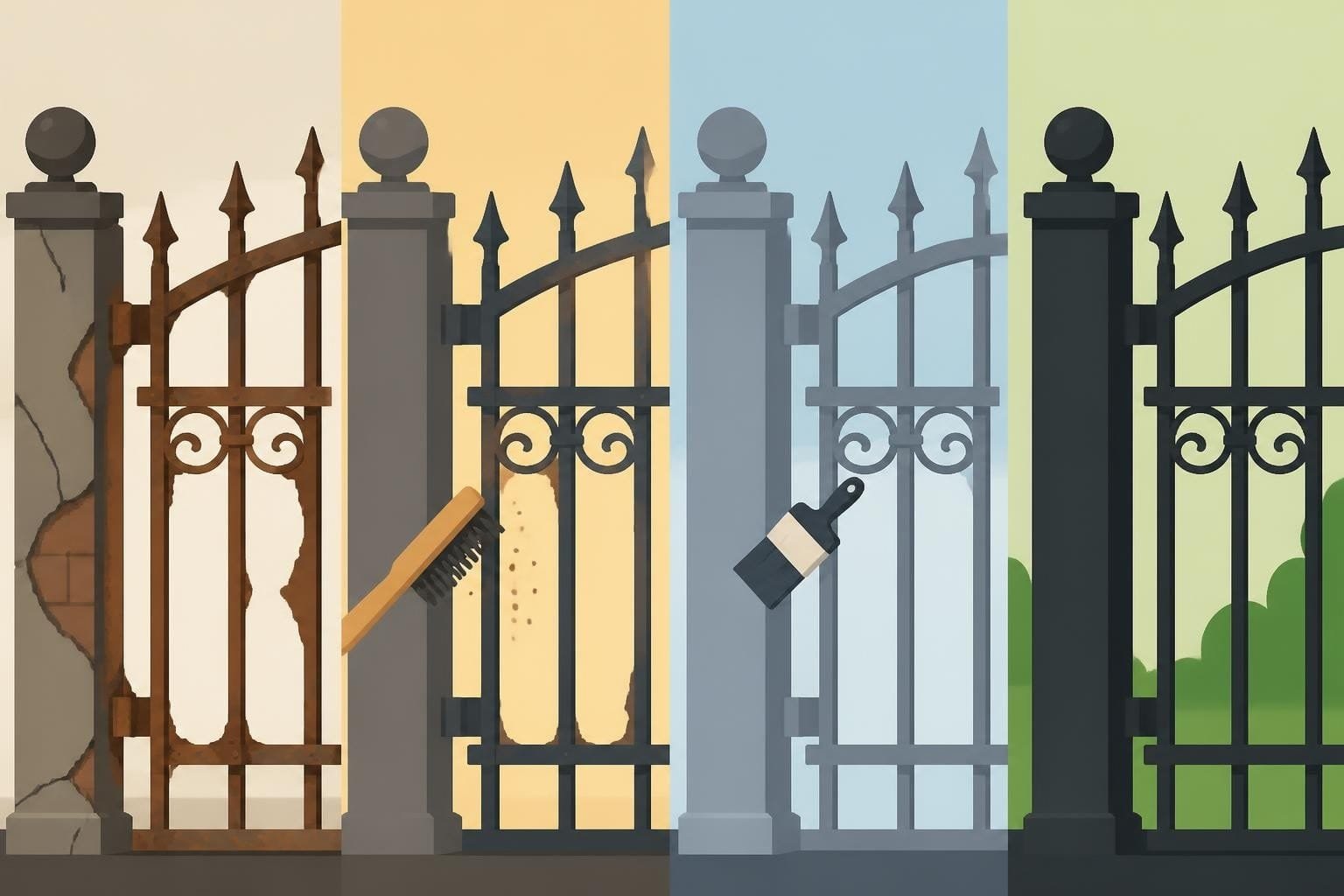
Use a wire brush or scraper to probe rusted areas. Surface rust brushes away easily, while deep corrosion crumbles and reveals pitting. Measure remaining metal thickness with calipers in heavily corroded sections. When rust has consumed more than 30% of the original thickness, replacement often proves more cost-effective than repair.
Rust Removal and Surface Preparation
Proper surface preparation determines repair longevity more than any other factor. Half-measures in cleaning and prep guarantee premature coating failure and recurring problems.
Manual and Mechanical Cleaning Methods
Small projects and detail work benefit from hand tools. Wire brushes, scrapers, and abrasive pads remove loose rust and failing paint. This labor-intensive approach suits ornamental sections where aggressive methods risk damage.
Power tools accelerate the process on larger surfaces:
- Angle grinders with wire cup brushes strip rust quickly but require skill to avoid gouging
- Flap disc sanders smooth surfaces while removing oxidation
- Needle scalers reach into crevices and tight corners
- Sandblasting provides the most thorough cleaning for extensive corrosion
Professional repair services often combine methods, sandblasting main surfaces while hand-cleaning decorative elements. The National Park Service recommends gentle approaches when working with historic ironwork to preserve original material and patina where appropriate.
| Cleaning Method | Best Application | Surface Profile | Dust/Debris |
|---|---|---|---|
| Hand tools | Detail work, small areas | Minimal | Low |
| Wire wheel | General rust, large flat surfaces | Light | Moderate |
| Flap disc | Smoothing, paint removal | Medium | Moderate |
| Sandblasting | Heavy rust, complete coating removal | Deep | Very high |
After mechanical cleaning, solvent-wipe all surfaces to remove oils, dust, and residue. Acetone or mineral spirits work effectively. Clean metal should show a uniform gray color without brown or black oxidation.
Structural Repairs and Metalworking
When damage extends beyond surface issues, repair iron gate structures require welding, metal fabrication, or component replacement. Assess your skill level honestly before attempting structural repairs, as poor welding creates weak points more dangerous than the original damage.
Cracked welds commonly appear at hinge mounting points and where vertical pickets meet horizontal rails. Grind out the failed weld completely, removing all cracked material until reaching sound metal. Clean the joint thoroughly before rewelding. MIG welding suits most iron gate repairs, offering good penetration and reasonable learning curve. TIG welding provides superior control for ornamental work and thin sections.
Critical welding considerations:
- Match filler metal to base material composition
- Achieve full penetration on structural joints
- Grind welds smooth on visible surfaces
- Apply weld in multiple passes for thick sections
- Allow gradual cooling to prevent stress cracking
Bent components require careful straightening to avoid metal fatigue. Heat the bent section to cherry-red (approximately 1400°F) using a torch, then apply steady pressure with a vise, press, or hydraulic jack. Rapid bending or working cold metal increases brittleness and crack risk.
Severely corroded sections may need replacement. Cut out damaged metal leaving clean edges, fabricate matching pieces, and weld into place. Maintain original dimensions and alignment throughout the process. For electric gate repair in Los Angeles, professionals ensure replacements don't interfere with automation components or safety sensors.
Corrosion Protection and Coating Systems
Even perfect metalwork fails without proper corrosion protection. Modern coating systems offer dramatically improved performance over traditional paints, especially in demanding environments.
Primer Selection and Application
Primers create the foundation for long-term protection. Epoxy primers provide excellent adhesion and corrosion resistance but require careful surface prep. Zinc-rich primers offer galvanic protection, sacrificing themselves to protect base metal. Rust-converting primers chemically stabilize remaining oxidation in areas impossible to clean perfectly.
Apply primer within hours of surface preparation, before flash rusting develops. Multiple thin coats outperform single thick applications, allowing proper curing between layers. Follow manufacturer specifications for temperature, humidity, and recoat windows precisely.
Topcoat Options for Maximum Durability
Direct-to-metal (DTM) coatings combine primer and topcoat properties in a single system, reducing application time. These formulations work well for maintenance repainting over sound existing coatings.
Powder coating systems provide superior durability compared to liquid paints, creating thick, uniform films resistant to chipping, chemicals, and UV degradation. The process requires professional equipment and complete disassembly, making it ideal for new gates or complete refurbishment projects.
Liquid topcoats offer easier application and field repair capability. Modern waterborne and powder coating technologies deliver performance approaching powder systems while maintaining liquid application convenience. Choose products specifically formulated for direct metal exposure rather than general-purpose paints.
Coating system comparison:
| System Type | Durability | Cost | DIY Feasible | Recoat Ease |
|---|---|---|---|---|
| Oil-based enamel | Fair | Low | Yes | Moderate |
| DTM acrylic | Good | Moderate | Yes | Easy |
| Epoxy + urethane | Excellent | High | Limited | Difficult |
| Powder coat | Superior | Very high | No | Difficult |
Apply topcoats in dust-free conditions with proper ventilation. Two coats minimum ensure adequate film thickness. Allow full cure time before returning gates to service – premature operation damages fresh coatings and voids warranties.
Component Replacement and Hardware Upgrades
Some repairs require new components rather than restoration. Hinges, latches, and automatic operators wear beyond repair or become obsolete as technology advances.
Modern heavy-duty hinges use sealed bearings that eliminate the squeaking and binding common with traditional bushing-style hardware. Self-lubricating materials reduce maintenance requirements. When selecting replacement hinges, calculate actual gate weight and choose models rated for at least 150% of that figure to provide adequate safety margin.
Locking mechanisms have evolved significantly. Smart locks integrate with home automation systems, allowing remote access control and activity monitoring. Even traditional mechanical locks now offer pick-resistant cylinders and hardened shackles that resist cutting. Match security hardware to actual risk level, avoiding over-engineered solutions for low-threat environments while providing adequate protection where warranted.
Automation System Integration
Automated gate systems introduce additional repair considerations. Operators create stress at mounting points that manual gates never experience. Reinforce mounting areas when adding automation to previously manual gates. Ensure hinges are rated for powered operation, which cycles many more times than manual use.
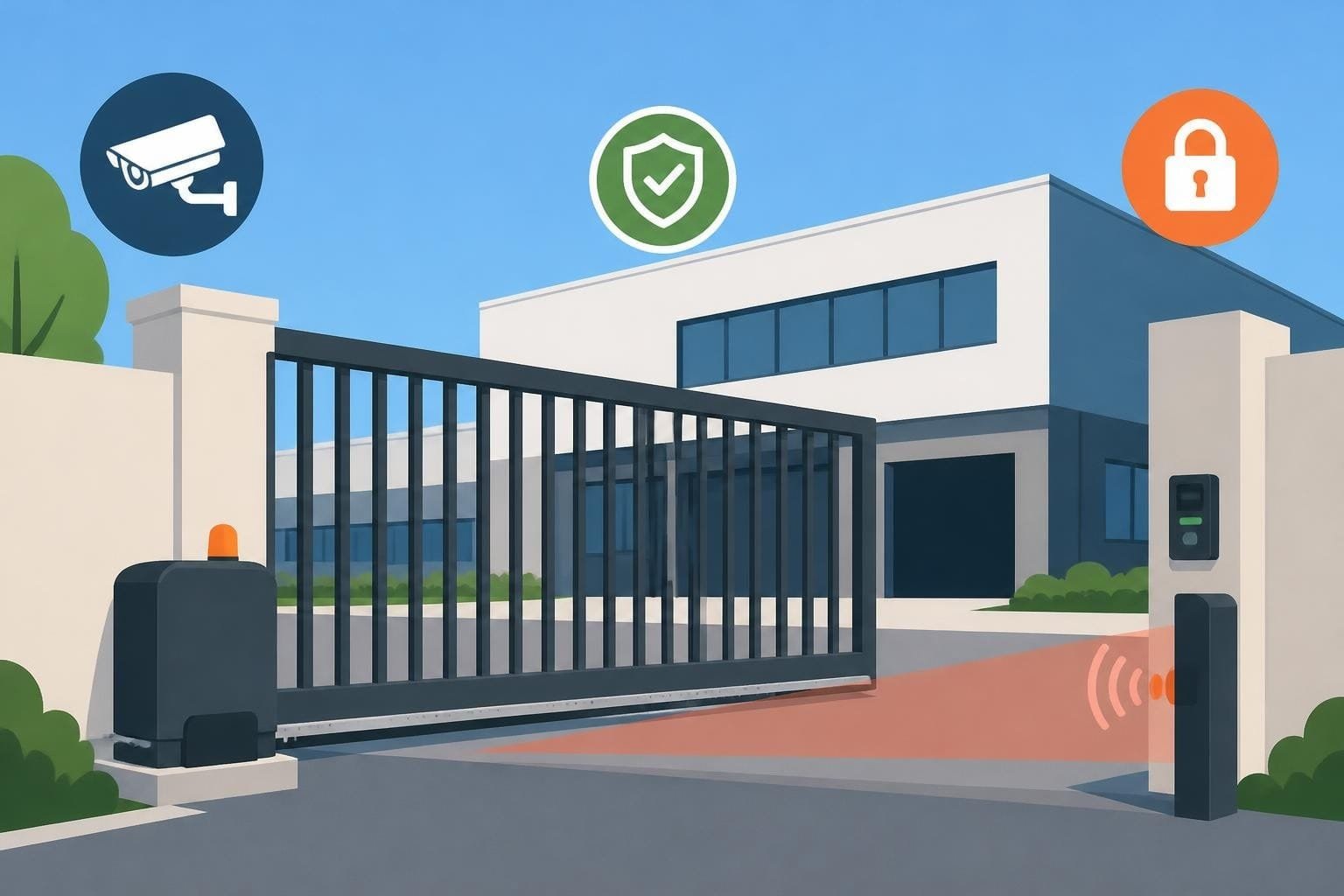
Safety sensors, wireless access controls, and backup batteries require protected mounting locations and proper wiring. Professional gate repair services in Los Angeles routinely upgrade outdated automation during structural repairs, improving safety and convenience while minimizing future service calls.
Preventive Maintenance After Repairs
Completed repairs require ongoing maintenance to justify the investment. Establish a regular schedule tailored to environmental conditions and gate usage frequency.
Quarterly maintenance tasks:
- Lubricate hinges and moving parts
- Inspect welds and joints for cracks
- Check mounting hardware tightness
- Clean dirt and debris from tracks
- Test safety sensors and auto-reverse
- Touch up paint chips promptly
Annual deep maintenance includes complete cleaning, detailed inspection, and protective coating assessment. Address minor issues before they escalate into major repairs. Keep detailed records of maintenance activities, noting date, tasks completed, and any concerns observed.
Environmental factors accelerate deterioration in predictable patterns. Coastal properties battle salt spray corrosion. Areas with lawn irrigation systems face constant moisture exposure. Properties near industrial facilities contend with acidic pollution. Tailor maintenance frequency to these specific challenges.
Comprehensive preventive maintenance calendar showing quarterly inspection points, annual deep maintenance tasks, and environmental factor adjustments for long-term iron gate protection
Regulatory Compliance and Safety Considerations
Repair iron gate work intersects with building codes, safety regulations, and environmental requirements. Automated gates must comply with UL 325 standards governing entrapment protection. Sensors, auto-reverse mechanisms, and warning devices aren't optional amenities but required safety features.
Historic properties face additional restrictions. Preservation guidelines for historic ironwork emphasize retention of original material, reversible repairs, and matching replacement components. Consult local historic preservation offices before modifying gates on landmark properties or within historic districts.
Lead paint presents serious health and legal risks. Properties built before 1978 likely have lead-based coatings. EPA’s Renovation, Repair and Painting Program mandates specific work practices, worker certification, and containment procedures when disturbing lead paint. Testing kits identify lead presence quickly and inexpensively. When detected, certified contractors must perform the work or property owners must complete EPA-approved training.
Fire codes may restrict gate operation in certain locations. Emergency vehicle access requirements dictate maximum gate closure time and mandate failsafe opening during power outages. Verify local requirements before installing or repairing automated systems that might block emergency access routes.
Cost Analysis and Professional Versus DIY Decisions
Repair iron gate projects range from simple weekend tasks to complex jobs requiring specialized equipment and expertise. Honest assessment of required skills, available tools, and time commitment determines the appropriate approach.
DIY repairs make sense for:
- Surface rust treatment and repainting
- Hinge lubrication and adjustment
- Minor weld repairs (with proper training)
- Hardware replacement
- Routine maintenance tasks
Professional services become necessary when projects involve:
- Extensive structural damage requiring fabrication skills
- Automation system troubleshooting with electrical components
- Heavy equipment needs like sandblasting or powder coating
- Historic preservation demanding specialized knowledge
- Regulatory compliance including lead paint or code requirements
Cost comparisons must account for tool purchases, material waste during learning, and time value. A $200 professional repair completed in two hours competes favorably with a $75 DIY attempt consuming an entire weekend plus tool rental fees. Factor in the quality difference and warranty coverage professionals provide.
| Repair Type | DIY Cost Range | Professional Cost Range | Time Investment |
|---|---|---|---|
| Rust removal + paint | $50-150 | $300-800 | 8-16 hrs |
| Hinge replacement | $30-100 | $150-400 | 2-4 hrs |
| Structural welding | $100-300 | $400-1200 | 6-12 hrs |
| Complete restoration | $500-2000 | $2000-6000 | 40+ hrs |
Request detailed estimates from multiple contractors when hiring professionals. Verify licensing, insurance coverage, and references. Quality work costs more initially but delivers better long-term value through durability and proper execution.
Advanced Techniques for Ornamental Ironwork
Decorative iron gates feature scrollwork, finials, and custom designs that demand specialized repair approaches. These elements often suffer damage that compromises their artistic detail while remaining structurally sound.
Replicating damaged ornamental sections requires pattern-making skills. Create templates from undamaged mirror sections, then forge or fabricate replacements. Hot forging allows traditional shaping of scrolls and decorative elements. Modern plasma cutters reproduce complex shapes from flat stock when forging isn't feasible.
Casting provides another replication method for heavily damaged ornamental components. Make silicone molds from intact sections, then cast replacements in bronze, aluminum, or iron. While more expensive than fabrication, casting perfectly reproduces fine details impossible to recreate through metalworking.
Ornamental repair sequence:
- Document original design with detailed photographs and measurements
- Create accurate templates or patterns
- Select appropriate replication method (forging, fabrication, or casting)
- Fabricate replacement elements
- Blend new components with existing through careful finishing
- Apply uniform coating to disguise repairs
Patina matching challenges even experienced craftspeople. New metal stands out starkly against aged surfaces. Accelerate oxidation using chemical treatments, then seal with clear protective coatings. Alternatively, prime and paint all surfaces uniformly, eliminating the aged appearance entirely while providing better corrosion protection.
Successful iron gate repairs combine proper assessment, thorough surface preparation, skilled metalworking, and durable protective coatings. Whether addressing minor cosmetic issues or undertaking complete structural restoration, attention to detail and use of appropriate materials ensures repairs that last for years. When damage exceeds your skills or available time, professional services deliver quality results backed by warranties and experience. Gates & Garage Door Express Inc. brings three generations of metalworking expertise to every gate repair project in Los Angeles, offering same-day emergency service for urgent repairs and comprehensive restoration for gates requiring complete refurbishment. Contact our team today to schedule an assessment and discover how professional repair extends your iron gate's service life while restoring its security and beauty.