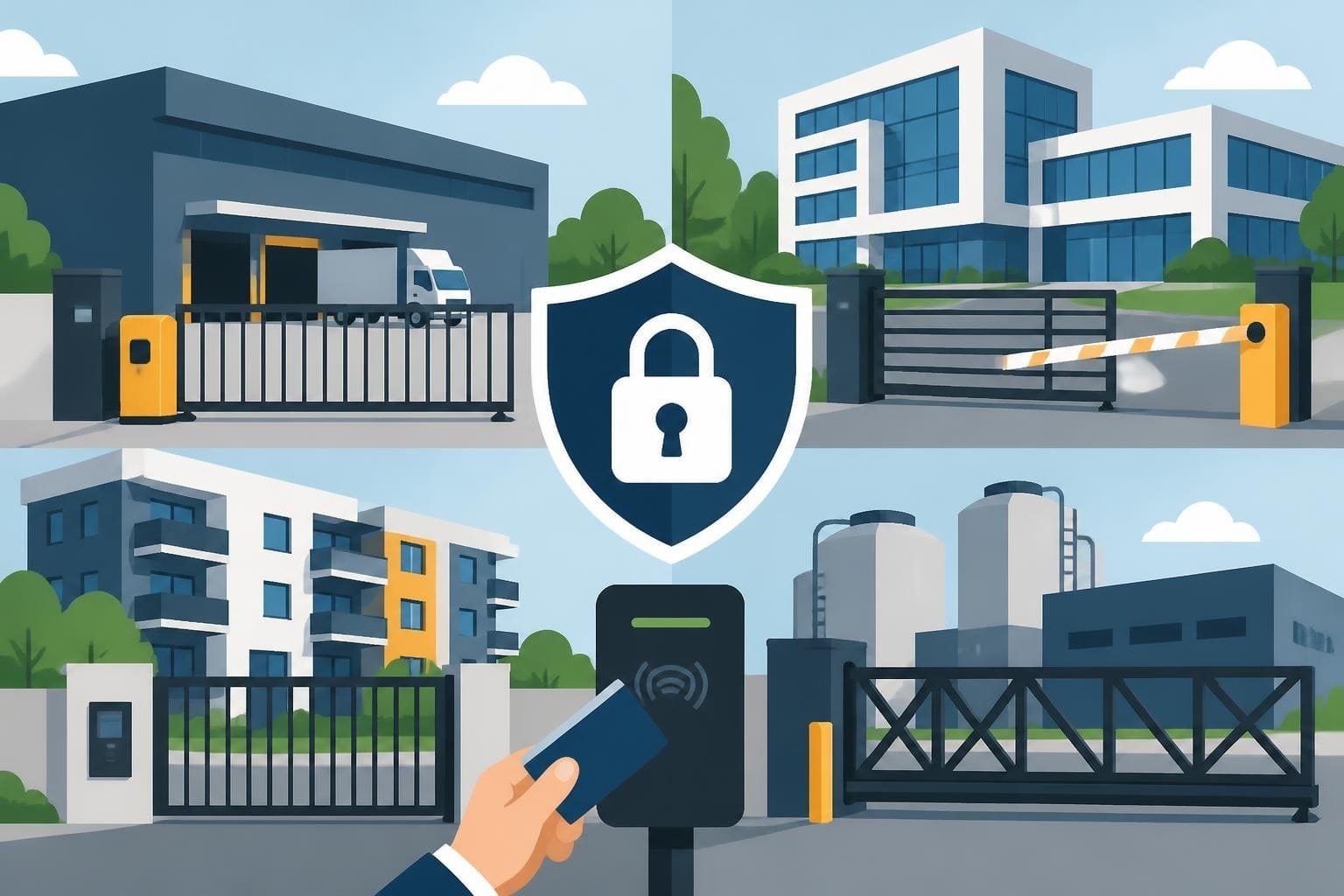
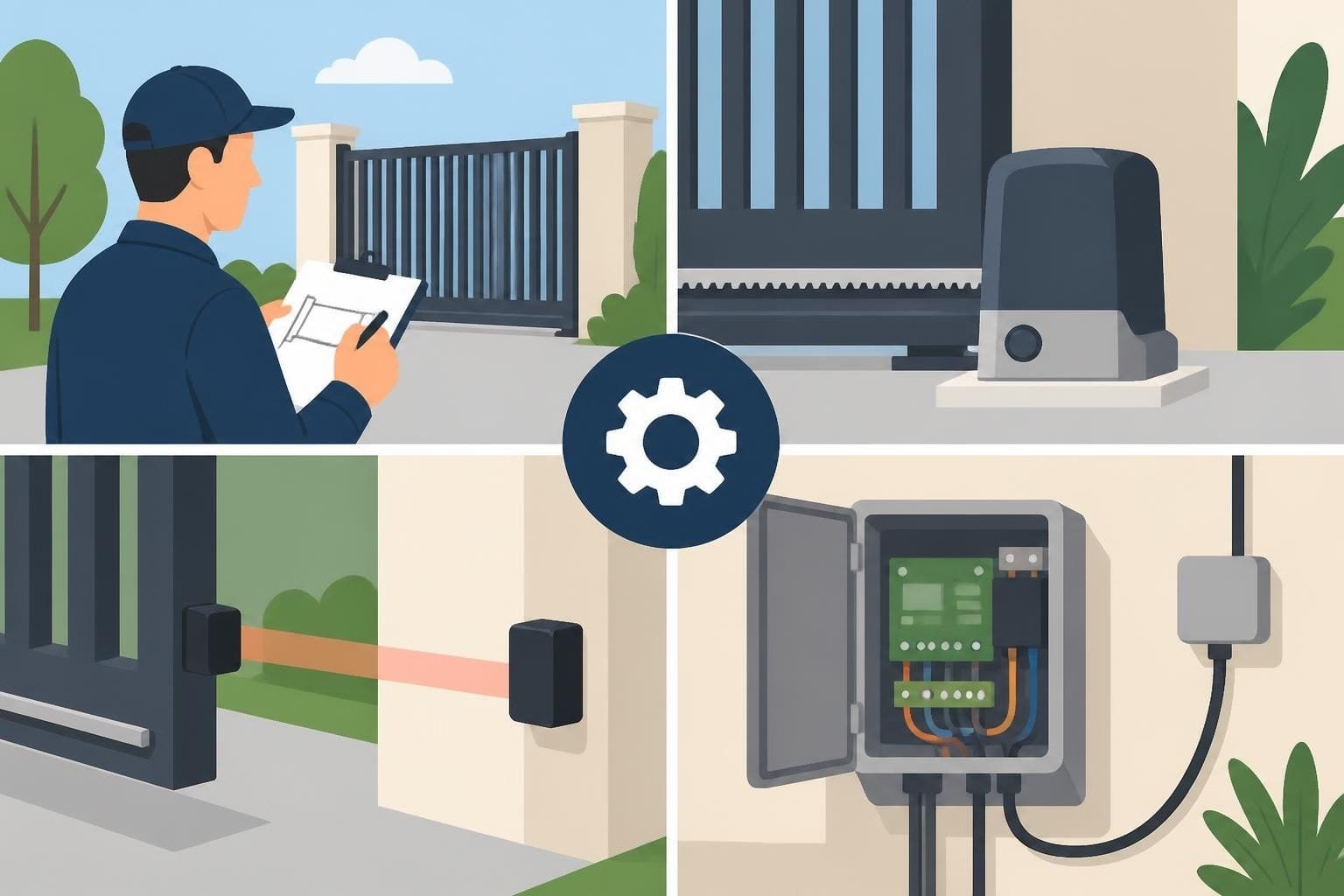

Installing an automatic gate opener transforms property access, security, and convenience for both residential and commercial applications. Whether you're upgrading an existing manual gate or implementing a new automated system, proper installation ensures reliable operation, compliance with safety standards, and long-term performance. This comprehensive guide walks through the essential considerations, technical requirements, and professional practices that contribute to successful automatic gate opener installation projects.
Understanding Automatic Gate Opener Systems
Automatic gate openers consist of several interconnected components working together to provide secure, convenient property access. The operator itself houses the motor, control board, and mechanical drive system that physically moves the gate. Gate types vary significantly, with swing gates requiring different operators than sliding gates, and commercial high-traffic installations demanding more robust systems than residential applications.
Core Components and Their Functions
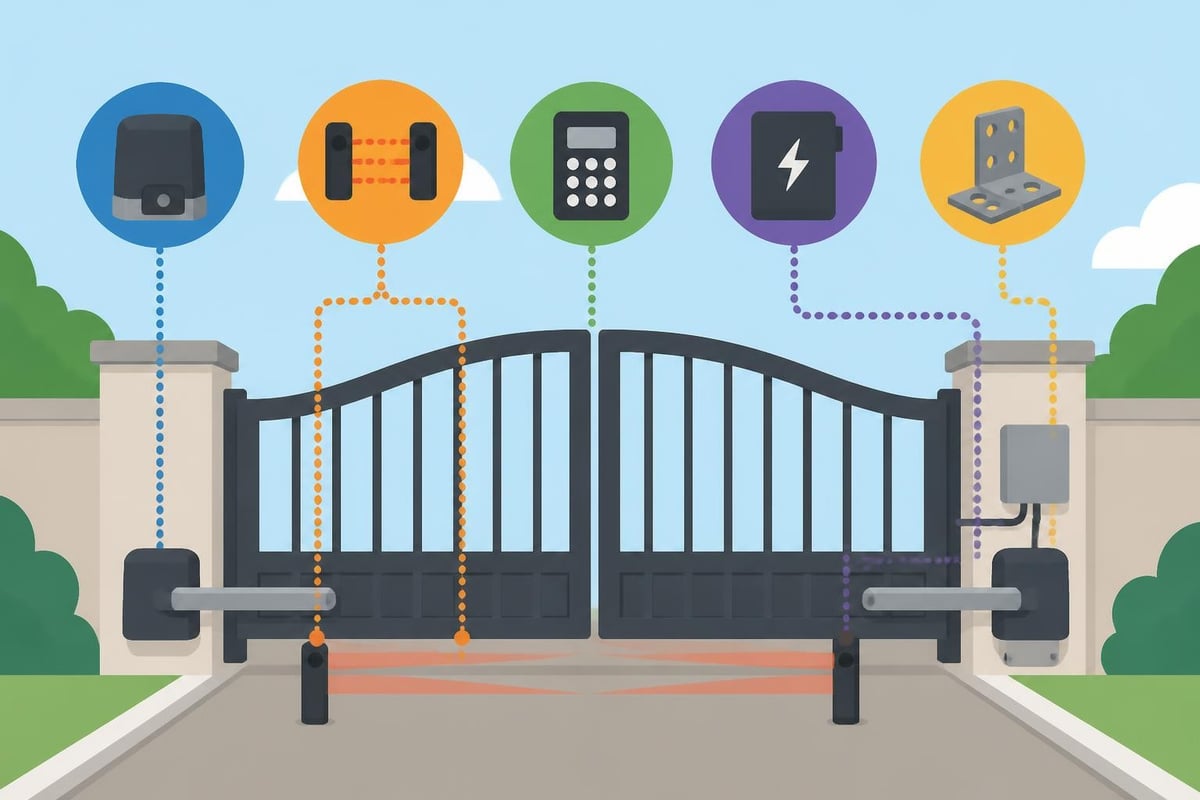
Every automatic gate opener installation includes critical elements that must work harmoniously:
- Operator unit: Contains the motor, gearbox, and control electronics
- Safety devices: Photo eyes, edge sensors, and loops prevent entrapment
- Access controls: Keypads, card readers, remotes, and smartphone integration
- Power supply: Electrical connection or solar options for remote locations
- Backup battery: Maintains operation during power outages
- Gate hardware: Hinges, tracks, catches, and structural mounting points
The selection of each component directly impacts installation complexity, code compliance, and system performance. Residential installations typically use 12V or 24V DC operators, while commercial applications often require higher-voltage systems capable of handling heavier gates and increased cycle counts.
Pre-Installation Planning and Site Assessment
Thorough planning prevents costly mistakes and ensures compliance with applicable codes and standards. The DASMA pre-installation checklist provides installers with comprehensive guidance on site evaluation and preparation requirements.
Evaluating Site Conditions
Before purchasing equipment or beginning work, assess these critical factors:
- Gate dimensions and weight: Measure precisely to select appropriately rated operators
- Terrain and slope: Grades exceeding 3-5% may require special operators or leveling
- Electrical service availability: Determine distance to power source and required wiring
- Drainage patterns: Prevent water accumulation around operators and control boxes
- Clearance zones: Verify adequate space for gate swing or slide paths
- Environmental exposure: Consider temperature extremes, salt air, and weather protection
Property owners in areas with luxury outdoor installations, such as those designed by specialists like Cotswold Cooking Company, often integrate automated gates as part of comprehensive outdoor living spaces requiring coordinated electrical and structural planning.
| Site Factor | Residential Consideration | Commercial Consideration |
|---|---|---|
| Gate weight | 200-600 lbs typical | 800-2000+ lbs common |
| Cycle frequency | 10-20 per day | 100-500+ per day |
| Power requirements | 110V AC standard | 220V AC or 3-phase |
| Safety certification | UL 325 Class I-III | UL 325 Class II-IV required |
Code Compliance and Safety Standards
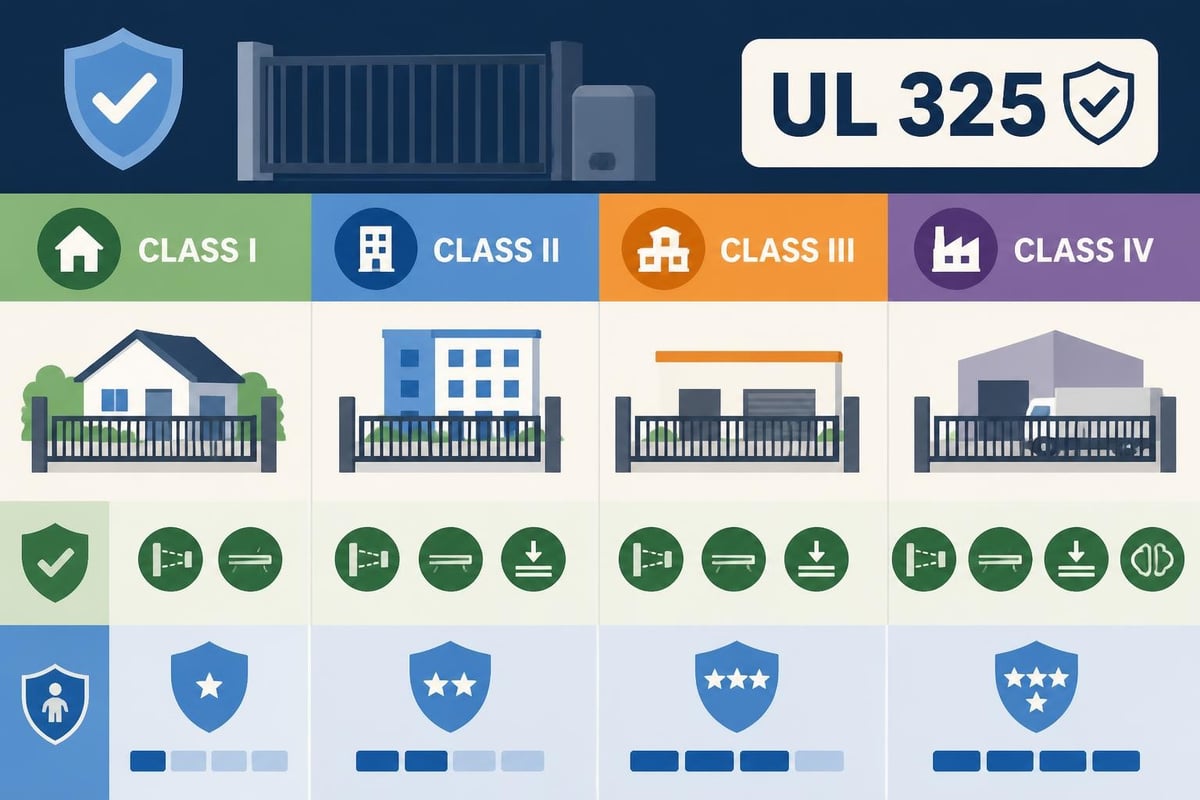
Automatic gate opener installation must comply with multiple safety standards and local building codes. The UL 325 standard establishes requirements for automated gate operators, classifying them by application and mandating specific entrapment protection features.
Understanding UL 325 Classifications
Gates fall into different classes based on their intended use and access patterns:
- Class I: Vehicular gates for single-family homes
- Class II: Commercial and multi-family residential vehicular gates
- Class III: Pedestrian gates in any location
- Class IV: Industrial and limited-access vehicular gates
Each classification requires progressively more sophisticated safety features. Class II and higher installations mandate monitored entrapment protection devices that actively detect obstructions rather than relying solely on force adjustments.
The ASTM F2200 standard works in conjunction with UL 325, specifying construction requirements for automated vehicular gates including structural integrity, hardware specifications, and installation practices.
Electrical Code Requirements
Proper electrical installation follows National Electrical Code (NEC) requirements, particularly regarding grounding and bonding. The NEC Article 250 guidance addresses grounding of metal fences and gates to prevent electrical hazards. All metal components must be properly bonded, and operators require dedicated circuits with appropriate overcurrent protection.
Installation Process for Sliding Gates
Sliding gate operators represent one of the most common automatic gate opener installation types for properties with limited swing clearance. The process requires precision alignment and proper foundation work to ensure smooth, reliable operation.
Foundation and Track Installation
The installation begins with creating a stable foundation for both the operator and the gate track system:
- Excavate and pour concrete pad: Minimum 12 inches deep, extending below frost line
- Install embedded mounting plate: Position accurately using manufacturer specifications
- Set gate track: Level precisely using transit or laser level across entire run
- Attach gate rollers and brackets: Space according to gate weight and length
- Allow concrete to cure: Minimum 72 hours before mounting operator
Track alignment is critical. Even minor deviations create binding points that increase wear and potentially cause safety system failures. Professional installers use precision leveling equipment and verify alignment at multiple points along the gate travel path.
Operator Mounting and Adjustment
Once foundations cure, the operator installation proceeds:
- Mount operator to embedded plate with manufacturer-supplied hardware
- Connect drive chain or rack-and-pinion system to gate
- Adjust tension and engagement according to specifications
- Verify gate travels smoothly through full range without binding
- Set limit switches for fully open and closed positions
The LiftMaster installation documentation provides detailed specifications for proper operator mounting, including torque values, adjustment procedures, and initial setup parameters.
Swing Gate Operator Installation
Swing gate installations present different challenges than sliding systems, particularly regarding hinge alignment, operator positioning, and clearance requirements. Single-swing and dual-swing configurations each require specific approaches to automatic gate opener installation.
Operator Placement Considerations
Swing gate operators may be installed in several configurations:
| Configuration | Advantages | Disadvantages | Best Applications |
|---|---|---|---|
| Post-mounted | Simple installation, minimal excavation | Visible operator, potential obstruction | Residential, light-duty |
| Ground-mounted | Hidden installation, clean appearance | Requires excavation, drainage needs | High-end residential, commercial |
| Underground | Completely concealed | Most complex installation, maintenance access | Luxury residential, architectural |
Ground clearance during swing travel must be verified throughout the arc. Gates traversing sloped driveways may require custom adjustments or articulated arm systems to maintain proper clearance.
Hinge and Structural Requirements
Existing gate hinges often lack the strength for automated operation. Automatic gate opener installation typically requires:
- Heavy-duty hinges rated for continuous cycling and lateral loads
- Reinforced gate frames to prevent racking and deflection
- Properly sized and positioned operator mounting brackets
- Anti-drop devices preventing gate fall if operator fails
- Adjustable catches and stops for precise closed positioning
Gates that aren't structurally sound will fail prematurely regardless of operator quality. Many electric gate repair calls stem from inadequate gate structure rather than operator malfunction.
Safety Device Integration
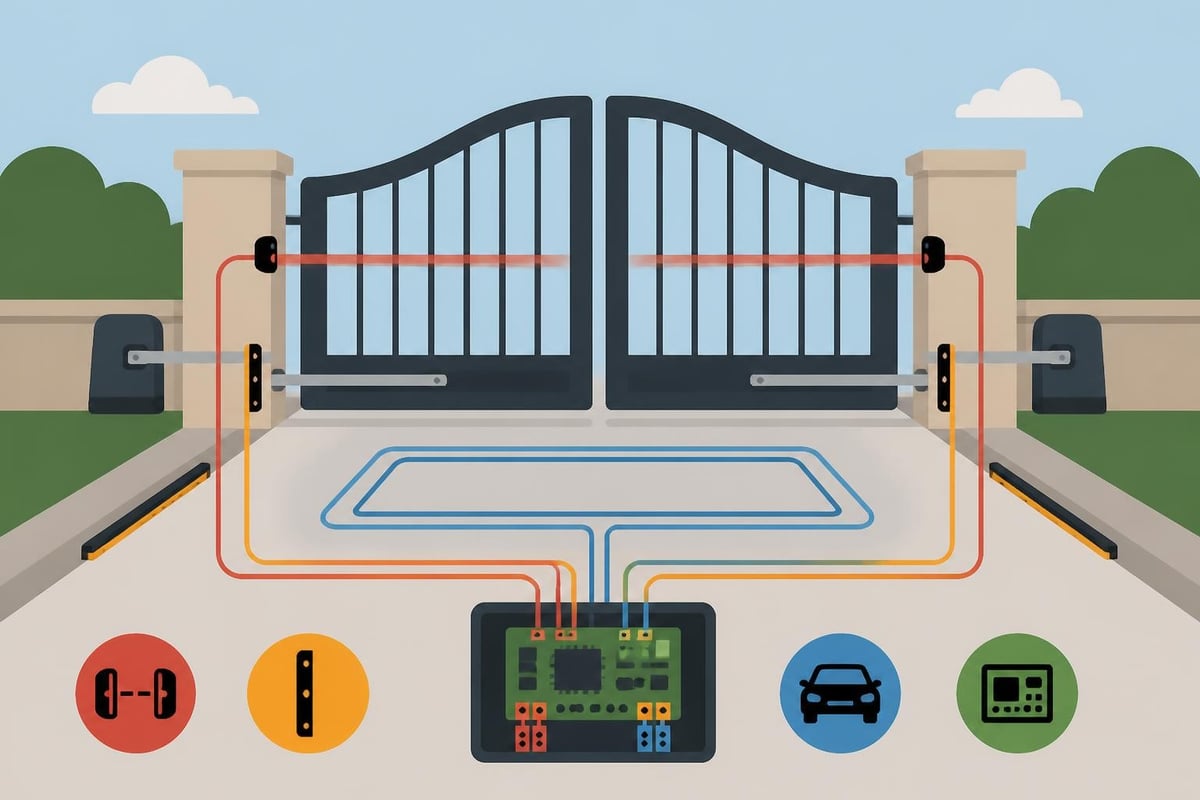
Modern automatic gate opener installation mandates multiple layers of entrapment protection. These safety devices must be properly positioned, wired, and tested to provide effective protection while minimizing nuisance trips.
Photo Eye Placement and Alignment
Photo eyes create an invisible beam across the gate opening that reverses or stops gate movement when interrupted:
- Mount sending and receiving units at 12-24 inches above ground
- Position outside the gate swing or slide path
- Ensure solid mounting resistant to vibration and impact
- Align precisely using manufacturer alignment tools
- Verify beam stability under all lighting conditions
- Test response during gate operation in both directions
The DASMA gate operator guidance specifies best practices for safety device placement, including minimum and maximum mounting heights, positioning relative to gate edges, and testing procedures.
Edge Sensors and Loop Detectors
Additional safety devices provide comprehensive protection:
- Edge sensors: Mounted on gate leading edges, detect contact and immediately stop/reverse
- Vehicle loops: Buried wire loops detect vehicles in the gate path
- Motion sensors: Monitor the swing zone for pedestrians or objects
- Emergency stop buttons: Required at operator locations for immediate shutdown
All safety devices must connect to monitored inputs on UL 325-compliant control boards. Simple contact closure isn't sufficient; the system must detect device failures and enter a fail-safe mode when monitoring circuits are compromised.
Access Control and User Interface
Modern automatic gate opener installation integrates multiple access methods accommodating different users and security levels. Control systems range from simple remote transmitters to sophisticated multi-credential platforms with audit trails and cloud connectivity.
Wired and Wireless Options
Access control devices connect to the gate operator through various methods:
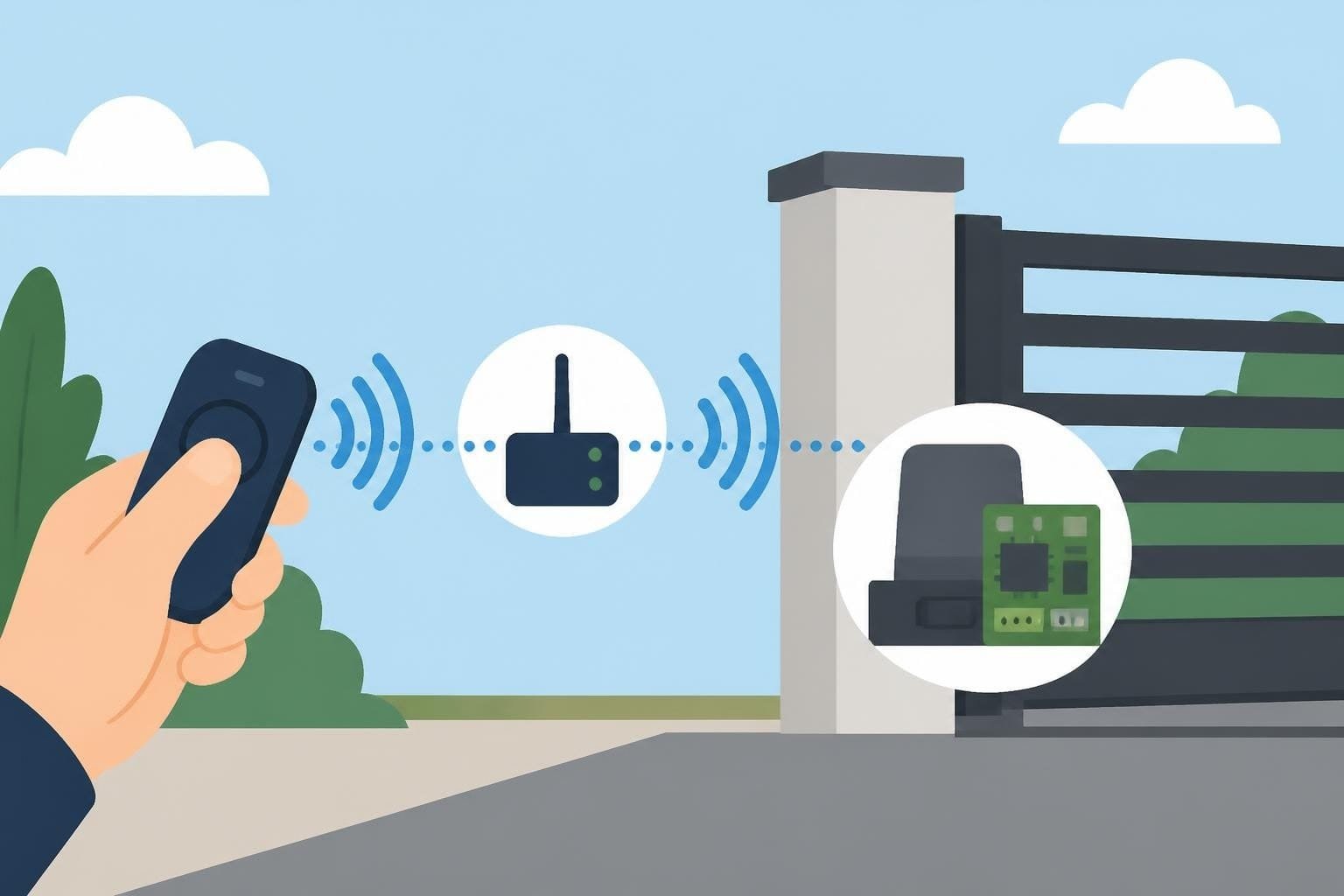
- Radio receivers: Accept signals from key fobs and vehicle transmitters
- Keypad entry: PIN code access with visitor and temporary codes
- Card readers: RFID proximity cards or fobs for credential-based access
- Intercom systems: Two-way communication with visitor video verification
- Smartphone control: WiFi or cellular connectivity for remote operation
- Vehicle tags: Long-range RFID for hands-free access
Commercial installations often combine multiple access methods, with permanent residents using transponders while visitors use intercoms or temporary codes. Manufacturer resources like LiftMaster’s architect guides detail integration options and wiring requirements for complex access control scenarios.
Control Board Programming
After physical installation, operators require programming for optimal performance:
- Set opening and closing speeds appropriate for gate weight and traffic patterns
- Adjust force limits to stop on obstruction without excessive pressure
- Configure auto-close timers if desired for security applications
- Program vacation modes, holiday schedules, and restricted hours
- Set up alerts and notifications for maintenance or fault conditions
Programming should balance convenience, safety, and security. Overly sensitive force limits cause nuisance reversals, while insufficient sensitivity creates safety hazards.
Power Supply and Backup Systems
Reliable power delivery ensures consistent gate operation. Automatic gate opener installation must account for both normal operation and backup power during outages.
Electrical Service Requirements
Most residential gate operators run on standard 110V AC power converted to 12V or 24V DC for motor operation. Commercial installations may require:
- 220V single-phase service for high-cycle applications
- Dedicated circuits with appropriate amperage rating
- Surge protection against lightning and power fluctuations
- Proper conduit installation for underground wire runs
- GFCI protection where required by local codes
Distance from the main electrical panel affects wire gauge selection. Voltage drop calculations ensure adequate power delivery to the operator location, particularly for installations hundreds of feet from the service entrance.
Battery Backup Integration
Quality automatic gate opener installation includes battery backup maintaining operation during power failures:
| Battery Type | Capacity | Cycle Life | Best For |
|---|---|---|---|
| Sealed lead-acid | 7-18 Ah | 3-5 years | Standard residential |
| AGM deep-cycle | 18-35 Ah | 5-7 years | High-cycle commercial |
| Lithium-ion | 20-40 Ah | 8-10 years | Premium applications |
Battery systems require proper charging circuits, temperature compensation, and periodic testing. Backup capacity should provide at least 48 hours of normal operation or sufficient cycles to evacuate a property during emergencies.
Testing and Commissioning Procedures
Comprehensive testing validates that automatic gate opener installation meets safety standards and performs reliably. Systematic testing procedures identify issues before the system enters regular service.
Safety Function Verification
All safety devices require individual testing and documentation:
- Photo eye test: Verify reversal when beam interrupted during closing
- Edge sensor test: Confirm immediate stop/reverse upon contact activation
- Loop detector test: Validate detection of vehicles in gate path
- Force limit test: Ensure gate reverses on obstruction with acceptable force
- Manual release test: Verify emergency manual operation functions properly
- Battery backup test: Confirm operation continues during simulated power failure
Testing must occur with the gate operating in both directions and from multiple positions. Documentation of test results provides proof of compliance and baseline performance data for future maintenance.
Operational Performance Checks
Beyond safety verification, operational testing ensures satisfactory performance:
- Measure gate travel times and verify acceptable speed
- Observe smooth operation without jerking, binding, or unusual noise
- Test all access control methods and verify proper authentication
- Verify auto-close timers function as programmed
- Check warning signals, lights, and signage visibility
- Confirm control interfaces respond appropriately to all inputs
Professional installation practices, as demonstrated by services like those offered throughout commercial gate installations in Glendale, include comprehensive commissioning documentation provided to property owners detailing system configuration, test results, and maintenance requirements.
Maintenance Access and Documentation
Proper automatic gate opener installation includes provisions for ongoing maintenance and clear documentation for future service providers. Accessibility to components and comprehensive records extend system life and simplify troubleshooting.
Service Access Considerations
Install operators and control equipment with maintenance in mind:
- Provide adequate clearance for component access and removal
- Position control boards where covers can be opened fully
- Ensure battery compartments allow easy replacement
- Design wire routing for future modifications or additions
- Install accessible disconnect switches for service safety
Properties with integrated security and property management systems often coordinate gate automation with other services. Just as Great Roofing coordinates roofing work with other exterior improvements, gate installation should consider interaction with landscaping, drainage, and utility systems.
Installation Documentation Package
Complete installation records should include:
- Equipment model numbers, serial numbers, and installation dates
- Wiring diagrams showing all connections and circuits
- Programming parameters and access control configurations
- Safety device test results and compliance certifications
- Warranty information and service contact details
- Recommended maintenance schedules and procedures
This documentation proves invaluable for future service work, whether performed by the original installer or another provider. Comprehensive records reduce diagnostic time and prevent incorrect adjustments that could compromise safety or performance.
Common Installation Challenges and Solutions
Even experienced professionals encounter challenges during automatic gate opener installation. Understanding typical issues and proven solutions improves installation quality and reduces callbacks.
Uneven Terrain and Drainage
Properties with slopes, depressions, or poor drainage require special attention:
- Install French drains or channel drains preventing water accumulation at operators
- Use adjustable mounting plates compensating for slope variations
- Consider articulated arms for swing gates traversing uneven ground
- Elevate control boxes and electrical components above potential flood levels
- Install larger foundation pads distributing loads on soft soil
Drainage issues represent a leading cause of premature operator failure. Water infiltration damages electronics, corrodes mechanical components, and creates freeze-thaw cycles in cold climates.
Limited Space and Clearance Issues
Confined installation sites require creative solutions:
- Vertical-lift or cantilever systems where slide clearance is inadequate
- Underground operators where above-ground units would obstruct pathways
- Articulated or telescoping arms accommodating restricted swing zones
- Custom gate designs incorporating curves or folding panels
- Remote operator mounting with extended mechanical linkages
These solutions typically increase installation complexity and cost but may be the only options for challenging sites. Much like how Shelton’s Janitorial adapts cleaning protocols to different facility layouts, gate installation must flex to accommodate site constraints.
Interference and Signal Issues
Radio frequency interference affects wireless access controls:
- Conduct site surveys identifying sources of RF interference
- Select operating frequencies avoiding conflicts with existing systems
- Position receivers away from metal structures and electrical equipment
- Install external antennas improving signal reception
- Consider hardwired alternatives for critical access points
Modern operators using spread-spectrum or frequency-hopping technology resist interference better than older fixed-frequency systems. However, proper antenna placement and receiver positioning remain critical for reliable operation.
Professional Installation versus DIY Approaches
While some property owners consider self-installation, automatic gate opener installation involves significant technical, safety, and liability considerations that often justify professional service.
Complexity and Expertise Requirements
Professional installation provides several advantages:
- Experience with code compliance and permitting requirements
- Proper tools for foundation work, alignment, and electrical installation
- Knowledge of manufacturer-specific programming and adjustment procedures
- Ability to troubleshoot and resolve unforeseen site conditions
- Warranty protection requiring professional installation for validation
The guidance available from sources like This Old House installation tutorials helps informed property owners understand the process but doesn't replace hands-on expertise with specialized gate systems.
Liability and Safety Concerns
Improperly installed automatic gates present serious safety hazards:
- Entrapment injuries from inadequate safety devices
- Property damage from gates operating with excessive force
- Electrical hazards from improper wiring or grounding
- Liability exposure if injuries occur due to installation defects
Insurance carriers and legal liability considerations often make professional installation the prudent choice, particularly for commercial applications or high-traffic residential settings.
Emerging Technologies and Smart Integration
Modern automatic gate opener installation increasingly incorporates smart home integration, cloud connectivity, and advanced security features that enhance convenience and monitoring capabilities.
Internet of Things Connectivity
Contemporary gate operators offer sophisticated connectivity options:
- Cloud dashboards: Remote monitoring, operation logs, and status alerts
- Smartphone apps: Control gates from anywhere with internet access
- Integration platforms: Compatibility with home automation systems
- Delivery management: Temporary access for package deliveries and service providers
- Video verification: Camera integration confirming user identity
These features require network connectivity at the gate location, either through WiFi extension or cellular modems. Installation must accommodate network equipment mounting, power supplies, and environmental protection for electronics.
Predictive Maintenance Capabilities
Smart operators monitor their own performance and predict maintenance needs:
- Cycle counters tracking usage for scheduled maintenance
- Current monitoring detecting increasing resistance indicating mechanical wear
- Temperature sensors alerting to environmental extremes
- Battery health monitoring predicting replacement needs
- Diagnostic logs capturing fault conditions for troubleshooting
This monitoring reduces unexpected failures and allows scheduling maintenance during convenient times rather than responding to emergency breakdowns.
Long-Term Performance and Warranty Considerations
Quality automatic gate opener installation establishes the foundation for years of reliable service. Understanding warranty terms and selecting appropriate equipment affects total ownership costs.
Equipment Selection and Durability
Operator selection should match application requirements:
| Application Type | Recommended Duty Rating | Typical Warranty Period |
|---|---|---|
| Residential low-traffic | Light duty, 10-20 cycles/day | 2-3 years parts/labor |
| Residential moderate | Medium duty, 20-50 cycles/day | 3-5 years parts, 1-2 labor |
| Commercial standard | Heavy duty, 100-300 cycles/day | 5 years parts, 1-2 labor |
| Industrial high-traffic | Industrial duty, 500+ cycles/day | 5-7 years parts, 1-3 labor |
Undersized operators fail prematurely and often void warranties when installed in applications exceeding their rated duty cycles. Manufacturers like those featured in Home Depot installation guides specify duty ratings that must be honestly matched to actual usage patterns.
Warranty Terms and Installation Requirements
Most manufacturer warranties require professional installation by certified technicians. Warranty claims may be denied if:
- Installation doesn't follow manufacturer specifications
- Applicable codes and standards aren't met
- Safety devices are omitted or improperly configured
- Operators are used beyond rated capacity
- Maintenance schedules aren't followed
Professional installers familiar with warranty requirements protect property owner investments by ensuring compliant installation and proper documentation.
Successful automatic gate opener installation combines technical expertise, code compliance, and attention to detail that ensures safe, reliable operation for years to come. Whether you're planning a new installation or upgrading an existing system, professional guidance makes the difference between a satisfactory outcome and a premium installation that adds genuine value and security to your property. For expert automatic gate opener installation and comprehensive gate services throughout Los Angeles, trust the experienced team at Gates & Garage Door Express Inc. to deliver professional results with same-day emergency service when you need it most.