
Modern property security and convenience depend heavily on reliable access control systems. An automatic gate opener remote serves as the primary interface between property owners and their automated gate systems, providing seamless entry and exit without the need to manually operate heavy gates. Understanding the technology, security features, and compatibility factors surrounding these devices has become essential for homeowners and businesses alike in 2026, as systems grow increasingly sophisticated and interconnected with smart home ecosystems.
Understanding Automatic Gate Opener Remote Technology
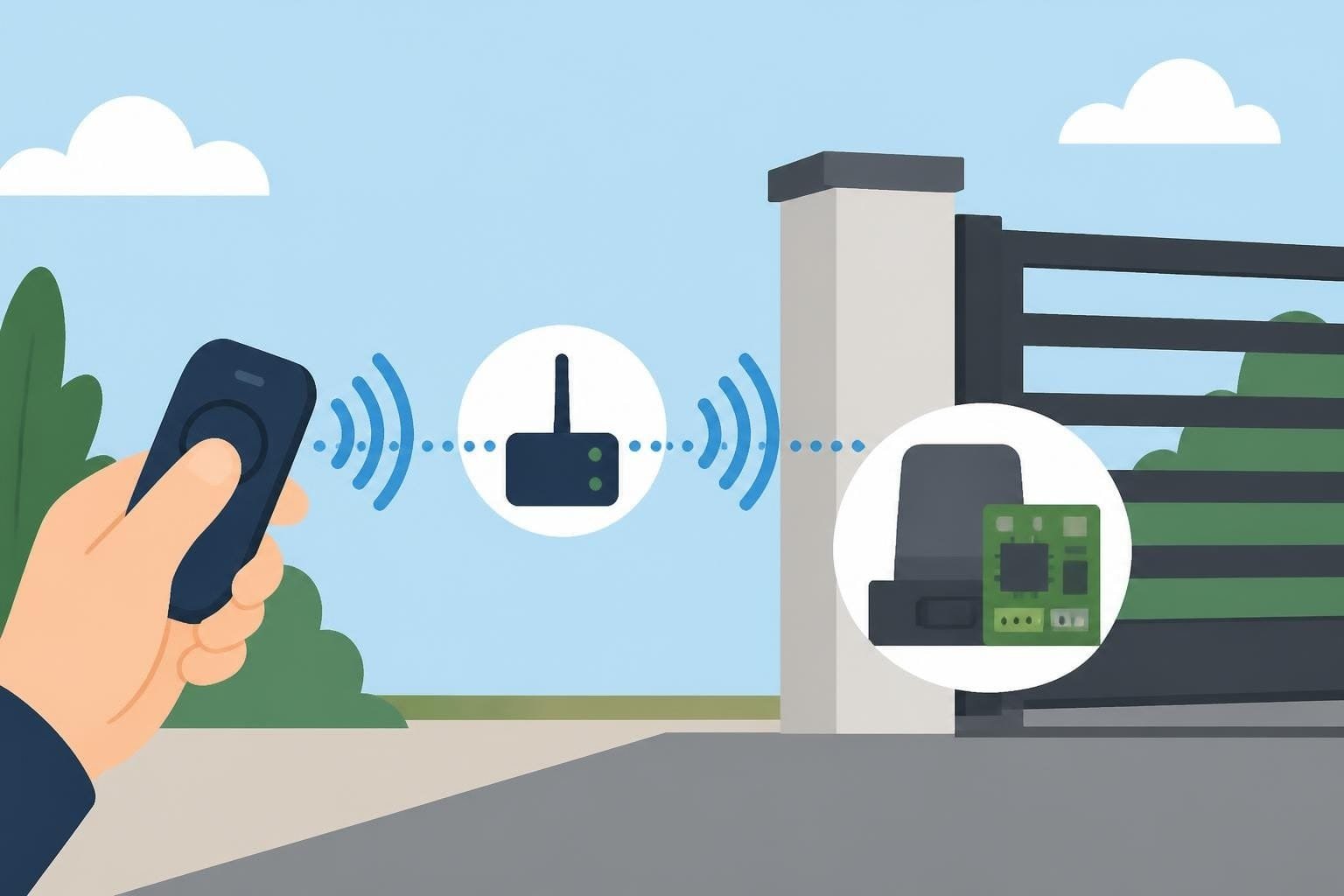
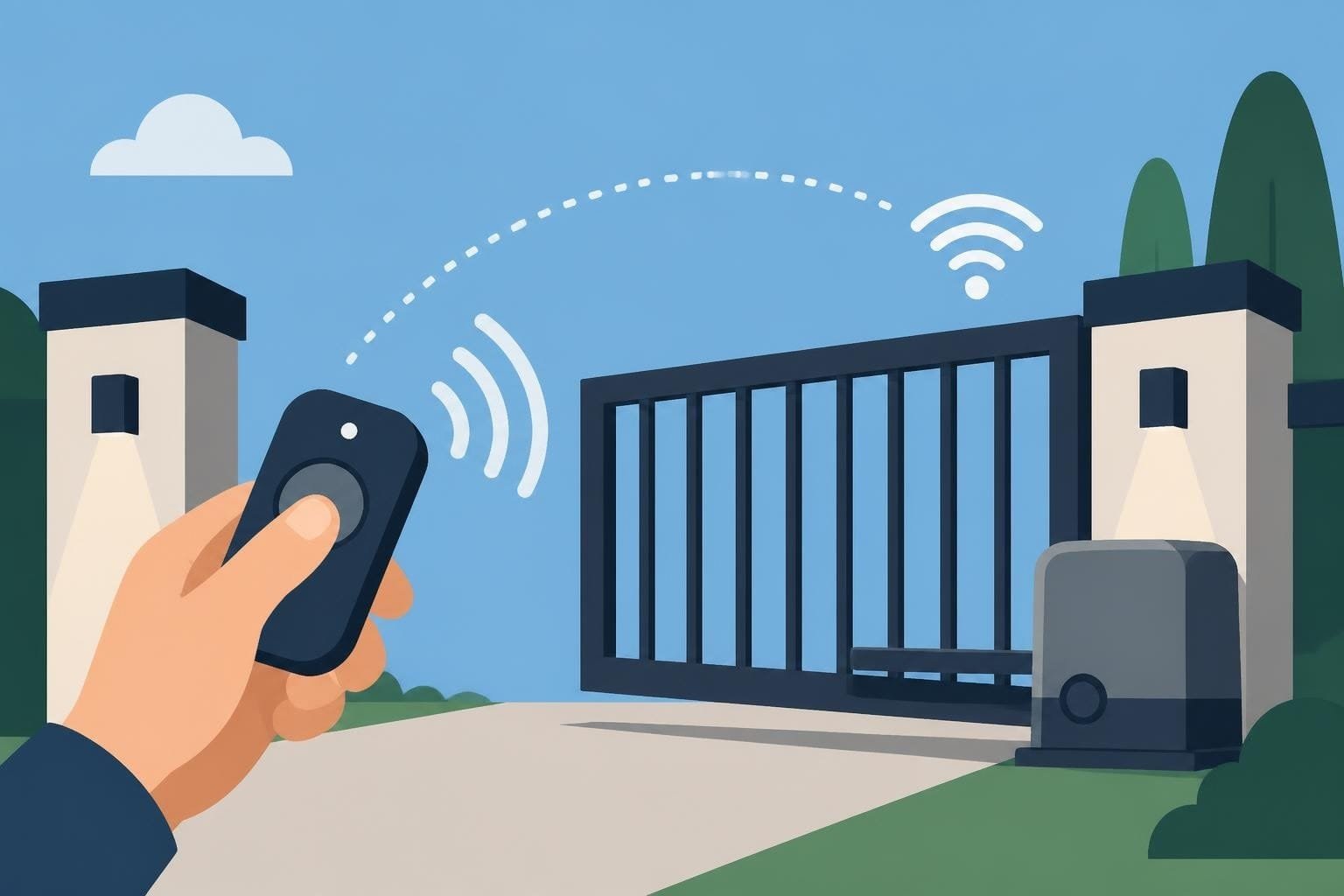
The fundamental operation of an automatic gate opener remote relies on radio frequency (RF) transmission between a handheld transmitter and a receiver unit installed in the gate operator. When you press a button on your remote, it broadcasts an encrypted signal on a specific frequency that the receiver recognizes and authenticates before activating the gate motor.
Most modern systems operate within unlicensed frequency bands regulated by the Federal Communications Commission under 47 CFR Part 15, typically using 300-400 MHz ranges. These frequencies provide reliable transmission through common obstacles like walls, vegetation, and weather conditions while minimizing interference with other devices.
Key Components of Remote Systems
Every automatic gate opener remote system consists of several critical elements working in harmony:
- Transmitter (the remote): Handheld device with buttons, battery, and RF transmitter circuit
- Receiver: Mounted in or near the gate operator, listens for valid signals
- Antenna: Extends reception range, typically mounted high on the operator or nearby post
- Control board: Processes received signals and triggers motor activation
- Power supply: Provides consistent electricity to the receiver and operator system
The quality and configuration of each component directly impacts system reliability, range, and security. Professional installation ensures optimal antenna placement and proper receiver programming, which can mean the difference between 50-foot and 200-foot operational ranges.
Security Features in Modern Gate Remotes
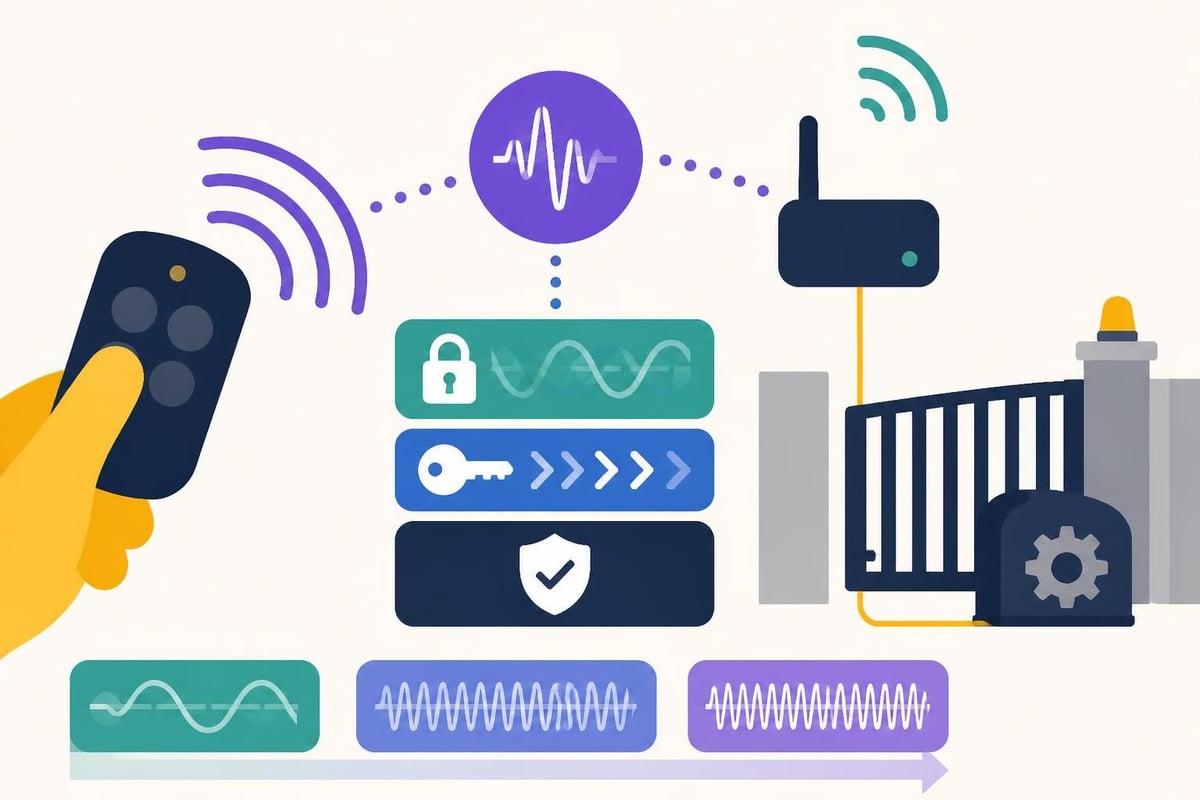
Security represents the paramount concern for any access control system. Early automatic gate opener remote designs used fixed-code transmission, where the same digital code transmitted every time you pressed the button. This approach proved vulnerable to code-grabbing attacks, where thieves could intercept and replay the signal.
Rolling Code Technology
Contemporary systems employ rolling code (also called code-hopping) encryption, which generates a new code with each transmission. The remote and receiver share an algorithm that synchronizes code sequences, making each signal valid only once. Even if someone intercepts a signal, it becomes useless for future access attempts.
The most widely implemented rolling code system, KeeLoq, has dominated the market for decades. While cryptanalysis research has identified theoretical vulnerabilities, practical exploitation requires sophisticated equipment and proximity during multiple transmissions. For residential applications, rolling code technology provides robust protection against casual security threats.
| Security Feature | Fixed Code | Rolling Code | Advanced Encryption |
|---|---|---|---|
| Code reuse | Same every time | Never repeats | Never repeats + additional layers |
| Interception vulnerability | Very high | Low | Very low |
| Code complexity | 8-12 bits | 32+ bits | 128+ bits |
| Common applications | Legacy systems | Residential | Commercial/high-security |
Multi-Factor Authentication Options
Modern automatic gate opener remote systems increasingly incorporate additional authentication layers. Some advanced configurations require:
- Smartphone verification through dedicated apps before remote activation
- Biometric confirmation via fingerprint or facial recognition on smart remotes
- Time-based restrictions that disable certain remotes during specified hours
- GPS geofencing that requires physical proximity verification
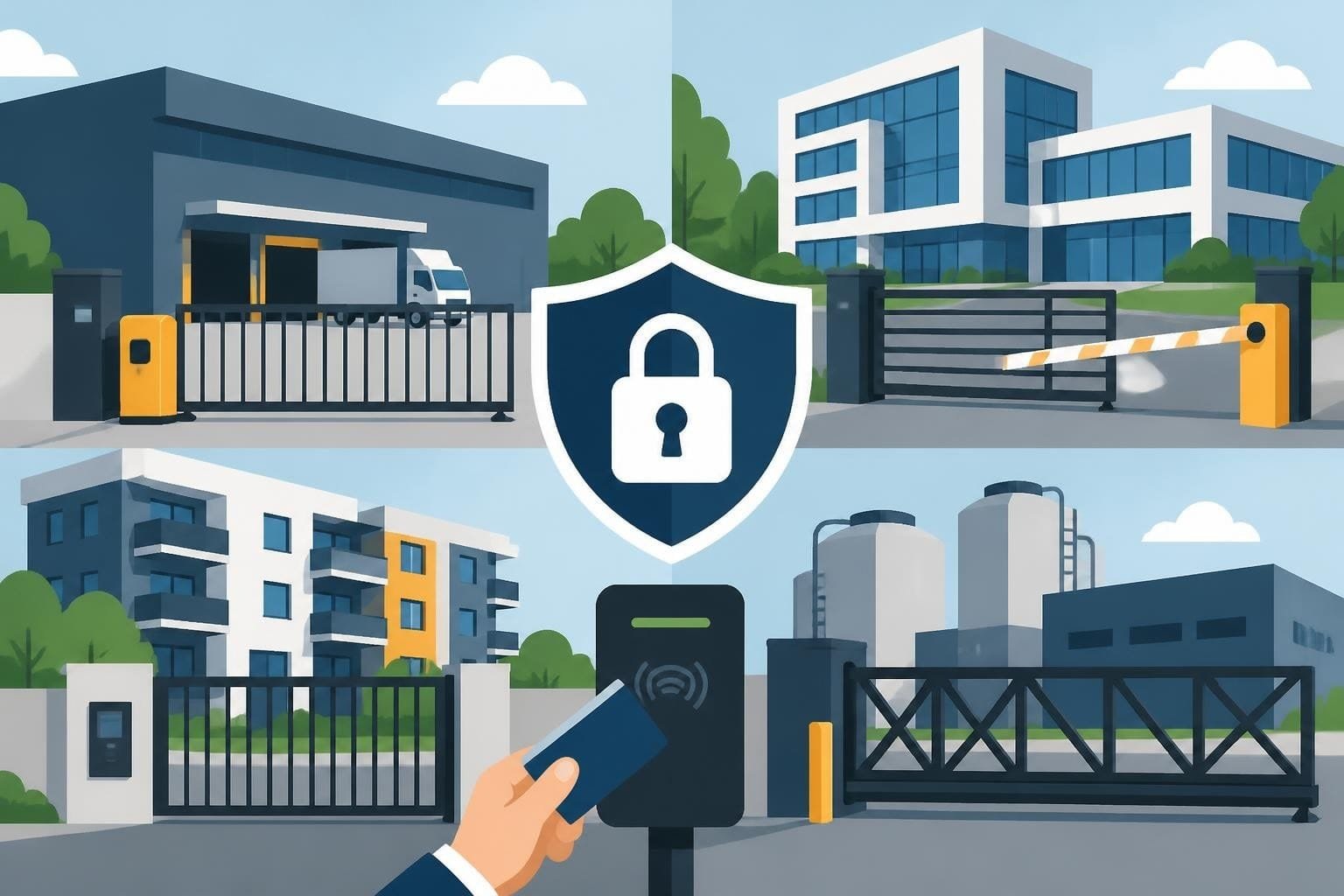
These enhanced security measures prove particularly valuable for commercial properties, gated communities, and high-security residential installations where unauthorized access carries significant consequences.
Compatibility and Universal Remotes
One of the most common challenges property owners face involves replacement or additional automatic gate opener remote acquisition. Original manufacturer remotes can be expensive, sometimes costing $50-150 per unit, driving many consumers toward universal or aftermarket alternatives.
Frequency Matching Requirements
Universal remotes must match your system's operating frequency. The three most common frequencies in North American installations are:
- 300 MHz (older systems, primarily 1990s installations)
- 310 MHz (common in DoorKing and Linear systems)
- 390 MHz (widespread across multiple manufacturers)
Purchasing a remote on the wrong frequency results in complete incompatibility, regardless of programming attempts. Always verify your existing system's frequency before ordering replacements. This information typically appears on the original remote, the receiver unit, or in the gate operator's manual.
Brand-Specific Protocols
Beyond frequency matching, the communication protocol must align with your system. Major manufacturers like LiftMaster, Chamberlain, Genie, and Linear each use proprietary signal formats and encryption methods. A universal remote claiming "multi-brand compatibility" usually achieves this through storing multiple protocol libraries and allowing user selection during programming.
Programming procedures vary significantly:
- DIP switch programming: Older method using physical switches to match transmitter and receiver codes
- Learn button programming: Press a button on the receiver, then the remote button within a time window
- Self-learning: Advanced remotes that can read and clone signals from existing remotes
- Computer programming: Professional-grade systems requiring software and cable connections
When dealing with electric gate repair or troubleshooting, understanding your specific system's programming requirements saves considerable time and frustration.
Range Factors and Performance Optimization
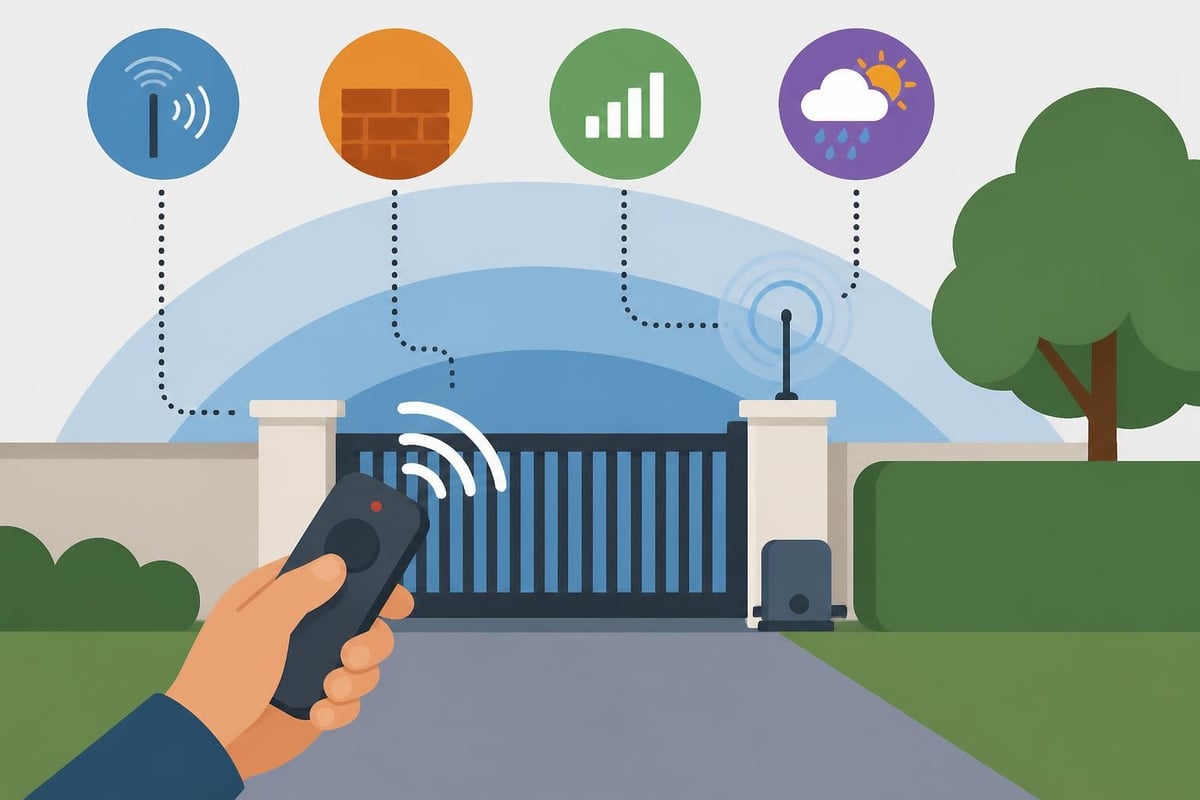
The functional range of an automatic gate opener remote varies from 50 to over 400 feet depending on numerous environmental and technical factors. Understanding these variables helps property owners optimize performance and troubleshoot range degradation.
Environmental Interference
Physical obstacles and electronic interference substantially impact signal transmission:
- Metal barriers: Steel fencing, metal roofing, and aluminum siding create signal blockage
- Concrete walls: Dense construction materials attenuate radio frequencies
- Trees and vegetation: Particularly problematic when wet, as water absorbs RF signals
- Electronic devices: LED lighting, solar panels, and wireless networks can create interference
- Weather conditions: Heavy rain and snow reduce effective range by 10-30%
Technical Optimization Strategies
Several practical steps can extend operational range and improve reliability:
Antenna positioning proves most critical. Mounting the receiver's antenna vertically and as high as possible (ideally above the gate operator housing) dramatically improves reception. Professional installers often run antenna extension cables to position the antenna on a nearby post or building for line-of-sight transmission paths.
Battery condition directly affects transmission power. Most remotes use CR2032 lithium batteries that last 2-3 years with normal use. Weak batteries reduce range by 50% or more before causing complete failure. Replace batteries annually as preventive maintenance, regardless of apparent functionality.
Receiver sensitivity adjustment exists on many systems through potentiometer controls on the circuit board. Increasing sensitivity extends range but may also increase false-activation susceptibility from environmental interference. Finding the optimal balance requires experimentation.
Smart Integration and Modern Features
The 2026 landscape for automatic gate opener remote technology has evolved significantly beyond simple button-press activation. Smart home integration and advanced features have transformed how property owners interact with their gate systems.
Smartphone Control Applications
Dedicated smartphone apps now serve as virtual remotes for many modern gate operators. These applications connect via WiFi bridges or Bluetooth modules added to existing systems, offering advantages over traditional physical remotes:
- Unlimited user creation without purchasing additional physical remotes
- Temporary access codes for guests, delivery personnel, or service providers
- Activity logging showing exactly when and by whom the gate was operated
- Remote operation from anywhere with internet connectivity
- Battery independence eliminating the need for regular replacements
Smart garage door opener controllers share similar technology and offer insights into reliability and security considerations for smart gate systems.
Voice Assistant Compatibility
Integration with Amazon Alexa, Google Assistant, and Apple HomeKit enables voice-activated gate control. Property owners can create routines like "Okay Google, open the front gate" while approaching their driveway. This hands-free operation proves particularly convenient when carrying packages or during inclement weather.
Security concerns surrounding voice activation include:
- Authentication verification: Most systems require smartphone presence or PIN codes
- Geofencing limitations: Commands only execute when within defined property boundaries
- Activity monitoring: All voice commands generate logs for security review
- Guest access restrictions: Prevents unauthorized individuals from shouting commands from outside the property
Troubleshooting Common Remote Issues
Even well-maintained automatic gate opener remote systems occasionally experience operational difficulties. Systematic troubleshooting identifies issues quickly and often reveals simple solutions before requiring professional intervention.
Remote Not Working At All
When a remote shows no response whatsoever:
- Replace the battery – The most common culprit, responsible for 60% of remote failures
- Check for physical damage – Cracked circuit boards or water damage prevent operation
- Verify LED indicator – Most remotes flash when buttons press; no flash indicates internal failure
- Test with another remote – Confirms whether the problem lies with the remote or receiver
- Inspect antenna connections – Loose or corroded antenna cables prevent signal reception
Intermittent or Short-Range Operation
When a remote works inconsistently or requires very close proximity:
| Symptom | Likely Cause | Solution |
|---|---|---|
| Works sometimes, not others | Weak battery | Replace battery immediately |
| Shorter range than before | Antenna damage/misalignment | Check antenna mounting and connections |
| Works close only | Receiver sensitivity too low | Adjust receiver sensitivity setting |
| Different performance by location | Environmental interference | Identify and eliminate interference sources |
Programming and Synchronization Errors
Rolling code systems occasionally lose synchronization between remote and receiver, typically after the remote button was pressed many times while out of range. Most systems include a resynchronization procedure that involves pressing the remote button multiple times (usually 3-8 times) within range of the receiver to re-establish code sequence alignment.
If synchronization fails, complete reprogramming using the learn button method typically resolves the issue. Consult your system's manual for specific procedures, as methods vary significantly between manufacturers.
Safety Compliance and Regulatory Standards
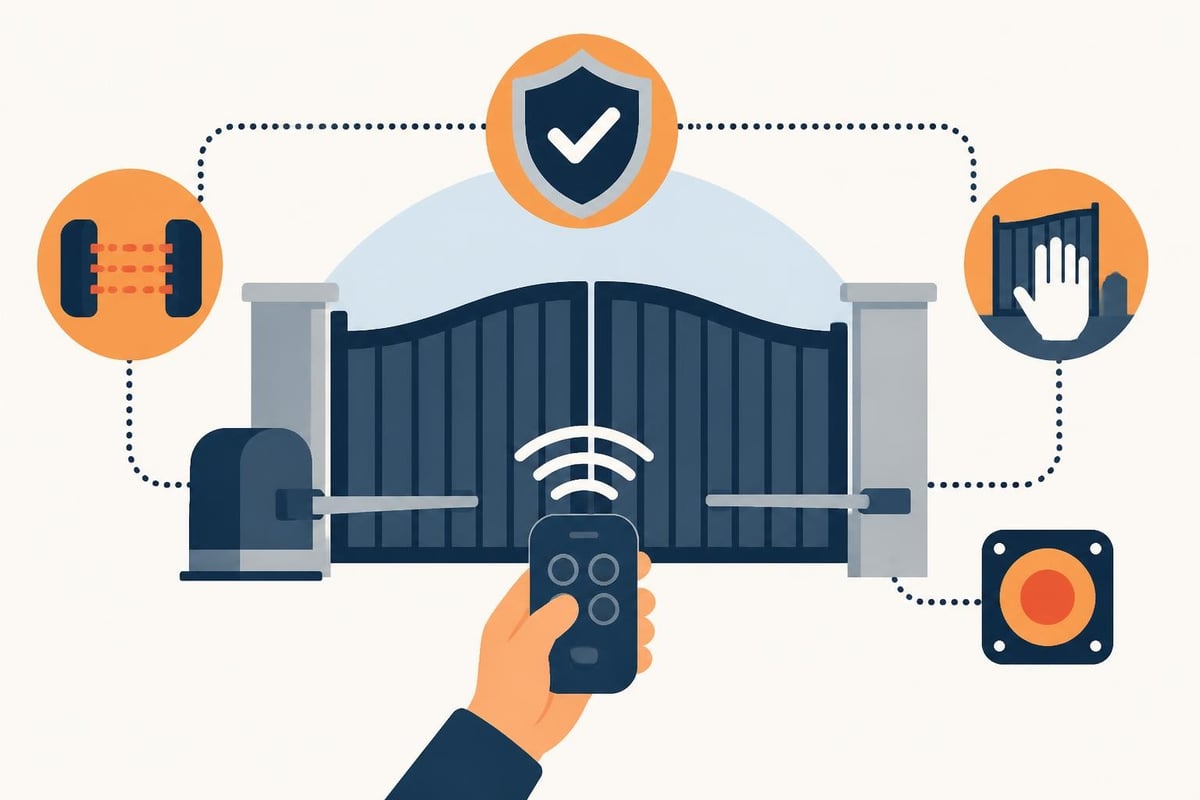
Automatic gate systems carry inherent safety risks, particularly regarding entrapment and crushing hazards. UL 325 safety standards govern gate operator design and installation requirements, with specific implications for remote control systems.
Modern installations must incorporate entrapment protection devices that reverse or stop gate motion when obstacles are detected. These safety features work independently of the automatic gate opener remote but interact with remote commands. When a remote signal initiates gate movement, safety sensors continuously monitor for obstructions.
The UK Health & Safety Executive guidance on powered gates provides valuable perspective on operator responsibilities and risk assessment, emphasizing that convenience features like remote operation must never compromise safety systems.
Installation Class Requirements
UL 325 defines four installation classes based on application:
- Class I: Residential vehicular gates (single-family homes)
- Class II: Commercial/industrial vehicular gates
- Class III: Residential pedestrian gates
- Class IV: Commercial/industrial pedestrian gates
Each class carries specific requirements for entrapment protection, with higher classes demanding more robust safety measures. Remote control systems must integrate properly with safety devices appropriate to their installation class. Professional installers ensure compliance through proper configuration and testing.
Maintenance and Lifespan Optimization
Proper maintenance extends automatic gate opener remote lifespan and ensures reliable operation. Most quality remotes provide 5-10 years of service with appropriate care, while neglected units may fail within 2-3 years.
Preventive Care Practices
Regular maintenance requires minimal effort but delivers substantial reliability benefits:
Physical protection matters significantly. Store remotes away from extreme temperatures (above 140°F or below -20°F), which degrade battery life and circuit board components. Avoid exposure to moisture, using protective cases or visor clips that shield from direct sun and rain.
Contact cleaning prevents signal degradation. Dirt and oxidation on battery contacts create resistance that weakens transmission power. Annually remove batteries and clean contacts with isopropyl alcohol and a cotton swab, ensuring complete drying before reinstallation.
Button testing identifies early failure signs. Sticky or unresponsive buttons indicate worn contact membranes. Address these symptoms promptly, as continued use damages circuit traces and accelerates complete failure.
Battery Management Best Practices
Lithium batteries perform optimally within specific parameters:
- Temperature storage: Keep spare batteries in climate-controlled environments
- Replacement timing: Change batteries at first sign of reduced range, not after complete failure
- Quality selection: Name-brand batteries (Duracell, Energizer, Panasonic) outlast generic alternatives by 30-50%
- Proper disposal: Recycle lithium batteries at designated collection points; never discard in regular trash
Some advanced automatic gate opener remote models now feature rechargeable lithium-ion batteries, eliminating replacement cycles entirely. These systems typically include micro-USB charging ports and provide 6-12 months of operation per charge.
Multi-Remote Management Strategies
Properties with multiple residents, employees, or vehicles require systematic approaches to remote distribution and management. Poor planning leads to security vulnerabilities and operational confusion.
Tracking and Inventory Systems
Maintaining accurate records of remote distribution prevents unauthorized access and aids troubleshooting:
- Serial number logging: Record each remote's serial number and assignment date
- User association: Document which individual possesses each remote
- Distribution dates: Track when remotes were issued to identify age-related failures
- Return protocols: Establish procedures for collecting remotes from departing employees or residents
- Deactivation capability: Ensure your system allows individual remote deactivation without affecting others
Commercial properties and gated communities benefit from professional access control systems that generate detailed activity logs showing which remote activated the gate at specific times. This accountability discourages misuse and aids security investigations.
Visitor and Temporary Access Solutions
Rather than distributing physical remotes to temporary visitors, modern systems offer superior alternatives:
Keypad entry systems provide PIN-based access without remotes. Temporary codes can be created for specific time periods, automatically expiring after guest departures. This approach eliminates remote retrieval concerns and prevents unauthorized duplication.
Smartphone temporary access through dedicated apps allows property owners to grant limited access to delivery personnel, contractors, or short-term guests. Access permissions can be scheduled precisely (for example, allowing a cleaning service every Tuesday from 9 AM to 11 AM) and revoked instantly when no longer needed.
Cost Considerations and Value Assessment
Automatic gate opener remote pricing varies dramatically based on features, brand, and sophistication. Understanding cost factors helps property owners make informed purchasing decisions.
Price Ranges and Factors
Basic replacement remotes for common systems range from $15-40 for universal models and $40-150 for original manufacturer units. The price difference reflects warranty coverage, guaranteed compatibility, and often superior build quality.
Advanced smart remotes and smartphone integration systems command higher prices:
- WiFi bridge modules: $80-200 for adding smartphone control to existing systems
- Smart integrated operators: $500-1,500 including remote capabilities and automation features
- Professional monitoring systems: $100-300 monthly for comprehensive access control with logging
When evaluating costs, consider the total ownership equation including battery replacement frequency, durability, and replacement cycles. A $25 universal remote requiring replacement every 18 months costs more over five years than a $75 original manufacturer remote lasting the full period.
When to Upgrade vs. Replace
Sometimes investing in complete system upgrades delivers better value than replacing individual components. Consider upgrading when:
- Your current system lacks rolling code security
- Multiple remotes need simultaneous replacement
- Smart home integration would provide substantial convenience benefits
- Safety features don't meet current UL 325 standards
- Frequent malfunctions indicate broader system degradation
Consultation with experienced professionals helps assess whether targeted repairs or comprehensive upgrades better serve long-term needs and budgets.
Professional Installation vs. DIY Approaches
While some property owners successfully program and install automatic gate opener remote systems independently, professional installation offers distinct advantages that often justify the additional expense.
DIY Feasibility Assessment
Self-installation makes sense when:
- Replacing a simple remote with a directly compatible model
- Your system uses straightforward learn-button programming
- Physical access to the receiver unit presents no difficulties
- You possess basic technical troubleshooting skills
- Manufacturer documentation provides clear instructions
However, professional assistance becomes valuable for:
- Initial system installations requiring antenna placement optimization
- Universal remote programming with multiple protocol options
- Systems requiring receiver board adjustments or modifications
- Troubleshooting complex intermittent failures
- Ensuring safety system integration and UL 325 compliance
Professional Service Benefits
Experienced technicians bring specialized knowledge that prevents costly mistakes. They quickly identify compatibility issues that might not surface until after purchase, saving return shipping costs and delays. Proper antenna positioning alone can double effective range, an optimization difficult for DIYers without radio frequency testing equipment.
Additionally, professional installation typically includes warranty coverage for both parts and labor. If a newly installed remote fails within the warranty period, the service provider handles replacement at no additional cost. This protection provides peace of mind unavailable with self-installation attempts.
Future Trends in Gate Remote Technology
The automatic gate opener remote landscape continues evolving rapidly as broader smart home and security technologies advance. Understanding emerging trends helps property owners make future-proof investments.
Biometric Integration
Fingerprint and facial recognition technology increasingly appears in high-security gate remotes. These systems eliminate the security vulnerability of lost or stolen remotes entirely, as access requires the authorized individual's physical presence. Expect this technology to become more affordable and widespread throughout 2026-2028.
Ultra-Wideband (UWB) Technology
Apple's integration of UWB chips in recent iPhone models has sparked interest in applying this technology to access control. UWB offers centimeter-level positioning accuracy, enabling gates to automatically open only when the authorized device approaches within a precisely defined area. This advancement could eliminate button-pressing entirely, creating truly hands-free operation.
Blockchain-Based Access Logging
Some commercial systems now employ blockchain technology to create tamper-proof access logs. Every gate activation gets recorded in a distributed ledger that prevents retroactive modification, providing irrefutable evidence for security investigations and liability disputes.
Understanding automatic gate opener remote technology empowers property owners to make informed decisions about security, convenience, and long-term value. From basic compatibility considerations to advanced smart integrations, the right remote system enhances daily life while protecting your property. Whether you need expert guidance on remote programming, system upgrades, or comprehensive gate repairs, Gates & Garage Door Express Inc. provides professional service throughout Los Angeles with same-day emergency availability. Their experienced technicians ensure your gate system operates reliably and securely, backed by the quality commitment that comes from family-owned business values.