
Property owners seeking a blend of security, convenience, and curb appeal increasingly turn to automated entry solutions. Automatic rolling driveway gates represent a sophisticated approach to property access control, combining smooth operation with space-efficient design. These systems slide horizontally along a track parallel to the fence line, making them ideal for properties with limited driveway depth or sloped terrain where traditional swing gates prove impractical. Understanding the mechanics, safety requirements, and maintenance needs of these systems helps property owners make informed decisions about installation and long-term care.
Understanding Automatic Rolling Gate Systems
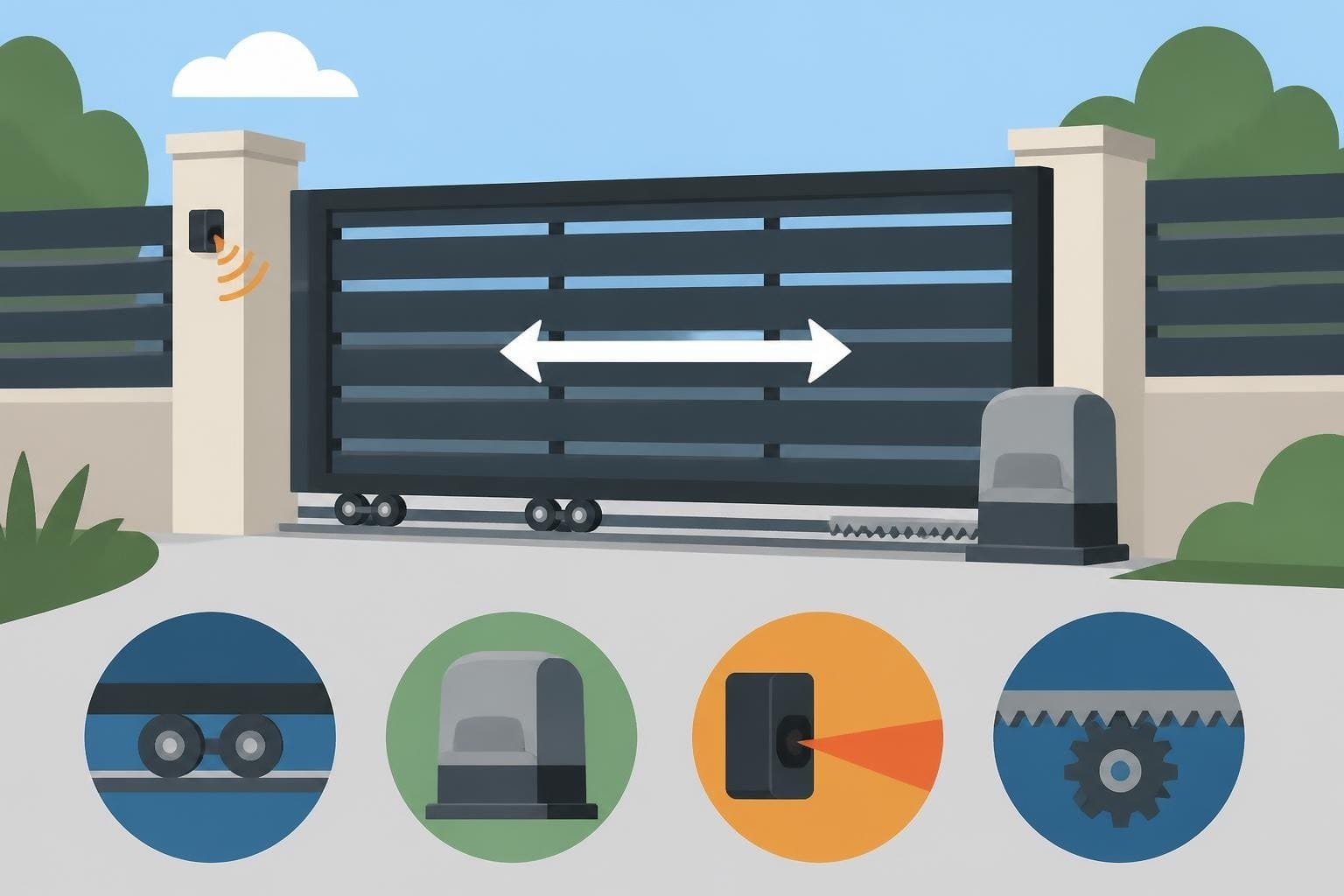
Automatic rolling driveway gates operate on a cantilever or track-mounted system that moves the gate panel horizontally. Unlike swing gates that require clearance to arc open, rolling gates slide parallel to the fence, conserving valuable driveway space.
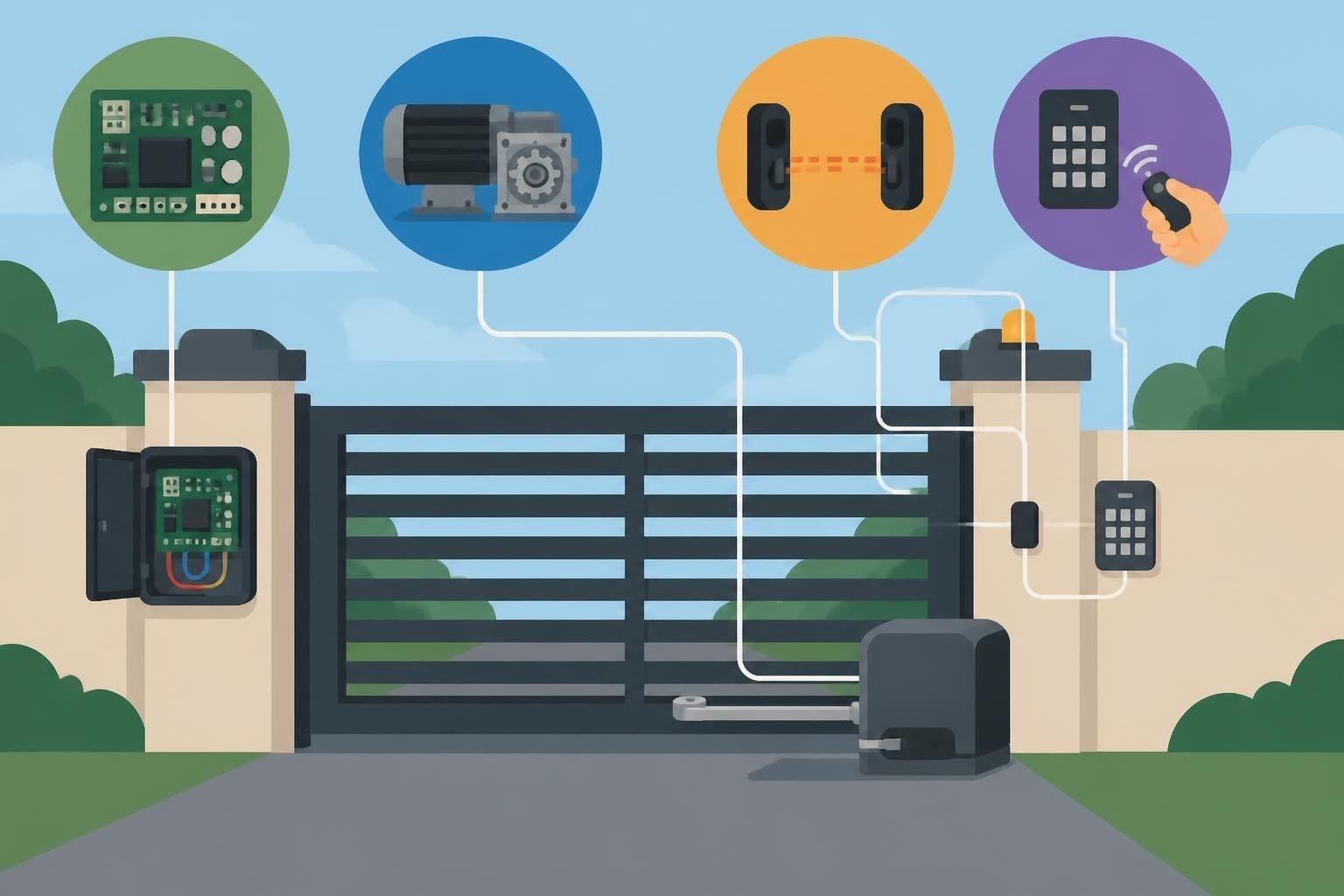
The core components include a heavy-duty motor, steel or aluminum gate panel, guide wheels, track system, and control electronics. The motor drives a chain or rack-and-pinion mechanism that propels the gate along its path. Most modern systems integrate safety sensors, access controls, and backup power supplies to ensure reliable operation under various conditions.
Cantilever vs. Track-Mounted Configurations
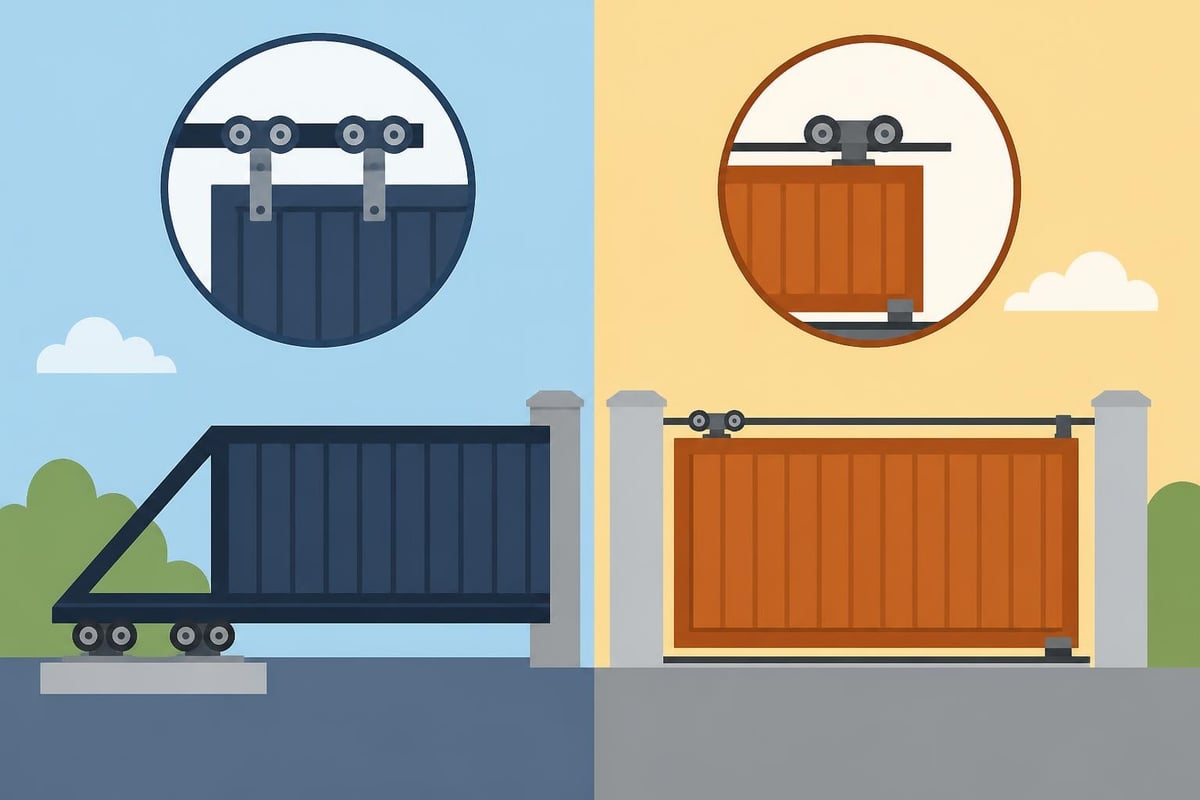
Two primary design approaches dominate the rolling gate market. Cantilever systems suspend the gate above ground using a counterbalance beam and rolling carriages, eliminating ground tracks that can accumulate debris or freeze in winter. This design suits areas with harsh weather or uneven ground.
Track-mounted gates roll on wheels guided by a ground-level track. While more susceptible to debris interference, these systems typically cost less and handle heavier gate panels more efficiently. The choice between configurations depends on climate, terrain, gate weight, and budget considerations.
Safety Standards and Compliance Requirements
Modern automatic rolling driveway gates must meet rigorous safety standards established by regulatory bodies and industry organizations. The UL 325 standard governs automatic gate operators, mandating specific entrapment protection devices and force limitations to prevent injury.
Compliance with ASTM F2200-24 ensures proper construction specifications for automated vehicular gates. This standard addresses materials, design loads, and operational requirements that contribute to safe, reliable performance. Property owners should verify their installations meet these specifications, particularly when insurance or liability concerns arise.
Essential Safety Features
| Safety Component | Function | Compliance Requirement |
|---|---|---|
| Photo-eye sensors | Detect obstructions in gate path | Required by UL 325 |
| Edge sensors | Detect contact with obstacles | Recommended for high-traffic areas |
| Emergency release | Manual gate operation during power loss | Mandatory for all automatic gates |
| Warning signs | Alert pedestrians and drivers | Required by ASTM F2200 |
| Force limiting | Prevents excessive closing pressure | UL 325 Type A/B/C classification |
Professional installers certified through programs like the American Fence Association’s Certified Gate Automation Designer program ensure installations meet all applicable codes. These credentials demonstrate knowledge of proper safety device placement, electrical requirements, and operational testing procedures.
The DASMA technical guidelines provide detailed recommendations for automatic vehicular gate operating systems, covering installation best practices and maintenance protocols that extend system life while maintaining safety compliance.
Motor Selection and Power Requirements
Choosing an appropriate motor represents a critical decision in automatic rolling driveway gate installation. Motor sizing depends on gate weight, frequency of operation, wind exposure, and backup power needs.
Residential applications typically use 1/2 to 3/4 horsepower motors for gates up to 1,000 pounds. Commercial installations handling heavier gates or high-cycle operations require industrial-grade motors with duty cycles exceeding 50%. When evaluating electric gate repair services, motor capacity often determines whether replacement or repair makes economic sense.
DC vs. AC Motor Systems
- DC motors offer battery backup compatibility, soft-start/stop operation, and variable speed control
- AC motors provide higher continuous duty ratings, lower cost, and simpler installation
- Hybrid systems combine AC power with DC battery backup for optimal reliability
Environmental protection matters significantly for outdoor installations. NEMA-rated enclosures protect electrical components from weather, dust, and corrosion. NEMA 4X ratings suit coastal or high-humidity environments, while NEMA 3R suffices for most residential applications.
Installation Considerations and Site Requirements
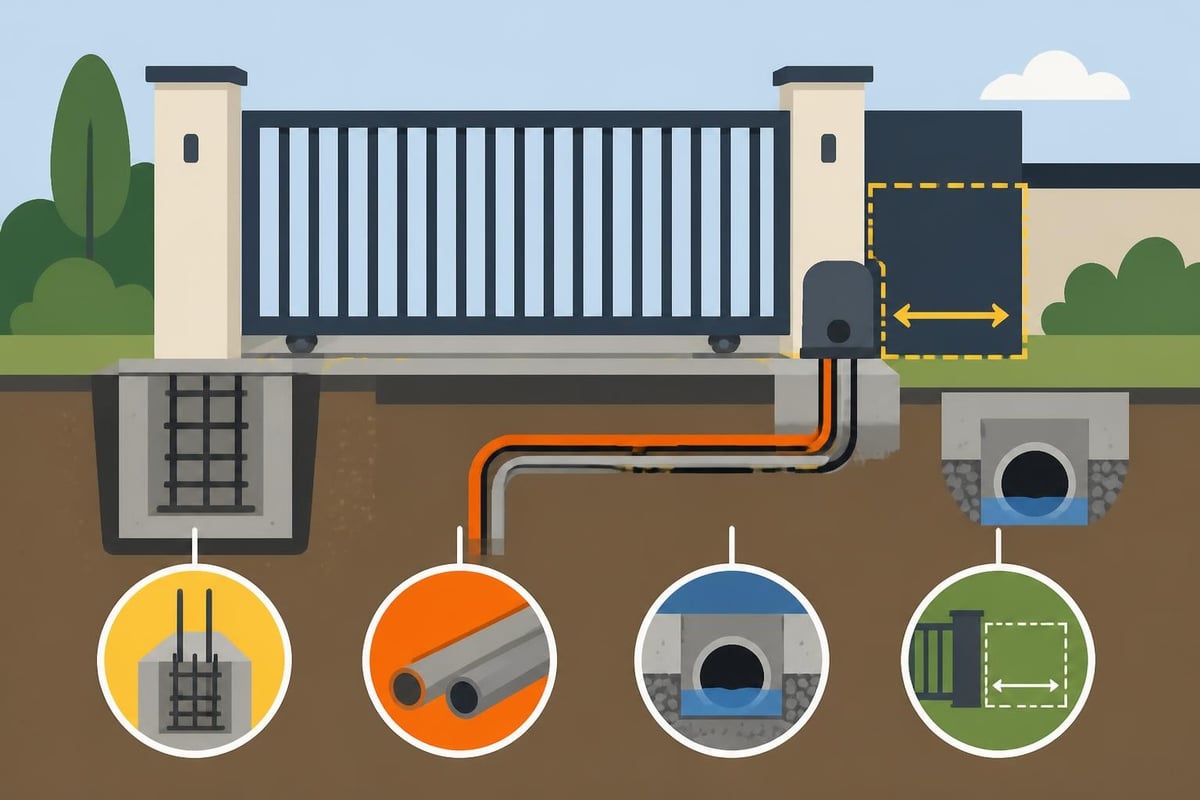
Proper site preparation determines long-term system performance. Automatic rolling driveway gates require level foundations, adequate electrical service, and clearance for the gate's full travel path.
Foundation requirements vary by system type and gate weight. Track-mounted systems need a concrete pad extending the gate's full length plus counterweight area. Cantilever systems require substantial counterweight foundations capable of supporting the entire gate assembly off the ground.
Pre-Installation Checklist
- Survey the property line to confirm gate placement within legal boundaries
- Verify utility locations to avoid underground conflicts during excavation
- Assess electrical service for adequate amperage and circuit protection
- Calculate wind load requirements based on panel design and local climate
- Determine drainage needs to prevent water accumulation in track areas
- Plan access control integration with intercoms, keypads, or card readers
Slopes present unique challenges for rolling gate installations. Gates installed on grades exceeding 5% require additional braking systems to prevent free-wheeling. Some jurisdictions mandate specific safety measures for sloped installations, including redundant locking mechanisms and emergency brake systems.
Access Control Integration Options
Modern automatic rolling driveway gates interface with numerous access control technologies, enabling customized security appropriate to each property's needs. Integration capabilities distinguish basic systems from comprehensive security solutions.
Radio frequency transmitters remain the most common access method, offering convenience and reliability. Multi-button remotes control multiple gates or activate different operational modes. Rolling code technology prevents signal interception and unauthorized access.
Keypad entry systems provide access without physical credentials, ideal for deliveries or service providers requiring temporary entry. Programmable codes enable different access levels and time restrictions.
Smartphone applications leverage WiFi or cellular connectivity for remote gate control and status monitoring. Advanced platforms send notifications for gate operation, alert on forced entry attempts, and maintain access logs.
Commercial Access Solutions
| Technology | Application | Key Benefit |
|---|---|---|
| Proximity cards | Employee/tenant access | Audit trail capability |
| License plate recognition | Automatic entry for authorized vehicles | Hands-free operation |
| Intercom systems | Visitor screening | Remote communication |
| Loop detectors | Free exit for outbound traffic | Enhanced convenience |
Commercial properties benefit from systems that integrate with property management software, enabling centralized control across multiple access points. These solutions often include video surveillance integration and cloud-based management platforms accessible from any location.
Maintenance Requirements and Service Schedules
Consistent maintenance preserves safety features and extends the operational life of automatic rolling driveway gates. Neglected systems develop costly problems that compromise security and convenience.
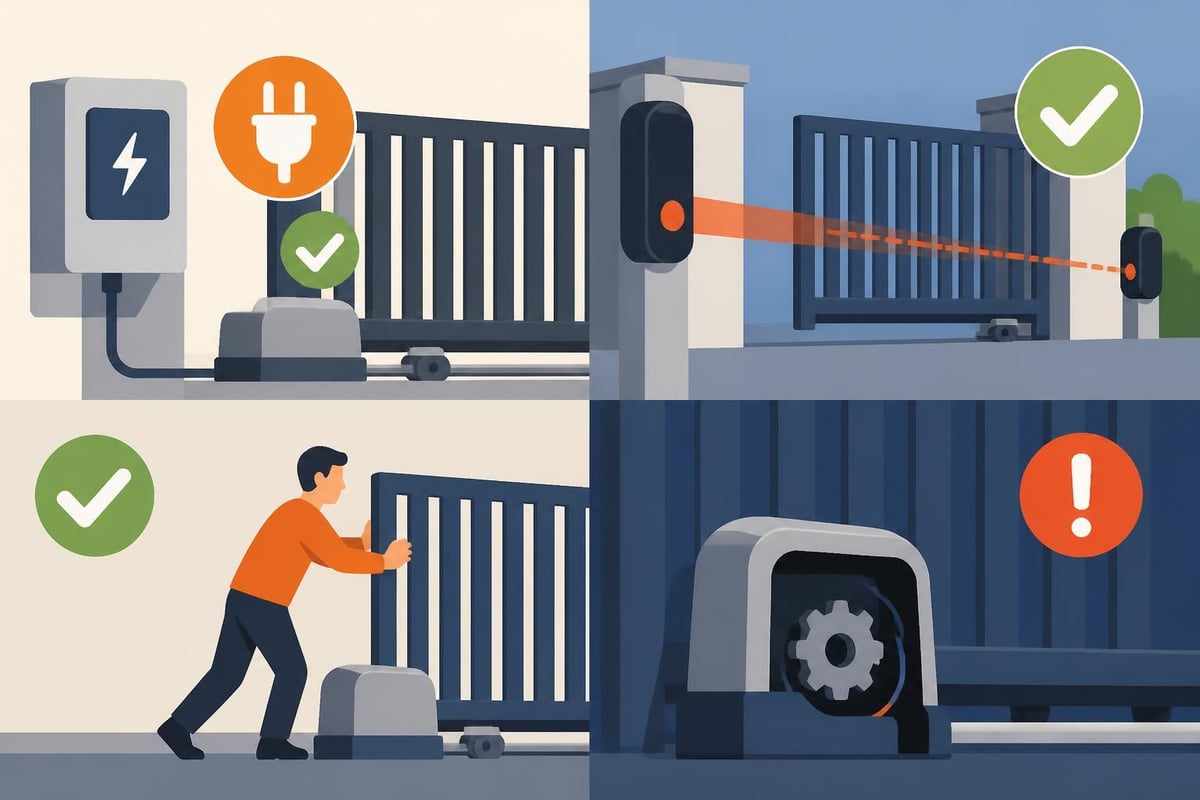
Monthly visual inspections should verify photo-eye alignment, check for loose hardware, and test emergency release mechanisms. Operators should cycle the gate several times while observing smooth motion and listening for unusual sounds indicating wear or misalignment.
Quarterly Maintenance Tasks
- Lubricate all moving parts including rollers, track, and chain drives
- Clean photo-eyes and adjust alignment if necessary
- Test safety reversal systems under load
- Inspect and clean ground tracks of debris accumulation
- Verify battery backup systems maintain proper charge
Annual professional service includes comprehensive electrical testing, motor inspection, and safety sensor calibration. Technicians examine structural components for stress cracks, check weld integrity, and verify compliance with current safety standards. Properties in the Los Angeles area can rely on professional services throughout various service areas to maintain optimal system performance.
Weather-related maintenance varies by climate. Coastal installations require more frequent lubrication with marine-grade products to combat salt corrosion. Cold climates need winterization procedures including track heating systems and cold-weather lubricants that maintain viscosity below freezing.
Troubleshooting Common Operational Issues
Understanding typical failure modes helps property owners respond appropriately when automatic rolling driveway gates malfunction. Some issues require immediate professional attention, while others yield to simple troubleshooting.
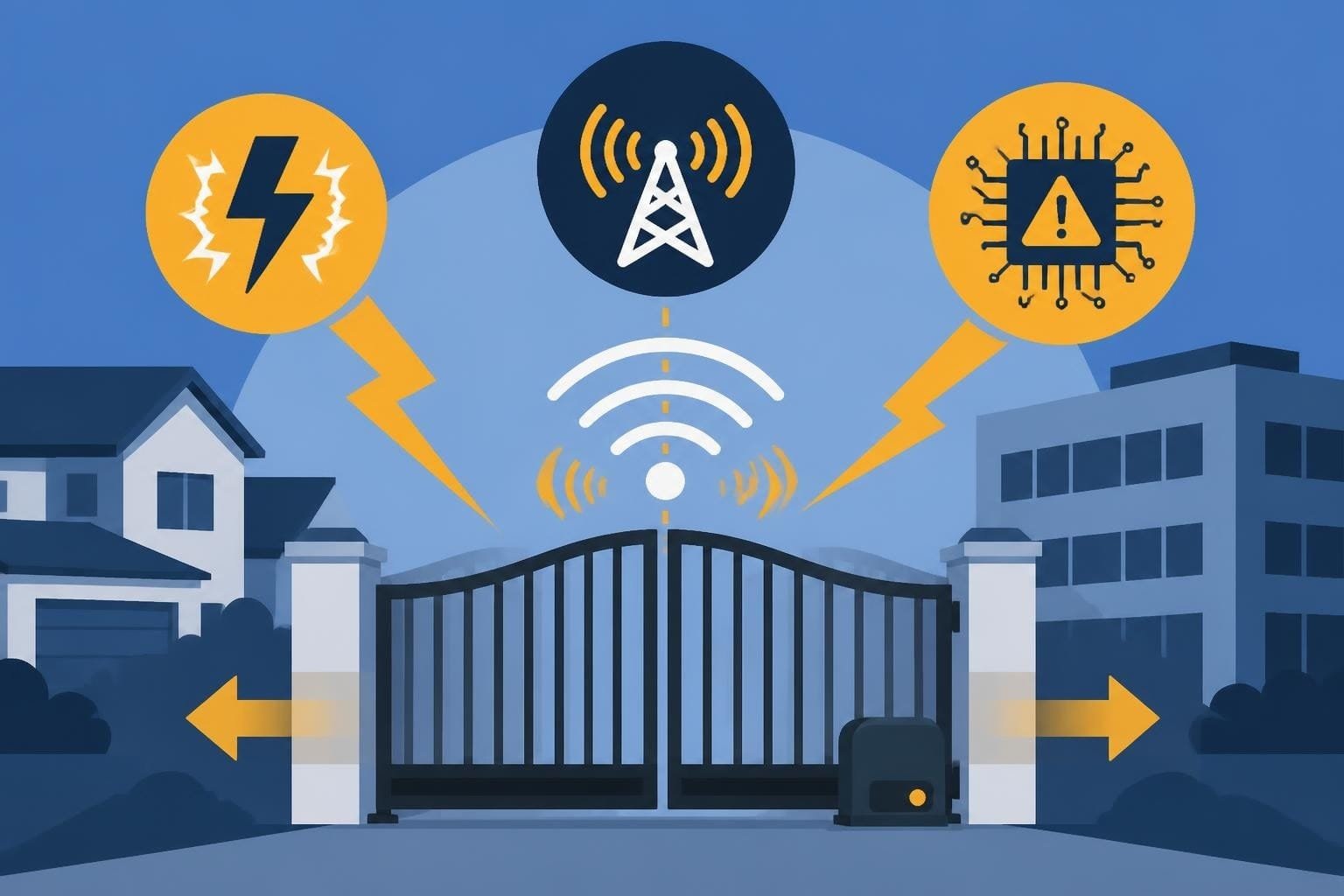
Gate fails to respond to commands: Check transmitter batteries first, then verify the gate's manual disconnect hasn't been engaged. If power supplies test normal but the gate remains unresponsive, control board failure likely requires professional diagnosis.
Gate reverses unexpectedly during operation: Misaligned photo-eyes commonly cause this symptom. Clean sensor lenses and verify alignment across the gate path. If reversal persists, edge sensors may require adjustment or replacement.
Slow or jerky operation: Insufficient lubrication or debris in the track system typically causes erratic movement. Clean and lubricate all moving components. Continuing problems suggest motor capacitor failure or insufficient power supply.
When to Call Professional Service
- Gate operates but makes grinding or scraping noises
- Safety sensors fail operational testing
- Gate stops mid-cycle and requires repeated commands
- Visible damage to structural components or welds
- Electrical burning smell or visible sparking
- Gate drifts when in closed position on sloped installations
The Federal safety standards governing automatic operators emphasize the importance of maintaining safety features in optimal working condition. Deferred maintenance on safety systems creates liability exposure should injury occur.
Material Selection and Durability Factors
Gate panel construction significantly impacts longevity, maintenance requirements, and aesthetic appeal. Material selection should balance initial cost against expected service life and maintenance expenses.
Steel gates offer maximum strength and security at moderate cost. Galvanized or powder-coated finishes resist corrosion, though damaged coatings expose underlying metal to rust. Regular inspection and touch-up painting extend service life in harsh environments.
Aluminum gates combine corrosion resistance with lighter weight, reducing motor requirements and structural loading. Higher initial cost offsets against minimal maintenance needs and excellent performance in coastal environments. Anodized finishes provide superior weather resistance.
Composite materials incorporating aluminum frames with synthetic fill panels offer design flexibility and weather resistance. These systems resist denting and maintain appearance with minimal care, though replacement panels may prove costly when damaged.
Design Pattern Considerations
| Pattern Type | Privacy Level | Wind Resistance | Maintenance |
|---|---|---|---|
| Solid panels | Maximum | Requires stronger motor | Low – fewer joints |
| Horizontal slats | Moderate | Good airflow reduces load | Moderate – clean between slats |
| Vertical pickets | Minimal | Excellent | Low – easy cleaning |
| Decorative scrollwork | Variable | Good | High – intricate details collect debris |
Gate design affects more than aesthetics. Solid panels create wind resistance requiring more powerful motors and stronger structural components. Perforated or slatted designs allow wind passage, reducing operational loads while maintaining security and privacy.
Cost Analysis and Investment Considerations
Automatic rolling driveway gates represent significant property investments, with total installed costs varying widely based on size, materials, and features. Understanding cost components helps budget appropriately and evaluate vendor proposals.
Basic residential installations start around $3,500 for simple track-mounted systems with standard motors and minimal access control. Mid-range systems incorporating cantilever designs, enhanced materials, and integrated access controls typically cost $6,000-$12,000. High-end installations featuring custom designs, commercial-grade operators, and comprehensive security integration exceed $15,000.
Long-Term Ownership Costs
Installation represents only initial investment. Operating costs include electricity consumption, routine maintenance, and eventual component replacement. Well-maintained systems operate 15-20 years before major refurbishment, though individual components require replacement sooner.
- Annual maintenance: $200-$400 for professional service
- Electricity: $50-$150 annually depending on usage frequency
- Component replacement: Motors ($400-$800), control boards ($300-$600), photo-eyes ($150-$300)
Property value considerations justify the investment for many homeowners. Automated gates enhance security, convenience, and curb appeal, often returning 50-75% of installation costs in increased property valuation. Commercial properties realize returns through reduced security personnel costs and improved access control.
Environmental and Energy Efficiency Factors
Modern automatic rolling driveway gates incorporate energy-efficient technologies that reduce operational costs and environmental impact. Solar power integration has advanced significantly, making off-grid installations practical in sunny climates.
Solar panel arrays sized between 100-300 watts adequately power most residential gate operators when paired with appropriate battery storage. Cloudy climate installations require larger arrays or hybrid systems supplementing solar with grid power during extended overcast periods.
LED lighting integrated into gate posts and panels consumes minimal power while enhancing nighttime visibility and security. Motion-activated lighting further reduces consumption by operating only when needed.
Sustainable Material Options
Recycled aluminum gates reduce environmental footprint without compromising performance. Manufacturers increasingly offer powder coating processes that eliminate harmful volatile organic compounds while providing durable, attractive finishes.
Consider lifecycle environmental impact when selecting materials. While vinyl-clad gates require minimal maintenance, they prove difficult to recycle at end-of-life. Metal gates, conversely, retain significant scrap value and recycle efficiently.
Smart controllers optimize energy usage by monitoring operational patterns and adjusting power consumption accordingly. Sleep modes reduce standby power draw during inactive periods, while soft-start functions minimize peak electrical demand during motor startup.
Automatic rolling driveway gates deliver security, convenience, and property value when properly specified, installed, and maintained. Understanding the technical requirements, safety standards, and ongoing care needs ensures years of reliable service from these sophisticated systems. Whether you're planning a new installation or addressing issues with an existing gate, Gates & Garage Door Express Inc. brings family-owned expertise and same-day emergency service to Los Angeles area properties, ensuring your automatic gate systems operate safely and reliably when you need them most.