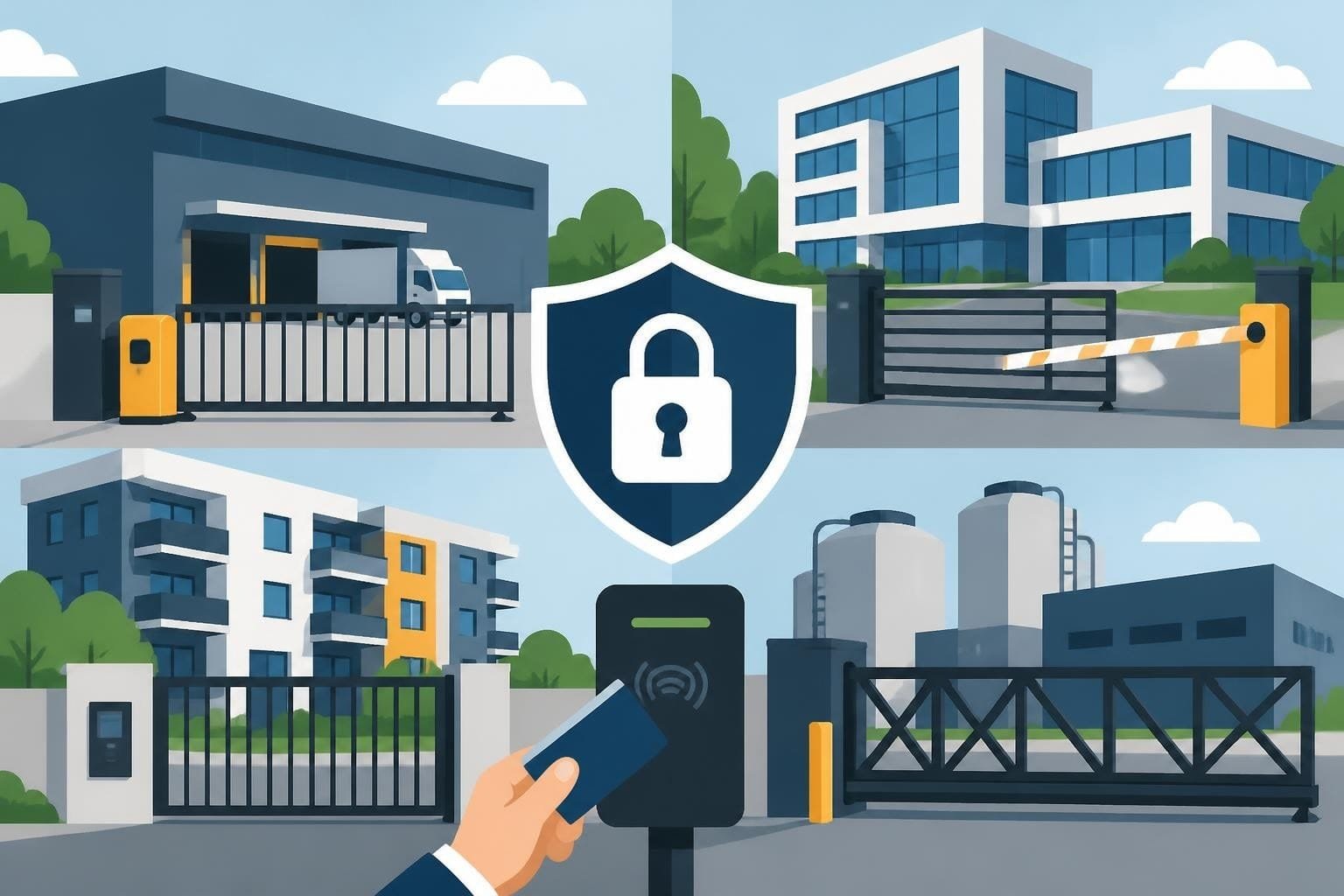

Commercial automatic gates serve as the first line of defense for businesses, protecting valuable assets while managing the flow of vehicles and pedestrians. These sophisticated access control systems have evolved significantly over the past decade, incorporating advanced technology that balances security requirements with operational efficiency. Whether you operate a manufacturing facility, manage a gated community, or oversee a corporate campus, understanding the capabilities and requirements of modern automated gate systems is essential for making informed decisions about property security.
Understanding Commercial Automatic Gate Systems
Commercial automatic gates differ substantially from residential models in both scale and complexity. These robust systems must withstand frequent daily use, often operating hundreds of times per day across various weather conditions and operational demands.
The primary distinction lies in duty cycle capacity. While residential gates typically operate 10-20 times daily, commercial installations may cycle 200-500 times or more. This intensive use demands industrial-grade motors, reinforced structural components, and comprehensive safety systems that meet stringent regulatory standards.
Key Components of Commercial Gate Systems
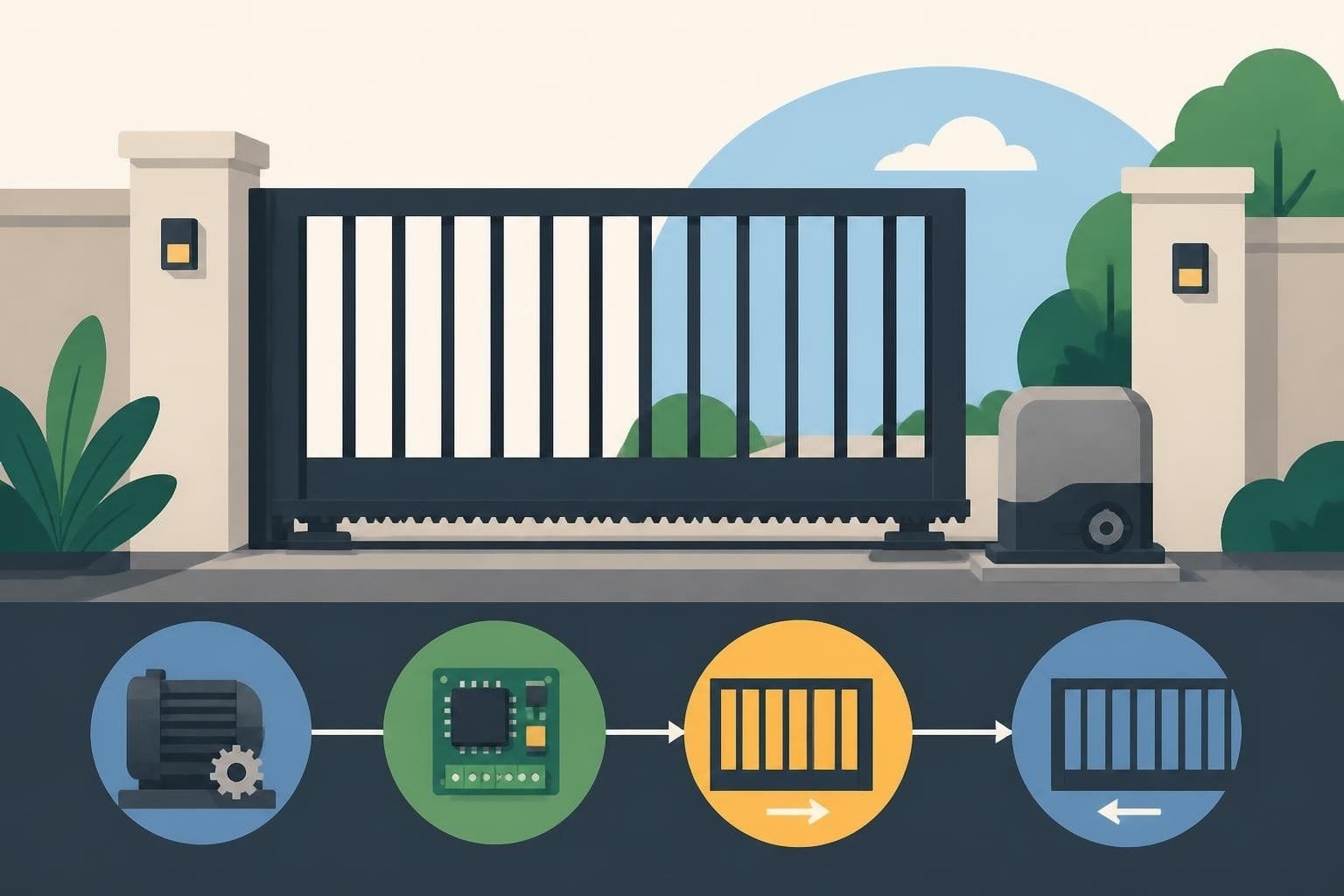
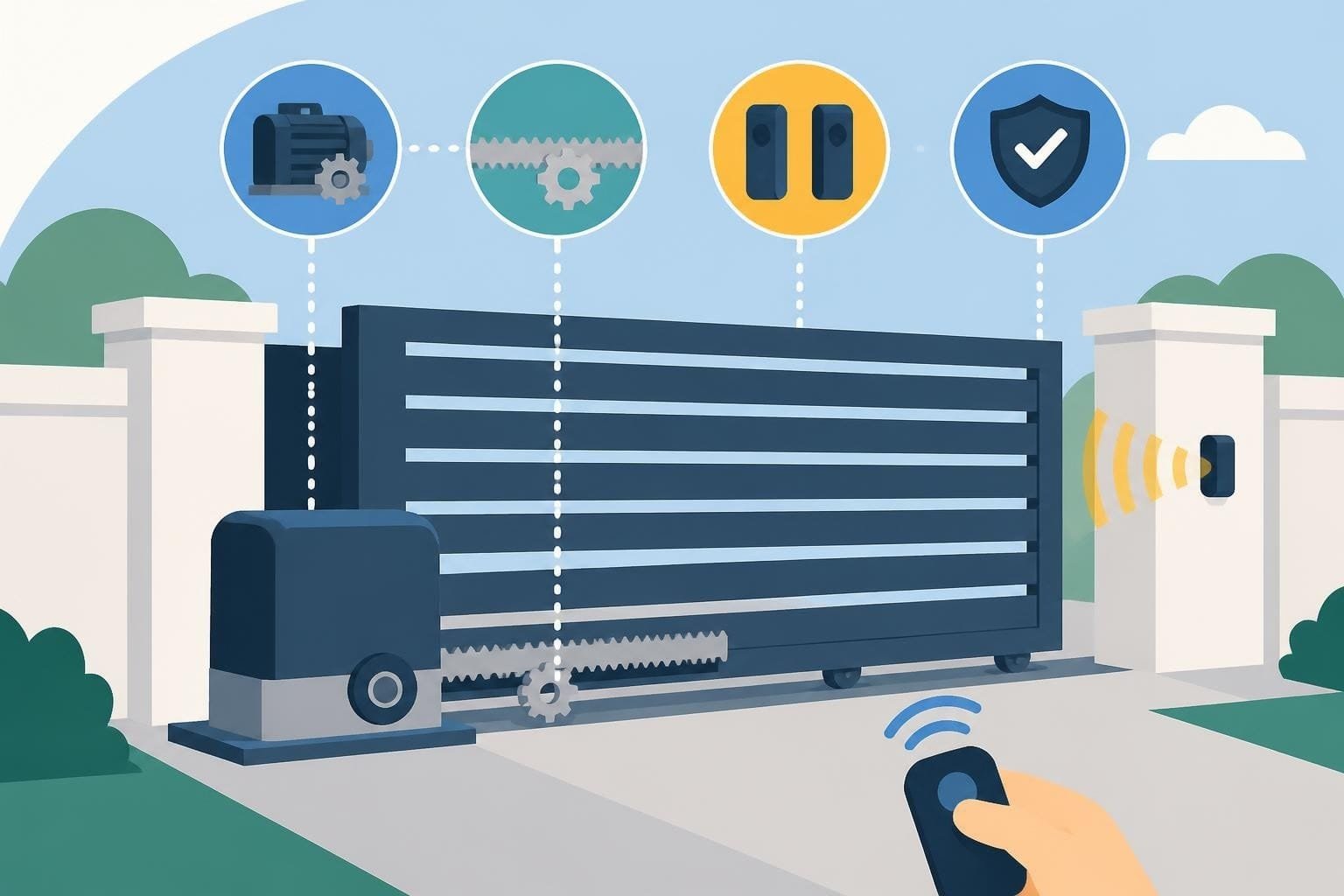
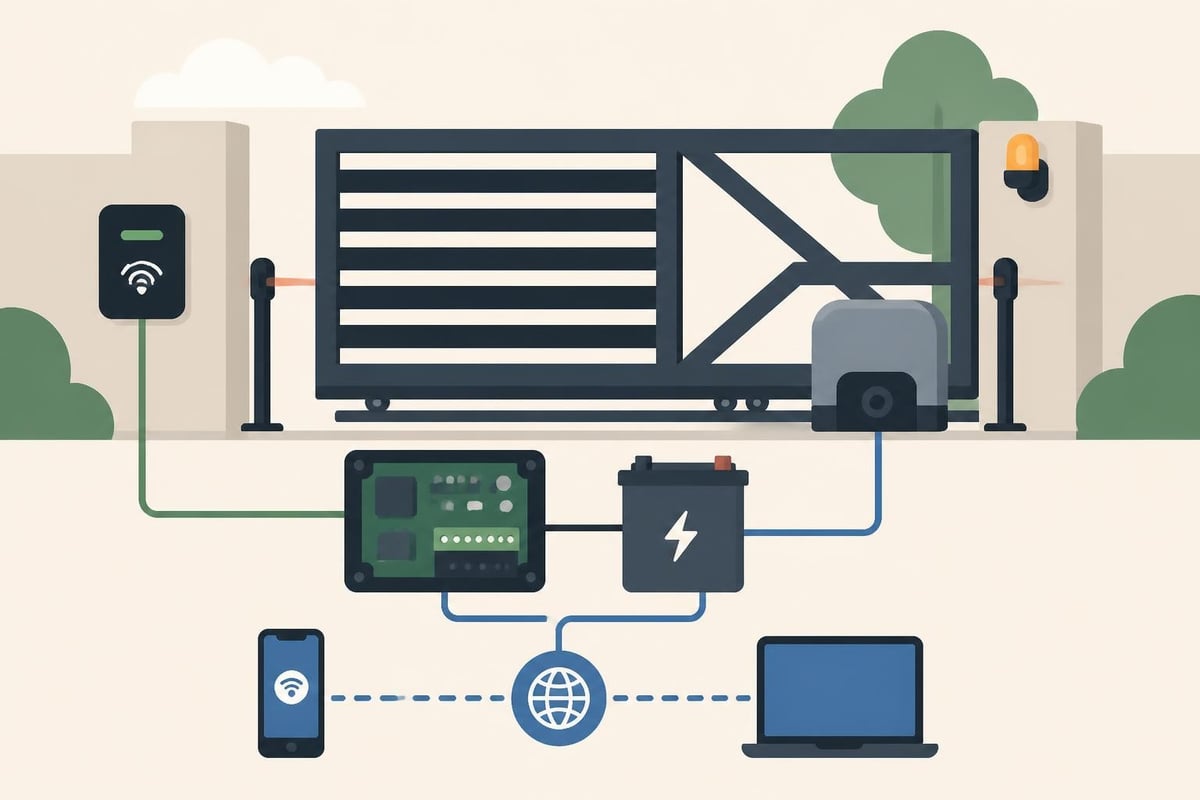
Every commercial automatic gate comprises several critical subsystems working in coordination:
- Gate operator and motor assembly rated for commercial duty cycles
- Control boards and logic controllers managing operational sequences
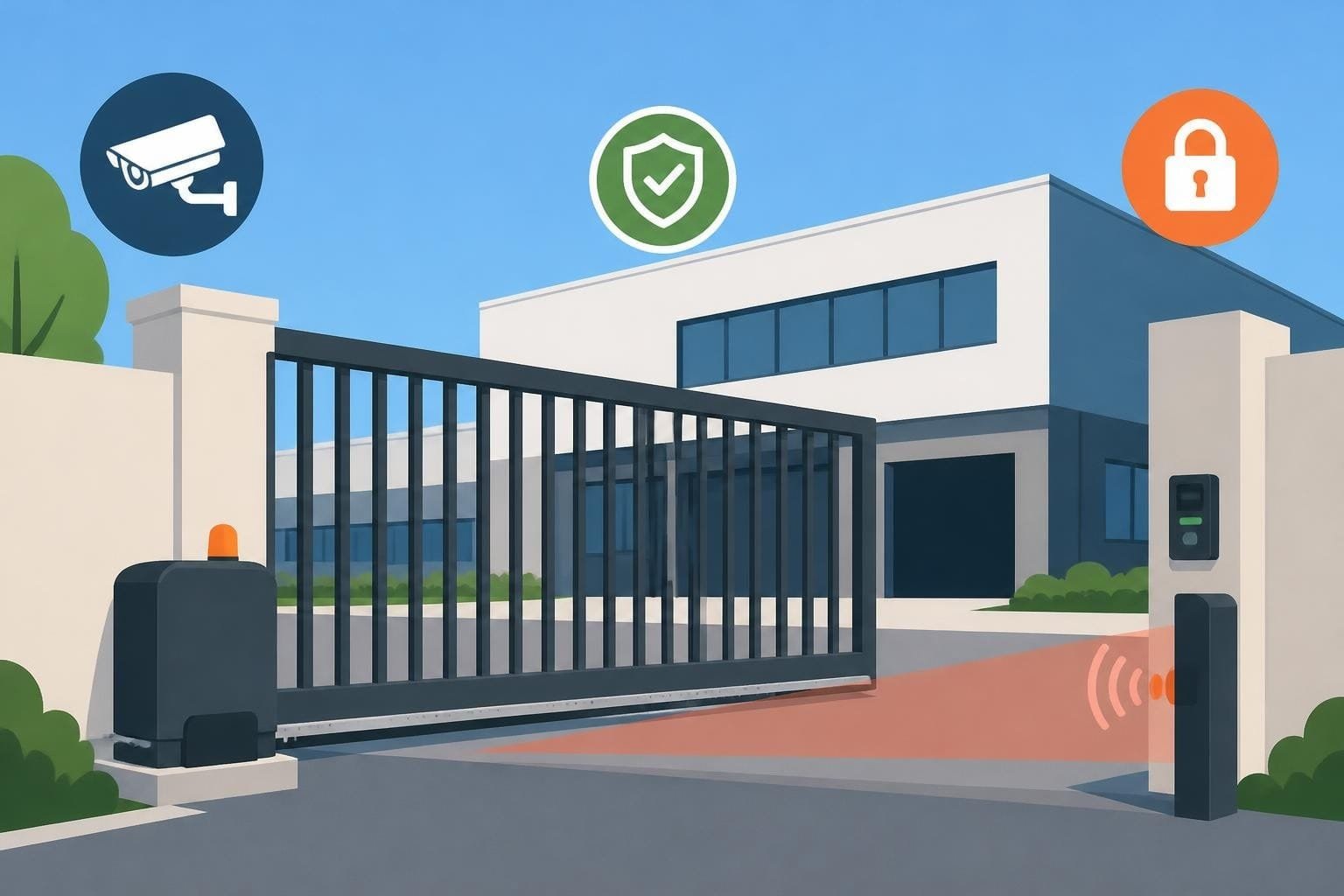
- Safety sensors and entrapment protection devices meeting UL 325 standards
- Access control integration including card readers, keypads, or biometric systems
- Backup power systems ensuring operation during electrical outages
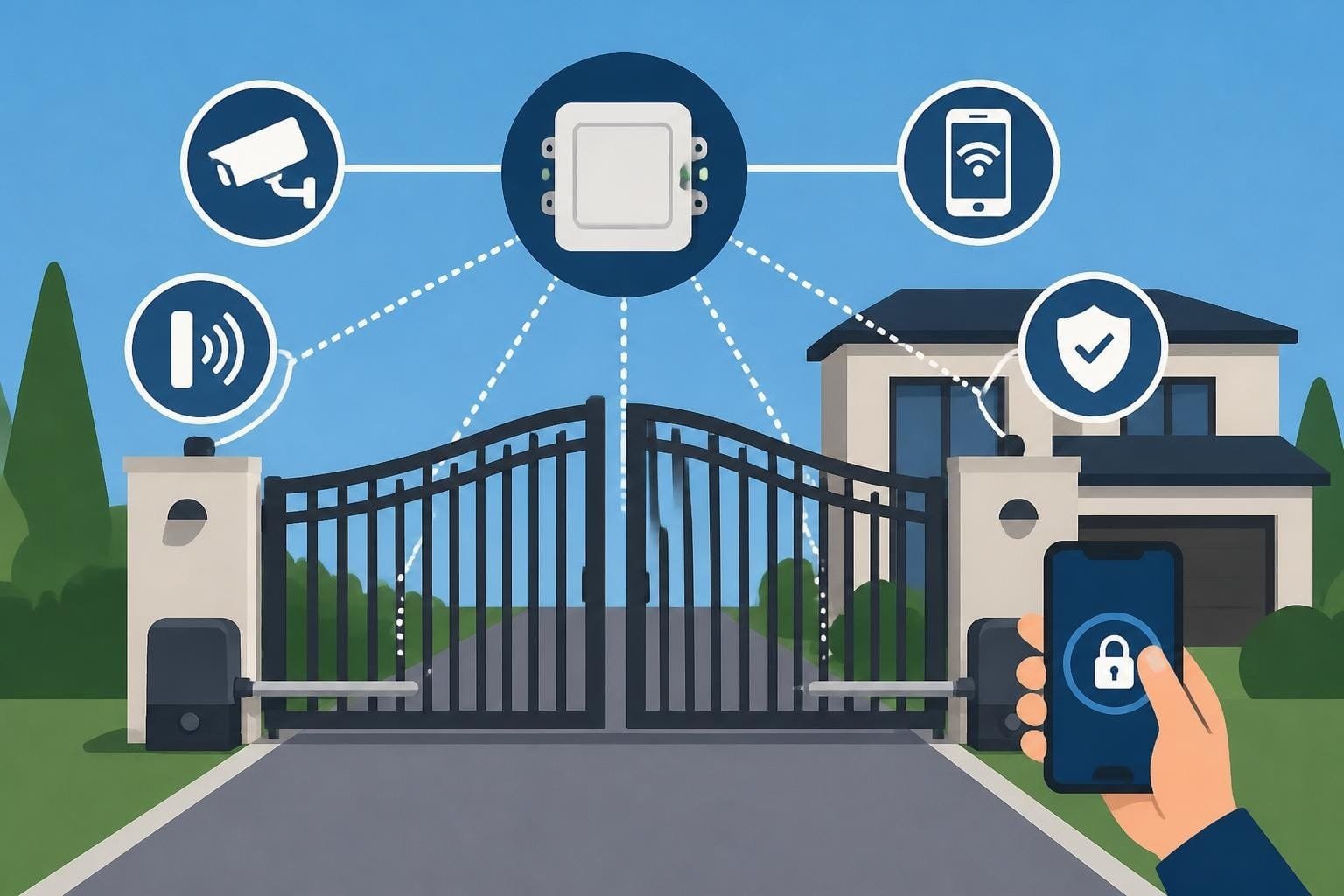
- Communication interfaces for remote monitoring and management
The control architecture typically incorporates programmable logic controllers (PLCs) that enable sophisticated operational rules, scheduling, and integration with building management systems. Modern commercial gates often connect to network infrastructure, making operational technology security practices increasingly relevant for protecting these access points from cyber threats.
Types of Commercial Automatic Gates
Selecting the appropriate gate configuration depends on property layout, traffic volume, security requirements, and aesthetic considerations. Each gate type offers distinct operational characteristics suited to specific applications.
Swing Gates
Swing gates operate similarly to conventional doors, pivoting on hinges mounted to sturdy posts or columns. These gates work well for properties with adequate clearance space perpendicular to the opening.
Single-swing configurations utilize one gate leaf spanning the entire opening width, while dual-swing designs employ two leaves meeting at the center. Dual-swing installations reduce the required swing radius and distribute weight across two operators, extending system longevity.
Swing gates excel in applications requiring wide openings up to 30 feet, though larger installations may require bifold designs or alternative solutions.
Slide Gates
Slide gates travel horizontally along a track parallel to the fence line, making them ideal when perpendicular clearance is limited. These systems represent the most common choice for commercial and industrial properties.
| Feature | Cantilever Slide Gates | Track-Mounted Slide Gates |
|---|---|---|
| Ground contact | None – gate suspends above ground | Wheels roll in ground-level track |
| Weather resistance | Excellent – no ground interference | Moderate – track requires maintenance |
| Initial cost | Higher due to complex engineering | Lower upfront investment |
| Long-term maintenance | Lower – fewer wear points | Higher – track cleaning, wheel replacement |
| Recommended for | High-traffic, all-weather applications | Budget-conscious, moderate-use sites |
Cantilever designs eliminate ground contact entirely, suspending the gate from an overhead track or balanced beam system. This configuration prevents snow, ice, and debris accumulation from interfering with operation, though it requires more sophisticated engineering and higher initial investment.
Vertical Lift and Barrier Gates
Vertical pivot gates and rising arm barriers suit applications where horizontal space is severely constrained. These systems find common use in parking structures, toll facilities, and high-security checkpoints.
Barrier arms cycle quickly, making them ideal for high-throughput environments, though they provide less physical security than solid panel gates. Full vertical lift gates offer enhanced security while maintaining the compact footprint advantage.
Safety Standards and Regulatory Compliance
Commercial automatic gates must comply with comprehensive safety regulations designed to prevent entrapment injuries and ensure reliable operation. The UL 325 standard for gate operators establishes fundamental safety requirements that all commercial installations must satisfy.
Entrapment Protection Requirements
UL 325 classifies gate operators into several classes based on application and required safety features:
- Class I: Vehicular gates in residential applications
- Class II: Vehicular gates in commercial/industrial settings
- Class III: Pedestrian gates in any location
- Class IV: Vehicular and pedestrian gates in restricted access areas
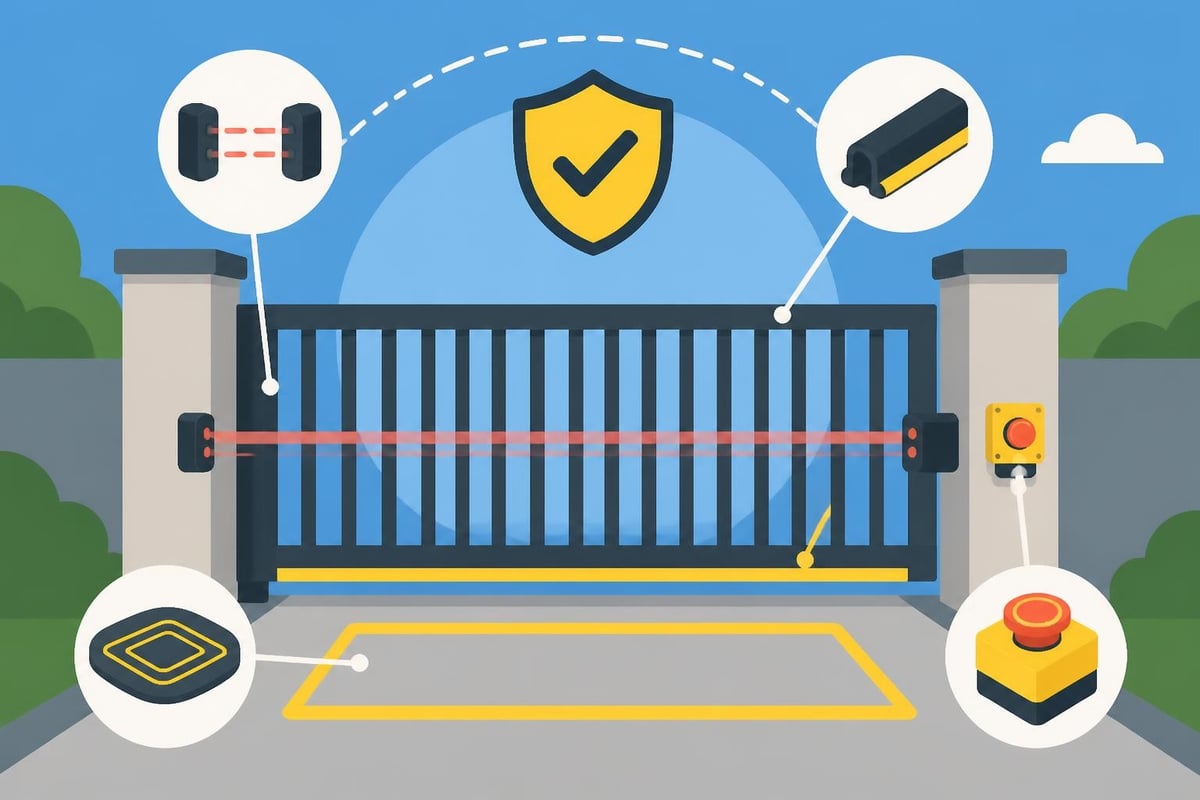
Class II commercial installations require redundant entrapment protection through multiple safety devices. Primary sensors detect obstructions in the gate's path, while secondary edge sensors or monitored force-sensing systems provide backup protection.
Modern commercial automatic gates incorporate advanced sensor arrays including:
Photoelectric eyes creating invisible beams across the opening that reverse gate operation when interrupted. Multiple beam heights detect vehicles, pedestrians, and smaller objects.
Safety edges mounted to the gate's leading edge contain pressure-sensitive switches that trigger immediate reversal upon contact. These rubberized or inflatable edges must meet specific compression and response-time requirements.
Loop detectors embedded in pavement sense vehicle presence through electromagnetic induction, preventing gates from closing on vehicles within the opening.
Accessibility Compliance
The Americans with Disabilities Act guidelines for entrances and gates establish specific requirements when commercial automatic gates serve as building entrances or control pedestrian access. Gates must maintain minimum clear width, appropriate opening force, and adequate maneuvering clearance.
Automatic operation timing must allow sufficient passage time for individuals with mobility limitations. Many jurisdictions require minimum hold-open periods of 5-10 seconds after activation before gates begin closing.
Access Control Integration and Technology
Modern commercial automatic gates function as integrated components within comprehensive access management systems rather than standalone security devices. This integration enables sophisticated control over who enters facilities and when access is permitted.
Credential-Based Access Systems
Multiple authentication technologies work with commercial gate operators to verify authorized users:
| Technology | Pros | Cons | Best Applications |
|---|---|---|---|
| Proximity cards/fobs | Affordable, easy to issue/revoke | Cards can be shared or lost | General employee/resident access |
| Keypads/PIN codes | No physical credential required | Codes may be shared, observed | Secondary or backup access |
| License plate recognition | Hands-free, convenient | Requires clear visibility, database maintenance | High-traffic facilities, parking |
| Biometric readers | Highest security, non-transferable | Higher cost, slower throughput | Restricted areas, high-security zones |
| Mobile credentials | Flexible, remotely manageable | Requires smartphones, app maintenance | Modern offices, tech-forward facilities |
Advanced systems combine multiple factors, requiring both a credential and PIN code for enhanced security. This multi-factor approach significantly reduces unauthorized access risk while maintaining reasonable convenience.
Network Connectivity and Remote Management
Connected commercial automatic gates enable facility managers to monitor operations, adjust settings, and respond to issues from centralized control rooms or mobile devices. Cloud-based access platforms provide real-time visibility into gate activity, including access attempts, successful entries, and system alerts.
Network-connected gate systems introduce cybersecurity considerations. Implementing industrial control system security practices helps protect gate operators and access control devices from unauthorized network access. Key protective measures include network segmentation, strong authentication requirements, regular firmware updates, and monitoring of unusual access patterns.
Critical Applications and Specialized Requirements
Certain commercial environments impose unique demands on automatic gate systems beyond standard security and access control functions.
Airport and Transportation Security
Commercial automatic gates protecting airport perimeters, air operations areas (AOA), and secured facilities must meet heightened security standards. The Federal Aviation Administration’s airport design guidelines specify minimum fence heights, gate construction standards, and access control requirements for certificated airports.
Transportation Security Administration guidance establishes additional perimeter security controls for general aviation facilities, including recommendations for electronically controlled gates, intrusion detection integration, and access logging capabilities.
Airport perimeter gates typically incorporate vehicle anti-ram features, including hydraulic bollards or wedge barriers that prevent unauthorized vehicle penetration even if gates are breached.
Industrial and Critical Infrastructure
Manufacturing facilities, utility installations, and critical infrastructure sites require commercial automatic gates engineered for both security and operational efficiency. These environments often demand:
- High-cycle operators capable of 1,000+ daily operations
- Integration with industrial control systems and SCADA networks
- Specialized materials resistant to corrosive environments
- Explosion-proof components for hazardous locations
- Emergency quick-opening systems for evacuation scenarios
Proper electric gate repair services become critical in these demanding applications, where gate failures can halt operations or compromise security. Professional technicians understand the complex interactions between gate operators, industrial networks, and specialized safety systems.
Maintenance and Lifecycle Management
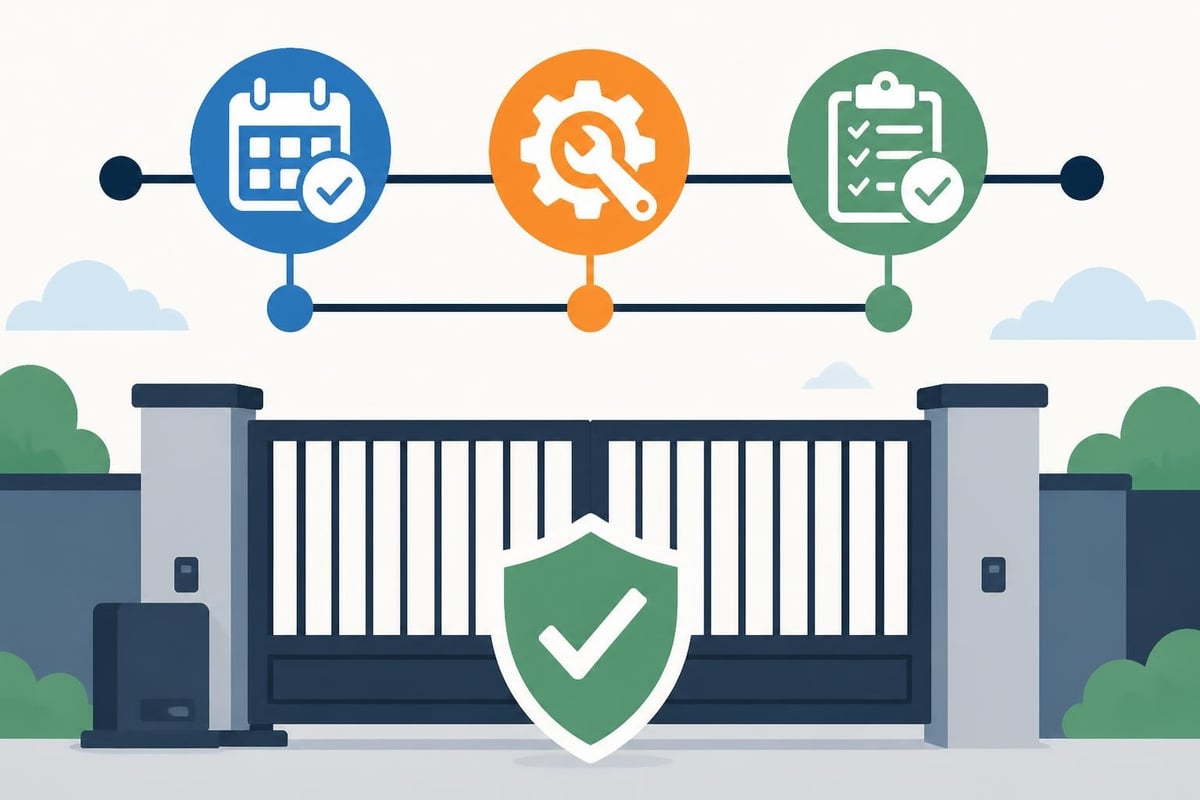
Commercial automatic gates represent significant capital investments requiring proactive maintenance programs to maximize operational life and minimize unexpected failures. Well-maintained systems routinely provide 15-20 years of reliable service, while neglected installations may require major repairs or replacement within 5-7 years.
Preventive Maintenance Protocols
Comprehensive maintenance programs address mechanical, electrical, and safety system components on scheduled intervals:
Monthly inspections verify proper operation of safety devices, test emergency stop functions, and check for unusual noise or vibration patterns indicating developing problems.
Quarterly service includes lubrication of pivot points and rollers, inspection of drive chains or belts, verification of proper gate alignment, and testing of backup power systems.
Annual comprehensive evaluation encompasses detailed examination of structural components, verification of torque settings, calibration of safety sensors, and review of access control integration.
Professional maintenance providers document service history, track component wear patterns, and identify optimization opportunities. This historical data enables predictive maintenance approaches that address issues before failures occur.
Common Issues and Diagnostic Approaches
Understanding typical failure modes helps facility managers recognize problems early:
- Intermittent operation often indicates loose electrical connections, worn limit switches, or control board issues
- Slow operation or struggling during movement suggests motor wear, insufficient lubrication, or track obstruction
- Safety sensor malfunctions may result from misalignment, contamination, or environmental factors
- Premature wear frequently indicates improper installation, inadequate operator sizing, or structural issues
Modern diagnostic tools enable technicians to monitor motor current draw, cycle times, and sensor response, identifying developing issues through data analysis rather than waiting for complete failures.
Selecting and Specifying Commercial Gate Systems
Proper system specification ensures commercial automatic gates meet operational requirements while avoiding over-engineering that increases costs unnecessarily.
Capacity and Duty Cycle Determination
Gate operator sizing begins with accurate traffic volume projections. Count expected daily cycles during peak periods, then add 30-40% margin for growth and occasional heavy-use periods. Commercial operators carry duty cycle ratings expressed as cycles per hour at specific temperatures.
Light commercial duty: 50-100 cycles per hour, suitable for small office complexes or restricted-access facilities
Medium commercial duty: 100-300 cycles per hour, appropriate for standard commercial properties and moderate-traffic industrial sites
Heavy commercial duty: 300-600+ cycles per hour, required for distribution centers, parking structures, and high-throughput facilities
Wind load calculations prove critical in gate specification. Solid panel gates act as sails, imposing substantial lateral forces on operators during high winds. Engineers calculate effective surface area, apply local wind speed data, and specify operators with adequate holding torque to resist opening during wind events.
Environmental Considerations
Operating environment directly impacts component selection and system longevity:
| Environmental Factor | Impact | Required Adaptations |
|---|---|---|
| Coastal/marine | Accelerated corrosion | Stainless steel components, specialized coatings |
| Extreme cold | Reduced battery capacity, frozen mechanisms | Heated enclosures, cold-weather lubricants |
| High heat/sun exposure | Premature component degradation | UV-resistant materials, ventilated enclosures |
| Heavy precipitation | Water intrusion risks | Enhanced sealing, elevated control boxes |
| Dusty/industrial | Contamination of moving parts | Sealed operators, frequent cleaning schedules |
Specifying appropriate environmental protections during initial installation proves far more cost-effective than retrofitting or replacing failed components.
Technology Trends Shaping Commercial Gate Systems
The commercial automatic gate industry continues evolving as new technologies emerge and user expectations change. Several trends are reshaping how organizations approach access control and perimeter security.
Artificial Intelligence and Predictive Analytics
AI-powered gate systems analyze operational data to predict maintenance needs, optimize access patterns, and identify anomalous behavior. Machine learning algorithms detect subtle changes in motor performance, cycle times, or sensor response that precede failures, enabling truly predictive maintenance.
Advanced systems correlate gate activity with other building systems, automatically adjusting opening sequences based on expected traffic patterns, weather forecasts, or special events.
Cloud-Based Management Platforms
Modern access control increasingly migrates from on-premise servers to cloud platforms offering greater flexibility and reduced infrastructure requirements. Cloud-based systems enable:
- Instant credential updates across multiple locations
- Centralized monitoring of distributed gate installations
- Automatic software updates and feature additions
- Mobile-first management interfaces
- Enhanced analytics and reporting capabilities
Organizations with multiple facilities particularly benefit from unified platforms that provide consistent access policies and consolidated security oversight.
Sustainable and Energy-Efficient Designs
Environmental responsibility drives adoption of solar-powered gate operators, particularly for remote locations where electrical service proves costly or impractical. Modern solar systems incorporate high-efficiency panels, advanced battery technology, and intelligent power management that maintains reliable operation even during extended cloudy periods.
LED lighting retrofits, efficient motor designs, and optimized control algorithms reduce ongoing operational costs while supporting corporate sustainability initiatives.
Commercial automatic gates represent critical infrastructure investments that require careful specification, proper installation, and ongoing professional maintenance to deliver reliable performance over their operational lifetime. Understanding the available technologies, regulatory requirements, and maintenance best practices enables informed decisions that balance security needs, operational efficiency, and budget considerations. When your commercial gate system requires expert service or evaluation, Gates & Garage Door Express Inc. provides same-day emergency repairs and comprehensive maintenance programs throughout Los Angeles, backed by our family-owned commitment to quality workmanship and customer satisfaction.