
Commercial electric gates are motorized entry barriers, typically sliding, swing or barrier-arm designs, built for heavier traffic, longer duty cycles and stricter safety rules than residential gates. For Los Angeles businesses, the right choice depends on the width of the opening, daily vehicle volume, access control needs and compliance with UL 325 and accessibility standards. This guide covers the main gate types, the safety requirements that apply, how to choose an operator, and how to keep a gate reliable once it is installed.
What Makes a Commercial Electric Gate Different
A commercial gate is built for volume, durability and liability, while a residential gate is built mainly for convenience.
A residential driveway gate might open a dozen times a day. A gate at an apartment complex, warehouse, medical office or industrial yard can cycle hundreds of times daily. That difference drives nearly every design decision: motor class, gearing, hinges or rollers, and the quality of the safety devices.
Several features set commercial systems apart:
- Heavier duty operators rated for continuous or high-frequency use
- Wider openings, often 20 feet or more for sliding gates serving truck traffic
- Integrated access control such as keypads, card readers, intercoms and vehicle detection
- Multiple safety layers, including photo eyes, edge sensors and reversing logic
- Backup options for power loss, since a stuck gate can halt deliveries or block emergency access
Commercial properties also carry exposure that homeowners do not. A gate that injures a pedestrian or traps a vehicle creates liability for the owner or manager, which is why the safety standards covered below matter so much.
Types of Commercial Electric Gates
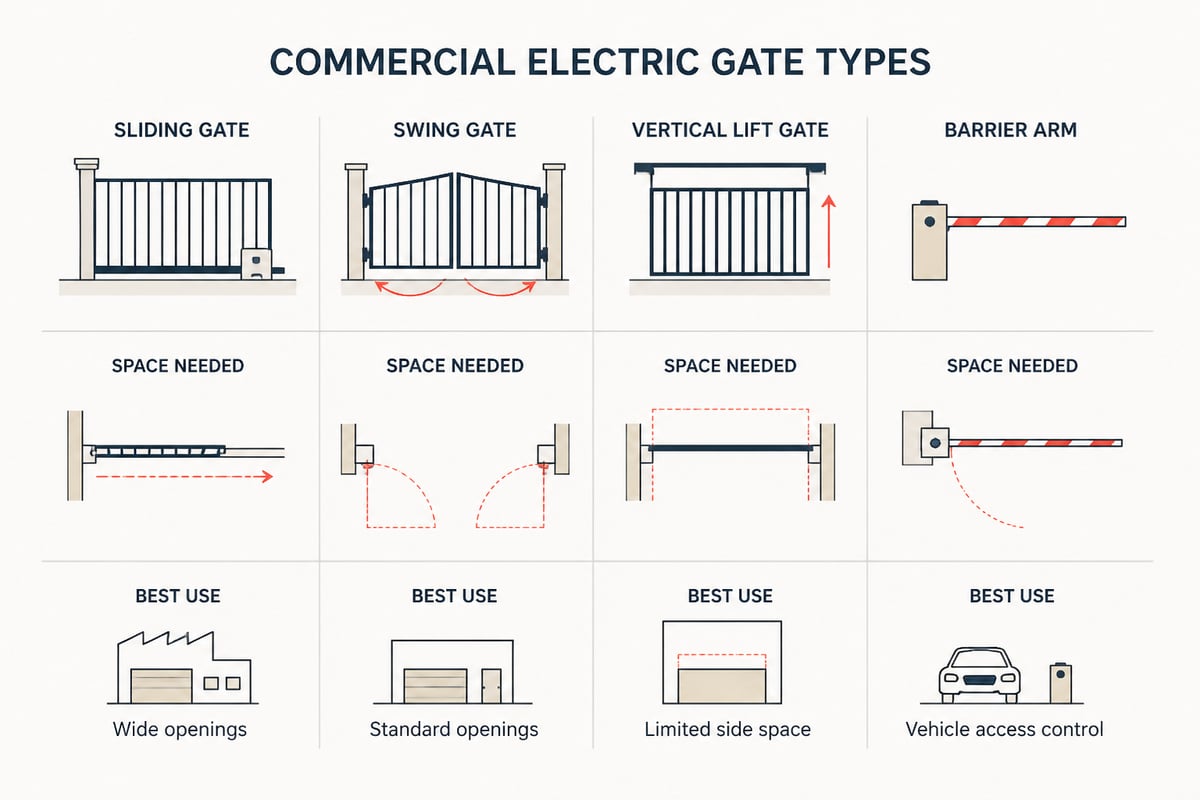
The main types are sliding, swing, vertical lift, vertical pivot and barrier arm gates, and the best fit depends on available space, traffic and security level.
| Gate type | Space needed | Best use | Main consideration |
|---|---|---|---|
| Sliding | Clear run alongside the opening | Industrial yards, lots with steep or tight entries | Needs a straight, level track path |
| Swing | Clearance for the leaf to open | Office parks, apartment entries with flat approach | Slopes and obstructions limit the arc |
| Vertical lift or pivot | Overhead or side clearance | Tight sites with no room to slide or swing | Specialized hardware and engineering |
| Barrier arm | Minimal | Parking facilities and ticketed entry | Speed control, not high security |
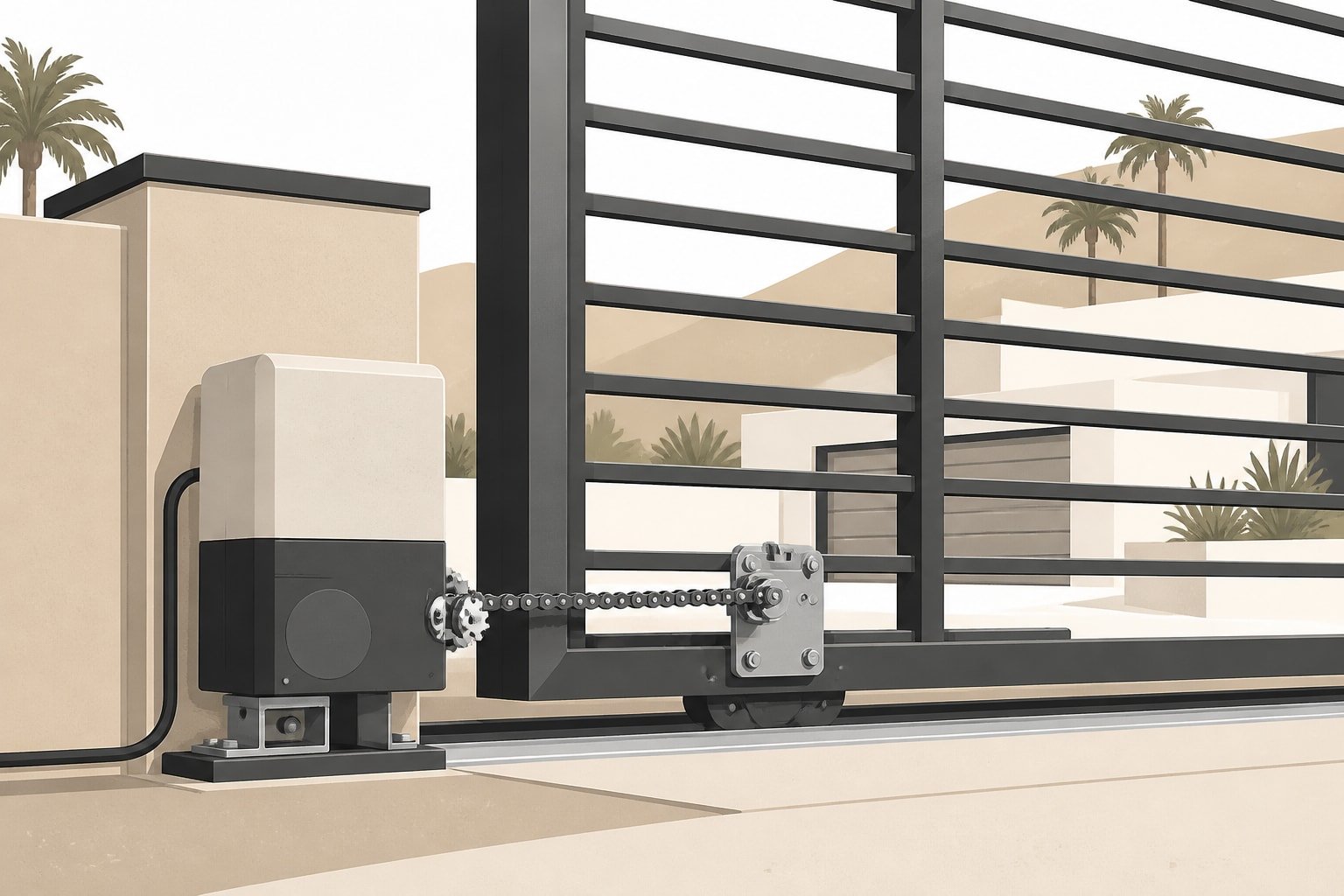
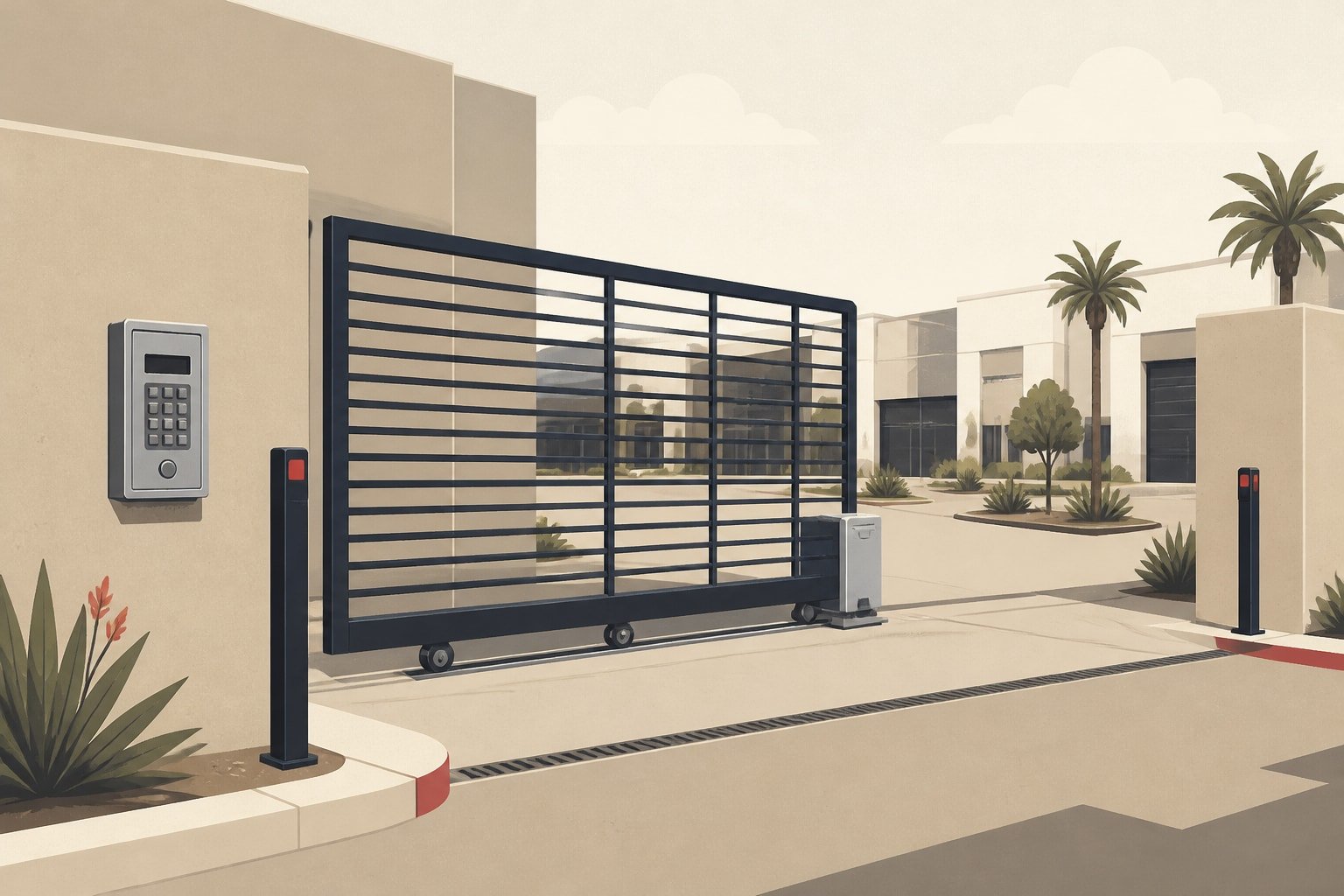
Sliding gates are the most common choice for busy Los Angeles commercial sites because they operate in a tight footprint and handle wide openings well. They need a stable track or cantilever frame and clear space for the gate to travel. Properties weighing this option can review electric sliding gates to see how the hardware is typically configured.
Swing gates suit properties with level approaches and room for the leaves to open. They look traditional and pair well with decorative fencing, but hillside lots and sidewalks close to the property line can make the swing arc impractical. An electric swing gate opener setup requires attention to leaf weight, post strength and wind loading.
Vertical gates and barrier arms fill narrower roles. Barrier arms manage flow into parking structures but offer little physical security on their own. Vertical lift designs help when neither sliding nor swinging fits, though they cost more to engineer and install.
For a broader look at configurations designed for business properties, the page on a commercial security gate outlines the common approaches.
Safety and Code Requirements You Need to Know
Commercial gate operators must meet UL 325, and gates on accessible routes must also meet ADA clear-opening requirements.
UL 325 is the core safety standard for gate operators in the United States. According to UL, the 2024 International Building Code, International Fire Code and other listed codes require gate operators to be UL 325-listed when installed. The standard covers electric gate operators and complete gate assemblies rated 600 V or less for ordinary locations. UL 325 has been revised to clarify requirements and definitions involving pedestrian gates, entrapment zones and commercial door operators, so property managers with older systems should confirm their equipment and protective devices still match current expectations.
In practice, UL 325 compliance means a gate has appropriate entrapment protection, such as photo eyes and contact edge sensors, and that the operator is classified for the intended use. UL’s gate and door safety resources explain how entrapment detection and protection work, which is useful background for managers who oversee vendors.
Accessibility is the second layer. The U.S. Access Board states that accessible-route gates must provide at least 32 inches of clear opening in both power-on and power-off modes. The same body notes that a doorway opening deeper than 24 inches must provide at least 36 inches of clear width to remain accessible. Pedestrian gates beside a vehicle entry, and gates serving tenants or visitors on foot, are the usual places where these rules apply. The Access Board also publishes guidance on entrances, doors and gates that clarifies how automated gates are treated.
Two points deserve attention on any Los Angeles property:
- Fire access. Emergency responders need a way through. Many sites use a Knox box, siren sensor or other approved override, and the local fire authority determines what is acceptable.
- Manual release. A gate must be operable during a power failure, which also supports the accessibility requirement above.
Choosing the Right Operator and Access Control
The right operator is matched to gate weight, length, cycle frequency and power conditions, then paired with an access method that fits who uses the entry.
Start with the numbers. Gate weight and length determine motor size, while daily cycles determine duty rating. An operator that is undersized for the load will overheat, wear gears early and fail when you need it most.
Consider these selection factors in order:
- Gate weight and span. Include any added panels, privacy slats or decorative metalwork, since they add load.
- Duty cycle. Count expected openings per day, including peak periods such as shift changes or deliveries.
- Power source. Standard AC power suits most sites. Solar assistance can help at remote entries, though shaded Los Angeles lots may limit output.
- Battery backup. Useful for sites where a power outage would block operations or emergency access.
- Brand and parts availability. Widely used platforms make future service faster. Brands such as LiftMaster and Mighty Mule are common, and the right fit depends on the load and duty level.
Access control deserves equal weight. Typical options include:
- Keypads and card readers for tenants and staff
- Intercoms and video entry for visitor screening
- Remote transmitters and mobile apps for convenience
- Loop detectors that open the gate for exiting vehicles and keep it from closing on a car
- Scheduled open periods for business hours
Planning these together avoids a common mismatch, such as a high-security gate paired with a weak entry method that everyone shares a single code for. The page on gate access control systems describes how entry systems connect to the operator.
Installation Considerations for Los Angeles Sites
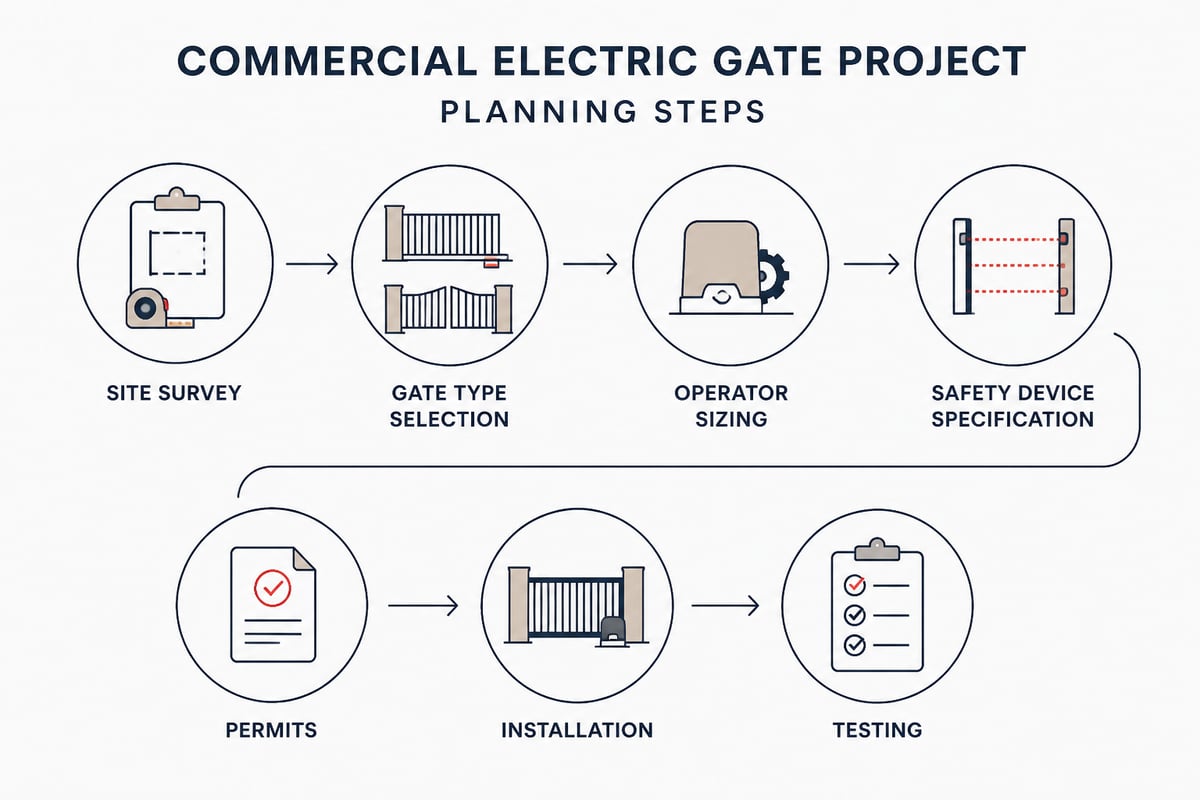
Successful installation in Los Angeles depends on site conditions, permits and utility planning more than on the gate itself.
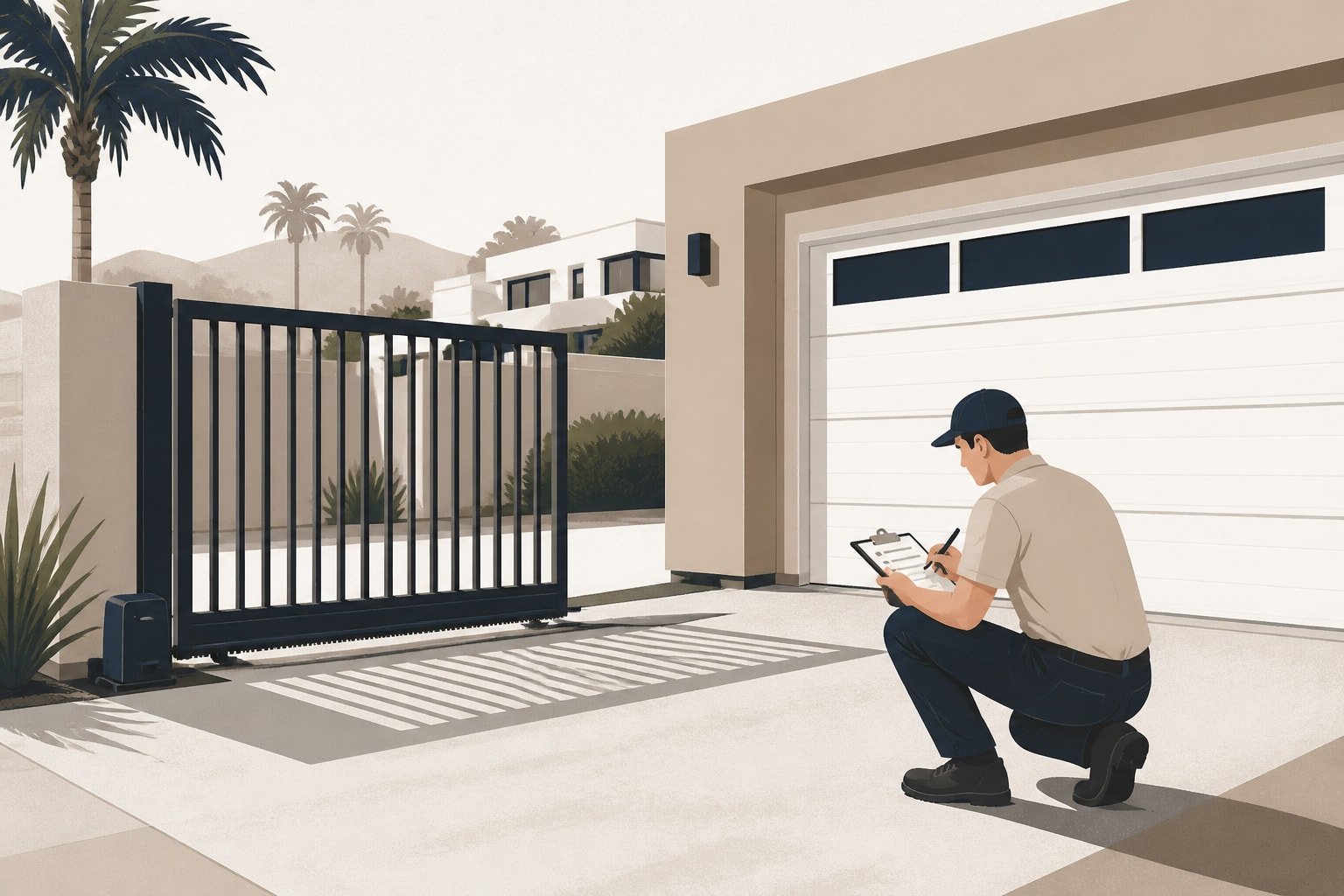
Slope is a frequent challenge. Hillside properties in areas such as the Hollywood Hills or Silver Lake can make sliding gates difficult and swing arcs unpredictable. A site survey should measure grade, post spacing, ground stability and the position of buried utilities before any hardware is chosen.
Other items to settle before work begins:
- Permits and approvals. Requirements vary by city within the county, and a property manager should confirm whether building, fire or HOA approval is needed.
- Electrical supply. Operators and access control need dedicated power and conduit runs, and long distances from the panel may call for larger wire.
- Foundation and posts. Heavy gates need properly sized footings, since poor concrete work causes sagging and misalignment years later.
- Vehicle stacking space. If the gate is set too close to the street, vehicles waiting for entry can block traffic or a sidewalk.
For businesses planning a new system or an upgrade, electric gate installation is a good starting point for what the process involves. Whether to motorize an existing manual gate is a related question, addressed in this overview of adding a motor to an electric gate.
Maintenance That Prevents Downtime
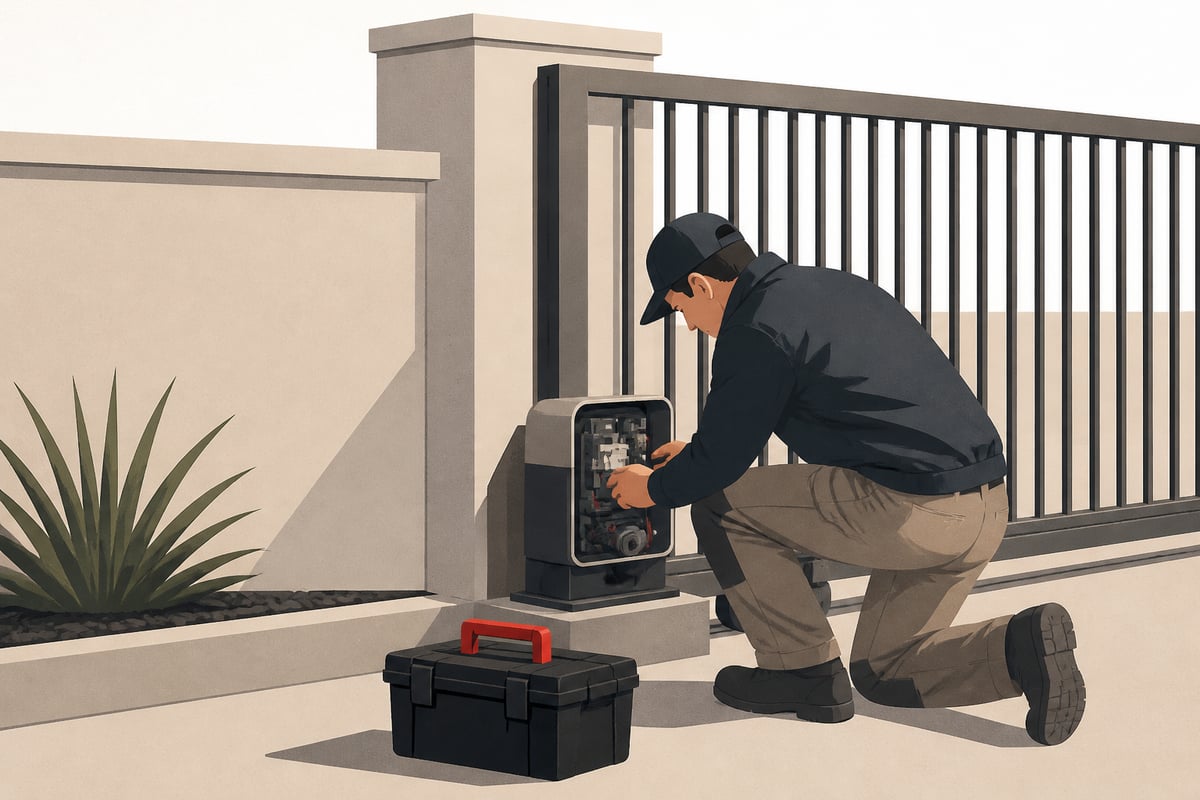
Scheduled maintenance is the most effective way to keep commercial electric gates reliable, since most failures trace back to worn parts, misalignment or neglected safety devices.
A gate cycling hundreds of times a day wears rollers, chains, hinges and gears faster than most owners expect. Small problems compound. A slightly misaligned track strains the motor, the strained motor trips the safety reversal, and the gate begins to stall or reverse without warning.
A practical maintenance routine covers:
- Visual inspection of tracks, rollers, hinges, chains and posts for wear, rust or debris
- Lubrication of moving parts according to the manufacturer's guidance
- Safety device testing, including photo eyes and edge sensors, to confirm the gate reverses on obstruction
- Limit and force settings checked and adjusted
- Battery and power checks, including backup batteries, which lose capacity over time
- Access control review, such as removing old codes, cards and remotes for former tenants or staff
Business owners can handle a few quick checks themselves before calling for service, such as clearing debris from the track and confirming the gate is not in manual release. Anything involving the operator, wiring or safety sensors belongs with a licensed technician.
One planning point applies especially to multi-tenant sites: keep a written log of inspections and repairs. If an incident ever occurs, a documented service history supports the owner's position that the gate was maintained to standard.
Common Problems and What They Signal
Most commercial gate failures fall into a handful of patterns, and the symptom usually points to the cause.
- Gate will not open or close. Often a power issue, a tripped breaker, a blocked safety sensor or a gate left in manual release.
- Gate reverses or stops partway. Typically a misaligned photo eye, an obstruction on the track or force settings that need adjustment.
- Grinding or loud noises. Worn rollers, dry hinges or damaged gears.
- Remote or keypad stops working. Dead batteries, a failed receiver or a programming problem.
- Gate drifts off its track. Worn wheels, a bent track or settling posts.
- Slow or weak movement. A failing motor, worn capacitor or low battery voltage.
Repeated nuisance trips deserve a professional look rather than repeated resets. Forcing a gate to run past a safety fault is how entrapment incidents happen. Facilities that depend on their gate for security should also keep a manual override method known to staff so operations can continue during a repair.
When to Repair and When to Replace
Repair makes sense when the structure is sound and the failing parts are inexpensive relative to the system, while replacement is warranted when the operator is obsolete, repeatedly failing or no longer meets safety requirements.
Consider replacement when:
- The operator is not UL 325-listed or lacks current protective devices
- Parts for the model are no longer available
- Repair visits are becoming frequent and costs approach the price of new equipment
- The site's traffic has grown past the operator's duty rating
- The gate structure itself is bent, cracked or structurally compromised
Consider repair when the issue is isolated, such as a worn roller set, a failed sensor, a burned-out board or a stripped gear. A technician who works across brands can often source compatible components rather than forcing a full swap.
Working With a Local Gate Service in Los Angeles County
A good service partner offers fast response, brand-agnostic repair, clear licensing and a service history you can verify.
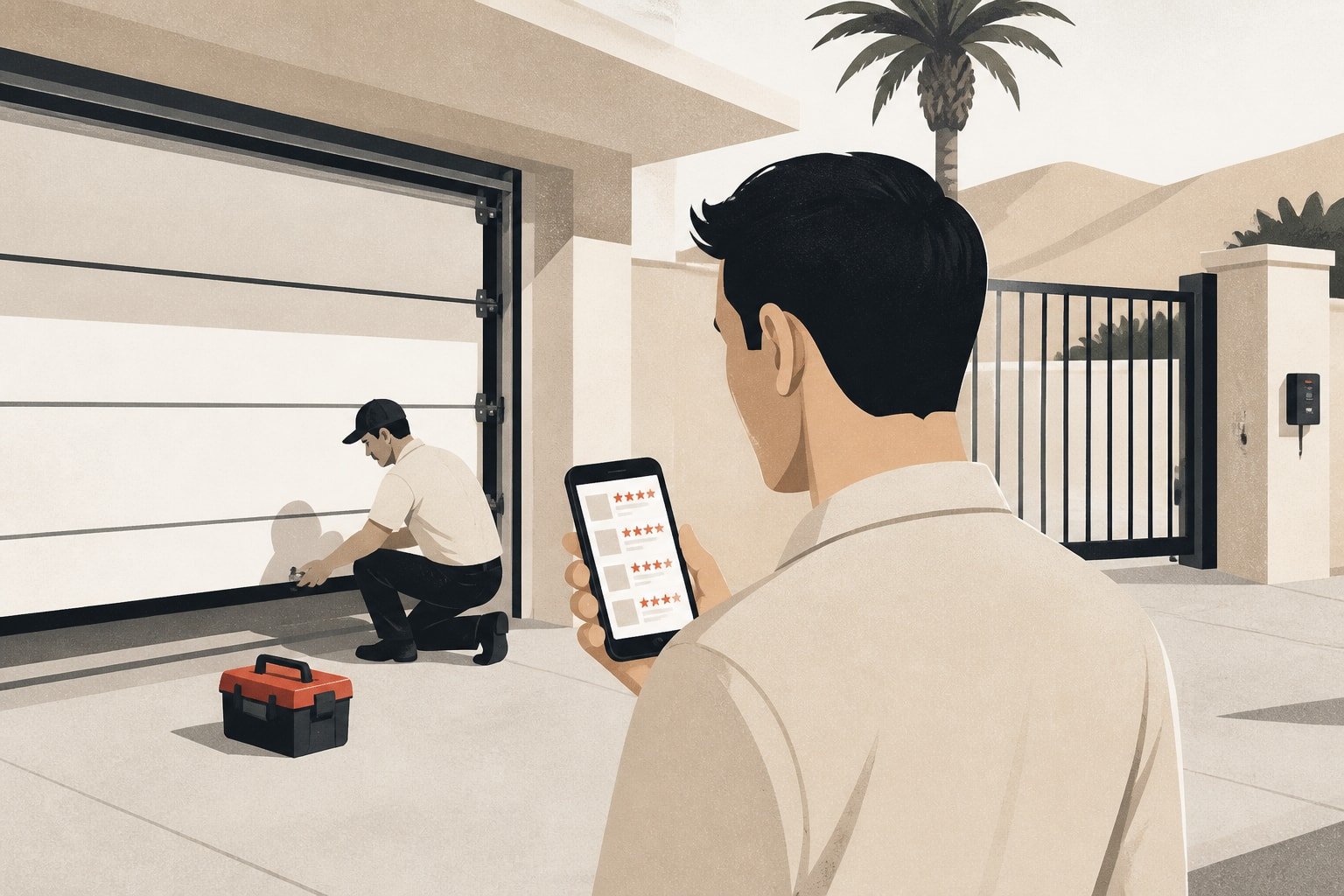
When a gate fails at a business, speed matters. A stuck-open gate leaves the property exposed, and a stuck-closed gate stops deliveries, tenants and staff. Gates & Garage Door Express Inc. is a family-owned company with 21 years in business, and it offers same-day, on-site service for gate repairs. Emergency services are available, and the technicians work on gate brands. The company also reports more than 500 reviews on major accredited sites. Senior and veteran discounts are available.
For a malfunctioning gate at a commercial property, its electric gate repair service is the most direct place to start, covering diagnosis and repair of operators, tracks, sensors and controls.
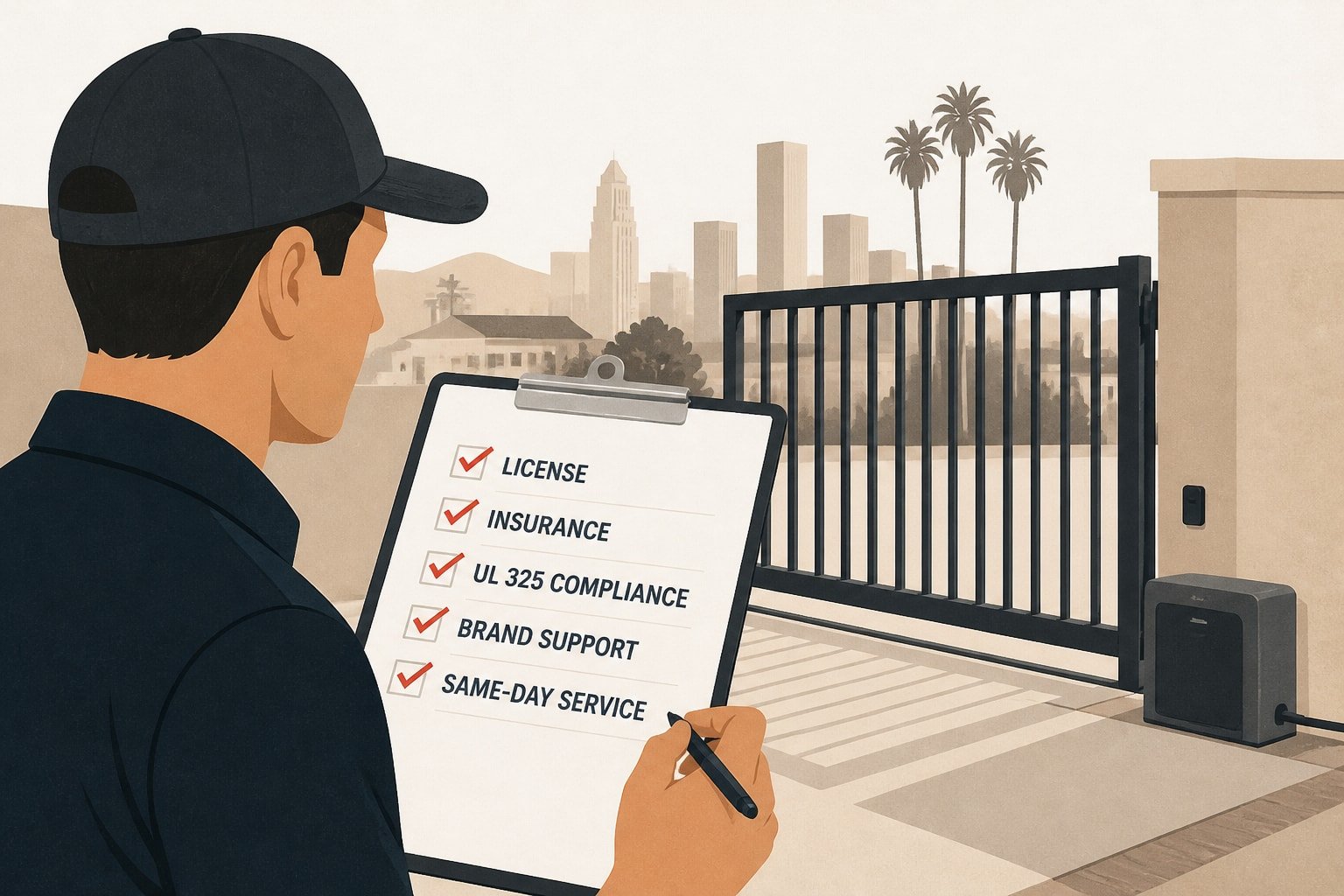
When vetting any provider, ask about:
- License and insurance, and verify the license number with the state board
- Familiarity with your operator brand and access control hardware
- UL 325 compliance practices for protective devices
- Emergency availability, including nights and weekends
- Written estimates and warranty terms before work starts
For multi-site owners, consistency matters. Using one provider across properties simplifies records, parts and scheduling.
Frequently Asked Questions
How much do commercial electric gates cost?
Cost varies widely with gate type, size, operator class, access control and site preparation. A simple swing system costs far less than a heavy-duty sliding gate with card readers, loop detectors and battery backup. Request written estimates from licensed providers after a site visit, since a phone quote cannot account for grade, power runs or footing work.
How long does a commercial gate operator last?
Service life depends on duty cycle, climate exposure and maintenance. Operators on high-traffic entries wear faster than those on low-use gates, and regular lubrication and alignment checks extend life considerably. Replace equipment when repairs become frequent or the model can no longer meet current safety requirements.
Do commercial gates need to work during a power outage?
Yes, in the sense that a gate needs a means of operation or manual release when power fails. Accessible-route gates must maintain the required clear opening in both power-on and power-off modes, and fire access requirements apply independently. Battery backup keeps normal operation going for sites that cannot tolerate an interruption.
Can I add access control to an existing gate?
In most cases, yes. Keypads, card readers, intercoms and loop detectors can be added to many existing operators, provided the control board supports the connections. A technician can confirm compatibility and recommend upgrades if the board is outdated.
How often should a commercial gate be serviced?
Many properties schedule inspections quarterly or twice a year, with more frequent visits for high-cycle entries. The right interval depends on traffic, brand guidance and site conditions. Safety sensors should be tested regularly regardless of the overall schedule.
Start by testing your gate's safety sensors and manual release today, and write down any stalling, reversing or grinding you notice so a technician can diagnose it faster. If a problem turns up, Gates & Garage Door Express Inc. can send a licensed technician for same-day service, and its electric gate repair team handles everything from worn rollers to failed operators. For a Los Angeles County business that needs a gate back in service or inspected before a problem develops, Call (818) 873-7687 to schedule a visit with Gates & Garage Door Express Inc.