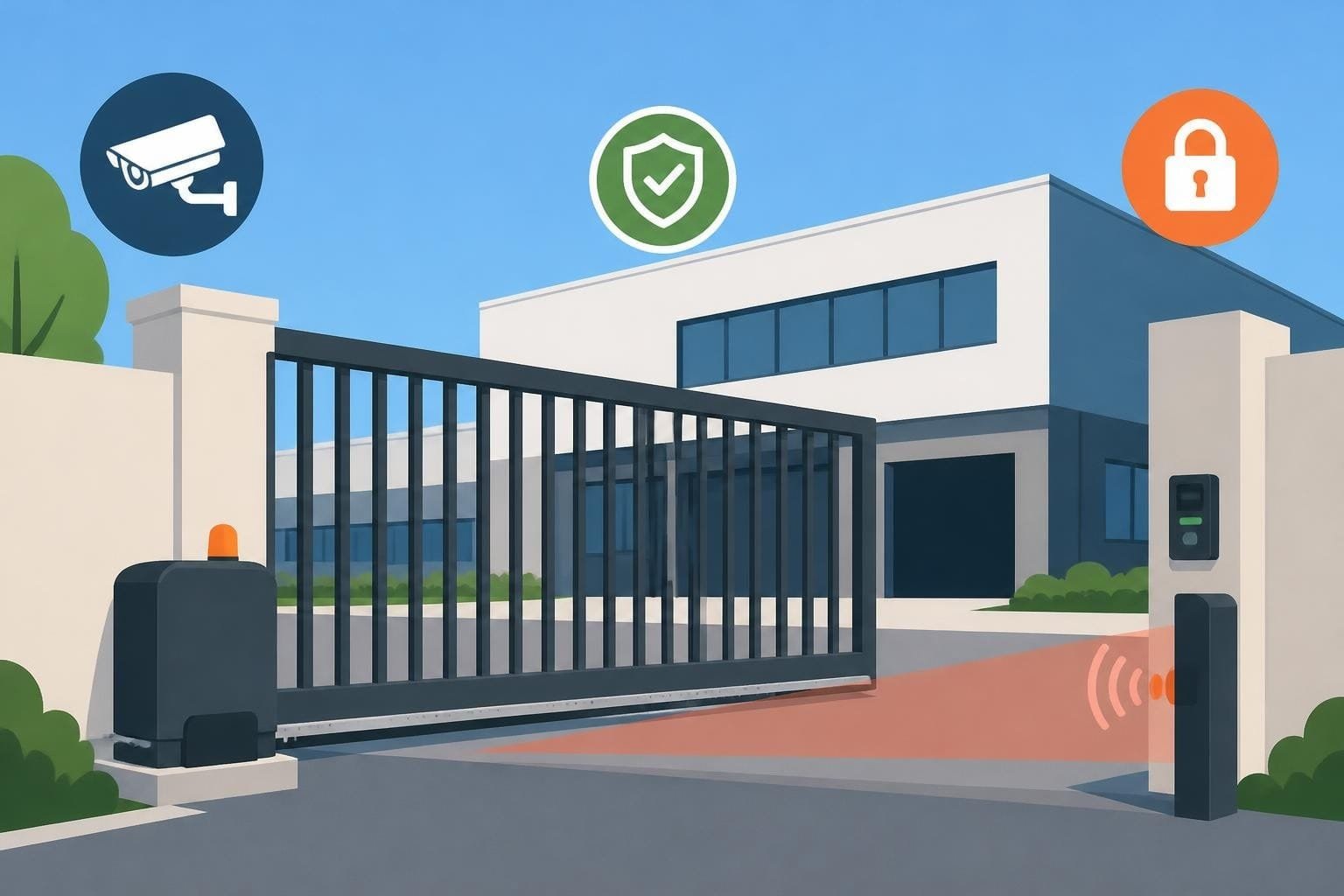

Security and access control remain top priorities for commercial properties in 2026, with businesses increasingly turning to automated gate solutions. A commercial sliding gate offers a perfect blend of functionality, space efficiency, and robust security for warehouses, manufacturing facilities, parking lots, and business campuses. Understanding the components, installation requirements, and ongoing maintenance needs of these systems helps property managers make informed decisions that protect their assets while ensuring smooth daily operations.
Understanding Commercial Sliding Gate Systems
A commercial sliding gate operates on a horizontal track system, moving parallel to the fence line rather than swinging inward or outward. This design makes it ideal for properties with limited driveway space or locations where gate swing clearance poses challenges.
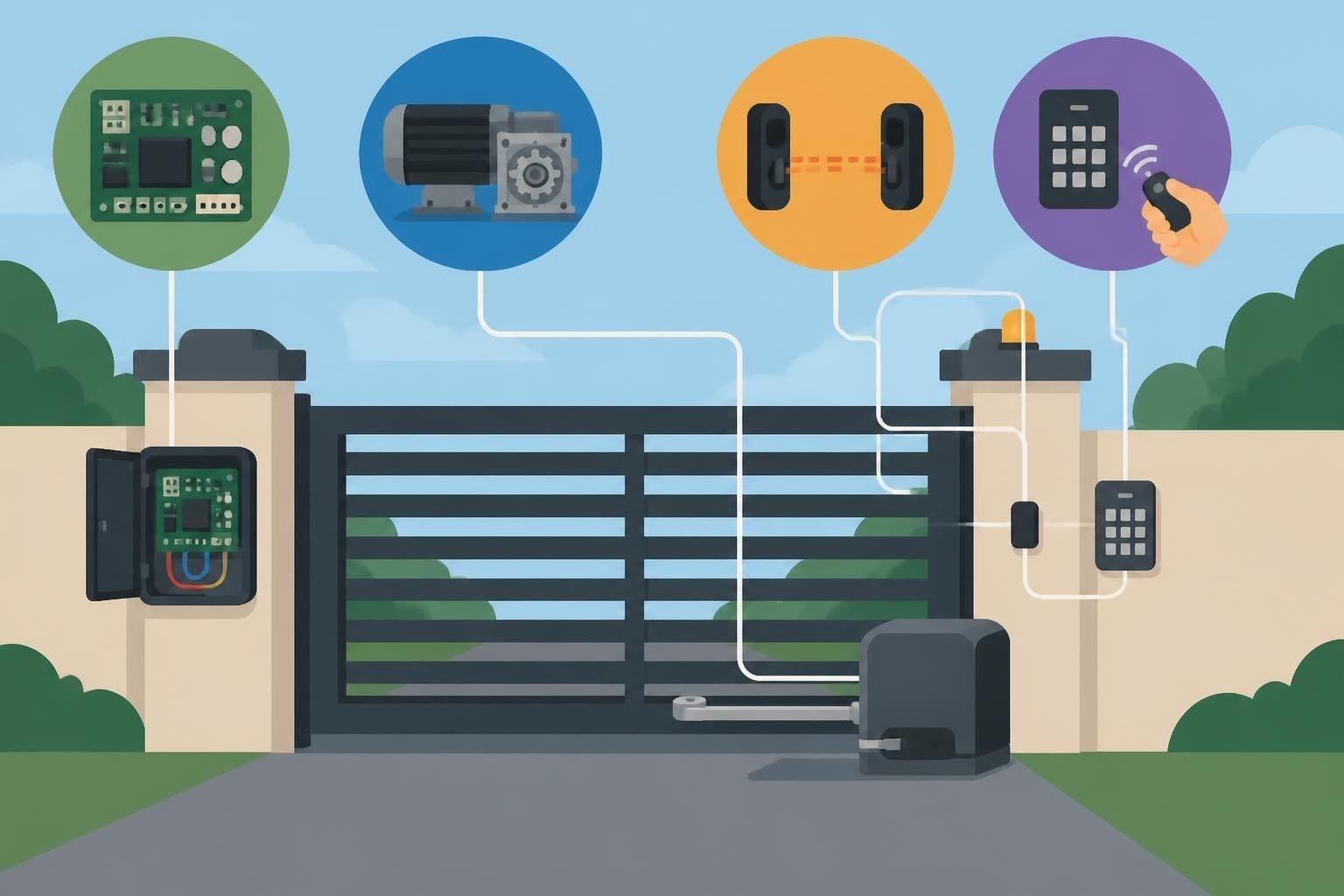
The fundamental components include the gate panel itself, a heavy-duty track embedded in or mounted on the ground, wheels or rollers that support the gate's weight, an electric operator motor, and safety devices such as photocells and loop detectors. The motor drives the gate using either a chain, rack-and-pinion, or direct-drive mechanism.
Key Advantages for Commercial Applications
Commercial properties benefit from sliding gates in several distinct ways:
- Space efficiency eliminates the need for swing clearance zones
- Heavy-duty construction supports gates weighing several thousand pounds
- Automation compatibility integrates easily with access control systems
- Wind resistance performs better than swing gates in high-wind conditions
- Traffic flow accommodates high-volume vehicle access without bottlenecks
The structural integrity of a commercial sliding gate exceeds residential specifications significantly. Commercial models typically feature reinforced steel frames, industrial-grade wheels rated for continuous operation, and motors designed to cycle thousands of times daily without degradation.
Installation Requirements and Site Preparation
Proper installation begins with thorough site assessment. The ground must be level and stable enough to support the track system and the lateral forces generated during gate operation. Soil conditions, drainage patterns, and existing utilities all influence installation planning.
Foundation and Track Installation
The track foundation requires concrete work that extends below the frost line in colder climates. A continuous concrete beam, typically 12-18 inches deep and 12-16 inches wide, provides the stable base needed for commercial applications. The track itself mounts on or embeds into this foundation.
Professional installers follow specific steps to ensure proper alignment:
- Excavate the track path to required depth and width
- Install forms and reinforcement steel (rebar) as needed
- Pour and finish concrete with precise level tolerances
- Mount or embed the track system with alignment verified
- Allow adequate curing time before gate installation
- Install gate posts with proper spacing and vertical alignment
The gate post on the opening side must withstand significant stress. It anchors the catch mechanism and provides the reference point for the gate's closed position. Many commercial installations use steel posts set in concrete piers extending 36-48 inches below grade.
| Installation Component | Residential Spec | Commercial Spec |
|---|---|---|
| Track Depth | 6-8 inches | 12-18 inches |
| Concrete Width | 8-10 inches | 12-16 inches |
| Post Pier Depth | 24-30 inches | 36-48 inches |
| Motor Duty Cycle | Intermittent | Continuous/Heavy |
Safety Standards and Compliance Requirements
Safety regulations for automatic gates have evolved considerably as access control and gate operators become more sophisticated. Commercial installations must comply with UL 325 standards in the United States, which classify gate operators by application type and establish safety requirements accordingly.
The UL 325 standard categorizes commercial applications as Class II (commercial/industrial) or Class IV (vehicular barrier operators). These classifications demand specific safety features including:
- Entrapment protection devices on both sides of the gate path
- Emergency stop and release mechanisms accessible without tools
- Force limitation to prevent crushing injuries
- Warning signs and labels visible from approach zones
Safety standards for power-operated doors and gates in international markets follow similar principles but may specify different testing protocols. The European EN 12453 standard, for example, requires force testing under various conditions to ensure consistent safety performance.
Entrapment Protection Technologies
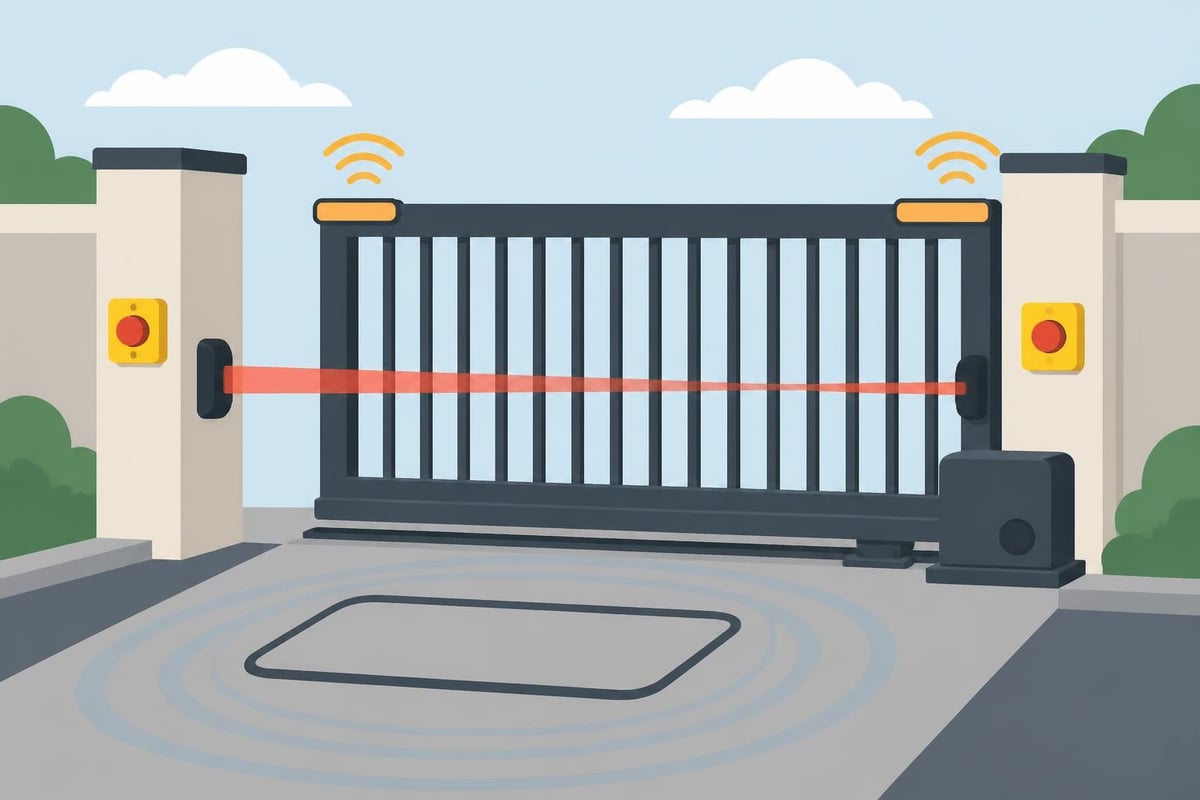
Modern commercial sliding gate systems employ multiple layers of protection. Photocell sensors create invisible beams across the gate path, stopping or reversing movement when interrupted. Vehicle loop detectors embedded in the pavement sense cars in the gate zone, preventing closure while vehicles remain present.
Edge sensors mounted on the gate's leading edge provide contact-based safety. When the gate encounters resistance beyond programmed thresholds, the system immediately stops and reverses direction. Some installations add pressure-sensitive edges that detect even light contact.
The UK Health and Safety Executive’s guidance on electrically powered gates emphasizes that relying on a single safety feature creates unacceptable risk. Properly designed systems incorporate redundant protection to address different hazard scenarios.
Motor Selection and Operator Specifications
Choosing the appropriate motor for a commercial sliding gate depends on several factors: gate weight, frequency of operation, environmental conditions, and required speed. Commercial motors range from 1/2 horsepower for lighter gates to 2+ horsepower for heavy industrial applications.
Duty Cycle Considerations
The duty cycle rating indicates how frequently the motor can operate without overheating. Residential motors typically have 30-50% duty cycles, meaning they need rest periods between operations. Commercial motors feature 75-100% duty cycles, enabling continuous operation during peak traffic hours.
A warehouse with 200 vehicle entries per day requires a significantly different motor than a parking lot gate that opens 30 times daily. Undersized motors fail prematurely, while oversized motors waste energy and increase installation costs unnecessarily.
| Gate Weight | Recommended HP | Duty Cycle | Typical Application |
|---|---|---|---|
| Up to 1,000 lbs | 1/2 – 3/4 HP | 50-75% | Light commercial |
| 1,000-2,500 lbs | 3/4 – 1 HP | 75-90% | Standard commercial |
| 2,500-5,000 lbs | 1 – 1.5 HP | 90-100% | Heavy commercial |
| Over 5,000 lbs | 1.5 – 2+ HP | 100% | Industrial |
Drive mechanism selection also impacts performance. Chain-drive systems offer cost-effectiveness for moderate-duty applications. Rack-and-pinion drives provide superior reliability and power transmission for heavy gates. Direct-drive systems eliminate chains and racks entirely, reducing maintenance needs but increasing upfront costs.
Access Control Integration
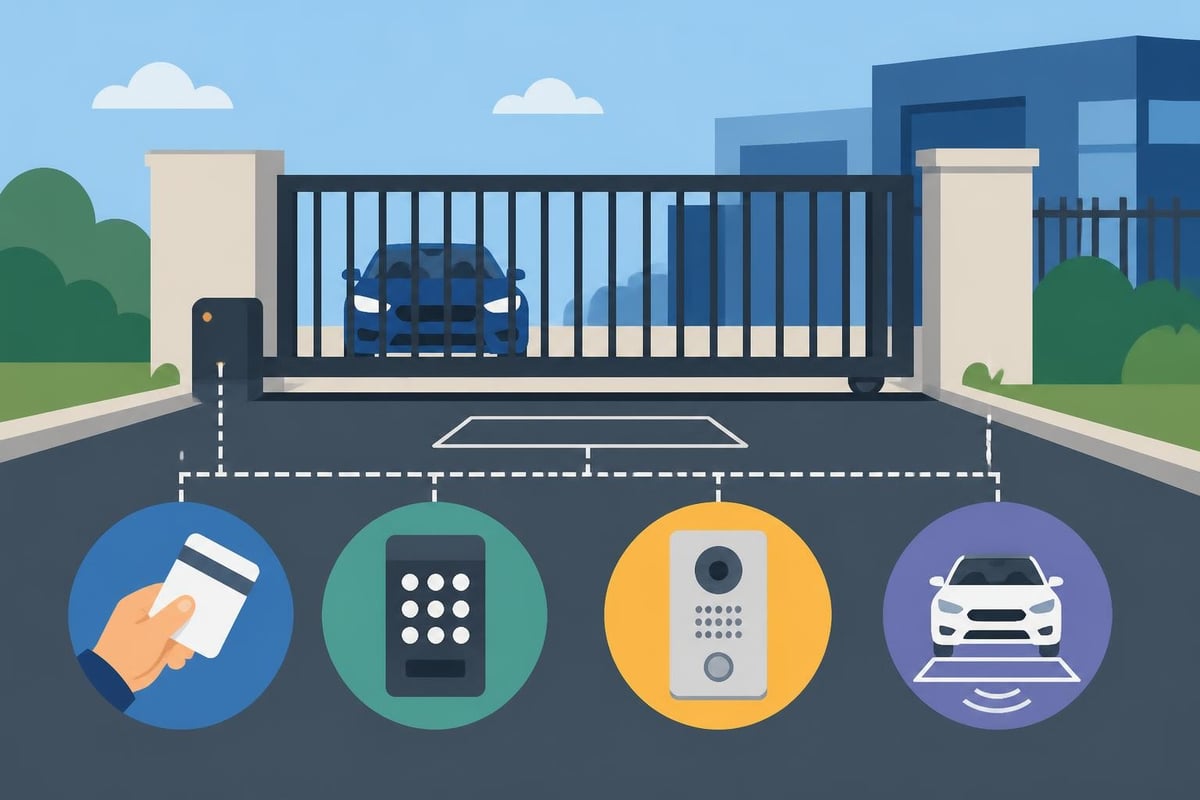
A commercial sliding gate serves as the physical barrier in a comprehensive access control system. Integration capabilities determine how well the gate fits into broader security infrastructure.
Modern gate operators communicate via standard protocols including relay contacts, RS-485, and IP networking. This connectivity enables coordination with card readers, keypads, intercoms, smartphone apps, and centralized security platforms.
Common Access Control Methods
Card and Credential Systems: Proximity cards, key fobs, and long-range transponders allow authorized users to trigger gate opening without stopping. Commercial properties often use these systems to log entry/exit times and manage different access levels for employees, visitors, and contractors.
Telephone Entry Systems: Intercoms with video capability let visitors communicate with office staff who can remotely grant access. Cloud-based intercom systems enable authorization from smartphones, even when property managers are off-site.
License Plate Recognition: Advanced installations use cameras and software to identify authorized vehicles automatically. This touchless approach works well for high-traffic commercial sites where credential management becomes cumbersome.
Many Los Angeles businesses working with commercial gate services integrate multiple access methods to accommodate different user groups while maintaining security protocols.
Maintenance Protocols for Longevity
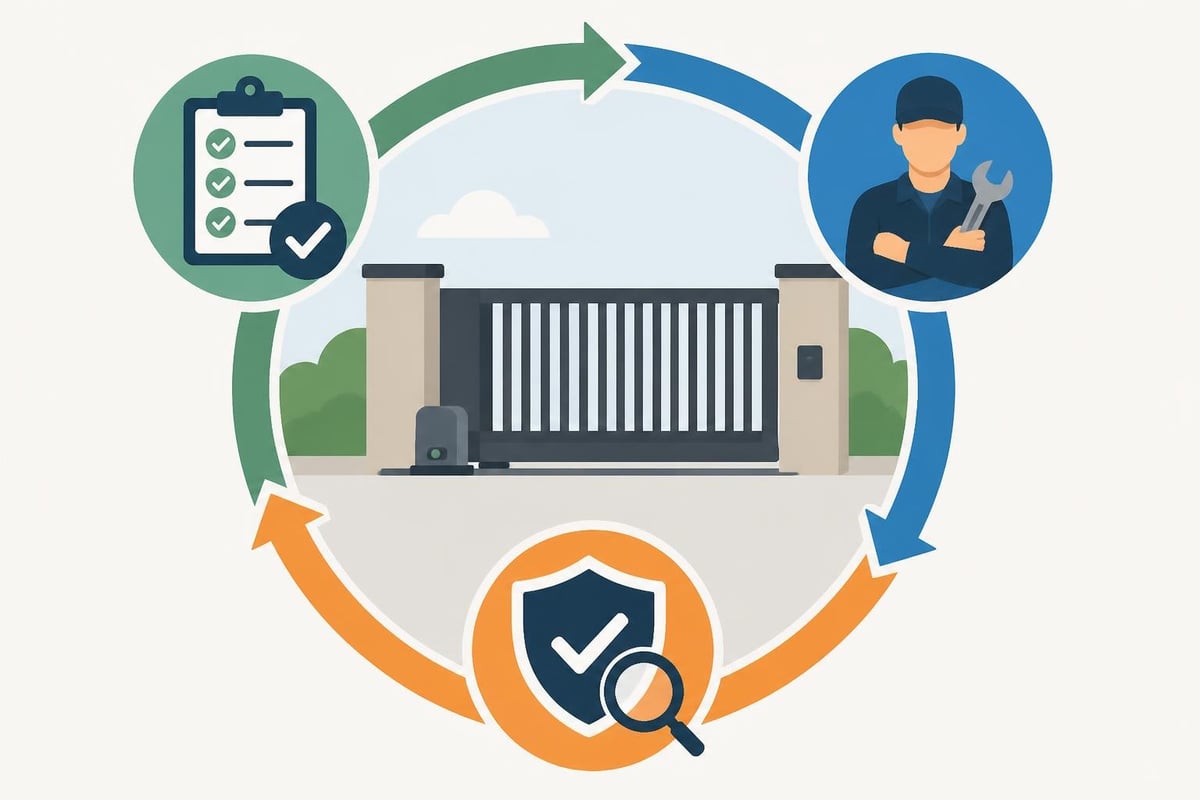
Preventive maintenance extends commercial sliding gate lifespan and reduces unexpected failures. A structured maintenance program addresses mechanical, electrical, and safety system components on regular intervals.
Monthly Inspection Checklist
Property managers or designated staff should perform basic checks monthly:
- Visually inspect track for debris, damage, or alignment issues
- Test safety sensors and verify proper gate reversal
- Listen for unusual noises indicating bearing or wheel problems
- Verify gate stops and catches engage properly
- Check motor housing for overheating signs or unusual odors
Quarterly maintenance performed by professionals includes lubrication of moving parts, electrical connection inspection, chain or belt tension adjustment, wheel bearing examination, and comprehensive safety system testing. For facilities with electric gate repair needs, establishing relationships with qualified service providers ensures rapid response when issues arise.
Annual Professional Service
Once yearly, commercial sliding gate systems require thorough professional inspection and service:
- Complete disassembly and cleaning of drive components
- Replacement of wear items (brushes, contacts, chains)
- Safety system certification and force testing
- Control board inspection and firmware updates
- Documentation of condition and recommendations
This annual service should coincide with safety compliance audits. Life safety and egress considerations require that automatic gates not impede emergency access or building evacuation. Testing confirms that emergency release mechanisms function correctly and that fail-safe modes operate as designed.
Common Problems and Troubleshooting
Understanding typical commercial sliding gate issues helps property managers recognize problems early and minimize downtime.
Gate Moves Slowly or Hesitates: This often indicates motor issues, low power supply voltage, or mechanical binding. Check for obstructions in the track, examine wheel condition, and verify power supply voltage at the motor. Heavy accumulation of debris in the track path creates significant resistance.
Intermittent Operation: Loose electrical connections, corroded terminals, or failing control boards cause erratic behavior. Temperature-related expansion and contraction can affect connection integrity, particularly in exposed installations.
Safety Sensors Malfunction: Photocells accumulate dirt, spider webs, and moisture that interfere with beam transmission. Misalignment from ground settling or post movement also causes sensor issues. Regular cleaning and alignment verification prevent most sensor problems.
Emergency Situations
Commercial properties must maintain manual operation capability. All automatic gate systems include emergency release mechanisms that disengage the motor, allowing manual gate movement during power failures or system malfunctions.
Staff training on emergency procedures prevents panic during gate failures. Designated personnel should know the release location, proper release procedure, manual operation method, and who to contact for emergency repairs. Clear signage near the operator identifies emergency contacts and basic troubleshooting steps.
Environmental and Operational Considerations
Los Angeles' Mediterranean climate presents specific challenges for commercial sliding gate systems. While freeze-thaw cycles aren't concerns, heat, dust, and occasional heavy rain require consideration.
Temperature Effects
Extreme heat affects metal expansion, electronic component reliability, and motor cooling. Gates installed in full sun exposure experience thermal expansion that can affect track alignment and clearances. Motor housings in direct sunlight may require supplemental cooling or shade structures to prevent premature component failure.
Electronic control boards contain components rated for specific temperature ranges. Installations in unconditioned spaces benefit from ventilated enclosures that prevent heat buildup while protecting electronics from dust and moisture.
Corrosion Prevention
Coastal properties face accelerated corrosion from salt air. Stainless steel components, powder-coated finishes, and marine-grade lubricants extend system life in these environments. Regular washing removes salt deposits before they penetrate protective coatings.
Industrial properties with chemical exposure require specialized materials and coatings. Consult with gate manufacturers about specific environmental challenges at your facility to ensure appropriate material selection.
Cost Considerations and ROI
Commercial sliding gate investments vary widely based on size, features, and site conditions. A basic 20-foot commercial sliding gate system with standard automation starts around $8,000-$12,000 installed. Heavy-duty industrial gates with advanced access control can exceed $30,000.
Breaking down typical project costs reveals where budget allocation occurs:
| Cost Component | Percentage of Total | Budget Range |
|---|---|---|
| Gate Panel | 25-35% | $2,500-$8,000 |
| Motor/Operator | 20-25% | $1,500-$5,000 |
| Installation Labor | 20-30% | $2,000-$6,000 |
| Track/Foundation | 15-20% | $1,500-$4,000 |
| Access Control | 10-15% | $1,000-$4,000 |
Return on investment comes from multiple sources. Security improvements reduce theft and vandalism. Automated access control eliminates security guard costs at some facilities. Insurance premiums may decrease with enhanced security measures. Property values increase with professional security infrastructure.
Operational savings accumulate over time through reduced manual labor for gate operation and improved traffic flow that increases productivity. The average commercial sliding gate, properly maintained, provides 15-20 years of reliable service.
Future Trends and Technology Integration
Commercial gate technology continues advancing with broader security and automation trends. Artificial intelligence enhances license plate recognition accuracy and enables predictive maintenance through usage pattern analysis. Cloud-based systems provide real-time monitoring and control from anywhere with internet access.
Integration with building management systems creates unified security platforms where gates coordinate with lighting, cameras, alarms, and access control across entire facilities. This integration improves both security effectiveness and operational efficiency.
Solar power options reduce operating costs and provide backup power during outages. Battery systems paired with solar panels maintain gate operation when grid power fails, ensuring continuous security even during extended power disruptions.
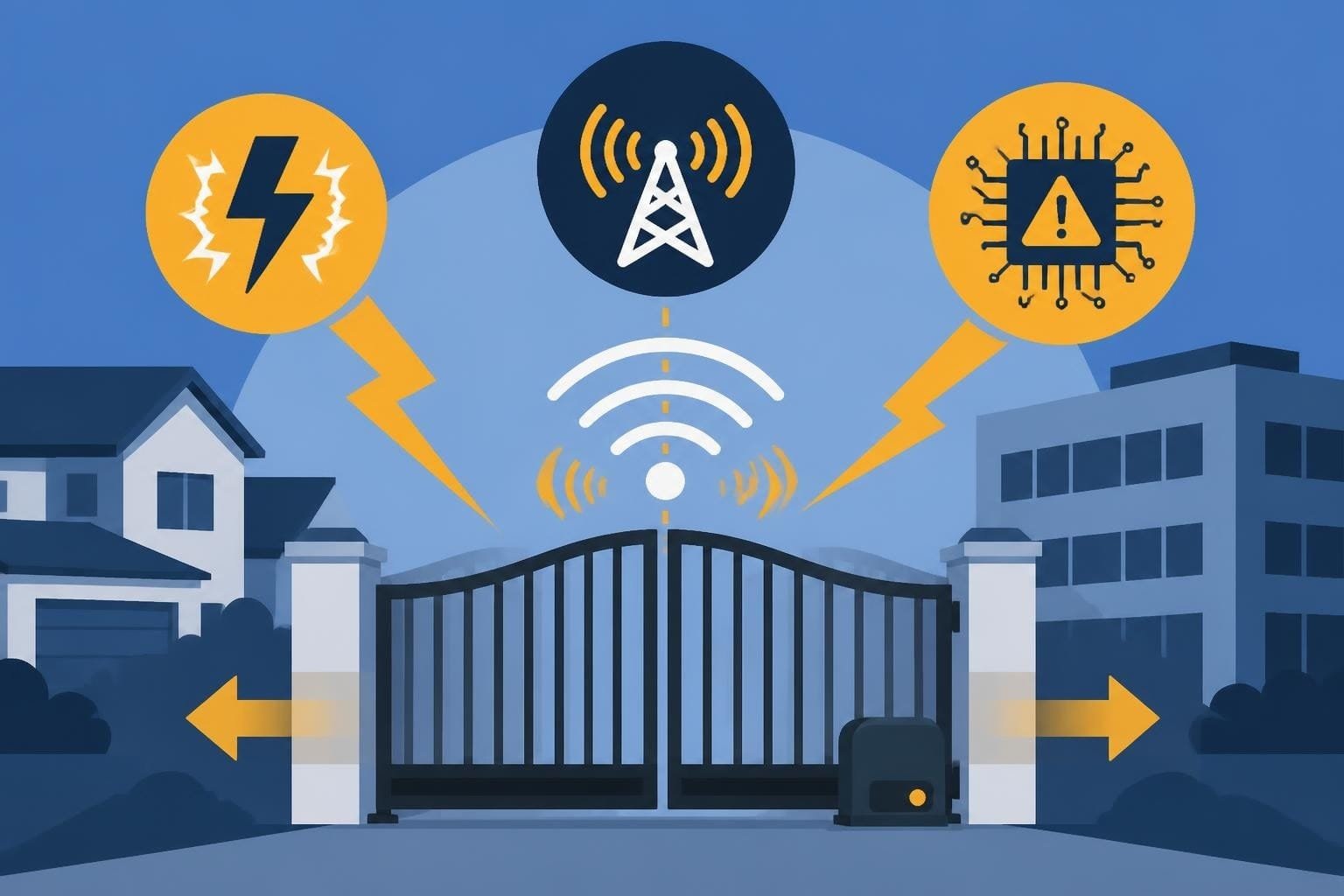
Cybersecurity becomes increasingly important as gates connect to networks. Systems accessible via internet require proper network segmentation, strong authentication, encrypted communications, and regular security updates to prevent unauthorized access through digital vulnerabilities.
Investing in a quality commercial sliding gate system delivers long-term security and operational benefits when properly specified, installed, and maintained. Understanding the technical requirements, safety standards, and ongoing maintenance needs positions property managers to make informed decisions that protect their investments. For Los Angeles area businesses seeking expert installation, repair, or maintenance services, Gates & Garage Door Express Inc. provides family-owned reliability with same-day emergency response and comprehensive gate solutions tailored to commercial property needs.