
A gate chain opener is a motorized operator that moves a sliding gate by driving a roller chain mounted along the gate frame, and choosing the right one comes down to gate weight, chain size, duty cycle, and safety features. Installing one correctly requires precise alignment, proper tension, and compliance with current safety standards. This guide explains how the system works, how to match components to your gate, and where professional help makes sense.
How a Gate Chain Opener Works
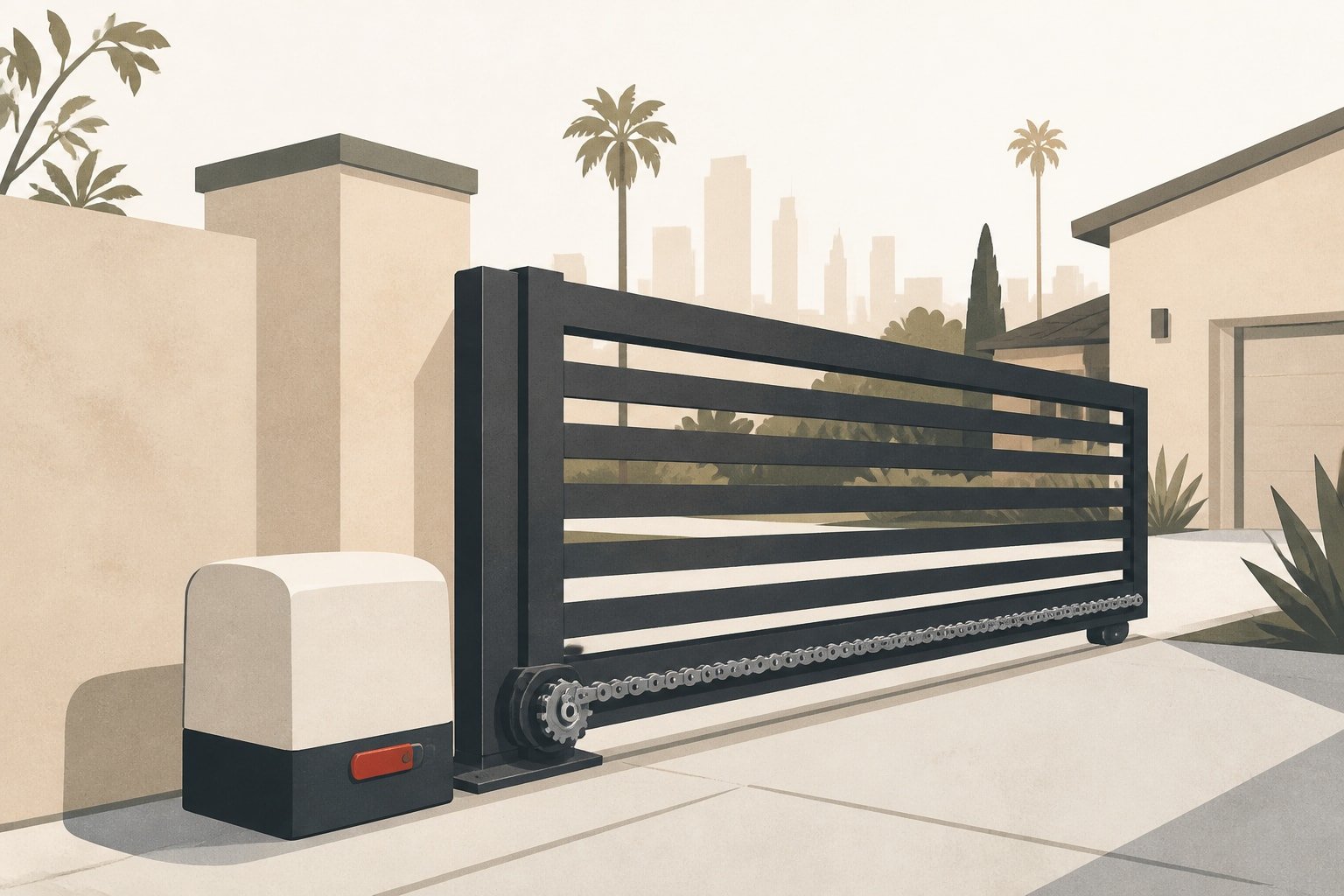
A chain-driven sliding gate operator uses a motor and gearbox to turn a sprocket that engages a roller chain fastened to the gate. As the sprocket rotates, it pulls the chain, and the gate rolls open or closed along its track or on its wheels.
The main components work together as a system:
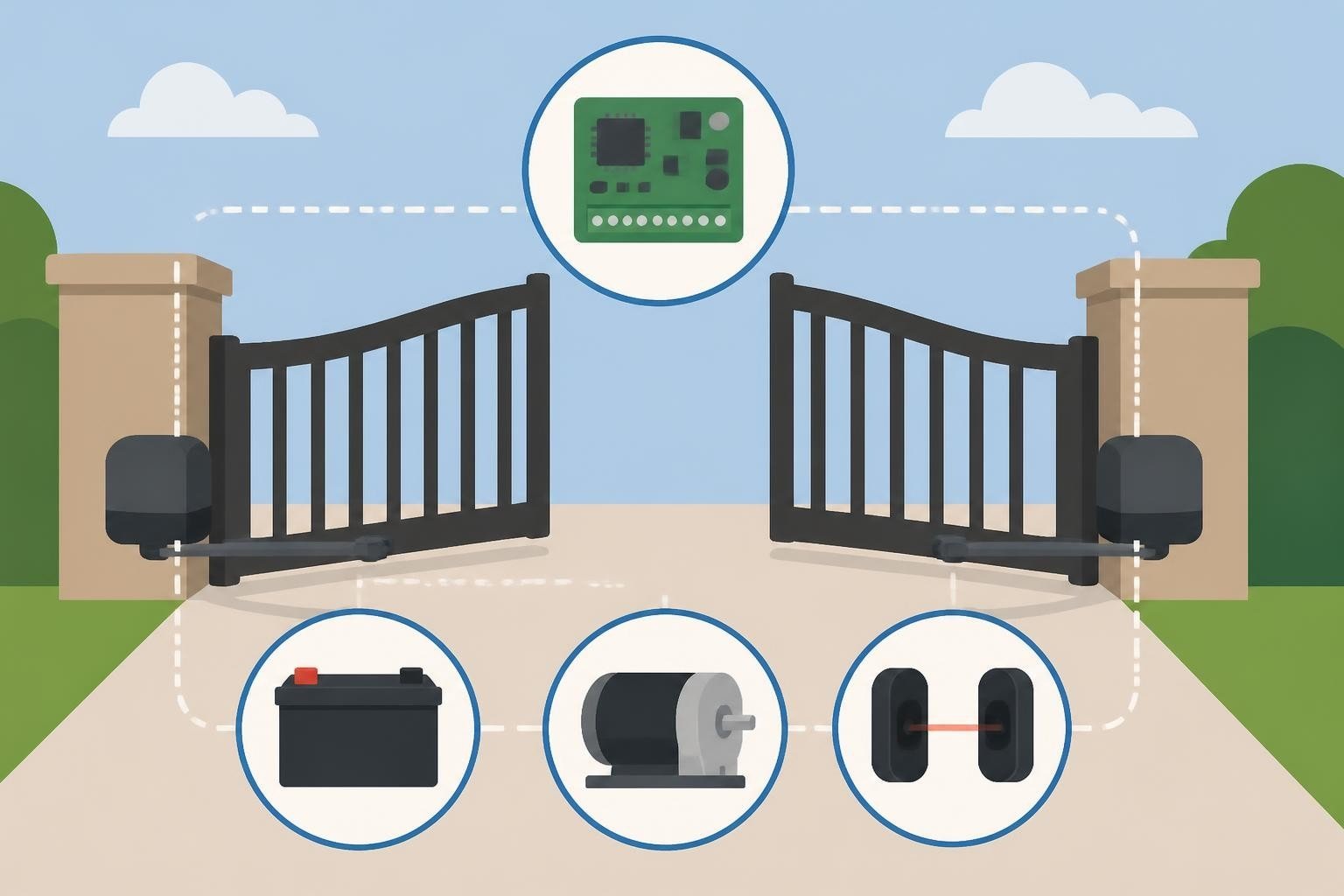
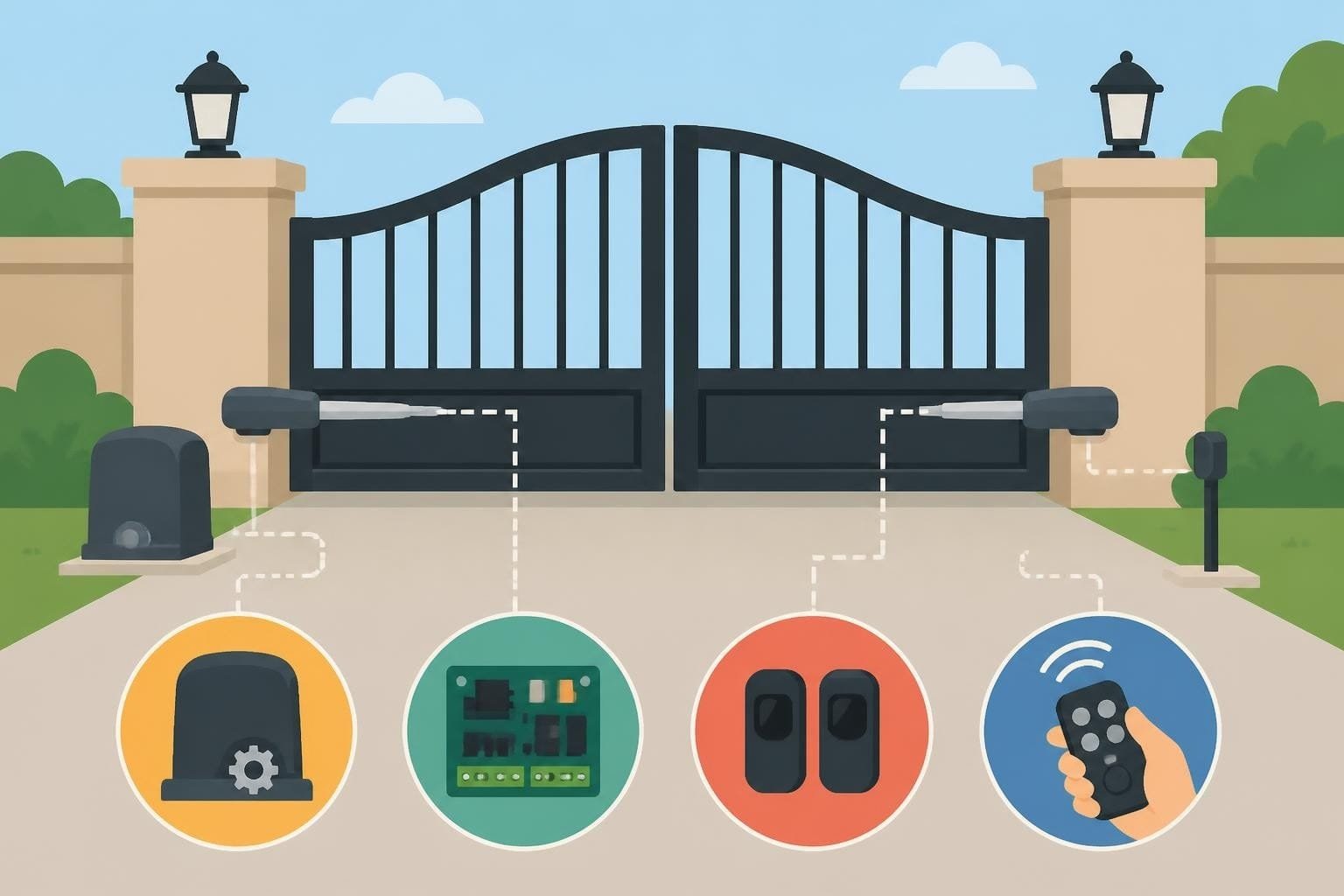
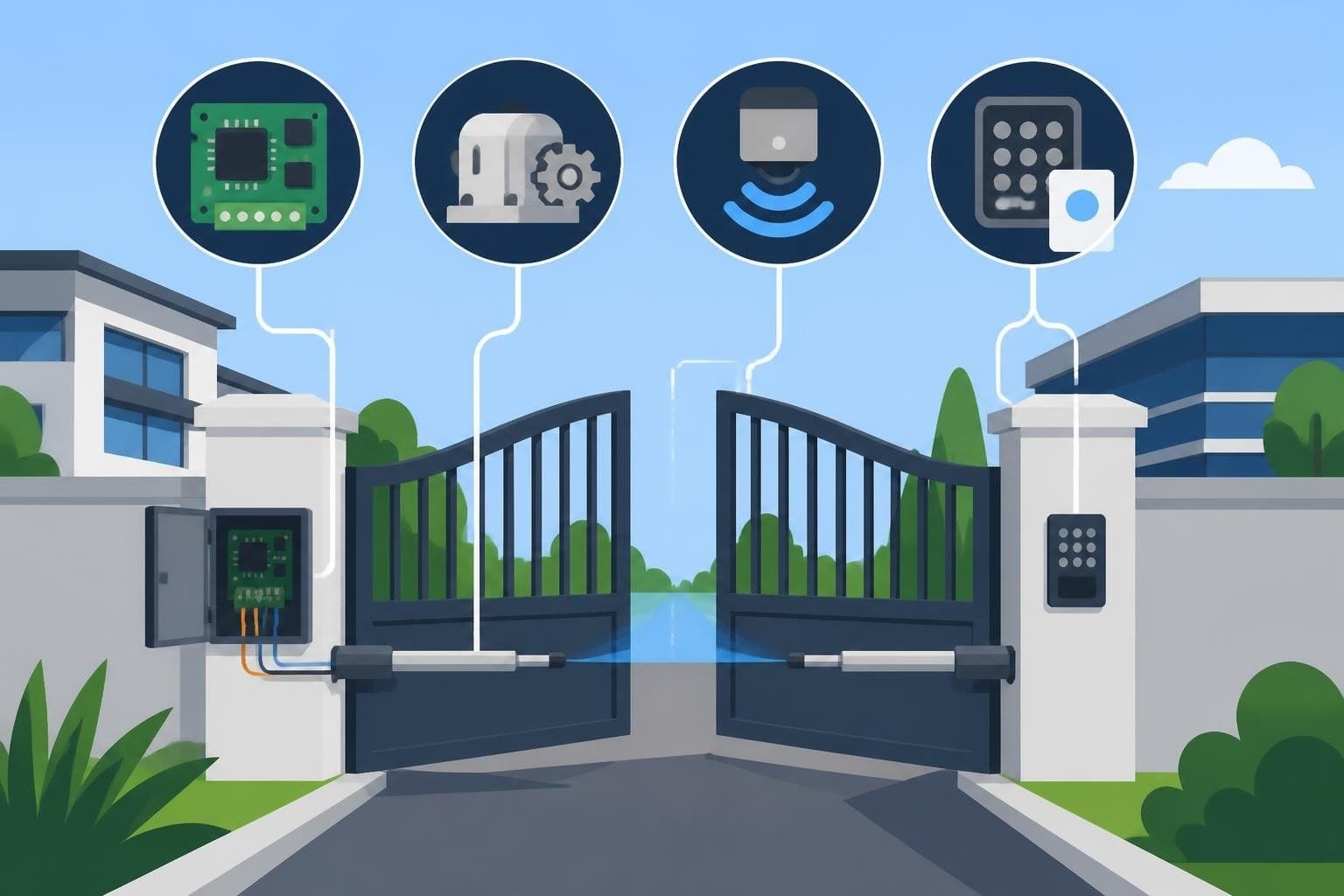
- Operator housing: Contains the motor, gearbox, drive sprocket, and control board.
- Roller chain: Runs the length of the gate and is secured at both ends with brackets.
- Chain brackets and bolts: Anchor the chain to the gate frame and allow tension adjustment.
- Limit settings: Tell the operator where the gate should stop when fully open or closed.
- Safety sensors: Detect obstructions and trigger a reverse or stop response.
Chain drive is common on heavier residential gates and on commercial and industrial entrances. It handles weight well and tolerates uneven surfaces better than some alternatives. Los Angeles County properties with long driveways, hillside slopes, or high-traffic entrances often fit this profile.
Chain Drive Compared With Other Gate Operator Types
Chain drive suits heavy, long, or frequently used sliding gates, while other drive types fit lighter or differently configured gates. The comparison below covers the most common options for sliding gates.
| Drive type | Typical use | Strengths | Limitations |
|---|---|---|---|
| Chain drive | Heavy residential and commercial slide gates | Strong pulling force, handles long runs | Needs periodic tension and lubrication checks |
| Rack and pinion | Medium to heavy slide gates | Positive engagement, fewer stretch issues | Rack must be mounted straight and level |
| Friction or wheel drive | Lighter slide gates | Quiet, simple installation | Can slip on wet or debris-covered surfaces |
If you are unsure which category your gate falls into, a technician can confirm gate weight and track condition on site. Properties with an existing automatic sliding gate operator often need only a chain or sprocket replacement rather than a full swap.
Choosing the Right Chain: Sizes, Materials, and Master Links
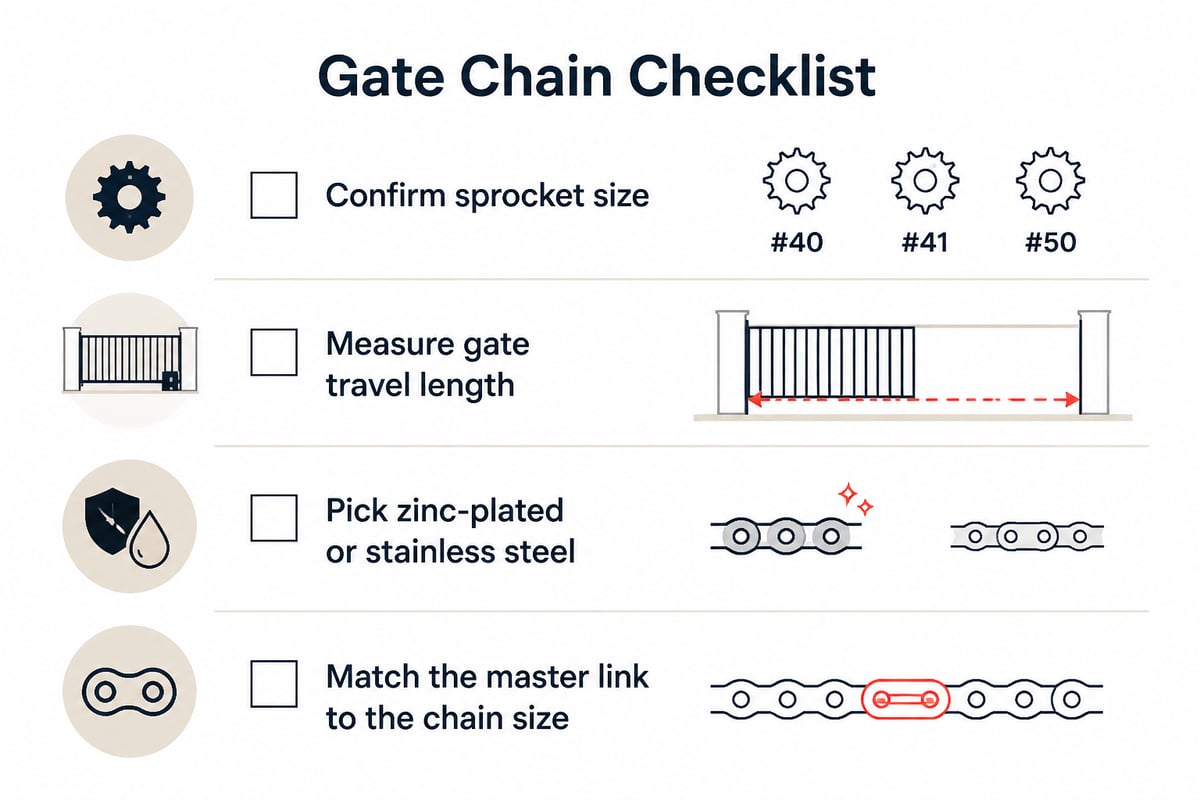
The right gate chain matches the operator's sprocket and the load of your gate, and the three sizes you will most often see are #40, #41, and #50. These numbers describe the chain's pitch and strength class. The sprocket on your operator is cut for a specific size, so the chain must match it exactly.
Here is how to approach the decision:
- Check the operator manual or sprocket markings. The manufacturer specifies the chain size the drive sprocket accepts.
- Measure the gate run. The chain must span the full travel of the gate plus the bracket attachment points.
- Choose the material for your environment. Zinc-plated carbon steel is common and economical. Stainless steel resists corrosion better near coastal areas or where sprinklers hit the gate.
- Match the master link. A master link joins two chain ends and must be the same size as the chain. Stainless chain pairs best with stainless links so the two metals wear evenly.
Mixing sizes is a frequent cause of skipping, noise, and premature wear. A #41 chain on a #40 sprocket may appear to fit, but the mismatch accelerates damage to both parts.
Safety Standards Every Gate Chain Opener Installation Should Meet
Any gate operator installed today should be UL 325 listed, and the safety features that standard requires apply to chain-driven models as well. According to UL, UL 325 is the standard commonly used to certify automatic gates and gate operators, and the 2024 IBC, IRC, and IFC require installed gate operators to be UL 325-listed.
The core requirement is entrapment protection. The Consumer Product Safety Commission describes UL 325 as requiring at least two entrapment-prevention mechanisms: a reversing response to an obstruction, plus a secondary sensor such as an electric eye or edge sensor.
The CPSC also recommends several physical safeguards around the gate itself:
- Eliminate gaps greater than 2.25 inches.
- Keep controls far enough from the gate to prevent contact during operation.
- Place controls where users can see the gate.
- Remove pinch points and guard exposed rollers.
- Post warning signs on both sides of the gate.
A chain that runs along the gate frame can create its own pinch point near the drive sprocket and at the tensioning brackets. A professional installer will check for these during setup, not after an incident.
Step-by-Step Installation Overview
Installation follows a predictable sequence, and each stage affects the next, so skipping alignment or tension checks leads to repeat service calls. The steps below describe the general process a licensed installer follows.
- Prepare the pad and operator mount. The operator sits on a level concrete pad positioned so the drive sprocket lines up with the gate's chain path.
- Mount the operator. It is anchored to the pad with the sprocket set at the correct height relative to the gate frame.
- Install the chain brackets. Brackets go at each end of the gate, in line with the sprocket, using the hardware supplied for the gate frame material.
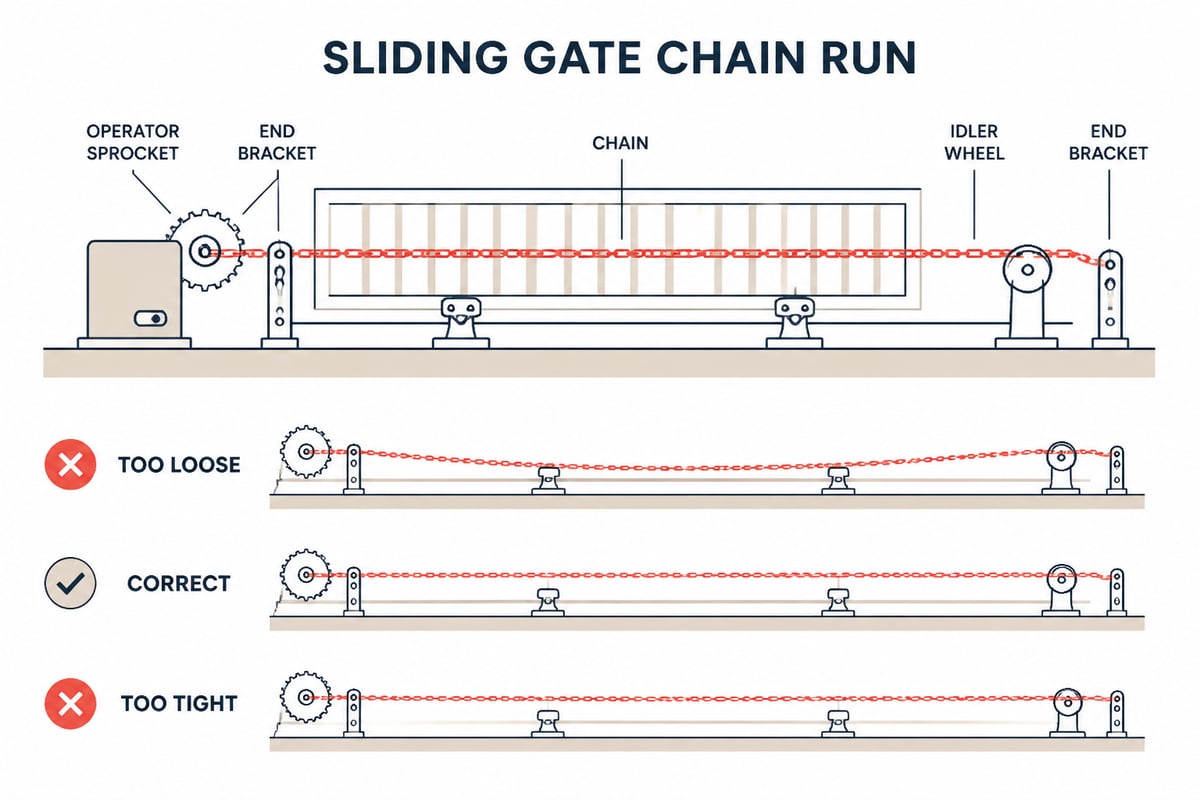
- Run the chain. The chain wraps around the sprocket and idler wheels, then connects to both brackets.
- Join and tension the chain. A master link closes the loop, and the tension bolts are adjusted until the chain has slight, even sag.
- Set limits and travel. The open and closed positions are programmed so the gate stops cleanly without hitting the stops hard.
- Install and test safety devices. Photo eyes, edge sensors, and the reversing response are tested with a real obstruction.
- Run the full cycle repeatedly. The gate should move smoothly with no chatter, binding, or sprocket skipping.
Chain tension deserves attention. Too loose, and the chain can jump teeth or slap against the frame. Too tight, and it overloads the motor bearings and sprocket. Properties that want a new setup can review options through an auto gate installers page before scheduling a site visit.
When and How to Disconnect the Chain
A chain-driven operator needs a way to release the gate for manual operation, and knowing how to do it matters most during a power outage or malfunction. Most operators include a manual release, often a key-operated lever or pull handle that disengages the drive from the gate.
Separate from that release, a technician may need to break the chain itself for replacement, shortening, or maintenance. This requires removing a master link or using a chain breaker tool, which pushes pins out of the link plates without damaging neighboring links. Done incorrectly, a chain breaker can distort pins and leave a weak spot that fails later under load.
Before disconnecting anything, cut power to the operator at the breaker. A gate that moves unexpectedly while someone handles the chain is a serious injury risk. For homeowners, the safest practice is to use only the manual release and leave chain work to a licensed technician.
Common Problems and What They Mean
Most chain-related gate problems trace back to tension, wear, alignment, or lubrication, and recognizing the symptom early prevents larger repairs. The patterns below help you describe an issue accurately when you call for service.
- Gate jerks or stutters: Often a stretched chain, worn sprocket teeth, or debris in the track.
- Grinding or rattling noise: Chain too loose, dry links, or a misaligned sprocket.
- Motor runs but gate does not move: A broken chain, a failed master link, or a disengaged manual release.
- Gate stops partway or reverses unexpectedly: Limit settings drifting, a dirty sensor, or a real obstruction.
- Rust on the chain: Common where sprinklers spray the gate or in coastal air. Stainless replacement chain solves this long term.
Chain stretch is gradual. Over years of daily cycles, chain links elongate slightly, and once the adjustment range runs out, replacement is the correct fix. Operators from brands such as Mighty Mule and others also depend on matching parts, and the Mighty Mule gate opener repair page covers brand-specific issues.
Maintenance Schedule for Chain-Driven Gates
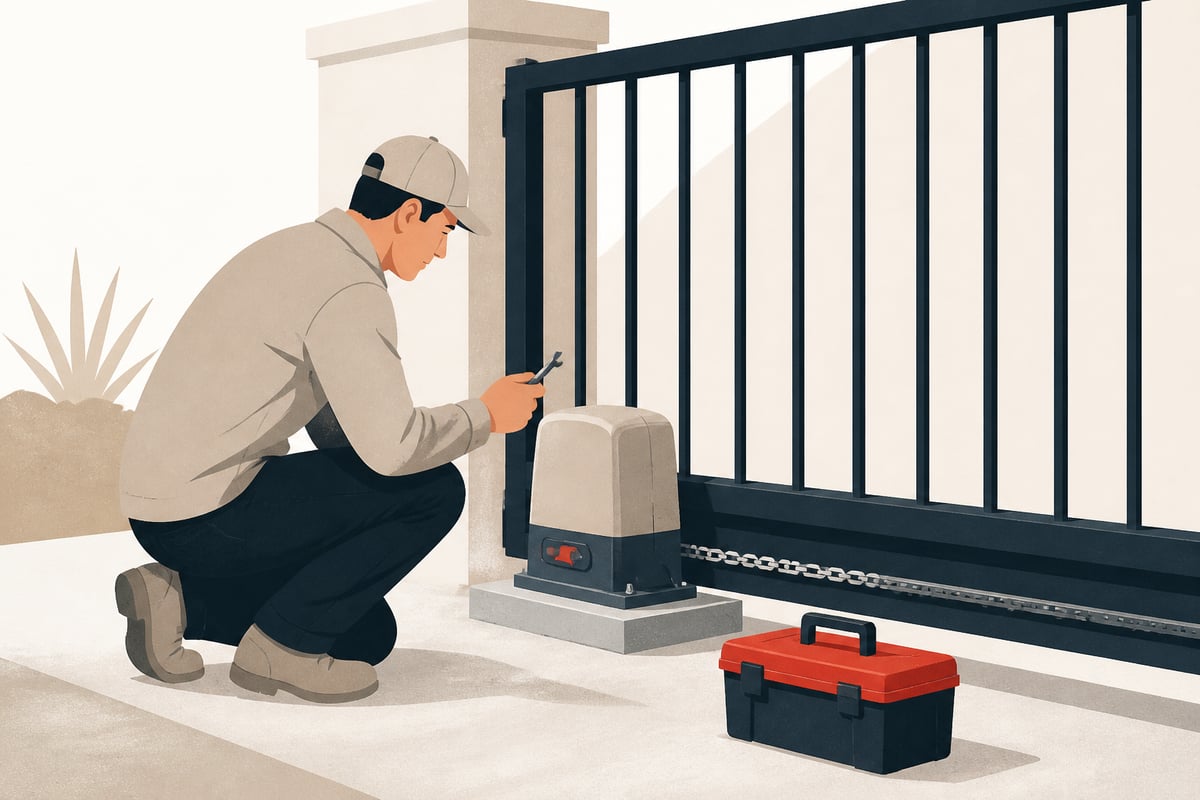
Routine maintenance extends chain life and catches wear before it causes a failure. A simple schedule works well for most Los Angeles County properties.
- Monthly: Visually inspect the chain, clear debris from the track, and test the safety sensors with an obstruction.
- Quarterly: Lubricate the chain with a product made for outdoor roller chain, and check tension and bracket bolts.
- Annually: Inspect sprocket teeth for hooking or wear, test the manual release, and confirm limit settings.
Dust, brake debris, and fine grit around busy LA roadways can collect in chain links and act like sandpaper. Properties near heavy traffic or construction may benefit from a shorter lubrication interval. Commercial sites with high daily cycle counts should schedule professional inspections more often than a residential driveway does.
Residential and Commercial Considerations
Residential and commercial properties choose chain-driven gates for different reasons, and the right setup reflects daily use, security needs, and liability. A single-family home may cycle its gate a few dozen times a day. A multi-unit building, warehouse, or business park may cycle it hundreds of times, which raises the duty-cycle requirement for the operator and the wear rate on the chain.
Property managers should also consider access control integration, such as keypads, intercoms, or vehicle detection loops, along with documentation of safety device testing. Having service records on file helps if an insurer or inspector asks about compliance. Homeowners considering upgrades can look at options for a residential sliding gate before deciding whether to repair or replace existing equipment.
When to Call a Licensed Gate Technician
A failed chain, a broken operator, or a gate stuck open or closed is a security and safety issue, and it is best handled by a licensed professional. Gates & Garage Door Express Inc. is a family-owned company with 21 years in business, and it provides same-day, on-site service across Los Angeles County. Emergency service is available, including after hours, and the team works on a range of gate brands.
For a stuck or malfunctioning chain-driven gate, the Electric Gate Repair service covers diagnosis and repair of operators, chains, sensors, and control boards. The company stands behind its work with a commitment to customer satisfaction.
Property owners who manage multiple access points sometimes pair gate service with broader digital planning. Resources on digital transformation can help with the communications and data side of a connected property, while the gate hardware itself stays with a qualified technician.
Questions to Ask Before You Hire an Installer
A short list of questions separates a qualified installer from a risky one, and the answers should be specific, not vague.
- Is the operator UL 325 listed, and will two entrapment-protection devices be installed?
- Is the contractor licensed and insured, and can they provide the license number?
- Which chain size and material will be used, and why?
- How will chain tension, limits, and the manual release be tested and documented?
- What happens if the gate fails after installation?
Clear answers to these questions tell you more than a low quote does. A gate that fails an inspection or injures someone costs far more than doing the work correctly the first time.
If your gate chain is skipping, slack, or broken, shut off power to the operator, use the manual release to secure the gate, and note the symptoms before you call. A licensed technician can then diagnose the chain, sprocket, and sensors in one visit. Gates & Garage Door Express Inc. offers same-day on-site repair across Los Angeles County, so you can call (818) 873-7687 to schedule service today.