
Powered gate openers have revolutionized property access control for both residential and commercial applications. These automated systems provide convenience, security, and efficiency while eliminating the need for manual gate operation. Whether you're considering an upgrade to your existing gate system or planning a new installation, understanding the technology, safety requirements, and maintenance needs of modern powered gate openers ensures you make informed decisions that protect your investment and property.
Understanding Powered Gate Opener Technology
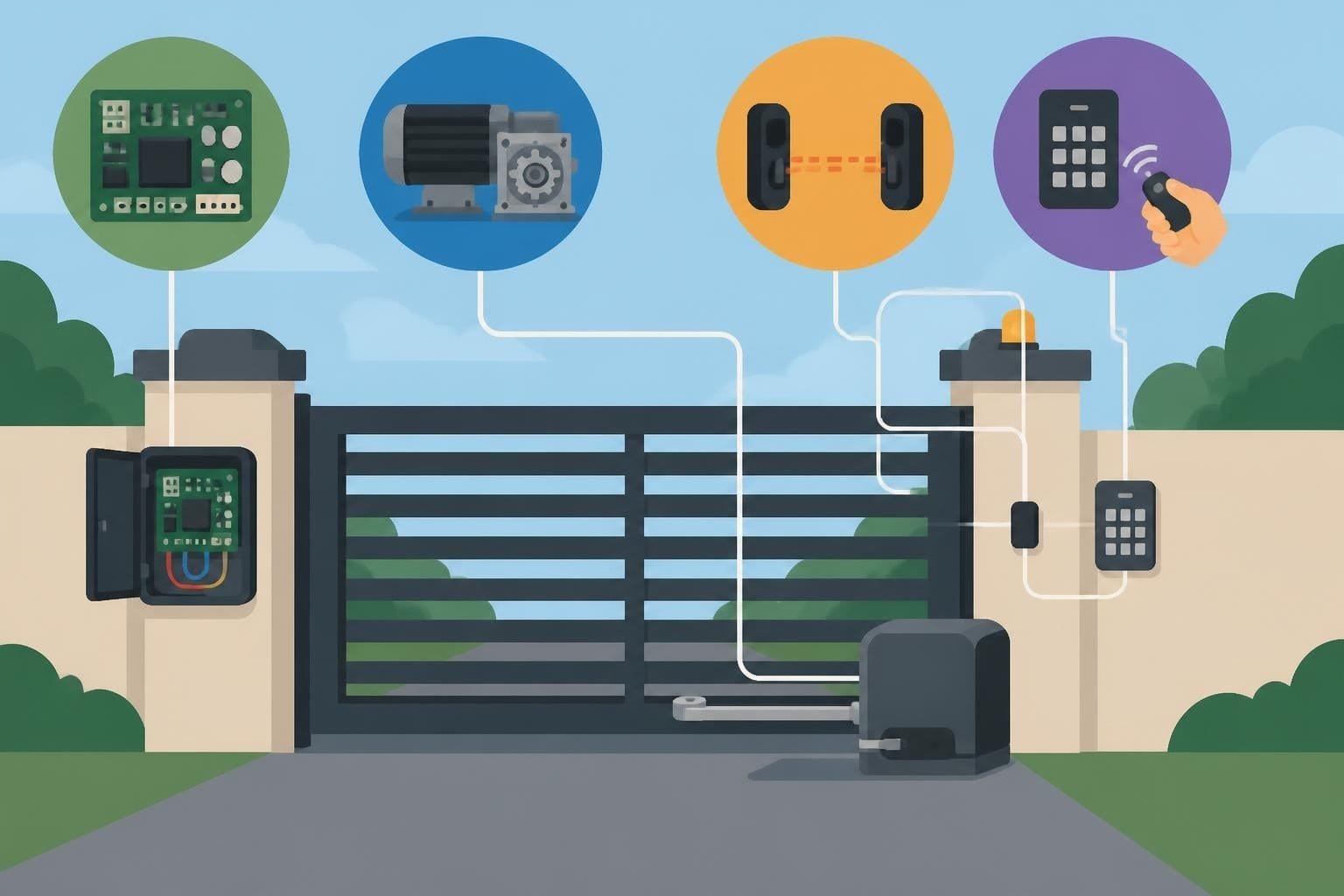
Modern powered gate openers combine electrical motors, sophisticated control systems, and integrated safety features to deliver reliable automated access. The core component is an electric motor that provides the mechanical force needed to move gates weighing anywhere from a few hundred to several thousand pounds.
Motor Types and Configurations
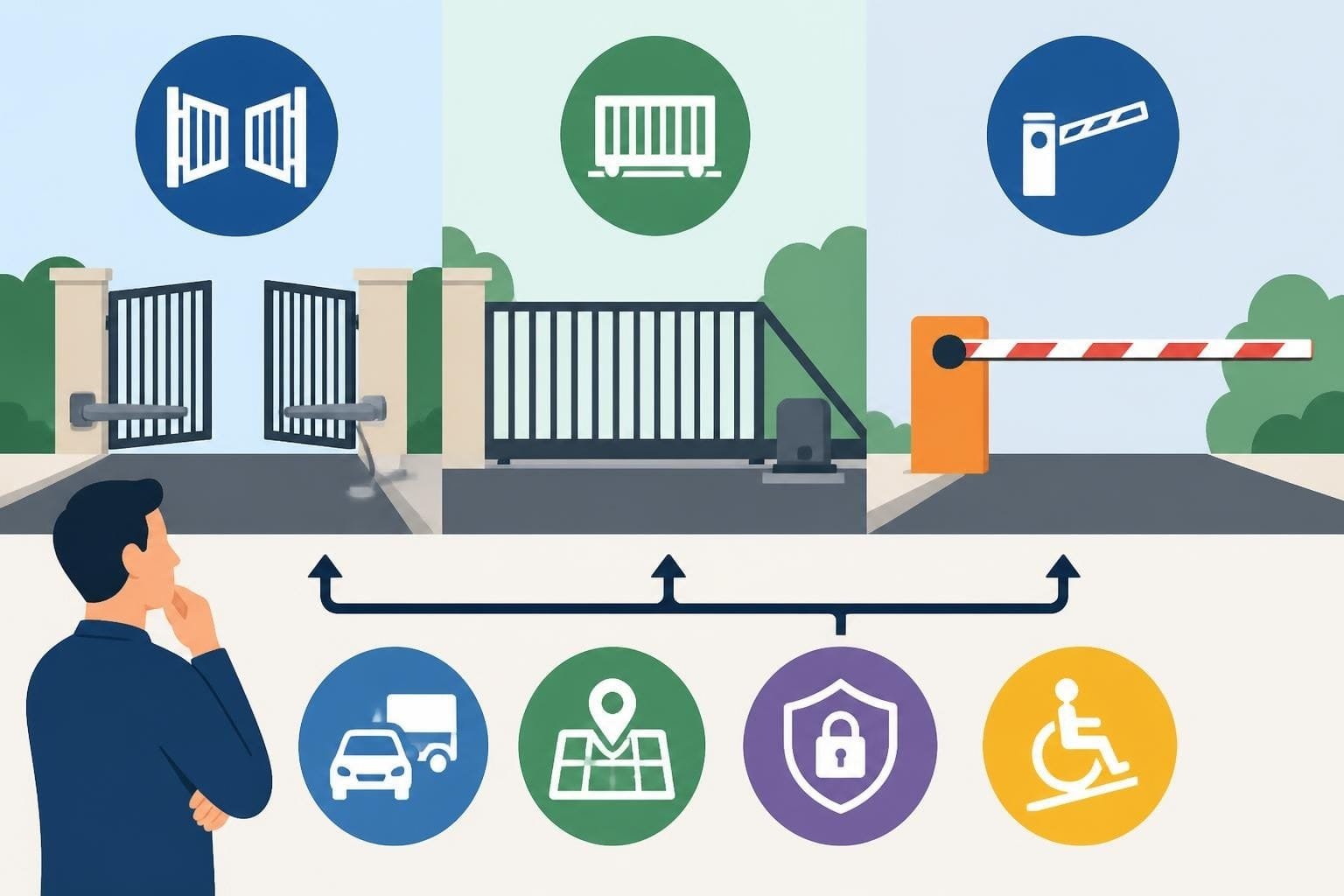
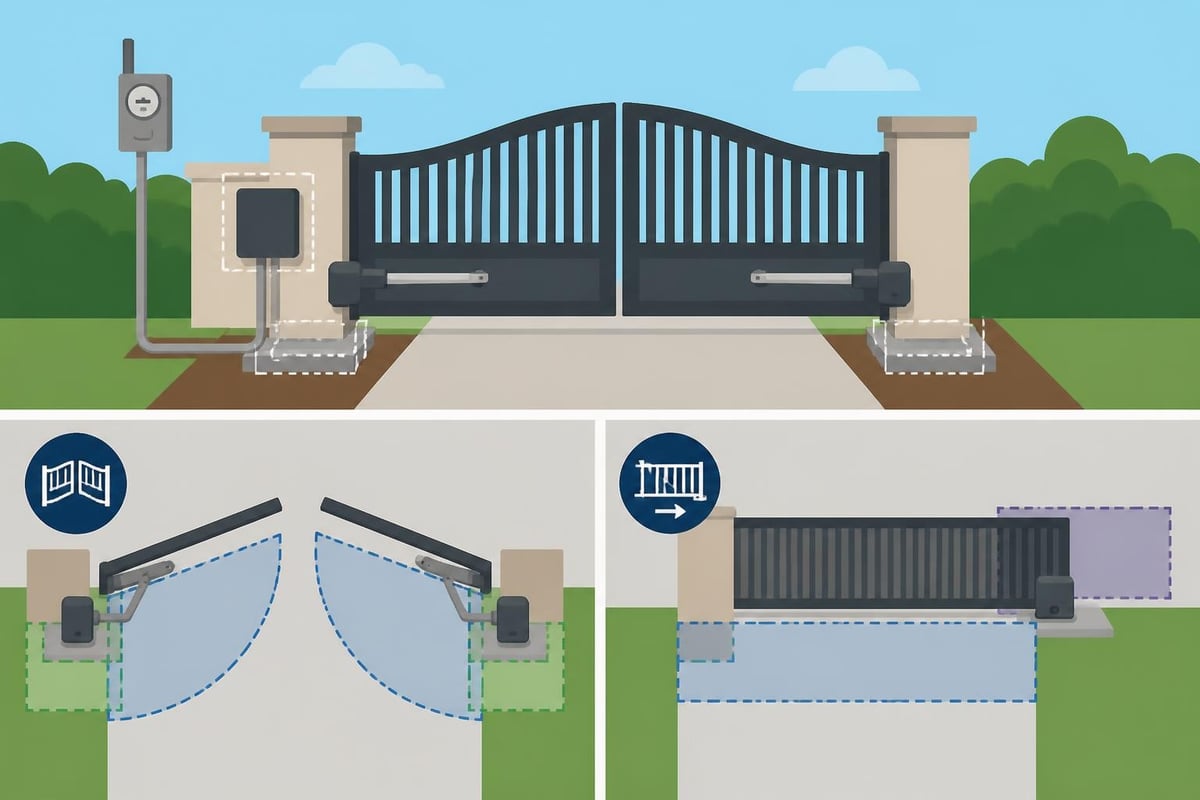
Different motor configurations serve different gate styles and operational needs. Swing gate operators use articulating arms or underground actuators to pull or push gate panels along an arc. Slide gate operators employ a rack-and-pinion or chain-drive mechanism to move gates horizontally along a track. Each configuration requires specific mounting considerations and power requirements based on gate weight, width, and frequency of use.
The most common motor types include:
- DC motors powered by battery backup systems for uninterrupted operation during power outages
- AC motors offering higher power output for heavy-duty commercial applications
- Solar-powered units providing eco-friendly operation in remote locations without electrical infrastructure
- Hydraulic systems delivering substantial force for extremely heavy or wide gates
Control Systems and Access Methods
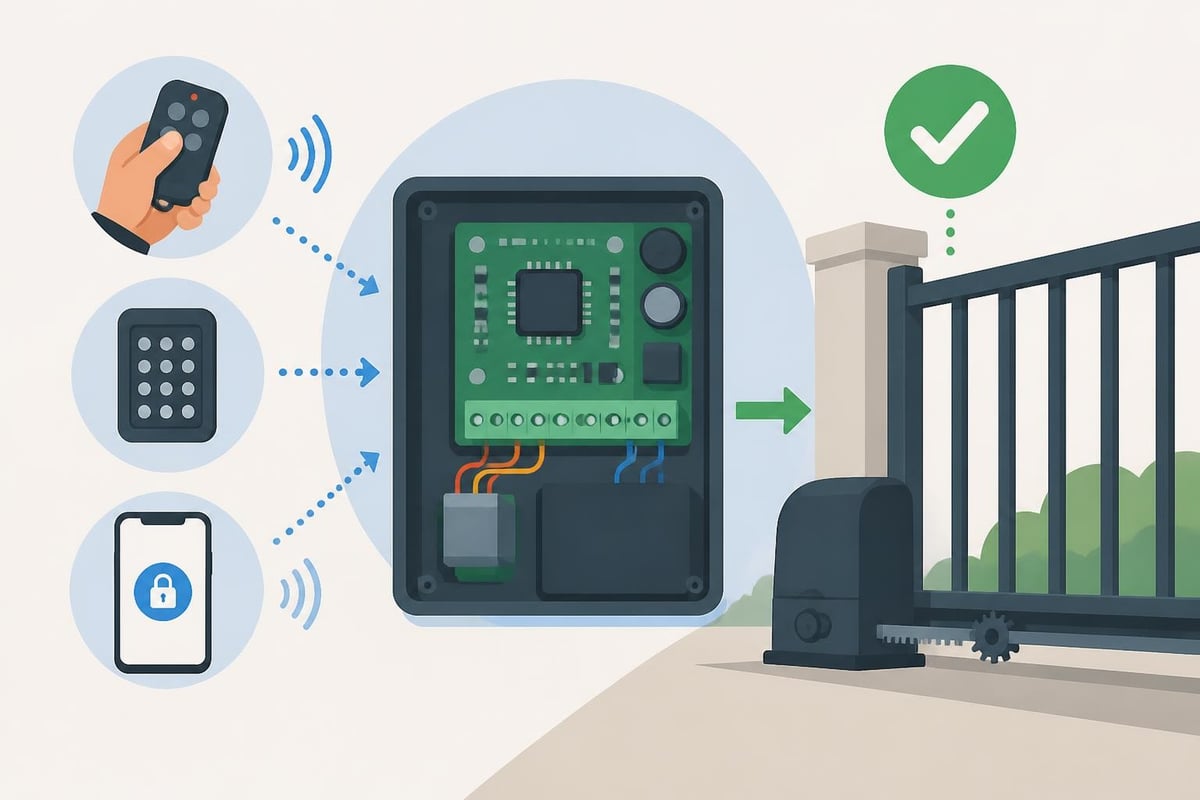
The control panel serves as the brain of powered gate openers, coordinating input signals, managing safety protocols, and executing open-close sequences. Modern control boards feature programmable logic that allows customization of opening speed, hold-open time, and sensitivity settings to match specific operational requirements.
Access Control Options
Property owners can choose from multiple access methods to suit their security needs and user preferences. Radio frequency remote controls remain the most popular choice for residential applications, offering convenient one-touch operation from vehicles. Wireless keypads provide PIN-code access for visitors and service personnel without distributing physical remotes.
Modern powered gate openers increasingly integrate with smart home ecosystems. Bluetooth connectivity enables smartphone control within proximity ranges, while Wi-Fi-enabled controllers allow remote operation from anywhere with internet access. These connected systems raise important security considerations, as research on smart home device security demonstrates the need for robust authentication protocols and regular firmware updates.
| Access Method | Range | Security Level | Power Requirement | Best For |
|---|---|---|---|---|
| RF Remote | 50-200 feet | Medium | Battery | Residential daily use |
| Keypad | Touch | Medium-High | Wired/Battery | Shared access control |
| Smartphone | Unlimited (Wi-Fi) | High | Wired | Remote management |
| Intercom | On-site | High | Wired | Visitor screening |
| Loop Detector | Vehicle presence | Low | Wired | Exit automation |
Safety Standards and Compliance Requirements
Safety represents the most critical aspect of powered gate opener installation and operation. UL 325 safety standards establish comprehensive requirements for gate operators to prevent entrapment injuries. All powered gate openers installed in the United States must comply with these standards, which mandate specific force limits, entrapment protection devices, and emergency release mechanisms.
Required Safety Features
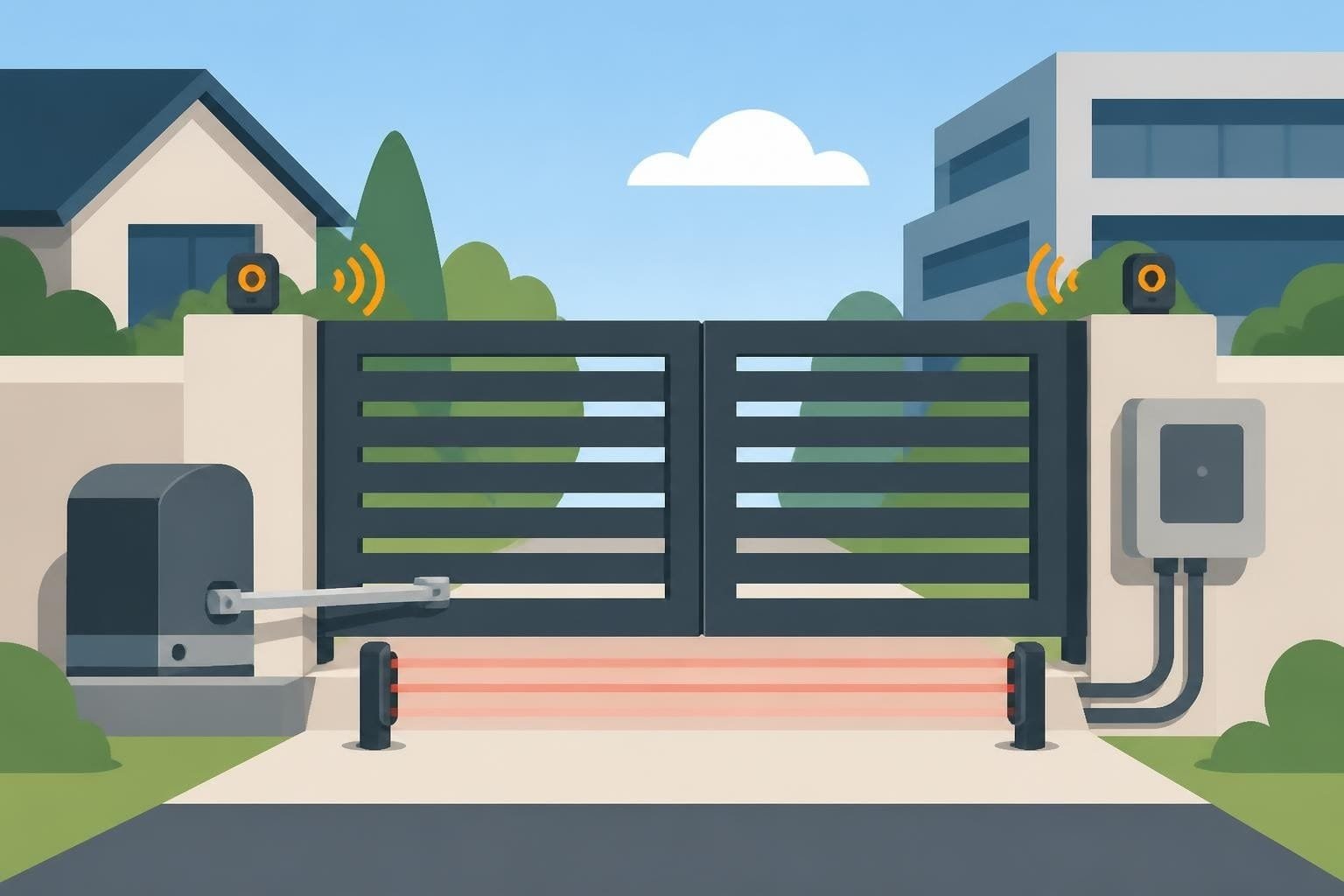
Obstruction detection systems use multiple technologies to prevent gate contact with people, vehicles, or objects. Photo-eye sensors create invisible beams across the gate path that trigger reversal when interrupted. Edge sensors mounted on gate leading edges detect physical contact and immediately stop or reverse motion. Modern control boards also monitor motor current draw to detect resistance indicating obstruction.
Additional safety requirements include:
- Emergency release mechanisms allowing manual gate operation during power failures or malfunctions
- Warning signage alerting users to automated gate operation and hazards
- Visual and audible warnings such as flashing lights or beepers during gate movement
- Secondary entrapment protection using pressure-sensitive edges or monitored safety edges
International installations must consider regional standards. European markets follow BS EN 12453 safety requirements for power-operated gates, which establish similar but distinct testing protocols and performance criteria.
Installation Considerations and Site Requirements
Proper installation ensures powered gate openers function reliably and safely throughout their service life. Professional installation by experienced technicians addresses numerous technical and regulatory requirements that impact system performance.
Electrical and Structural Preparation
Powered gate openers require dedicated electrical circuits sized appropriately for motor load and control system requirements. Most residential systems operate on 120VAC circuits with 15-20 amp capacity, while heavy commercial operators may require 240VAC service. Solar installations need battery banks sized for expected daily cycles plus reserve capacity for cloudy periods.
Foundation work varies by gate type and operator model. Swing gate operators typically mount to concrete footings or existing gate posts reinforced to handle lateral forces. Slide gate systems require level tracks properly aligned and secured to foundations that prevent settling or movement. Underground swing gate operators demand excavation for operator housings with drainage provisions to prevent water accumulation.
Professional vs. DIY Installation
While some homeowners attempt DIY installation to reduce costs, powered gate opener installation involves complexities that benefit from professional expertise. Licensed technicians understand local building codes, proper safety sensor placement, and control board programming specific to each gate configuration. If you need professional assistance with electric gate repair in Los Angeles, experienced technicians can diagnose issues quickly and ensure all safety systems function correctly.
Professional installers also coordinate necessary permits and inspections required in many jurisdictions. Building departments increasingly scrutinize automated gate installations to ensure compliance with safety standards, especially for commercial properties and multi-family residential developments.
Maintenance and Troubleshooting
Regular maintenance extends powered gate opener lifespan and prevents unexpected failures. Proactive service identifies wear before it causes breakdowns, particularly important for systems providing security or access control for businesses and gated communities.
Routine Maintenance Tasks
Monthly visual inspections should verify proper gate alignment, check for loose hardware, and confirm safety sensor alignment. Quarterly service includes lubricating moving parts such as hinges, rollers, and chain drives with appropriate products that won't attract excessive dust or degrade in weather extremes.
Critical maintenance intervals include:
- Weekly: Test safety reversal systems by placing obstruction in gate path
- Monthly: Inspect and clean photo-eye sensors; verify emergency release operation
- Quarterly: Lubricate mechanical components; check battery backup systems
- Annually: Professional inspection including control board testing and force adjustment
- Bi-annually: Replace battery backup units before failure
Common Issues and Solutions
Powered gate openers experience predictable failure modes that trained technicians can often resolve quickly. Motor burnout typically results from excessive cycling, inadequate sizing for gate weight, or binding caused by track misalignment. Control board failures may stem from power surges, moisture infiltration, or component aging requiring replacement.
| Symptom | Likely Cause | Solution |
|---|---|---|
| Gate won't open | Dead battery, blown fuse | Check power; test/replace battery |
| Partial opening | Limit switch misadjustment | Recalibrate open/close limits |
| Erratic operation | Photo-eye misalignment | Clean and realign sensors |
| Excessive noise | Worn bearings, dry chain | Lubricate; replace worn components |
| Remote doesn't work | Dead transmitter battery, receiver failure | Replace battery; reprogram receiver |
Commercial Applications and Heavy-Duty Systems
Commercial and industrial facilities demand powered gate openers engineered for high-cycle operation and enhanced security features. These robust systems handle frequent daily activations while integrating with comprehensive access control platforms managing hundreds or thousands of users.
Duty Cycle and Performance Specifications
Duty cycle describes the operational capacity of powered gate openers expressed as percentage of time actively running versus resting. Residential-grade operators typically offer 25-30% duty cycles suitable for 15-20 daily operations. Commercial systems require 50-100% duty cycles supporting continuous operation during peak traffic periods without overheating or premature wear.
Heavy-duty powered gate openers incorporate enhanced construction features including sealed gearboxes, commercial-grade motors, and oversized mechanical components. These systems often include redundant safety features and diagnostic capabilities that alert facility managers to developing issues before failures occur.
Businesses requiring commercial gate services in Glendale benefit from operators sized appropriately for their traffic patterns and security requirements. Undersized systems fail prematurely when subjected to commercial use, while properly specified equipment delivers years of reliable service.
Smart Integration and Connected Features
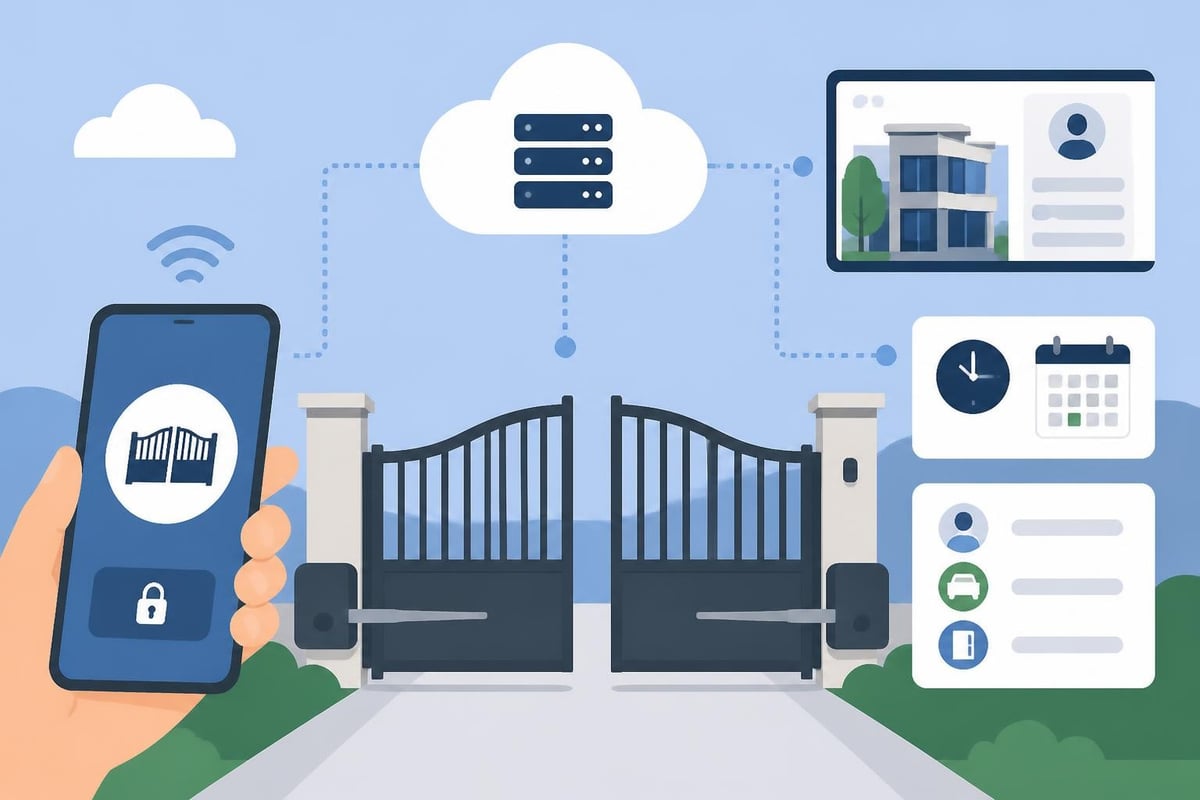
The proliferation of connected technology has transformed powered gate openers from simple access devices into integrated security and automation platforms. Modern systems communicate with building management systems, surveillance cameras, and mobile applications to create comprehensive property access solutions.
Connectivity and Remote Management
Cloud-connected controllers enable property owners and managers to operate gates remotely, review access logs, and receive alerts about system status or security events. These platforms typically offer user management interfaces allowing administrators to grant or revoke access permissions, schedule automatic open-close times, and generate reports documenting all gate activity.
Security remains paramount for connected powered gate openers. Research on authentication protocols for smart home security emphasizes the importance of encrypted communication, multi-factor authentication, and regular security updates. Manufacturers must balance convenience features with robust cybersecurity protecting against unauthorized access or system compromise.
Integration Capabilities
Modern powered gate openers interface with numerous third-party systems to enhance functionality and user experience. Vehicle identification systems using RFID tags or license plate recognition provide touchless automated access for authorized users. Video intercom integration allows visual verification before granting entry, particularly valuable for residential communities and secure facilities.
Popular integration options include:
- Home automation platforms like Amazon Alexa, Google Home, and Apple HomeKit for voice control
- Security systems triggering gate closure when alarms activate
- Delivery management providing temporary access codes for package couriers
- Visitor management systems automating guest registration and access provisioning
Cost Considerations and Value Analysis
Investment in quality powered gate openers involves upfront equipment and installation costs balanced against long-term operational benefits and property value enhancement. Understanding total cost of ownership helps property owners make informed purchasing decisions appropriate for their applications and budgets.
Initial Investment Components
Equipment costs for powered gate openers vary significantly based on gate type, size, and feature requirements. Basic residential swing gate operators start around $400-600 for the opener unit alone, while heavy-duty commercial slide gate systems can exceed $3,000-5,000. Solar-powered units command premium pricing due to included panels and battery systems.
Professional installation typically adds $500-1,500 for residential systems and $2,000-5,000 for complex commercial installations requiring extensive electrical work, concrete foundations, and sophisticated access control integration. These costs reflect labor, materials, permits, and commissioning services ensuring proper operation and code compliance.
| System Type | Equipment Cost | Installation Cost | Total Investment | Expected Lifespan |
|---|---|---|---|---|
| Residential Swing | $500-1,200 | $600-1,200 | $1,100-2,400 | 10-15 years |
| Residential Slide | $800-1,800 | $800-1,500 | $1,600-3,300 | 12-18 years |
| Commercial Swing | $1,500-3,500 | $1,500-3,000 | $3,000-6,500 | 15-20 years |
| Commercial Slide | $2,000-5,000 | $2,000-5,000 | $4,000-10,000 | 15-25 years |
Long-Term Value and ROI
Powered gate openers deliver measurable benefits beyond mere convenience. Security enhancement reduces unauthorized access risks and potential liability from trespassing incidents. Property insurance providers may offer premium discounts for automated access control systems meeting specific security standards.
Operational efficiency gains prove significant for commercial properties. Eliminating manual gate operation reduces staffing requirements and prevents vehicle idling while waiting for access. These savings accumulate over system lifespan, particularly for facilities experiencing high traffic volumes.
Regulatory Compliance and Code Requirements
Navigating building codes and safety regulations ensures powered gate opener installations meet legal requirements while protecting occupants and operators from hazards. Regulatory frameworks vary by jurisdiction but share common themes emphasizing life safety and accessibility.
Building Code Provisions
Fire and life safety codes address powered gate openers in contexts involving emergency vehicle access and occupant egress. The NFPA regulations establish requirements for emergency access gates serving fire department connections and evacuation routes. These provisions mandate specific response times for automatic gate opening upon fire alarm activation and manual override capabilities for first responders.
Americans with Disabilities Act (ADA) compliance affects powered gate openers serving public accommodations and commercial facilities. Accessible gate operation requires appropriate force limits, opening speeds accommodating mobility-impaired users, and controls positioned within accessible reach ranges.
Local jurisdictions often supplement national standards with additional requirements addressing specific regional concerns. Coastal areas may mandate corrosion-resistant construction, while regions experiencing extreme weather establish enhanced wind load or freeze-protection standards. Consulting with experienced gate and garage door professionals ensures installations meet all applicable requirements.
Environmental and Weather Considerations
Powered gate openers operate in exposed outdoor environments subjected to temperature extremes, moisture, dust, and corrosive elements. System longevity depends significantly on selecting equipment rated for local environmental conditions and implementing appropriate protective measures.
Climate-Specific Challenges
Cold climate operation demands heated control enclosures preventing condensation and ensuring electronic components function at sub-freezing temperatures. Battery backup systems require cold-weather batteries maintaining capacity in freezing conditions. Mechanical components need low-temperature lubricants remaining fluid when conventional greases would solidify.
Hot, arid environments present different challenges. Direct sun exposure can elevate control box temperatures to levels causing premature component failure without adequate ventilation or shading. Dust infiltration requires sealed enclosures with filtered ventilation preventing abrasive particle accumulation in mechanical assemblies.
Coastal installations face aggressive salt-air corrosion demanding stainless steel or marine-grade components. Standard steel components rust rapidly in marine environments, causing binding, structural failure, and electrical shorts. Investment in corrosion-resistant construction extends service life dramatically in these demanding conditions.
Weather Protection Strategies
Proper installation techniques minimize weather-related damage to powered gate openers. Control boxes should mount with drainage provisions preventing water accumulation and ventilation maintaining acceptable internal temperatures. Cable entry points require sealed fittings preventing moisture infiltration along conductor paths.
Protective measures include:
- NEMA-rated enclosures appropriate for environmental exposure level
- Conformal coating on circuit boards protecting against moisture and corrosion
- Sealed bearing assemblies preventing water and contaminant infiltration
- UV-resistant wiring and conduit preventing sun damage and degradation
Future Trends and Emerging Technologies
Powered gate opener technology continues evolving with advances in motors, sensors, connectivity, and artificial intelligence creating increasingly sophisticated and capable systems. Understanding emerging trends helps property owners plan investments aligned with future capabilities and integration opportunities.
Advanced Sensor Technologies
LiDAR and 3D imaging sensors represent the next generation of obstruction detection, creating detailed spatial awareness of gate surroundings. These sensors detect not just gate path obstructions but loitering individuals, approaching vehicles, and potential security threats. Integration with AI analytics enables predictive behavior recognition distinguishing authorized users from potential intruders.
Biometric authentication systems increasingly integrate directly with powered gate openers, eliminating traditional access credentials. Facial recognition, fingerprint readers, and even vehicle occupant identification create seamless, touchless access experiences while enhancing security through multi-factor verification.
Sustainability and Energy Efficiency
Environmental consciousness drives development of ultra-efficient powered gate openers minimizing energy consumption and environmental impact. Brushless DC motors offer superior efficiency compared to conventional motor designs, reducing electrical consumption by 30-50% while extending service life through elimination of wear-prone brush assemblies.
Regenerative braking systems capture energy during gate closing cycles, returning power to battery banks rather than dissipating it as heat. Combined with high-efficiency solar panels and advanced battery chemistries, modern systems approach true energy independence eliminating utility costs while reducing carbon footprint.
Selecting and maintaining the right powered gate openers requires understanding your specific needs, local requirements, and long-term operational considerations. Whether you need installation, repair, or upgrade services, working with experienced professionals ensures your automated gate system delivers reliable security and convenience for years to come. For expert assistance with your gate automation needs in the Los Angeles area, Gates & Garage Door Express Inc. provides same-day service and comprehensive solutions for residential and commercial properties.