
The evolution of property access control has transformed dramatically over the past decade, with smart gates emerging as a cornerstone technology for both residential and commercial applications. These intelligent systems combine traditional gate mechanics with cutting-edge connectivity, sensors, and automation to deliver unprecedented security, convenience, and operational efficiency. As we navigate 2026, understanding the capabilities and considerations surrounding smart gate technology has become essential for property owners seeking to modernize their perimeter security while maintaining the reliability expected from professional installations.
Understanding Smart Gate Technology
Smart gates represent a significant leap beyond conventional automatic gates by integrating Internet of Things (IoT) connectivity, advanced sensors, and intelligent control systems. At their core, these systems transform a simple entry point into a sophisticated access management platform that can communicate with smartphones, security systems, and property management software.
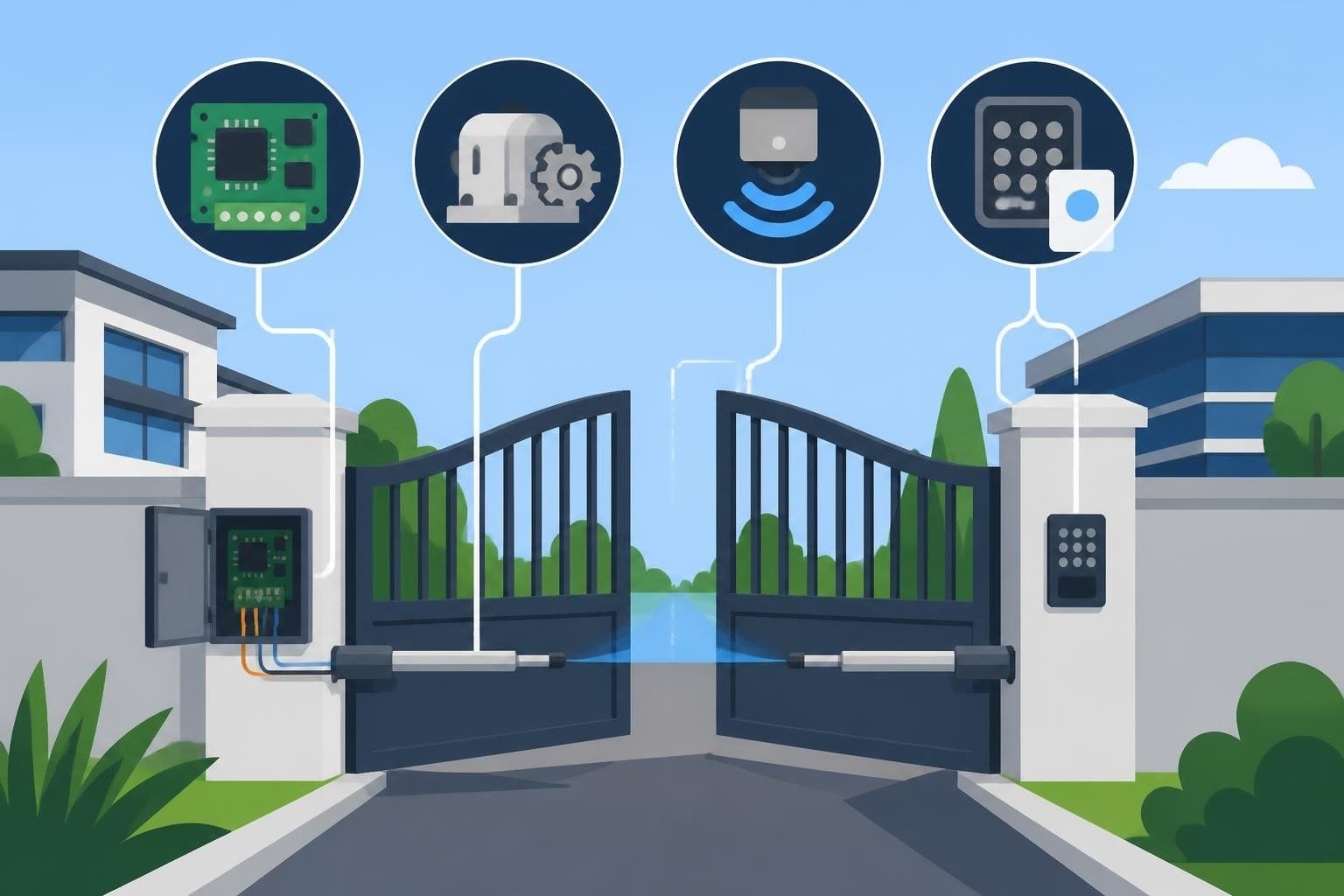
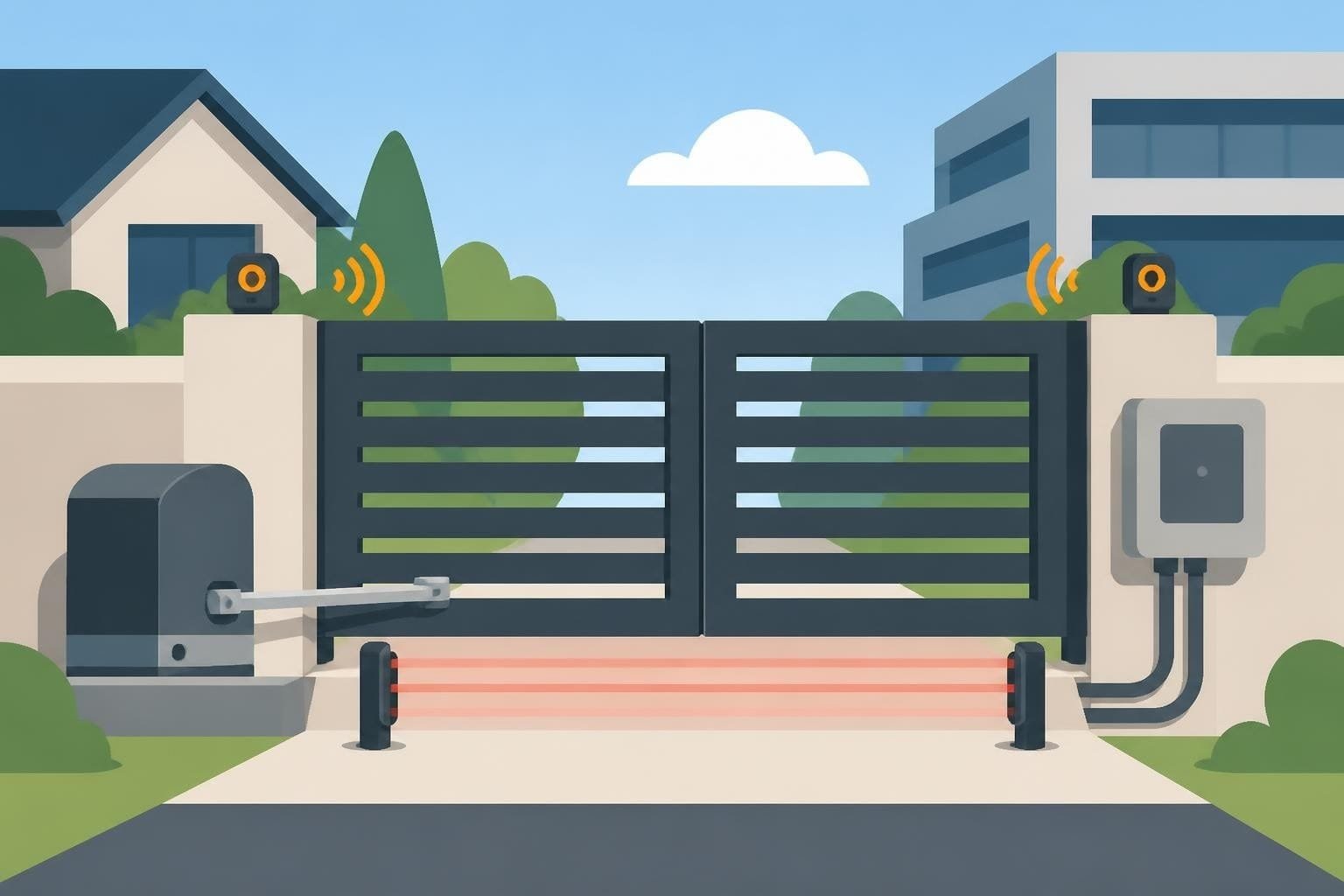
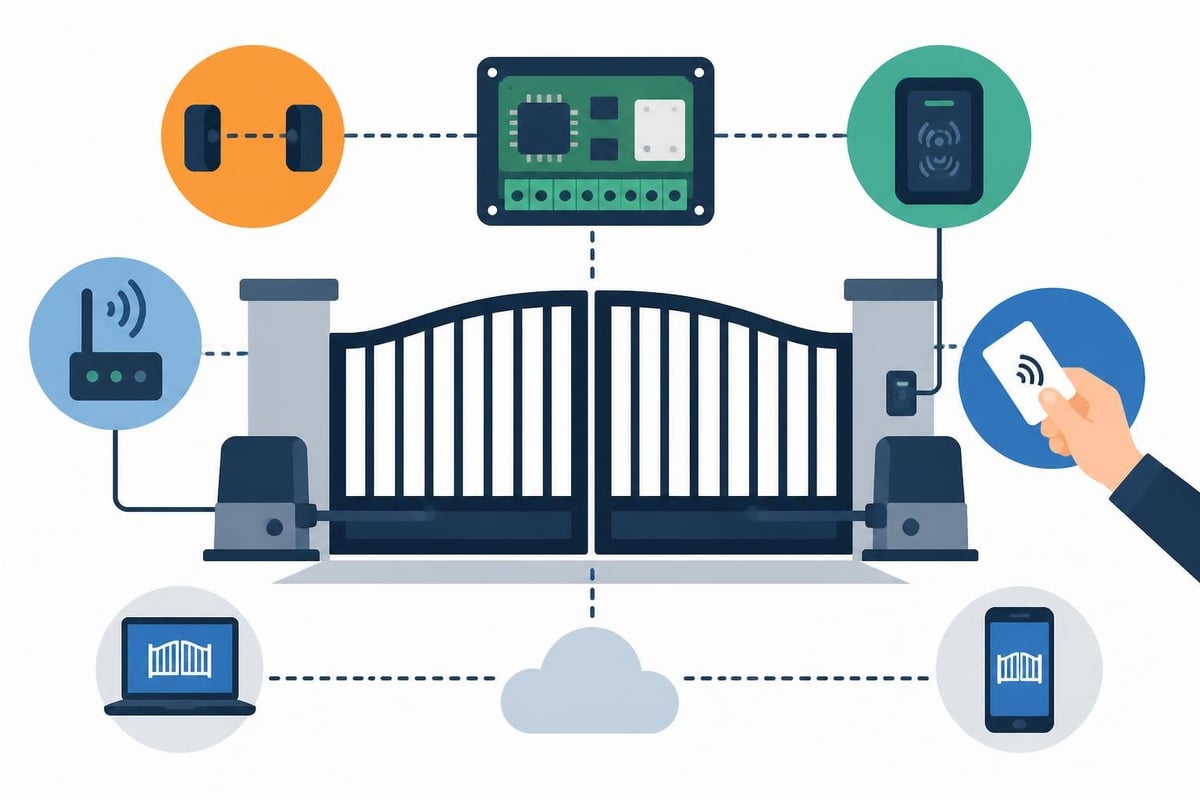
The fundamental architecture of a smart gate system includes several interconnected components working in harmony. The gate operator mechanism handles the physical opening and closing, while sensors monitor position, obstruction detection, and environmental conditions. A central controller serves as the brain of the operation, processing inputs from various sources and executing commands based on programmed logic or real-time instructions from authorized users.
Core Components and Their Functions
Modern smart gates rely on a carefully orchestrated ecosystem of hardware and software elements. Understanding these components helps property owners make informed decisions about system design and maintenance requirements.
Essential Hardware Elements:
- Gate operator: Electric motor and drive mechanism
- Control board: Microprocessor-based decision-making unit
- Wireless receiver: Accepts signals from remotes and mobile devices
- Safety sensors: Photoelectric beams and pressure-sensitive edges
- Access readers: RFID, keypad, biometric, or camera-based systems
- Communication module: Wi-Fi, cellular, or Ethernet connectivity
The integration of these components creates a system that can operate autonomously while remaining responsive to user commands and environmental changes. Research on gate automation systems using various access control mechanisms demonstrates how different technologies can be combined to create robust, user-friendly solutions tailored to specific security requirements.
Advanced Access Control Technologies
The methods by which users interact with smart gates have evolved far beyond the simple remote control. Today's systems offer multiple authentication pathways, each with distinct advantages for different use cases and security requirements.
License plate recognition (LPR) technology has gained significant traction in both residential communities and commercial facilities. By automatically identifying authorized vehicles, these systems eliminate the need for drivers to stop and present credentials. Recent research on automated vehicle access control using deep-learning LPR highlights the improved accuracy and privacy considerations that make this technology increasingly viable for everyday applications.
Comparison of Access Methods
| Access Method | Convenience | Security Level | Installation Cost | Maintenance |
|---|---|---|---|---|
| RFID Card/Tag | High | Medium-High | Low-Medium | Low |
| Smartphone App | Very High | High | Medium | Low-Medium |
| License Plate Recognition | Very High | Medium-High | High | Medium |
| Biometric Scanner | Medium | Very High | High | Medium-High |
| Keypad Entry | Medium | Medium | Low | Low |
| Intercom/Video | High | High | Medium-High | Medium |
The selection of appropriate access methods depends on factors including the number of users, required security level, budget constraints, and existing infrastructure. Many property owners opt for multi-modal systems that combine two or three methods to balance convenience with security.
Connectivity and Smart Home Integration
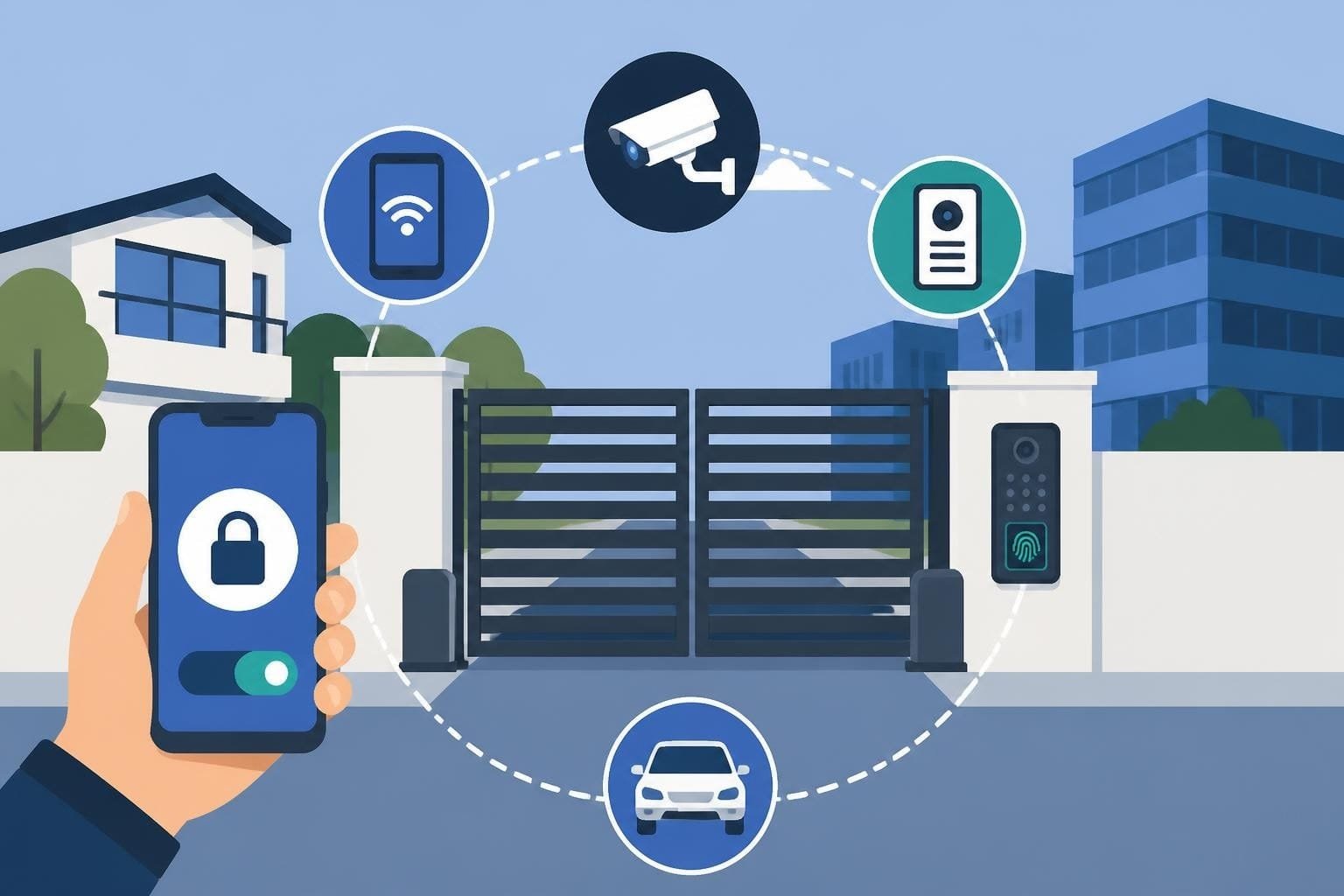
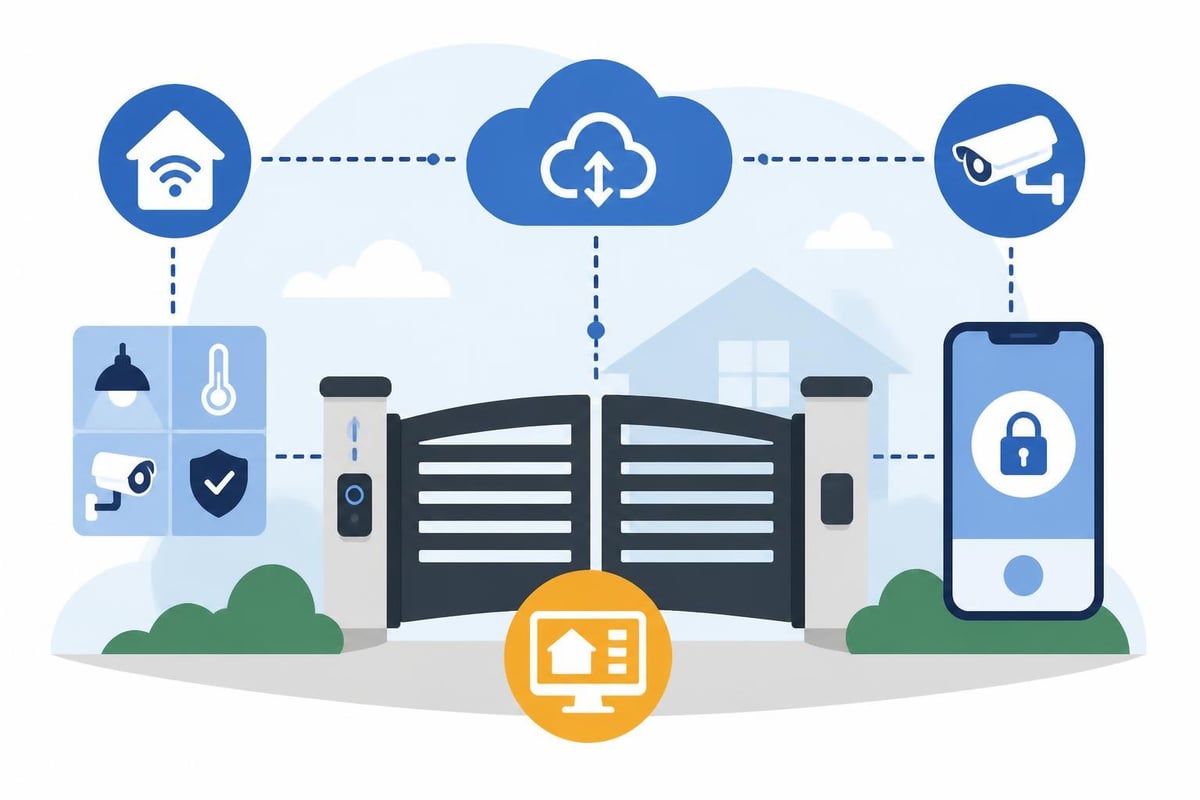
The true power of smart gates emerges when they integrate seamlessly with broader property automation ecosystems. Modern systems communicate using standard protocols that enable coordination with security cameras, lighting systems, alarm panels, and voice assistants.
Smart gate controllers typically support multiple communication pathways to ensure reliable operation. Wi-Fi connectivity provides straightforward integration with home networks, while cellular backup ensures functionality during internet outages. Some professional installations incorporate dedicated mesh networks to maintain gate communication independent of consumer internet service.
Integration Capabilities:
- Security system coordination: Automatic disarming when authorized users arrive
- Camera triggering: Recording activation upon gate movement or access attempts
- Lighting automation: Pathway illumination synchronized with gate opening
- Voice assistant control: Commands through Amazon Alexa, Google Assistant, or Apple Siri
- Notification systems: Real-time alerts for gate activity, errors, or security events
Property management platforms can aggregate data from multiple smart gates across a facility, providing centralized monitoring and control. This capability proves particularly valuable for commercial properties, HOAs, and multi-tenant residential complexes where access patterns require oversight and reporting.
Cybersecurity Considerations for Smart Gates
As smart gates become increasingly connected, they also become potential vectors for cybersecurity threats. Protecting these systems requires understanding both the vulnerabilities inherent in IoT devices and the best practices for securing them against unauthorized access or manipulation.
The NIST IoT Device Cybersecurity Requirement Catalogs provide comprehensive guidance on securing connected devices, including gate controllers and access systems. These resources outline essential capabilities that manufacturers should implement and that property owners should verify before deployment.
Essential Security Measures
Implementing robust cybersecurity for smart gates involves multiple layers of protection. Network segmentation keeps gate controllers isolated from general computing devices, limiting potential lateral movement by attackers. Strong authentication mechanisms prevent unauthorized control attempts, while encrypted communications protect data in transit.
Regular firmware updates remain critical for maintaining security posture. Manufacturers continually discover and patch vulnerabilities, making update discipline essential. Property owners should establish update schedules and verification procedures to ensure their gate systems receive necessary security patches promptly.
Key Security Practices:
- Enable two-factor authentication for all user accounts
- Change default passwords on controllers and wireless receivers
- Implement network segmentation using VLANs or separate networks
- Disable unused features and communication ports
- Monitor access logs for unusual patterns
- Maintain current firmware versions on all components
The technical baseline for IoT device cybersecurity established by NIST and IEEE offers manufacturers and installers a framework for implementing essential security capabilities. Property owners working with professional installers should verify that their chosen systems meet these baseline requirements.
Safety Standards and Compliance
Smart gates must adhere to stringent safety requirements that protect users from entrapment, crushing, or other hazards associated with automated heavy machinery. Understanding these standards helps property owners ensure their installations meet legal obligations while protecting residents, visitors, and service personnel.
The ANSI/CAN/UL 325 standard governs safety requirements for gate operators and systems. This comprehensive specification addresses entrapment protection, force limitations, sensor requirements, and operational characteristics that prevent injuries. UL Solutions provides detailed guidance on key safety issues that have evolved over the standard's five-decade history.
Required Safety Features
| Safety Feature | Function | Regulatory Requirement |
|---|---|---|
| Photoelectric Sensors | Detect obstructions in gate path | Required for vehicular gates |
| Entrapment Protection | Reverse on contact with objects | Mandatory UL 325 compliance |
| Manual Release | Emergency manual operation | Required for all automatic gates |
| Edge Sensors | Detect contact along gate edges | Required for sliding gates |
| Warning Signs | Notify users of automatic operation | Mandated by local codes |
| Adjustable Force Settings | Limit closing/opening force | UL 325 specification |
Professional installations must include periodic testing and adjustment of safety features. These maintenance protocols ensure that sensors remain properly aligned, force settings stay within safe limits, and emergency releases function correctly. When properly maintained, electric gate repair services can quickly identify and correct safety concerns before they pose risks to users.
Installation Considerations and Best Practices
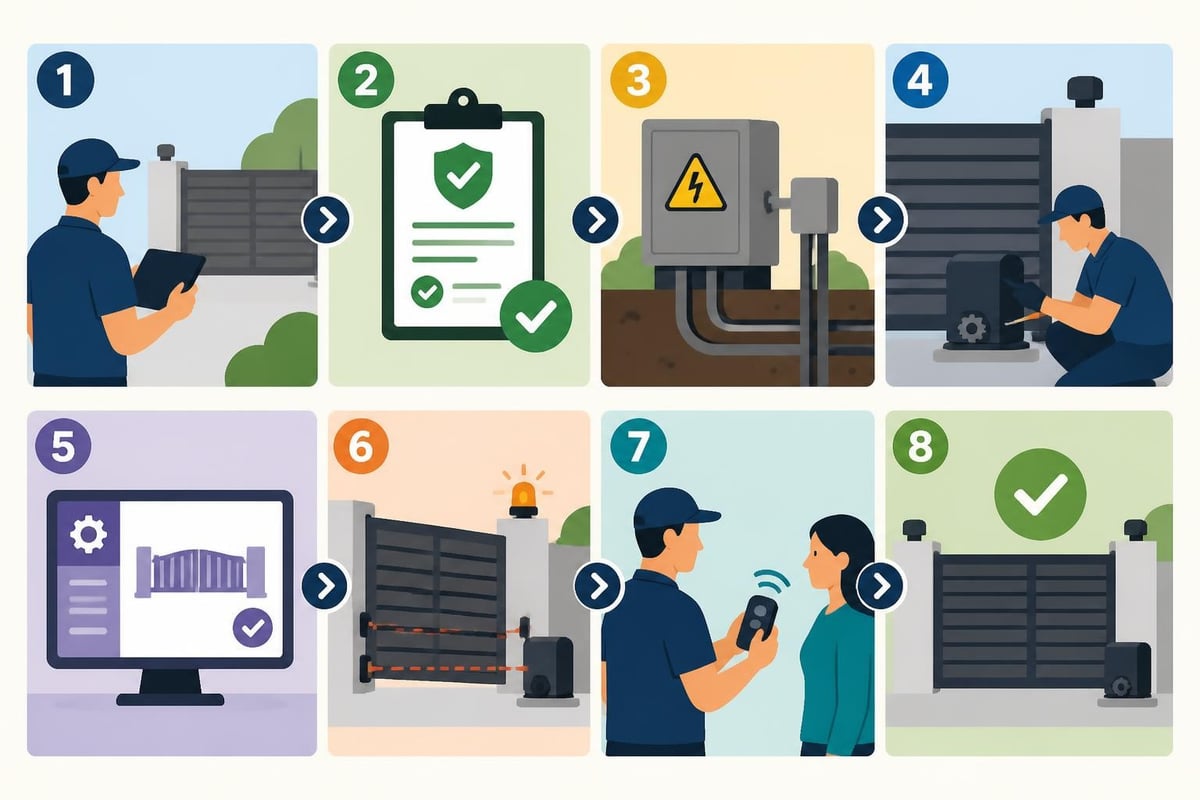
Successful smart gate deployment requires careful planning that addresses site-specific challenges, power requirements, communication infrastructure, and integration with existing systems. Professional installation ensures compliance with safety standards while optimizing system performance and longevity.
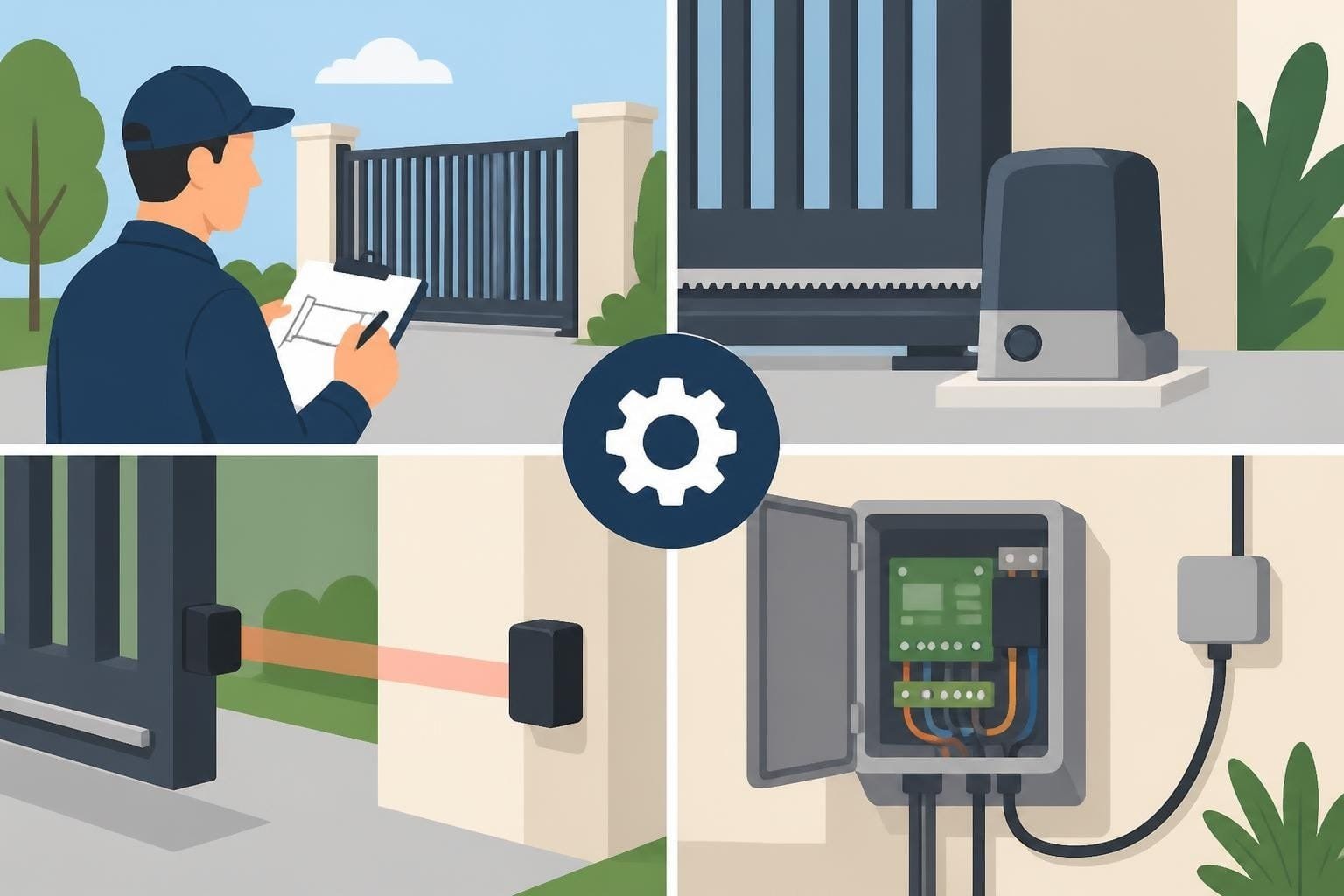
Site assessment forms the foundation of proper installation planning. Evaluating terrain, drainage, existing utilities, and communication signal strength helps identify potential obstacles before equipment selection. Gates installed in areas with poor cellular coverage may require Wi-Fi repeaters or hardwired Ethernet connections to maintain reliable smart features.
Pre-Installation Planning Checklist
Property owners benefit from addressing these considerations during the planning phase:
- Verify local permits and regulations for automated gate installations
- Assess power availability and determine if new circuits are required
- Evaluate communication infrastructure for IoT connectivity
- Determine access control requirements based on user population
- Plan for backup power using battery systems or generators
- Consider traffic flow patterns to optimize gate positioning
- Review integration requirements with existing security systems
The physical installation process involves precise alignment, secure mounting, proper wiring, and thorough testing of all safety features. Professional installers follow manufacturer specifications for concrete footings, gate swing clearances, and sensor positioning to ensure reliable long-term operation.
Maintenance Requirements and Lifecycle Management
Smart gates require regular maintenance to ensure continued reliability, safety, and performance. Unlike traditional gates, these systems demand attention to both mechanical components and electronic subsystems, each with distinct maintenance schedules and requirements.
Mechanical elements including hinges, wheels, tracks, and operators need periodic lubrication, adjustment, and inspection for wear. Electronic components require firmware updates, battery replacement in backup systems, and verification of sensor calibration. A comprehensive maintenance program addresses both domains systematically.
Monthly Maintenance Tasks:
- Visual inspection of gate alignment and mechanical condition
- Test safety sensors and entrapment protection
- Verify remote and smartphone control functionality
- Check battery backup charge status
- Clean photoelectric sensor lenses
Quarterly Maintenance Tasks:
- Lubricate moving parts and pivot points
- Inspect and tighten all mounting hardware
- Test manual release mechanism
- Update firmware if new versions available
- Review access logs for anomalies
Annual Maintenance Tasks:
- Professional inspection of operator mechanism
- Comprehensive safety system testing
- Replace backup batteries as needed
- Audit user access credentials
- Verify cybersecurity measures remain current
Properties in Los Angeles and similar climates face specific challenges including dust accumulation, thermal expansion effects, and UV degradation of plastic components. Regular maintenance schedules tailored to local conditions extend system lifespan while preventing unexpected failures that compromise security and convenience.
Cost Analysis and Return on Investment
Understanding the financial implications of smart gate systems helps property owners make informed decisions about technology selection, installation approach, and feature prioritization. While initial costs exceed traditional automatic gates, the long-term value proposition often justifies the investment.
Cost Breakdown by System Type
| System Configuration | Equipment Cost | Installation Cost | Annual Maintenance | Total 5-Year Cost |
|---|---|---|---|---|
| Basic Automatic Gate | $2,500-$4,000 | $800-$1,500 | $200-$400 | $5,300-$9,500 |
| Smart Gate (Wi-Fi) | $3,500-$6,000 | $1,200-$2,000 | $300-$500 | $7,000-$13,000 |
| Advanced Smart Gate (LPR) | $6,000-$10,000 | $2,000-$3,500 | $400-$700 | $12,000-$21,500 |
| Commercial Smart Gate | $8,000-$15,000 | $3,000-$5,000 | $600-$1,000 | $17,000-$32,000 |
Smart gates deliver value through multiple channels beyond basic access control. Enhanced security reduces insurance premiums and potential theft losses. Operational efficiency eliminates staffing costs for manual gate operation in commercial settings. Property value appreciation reflects buyer preference for modern security amenities.
The convenience factor proves difficult to quantify but significantly impacts daily quality of life. Eliminating the need to manually operate gates in inclement weather, at night, or when returning home with passengers provides tangible benefits that accumulate over years of ownership.
Future Trends and Emerging Technologies
The smart gate industry continues evolving rapidly as new technologies mature and user expectations shift. Several developments on the horizon promise to reshape how these systems function and integrate with broader property ecosystems.
Artificial intelligence and machine learning algorithms enable increasingly sophisticated behavior prediction and anomaly detection. Systems can learn typical usage patterns and flag unusual activity automatically. Computer vision approaches using YOLOv8 and advanced LPR demonstrate how real-world accuracy continues improving, making these features more practical for everyday deployments.
Emerging Capabilities:
- Facial recognition integration for hands-free access control
- Predictive maintenance using sensor data and machine learning
- Energy harvesting from solar or kinetic sources for self-powered operation
- Blockchain-based access credentials for enhanced security and auditability
- Mesh networking enabling gate-to-gate communication across large properties
- Environmental sensing adjusting operation based on weather and traffic conditions
The convergence of 5G connectivity, edge computing, and advanced sensors creates opportunities for real-time responsiveness previously impossible with cloud-dependent systems. Gate controllers increasingly process decisions locally while maintaining cloud connectivity for management and updates.
Sustainability considerations drive innovation in power efficiency and renewable energy integration. Modern operators consume less power during standby periods, while improved battery technology enables longer backup operation during outages. Solar panel integration becomes more practical as panel efficiency improves and costs decline.
Selecting the Right Smart Gate System
Choosing an appropriate smart gate configuration requires balancing security requirements, budget constraints, aesthetic preferences, and operational needs. A systematic evaluation process ensures the selected solution aligns with both immediate requirements and long-term property plans.
Property type fundamentally influences system selection. Single-family residential installations prioritize convenience and aesthetic integration, while commercial facilities emphasize throughput capacity, audit trails, and integration with enterprise security platforms. Gated communities require scalable solutions supporting hundreds of users with varying access privileges.
Decision Framework
Assess Security Requirements:
- Determine threat level and required access control rigor
- Identify credential management needs (users, guests, service personnel)
- Evaluate integration requirements with existing security infrastructure
- Consider audit trail and reporting requirements
Evaluate Operational Factors:
- Estimate daily traffic volume and peak usage patterns
- Assess power availability and backup requirements
- Determine communication infrastructure capabilities
- Review maintenance access and service availability
Consider Long-Term Flexibility:
- Verify system scalability for future expansion
- Assess vendor stability and product longevity
- Review upgrade pathways for adding features
- Evaluate compatibility with emerging standards
Working with experienced professionals who understand local conditions proves invaluable. Providers familiar with Los Angeles environments, permit requirements, and typical use cases can recommend configurations optimized for regional considerations. Many property owners find that investing in professional consultation during the planning phase prevents costly modifications later.
Smart gates represent a significant advancement in property access control, combining security, convenience, and operational efficiency through intelligent automation and connectivity. As technology continues evolving, these systems will become increasingly sophisticated while remaining accessible to property owners seeking modern solutions. Whether you're considering upgrading an existing gate or planning a new installation, partnering with experienced professionals ensures optimal results. Gates & Garage Door Express Inc. brings family-owned dedication and technical expertise to every smart gate project in Los Angeles, offering same-day service when you need it most and the quality installations that protect your investment for years to come.